

Agricultural machinery accounts for a significant share of workplace injuries, with over 40 percent of accidents linked to equipment malfunction and poor maintenance. For farmers and operators, safety becomes a daily concern as shifting weather and rugged terrain add extra risk. By learning from proven american safety practices and focusing on both equipment care and protective gear, you can lower injury rates while keeping your machinery performing at its best.
Table of Contents
- Defining Agricultural Safety In Modern Farming
- Major Risks For Machinery Operators
- Proper Equipment Handling And Maintenance
- Essential Personal Protective Gear And Practices
- Legal Responsibilities And Compliance Requirements
Key Takeaways
| Point | Details |
|---|---|
| Holistic Safety Approach | Effective agricultural safety requires addressing human factors, mechanical interactions, and environmental conditions beyond basic equipment maintenance. |
| Unique Agricultural Risks | Dynamic outdoor settings lead to heightened risks; targeted interventions are necessary for safe operations, especially concerning machinery and transportation. |
| Importance of PPE | Proper selection and use of personal protective equipment is vital to protect agricultural workers from various occupational hazards. |
| Compliance and Training | Employers must implement systematic risk assessments, continuous training, and maintain documentation to meet legal safety standards in agriculture. |
Defining Agricultural Safety in Modern Farming
Agriculture represents one of the most hazardous economic sectors globally, with workers confronting complex and dynamic workplace risks daily. Comprehensive safety protocols are essential for protecting agricultural professionals from potential life-threatening situations. Understanding these risks requires examining the multifaceted nature of agricultural work environments.
Modern farming safety encompasses far more than basic equipment maintenance. It involves a holistic approach addressing human factors, mechanical interactions, environmental conditions, and systematic risk management. Workers must navigate potential dangers ranging from heavy machinery operations to chemical exposure, unpredictable animal interactions, and challenging terrain. The complexity of agricultural work means safety cannot be reduced to simple checklists but requires continuous education, awareness, and proactive prevention strategies.
The agricultural industry faces unique challenges that distinguish its safety requirements from other sectors. Unlike controlled industrial environments, farming occurs in dynamic outdoor settings where variables constantly shift. Weather conditions, equipment reliability, physical demands, and isolation can dramatically increase workplace hazards. Rural health experts emphasize that transportation incidents, machinery accidents, and environmental exposures represent significant risks requiring targeted interventions and comprehensive training programs.
Here is a comparison of the main agricultural hazards and key preventive strategies:
| Main Hazard | Risk Example | Prevention Focus |
|---|---|---|
| Machinery malfunction | Sudden equipment failure | Routine inspection, training |
| Environmental exposure | Extreme weather change | Adaptive protocols, PPE |
| Animal interactions | Unpredictable behavior | Special handling, awareness |
| Chemical hazards | Pesticide contact | Proper storage, PPE use |
Pro tip: Develop a personalized safety checklist specific to your farm’s unique equipment and terrain, reviewing and updating it quarterly to maintain relevance and effectiveness.
Major Risks for Machinery Operators
Machinery operators in agricultural settings face a complex array of potential hazards that require constant vigilance and strategic risk management. Occupational safety standards highlight the significant dangers inherent in operating heavy agricultural equipment, where a single moment of distraction can lead to life-altering consequences. Understanding these risks is crucial for developing comprehensive safety protocols that protect workers from mechanical and operational threats.
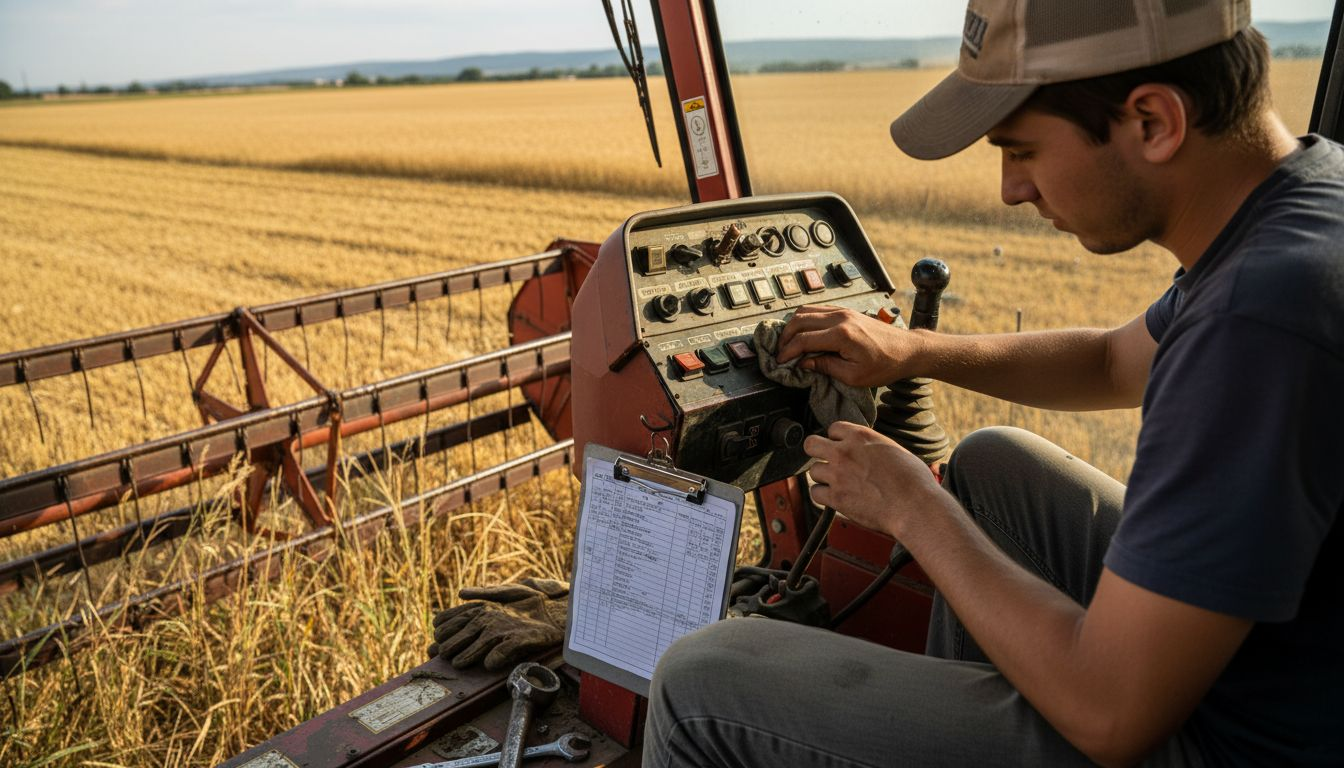
The primary risks for machinery operators encompass multiple interconnected factors. Equipment malfunction represents a critical danger, with mechanical failures potentially causing sudden and catastrophic accidents. Operators must contend with moving parts, hydraulic systems, and complex mechanical interfaces that can create unexpected pinch points, entanglement zones, and crushing hazards. Additionally, agricultural machinery safety design emphasizes the importance of understanding machine limitations, operational boundaries, and potential failure modes that could compromise worker safety.
Environmental conditions significantly amplify risk factors for machinery operators. Uneven terrain, challenging weather conditions, reduced visibility, and unpredictable ground surfaces can transform routine operations into potentially dangerous scenarios. Tractors and self-propelled machinery are particularly vulnerable to rollovers, especially on sloped or unstable ground. Operators must constantly assess environmental variables, maintain situational awareness, and implement defensive operational strategies to mitigate these inherent risks.
Pro tip: Conduct a daily pre-operation equipment inspection, systematically checking mechanical components, safety guards, and operational controls to identify potential risks before starting work.
Proper Equipment Handling and Maintenance
Proper equipment handling and maintenance form the cornerstone of agricultural safety, directly impacting worker protection and machinery longevity. Sustainable mechanization principles emphasize that routine maintenance is not just a technical requirement but a critical safety strategy that prevents unexpected equipment failures and potential workplace accidents.
Effective equipment maintenance involves a comprehensive approach that goes beyond basic cleaning and repair. Systematic inspection requires farmers to develop detailed checklists that cover mechanical components, hydraulic systems, electrical connections, and structural integrity. Operators must perform thorough pre-operation assessments, checking for signs of wear, potential structural weaknesses, and functional irregularities. Safe management practices recommend documenting each inspection, tracking equipment performance, and addressing minor issues before they escalate into significant safety risks.
The complexity of modern agricultural machinery demands specialized knowledge and a proactive maintenance mindset. Operators must understand each equipment’s unique operational parameters, manufacturer recommendations, and potential failure modes. This includes maintaining proper lubrication, monitoring fluid levels, replacing worn components, and ensuring all safety guards and protective mechanisms remain intact and functional. Environmental factors like dust, moisture, temperature variations, and mechanical stress can accelerate equipment degradation, making consistent maintenance even more critical for preventing unexpected breakdowns and potential operator injuries.
Pro tip: Create a digital maintenance log for each piece of equipment, tracking inspection dates, repair history, and performance metrics to identify potential issues before they become safety hazards.
Essential Personal Protective Gear and Practices
Personal protective equipment (PPE) represents the last critical line of defense for agricultural workers facing numerous occupational hazards. Comprehensive protection strategies emphasize the importance of selecting and using appropriate gear that shields workers from potential injuries, chemical exposures, and environmental risks inherent in farming operations.
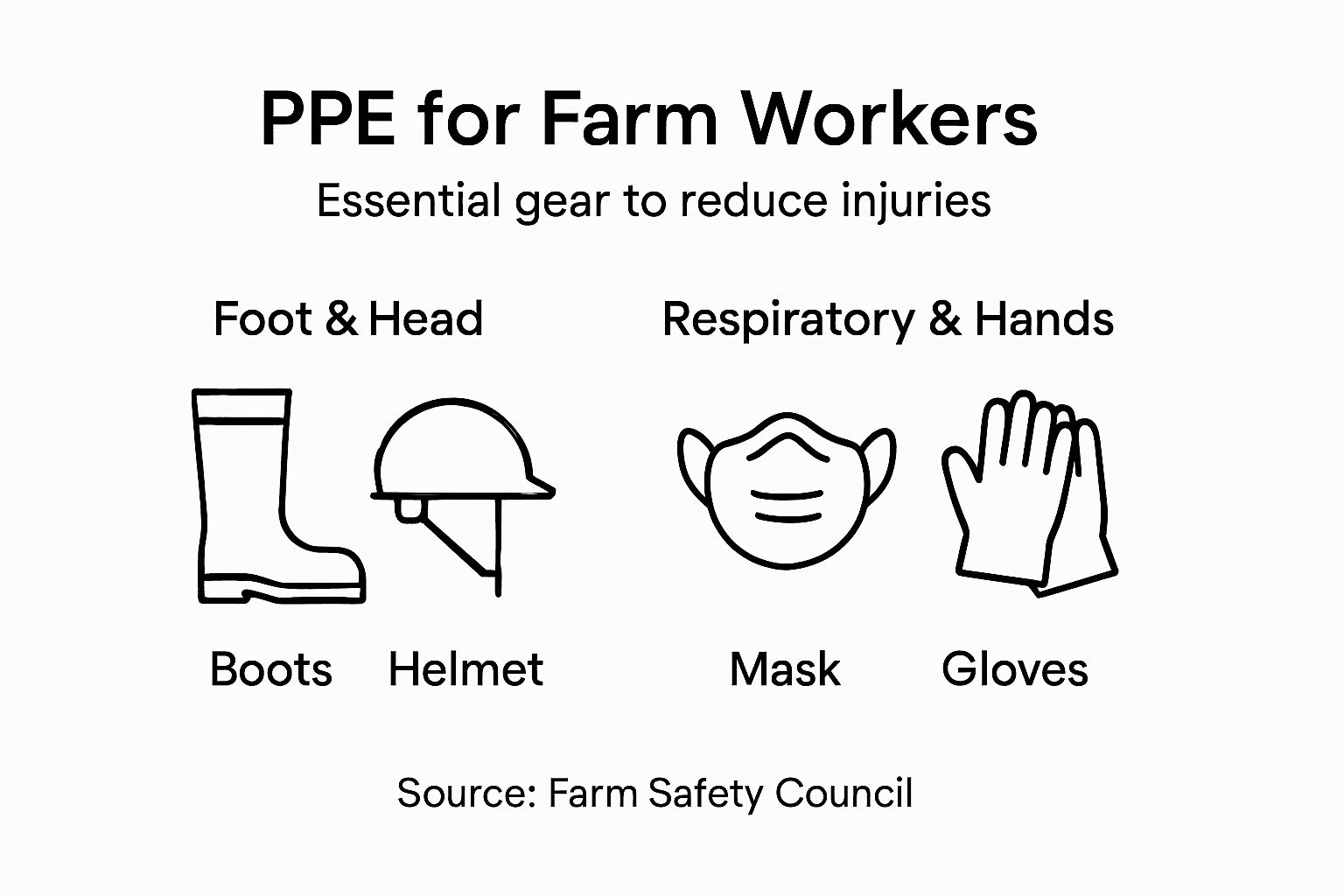
A comprehensive PPE approach requires more than simply purchasing protective equipment. Farm safety experts recommend conducting thorough hazard assessments to identify specific risks unique to each farming environment. This involves evaluating potential exposure to mechanical impacts, chemical splashes, noise pollution, respiratory irritants, and environmental conditions. Farmers must select specialized protective gear including steel-toed boots, impact-resistant gloves, hearing protection, respiratory masks, eye protection, and protective clothing designed to withstand harsh agricultural working conditions.
The effectiveness of personal protective equipment depends entirely on proper fit, consistent maintenance, and correct usage. Workers must undergo comprehensive training to understand how to inspect, wear, and maintain their protective gear. This includes checking equipment for signs of wear, ensuring proper sizing, understanding limitations, and replacing components that show damage or reduced protective capabilities. Environmental factors like extreme temperatures, mechanical stress, and chemical exposures can degrade protective equipment rapidly, making regular inspection and replacement critical for maintaining worker safety.
The table below summarizes essential personal protective equipment and their farming applications:
| PPE Item | Main Protection Provided | Typical Farming Use |
|---|---|---|
| Steel-toed boots | Foot injury prevention | Heavy machinery, livestock |
| Respiratory masks | Inhalation hazard block | Pesticide/fertilizer handling |
| Hearing protection | Noise damage reduction | Operating loud equipment |
| Impact gloves | Hand injury prevention | Maintenance, machinery use |
| Safety goggles | Eye injury prevention | Chemical mixing, cutting |
Pro tip: Develop a monthly PPE audit system that systematically checks, documents, and replaces protective equipment before it reaches critical wear levels.
Legal Responsibilities and Compliance Requirements
Agriculture represents a complex legal landscape where safety regulations intersect with occupational health standards, creating a comprehensive framework of responsibilities for employers and workers. International labor guidelines establish critical standards that mandate proactive safety management, emphasizing prevention of workplace accidents and protection of worker rights across agricultural environments.
Employers bear significant legal obligations in implementing safety protocols and maintaining workplace standards. Compliance requirements extend beyond simple rule adherence, demanding systematic risk assessments, continuous worker training, and documented safety procedures. Agricultural policy monitoring indicates that successful legal frameworks must balance regulatory enforcement with practical implementation, recognizing the unique challenges of agricultural work environments.
The legal responsibilities in agricultural safety encompass multiple dimensions, including equipment maintenance, worker training, hazard identification, and consistent documentation. Employers must establish clear protocols for reporting incidents, conducting regular safety inspections, and maintaining comprehensive records that demonstrate ongoing compliance with national and international safety standards. This includes providing appropriate personal protective equipment, ensuring machinery meets safety specifications, and creating workplace environments that minimize potential risks through proactive management strategies.
Pro tip: Develop a comprehensive safety compliance binder that includes all required documentation, inspection reports, training records, and incident logs to demonstrate ongoing commitment to workplace safety.
Enhance Your Agricultural Safety with Trusted Machinery Parts
The article highlights the critical importance of preventing injuries by maintaining proper equipment and using the right protective gear in farming operations. A common challenge for farmers is managing machinery reliability and ensuring routine maintenance to avoid sudden equipment failures. These risks underscore the need for high-quality tractor accessories and spare parts designed for durability and safety. At pexlivanidis.com, we understand that your safety depends on dependable equipment components customized to your farm’s unique demands.
Don’t let worn or faulty machinery parts compromise your safety protocols. Explore our vast inventory of over 20,000 agricultural parts that support effective equipment handling and compliance with safety standards. Whether you need reliable tractor spare parts or specialized accessories, our platform offers free shipping on orders over 100€ within Greece and wholesale options for businesses. Take control of your farm’s safety with products that keep your machines running smoothly and protect you from costly accidents. Visit pexlivanidis.com now and equip your operation for safer workdays.
For tailored solutions that match the safety strategies discussed like daily machine inspections and maintenance logs, browse our selection of parts and learn how you can prevent equipment malfunctions before they occur. Your next step to safer farming starts here.
Frequently Asked Questions
What are the main hazards in agricultural work environments?
Agricultural work environments present various hazards including machinery malfunctions, environmental exposure to extreme weather, unpredictable animal interactions, and chemical hazards such as pesticide contact.
How can equipment maintenance improve agricultural safety?
Regular equipment maintenance is crucial for preventing unexpected failures that can lead to accidents. Systematic inspections, tracking performance, and ensuring all safety guards are functional contribute significantly to overall safety.
What types of personal protective equipment (PPE) are essential for agricultural workers?
Essential PPE for agricultural workers includes steel-toed boots for foot injury prevention, respiratory masks for inhalation hazards, hearing protection from loud machinery, impact gloves for hand injuries, and safety goggles for eye protection during chemical handling.
What legal responsibilities do employers have regarding agricultural safety?
Employers are legally obligated to implement safety protocols, conduct risk assessments, provide training, supply appropriate PPE, and maintain documented safety procedures to ensure compliance with safety regulations.