

TL;DR:
- Many farmers misuse tools due to a lack of understanding of their proper system integration and functions. Choosing the correct equipment tailored to soil, crop, and management goals enhances productivity and soil health, especially when combining conventional and no-till practices. Maintaining equipment regularly and adopting integrated data systems are essential for maximizing farming efficiency and long-term sustainability.
Not every farmer grabs the wrong tool on purpose. The problem is that agriculture tools and equipment and their uses are rarely explained as a system — most resources list items without explaining why you’d choose one over another, or what happens when you get it wrong. Pick the wrong tillage implement for your soil type and you compact it instead of preparing it. Use an undersized seeder and your planting windows shrink. This guide cuts through that confusion and covers the full range of common farm tools and equipment, from traditional hand implements to precision agriculture technology, so you can make smarter decisions for your operation.
Table of Contents
- Key takeaways
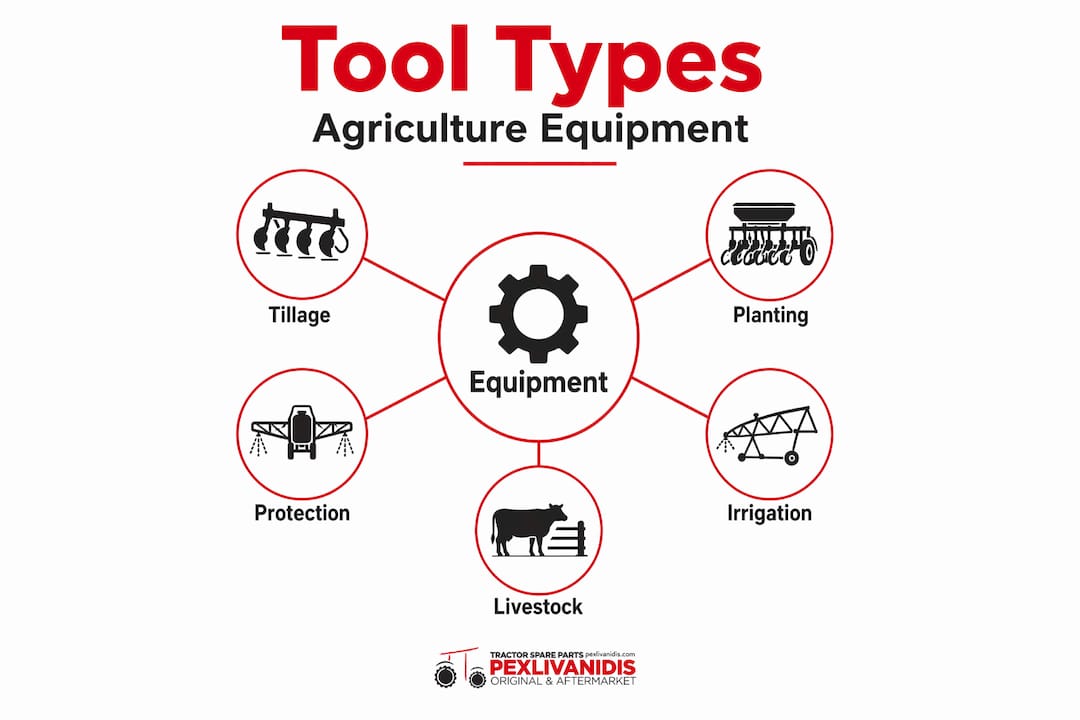
- Agriculture tools and equipment and their uses: the full picture
- Soil cultivation: tillage equipment explained
- Planting and seeding equipment
- Crop protection and irrigation tools
- Livestock tools and equipment
- My honest take on modern farm toolchains
- How Pexlivanidis helps you get the most from your equipment
- FAQ
Key takeaways
| Point | Details |
|---|---|
| Match tools to your soil and crop | Selecting the wrong implement for your soil type wastes time and can damage field productivity. |
| No-till saves more than fuel | No-till drills preserve soil structure and moisture, delivering long-term yield benefits beyond fuel savings. |
| Precision tech works as a system | GPS, sensors, and variable-rate planters only deliver results when they share data and work together. |
| Sprayer upkeep is about small parts | Most sprayer failures trace back to worn nozzles and clogged strainers, not pump problems. |
| Livestock tools reduce hidden costs | Proper hoof care kits and PPE prevent disease spread and cut treatment delays on busy operations. |
Agriculture tools and equipment and their uses: the full picture
The biggest mistake farmers make is treating their tool inventory as a flat list rather than a structured system. When you categorize your equipment by function, you see gaps, redundancies, and opportunities much more clearly.
Here are the major categories you need to account for:
- Tillage and soil preparation: Ploughs, harrows, cultivators, subsoilers, and no-till drills. These prepare the seedbed, manage residue, and set the foundation for every crop that follows.
- Planting and seeding: Grain drills, row planters, precision seeders, and transplanting equipment. Accurate seed placement directly affects germination rates and final yields.
- Crop protection: Boom sprayers, knapsack sprayers, dusters, and drone-based applicators. This category spans chemical and biological inputs with radically different calibration requirements.
- Irrigation and water management: Drip systems, center-pivot irrigation, flood systems, and moisture sensors. Water use efficiency is where many operations leak significant money.
- Harvesting: Combine harvesters, forage harvesters, grain carts, and specialty crop pickers. Timing and capacity mismatches here cost farmers measurable yield every season.
- Livestock care: Hoof care toolkits, handling equipment, automated feeders, and monitoring systems. These tools directly affect animal welfare and herd health outcomes.
The distinction between hand tools and mechanized equipment matters more than most people acknowledge. On small or diversified farms, common farm tools like hoes, hand seeders, and pruning shears remain genuinely practical. On larger operations, mechanized equipment with matched tractor power ratings determines whether field work gets done on time. Understanding the different types of agricultural tools across these categories sets the foundation for everything that follows.
Soil cultivation: tillage equipment explained
Soil preparation is where most farms either gain or lose ground before a seed ever goes in. The right tillage equipment loosens compaction, manages residue, and creates the optimal seedbed condition for the crop you are planting.
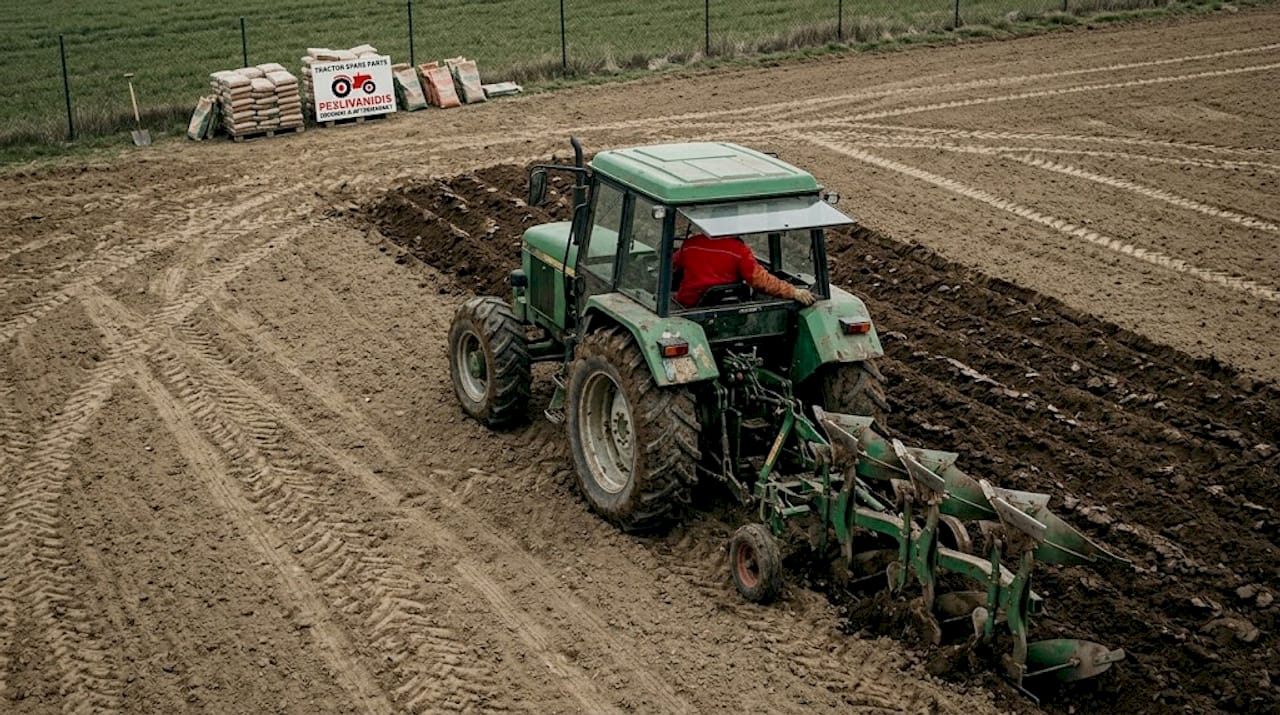
Ploughs remain the most recognized tillage tool. A moldboard plough inverts the top 8 to 12 inches of soil, burying surface residue and breaking up compacted layers. It is aggressive and effective, but it also disrupts soil structure and accelerates moisture loss. Disc ploughs handle harder, drier soils and rocky fields better than moldboard versions.
Harrows do the finishing work. Four main types exist): disc harrows for breaking heavy clods after primary tillage, tine harrows for seedbed refinement, chain harrows for light leveling and pasture maintenance, and chain-disk combinations for intermediate tasks. Selecting the wrong type is a common and costly mistake. Disc harrows in a field that only needs seedbed finishing will destroy fine soil structure. Tine harrows in heavy, unbroken ground will bounce across the surface without doing anything useful.
The comparison below shows how conventional tillage and no-till approaches differ across the metrics that matter most:
| Factor | Conventional tillage | No-till |
|---|---|---|
| Soil disturbance | High, full inversion | Minimal, narrow slit only |
| Moisture retention | Lower after tillage | Higher due to residue cover |
| Equipment requirement | Plough, harrow, seedbed prep | No-till drill, 45+ HP tractor |
| Residue management | Buried | Left on surface |
| Long-term soil health | Can degrade structure over time | Builds organic matter and structure |
| Best suited for | Heavy compaction, weed pressure | Established fields, conservation goals |
No-till drills cut narrow slits in undisturbed soil, place seed at the correct depth, and close the slot behind them. They require a tractor with at least 45 HP and a working width of around six feet for standard models. The tradeoff is real: you give up the clean seedbed of full tillage, but you gain moisture retention, reduced erosion, and healthier long-term soil biology. For a complete breakdown of tillage options, matching implement choice to your field history and crop rotation matters enormously.
Pro Tip: Match harrow aggressiveness to your soil condition and timing in the planting cycle. Use disc harrows right after primary tillage when clods are large, and switch to tine or chain harrows within 48 hours before planting for final seedbed preparation. Aggressiveness and design) should reflect what the soil actually needs, not what the implement happens to be available.
Planting and seeding equipment
Getting seed in the ground accurately and on time is the single most time-sensitive task in crop production. Modern planting equipment spans a wide range, from simple hand-push seeders to GPS-guided multi-row planters with variable-rate capability.
The core tools every operation needs to understand:
- Grain drills: Plant small-seeded crops like wheat, oats, and canola in closely spaced rows. Depth wheels and press wheels on quality drills keep seed placement consistent even in variable soil conditions.
- Row planters: Designed for larger seeds like corn, soybeans, and sunflowers. Plate or finger pickup systems singulate seed for precise spacing, which directly affects plant population and competition for resources.
- Air seeders: High-capacity tools common on large grain farms. They use pressurized air to move seed from a central tank to multiple row units, covering ground fast without compromising accuracy.
- Precision seeders: Often GPS-guided with electric drive row units that allow variable-rate seeding. Each row can be adjusted in real time based on soil zones mapped during the previous season.
The shift to precision agriculture tools changes how planting equipment works. GPS guidance reduces overlap and skips, saving seed costs across large fields. Variable-rate technology adjusts seeding populations based on soil productivity zones, so you are not planting the same rate in a corner prone to flooding as you are in your best ground. Yield monitors connected to your planting records close the feedback loop, showing you which rates and varieties performed where.
Maintenance matters here more than most farmers realize. Seed disc openers wear down and create inconsistent furrow depth. Finger pickups crack and cause double seeds or skips. A 30-minute inspection before each planting day prevents hours of troubleshooting mid-field.
Crop protection and irrigation tools
Keeping crops healthy between planting and harvest involves two overlapping challenges: managing pests and disease, and supplying water precisely. Getting either wrong is expensive.
For crop protection, start with your sprayer setup:
- Boom sprayers mounted to tractors or self-propelled units cover large acreage efficiently. Nozzle selection determines droplet size, coverage pattern, and drift potential. Flat fan nozzles work for herbicides, while air induction nozzles reduce drift in sensitive areas.
- Knapsack and backpack sprayers remain the practical choice for spot treatments, small plots, and orchard work where a boom cannot reach.
- Drone applicators are gaining traction for precise canopy applications on high-value crops and difficult terrain. They cover ground quickly and avoid soil compaction from ground equipment.
Sprayer failures disproportionately trace back to worn nozzle tips, clogged strainers, and cracked hoses rather than pump problems. A nozzle tip that wears beyond 10% of its rated output creates uneven application across the boom. That means some areas receive too little active ingredient while others get overtreated. Routine nozzle inspection and scheduled replacement every season is cheaper than the yield damage from a drift or skip event.
Pro Tip: Flush your sprayer with clean water at the end of every application day, not just at the end of the season. Chemical residue left in lines and filters degrades seals and accelerates corrosion. A five-minute rinse cycle prevents the kind of contamination buildup that causes boom sections to drop pressure mid-field during your next application.
For irrigation, the type of system you choose shapes your entire water management strategy. Drip irrigation delivers water directly to the root zone at low pressure, cutting evaporation losses significantly compared to flood or overhead methods. Center-pivot systems suit large, flat fields and can be paired with variable-rate irrigation controllers that adjust application rates based on soil moisture sensor readings. Soil moisture sensors alone, when properly placed, can reduce irrigation water use noticeably while actually improving yields by preventing both under and over-watering. The integration of GPS and sensors into irrigation management turns what used to be guesswork into data-driven scheduling.
Livestock tools and equipment
Livestock care is the category where tool quality most directly translates into animal welfare outcomes. Cutting corners on equipment here creates health problems that spread through a herd faster than most operators expect.
The foundational toolkit for hoof care illustrates this well:
- Hoof knives and trimming tools: Must be kept sharp. A dull knife requires more force, creates inconsistent cuts, and increases injury risk for both the animal and the operator. Sharpen or replace before every session.
- Foot-blocks and hoof blocks: Used to redistribute weight away from an affected claw during treatment. Stocking the correct sizes for your herd prevents treatment delays when a cow needs immediate intervention.
- Antibiotic sprays and NSAIDs: Not tools in the mechanical sense, but part of the functional kit. Having them on hand and properly labeled prevents improvised solutions during treatment.
- PPE (gloves, eye protection, protective footwear): Proper hygiene and PPE during hoof care prevents cross-contamination between animals and protects the handler from exposure to pathogens.
Disease transmission via shared livestock tools is a real and underestimated risk. Contaminated knives and handling equipment move bacteria from affected animals to healthy ones during routine treatment sessions. Standardizing your disinfection protocol and replacing compromised PPE immediately reduces that risk at minimal cost compared to treating a herd-wide infection.
Pro Tip: Keep a second hoof care kit ready and disinfected at all times. When you are mid-treatment and need to move to a new animal, switching to a clean kit is faster and safer than stopping to disinfect in the field. Standardizing equipment management like this is what separates efficient operations from reactive ones.
My honest take on modern farm toolchains
I have watched farmers invest in precision agriculture technology without seeing the returns they expected, and the reason is almost always the same. They buy the tools as isolated gadgets instead of building an integrated system. A GPS planter that does not talk to your yield monitor gives you half the picture. A drone applicator without calibrated field maps applies inputs as inconsistently as a poorly maintained boom sprayer.
What I have learned is that the integration of GPS, drones, and sensors only pays off when the data flows continuously between collection, analysis, and application decisions. That requires a bit more setup upfront and disciplined record-keeping, but it is the difference between a technology investment that pays back and one that collects dust.
The other lesson that took me longer to accept is that maintenance discipline matters more than equipment quality. A mid-range sprayer with a rigorous maintenance schedule outperforms a premium unit that gets checked once a year. The same logic applies across every category covered here, from harrows to hoof knives. You will get more out of understanding machinery performance than from chasing the next upgrade.
My honest advice: pick a tool category that is currently limiting your operation, master it fully, and build outward from there. The farms that run well do not necessarily have the most equipment. They have the right equipment, maintained properly, used at the right time.
— George
How Pexlivanidis helps you get the most from your equipment
Understanding agriculture tools and equipment and their uses is only half the equation. Keeping that equipment running at its best requires access to the right parts and reliable maintenance information. Pexlivanidis stocks over 20,000 agricultural machinery parts, including tractor accessories and spare parts for tillage, planting, and crop protection equipment. Whether you need replacement nozzle tips before a spray window or wear parts for your seeder disc openers, the inventory covers what working farms actually need. Check out the guide to essential machinery parts to understand which components most affect performance, and use the machinery maintenance guide to build the inspection schedule your equipment deserves.
FAQ
What are the main types of agricultural tools and equipment?
The main types include tillage equipment, planting and seeding tools, crop protection sprayers, irrigation systems, harvesting machinery, and livestock care tools. Each category serves a distinct function in the farming workflow, from soil preparation through to animal management.
What is the difference between no-till and conventional tillage equipment?
Conventional tillage uses ploughs and harrows to fully invert and prepare the soil, while no-till drills cut narrow slits and plant seed with minimal disturbance. No-till preserves soil structure and retains more moisture, making it the better choice for conservation-focused operations.
How often should sprayer nozzles be replaced?
Nozzle tips should be inspected regularly and replaced when output exceeds 10% above the rated flow rate, which typically occurs within one season of regular use. Preventative replacement is far less costly than crop damage from uneven application.
What tools are most important for livestock hoof care?
A complete hoof care kit includes sharp trimming knives, foot-blocks in the correct sizes for your herd, antibiotic spray, NSAIDs, and full PPE including gloves and eye protection. Proper hygiene practices with these tools prevent disease spread between animals during treatment sessions.
How does precision agriculture technology improve planting efficiency?
Precision tools such as GPS-guided planters and variable-rate technology allow farmers to adjust seed populations based on mapped soil productivity zones, reducing waste and improving yields. Integrated precision platforms connect planting, monitoring, and yield data into a single decision-support system.