

Over half of American farms report unexpected equipment downtime every year, costing both time and profit. Sourcing reliable tractor parts can make or break large-scale agricultural operations, yet many overlook the importance of a step-by-step wholesale procurement strategy. This guide reveals smarter ways to assess your equipment needs, compare top suppliers, and manage orders with confidence so American growers can keep their machinery working at peak performance.
Table of Contents
- Step 1: Assess Tractor Part Requirements For Your Operations
- Step 2: Research Wholesale Suppliers And Compare Offers
- Step 3: Register For B2B And Set Up Wholesale Accounts
- Step 4: Place Bulk Orders And Confirm Availability
- Step 5: Verify Delivery, Quality, And Transaction Details
Quick Summary
| Key Point | Explanation |
|---|---|
| 1. Assess Your Tractor Needs | Conduct a thorough inspection and maintain documentation of your tractor parts to identify requirements. |
| 2. Evaluate Wholesale Suppliers | Create an assessment scorecard to compare potential suppliers based on their reliability and service. |
| 3. Prepare for B2B Registration | Gather necessary business documents and complete B2B applications carefully to streamline setup. |
| 4. Manage Bulk Orders Effectively | Use detailed purchase orders and a tracking system to ensure accurate fulfillment of bulk orders. |
| 5. Verify Deliveries Thoroughly | Inspect delivered components carefully and document any discrepancies immediately for resolution. |
Step 1: Assess Tractor Part Requirements for Your Operations
Successfully managing wholesale tractor parts starts with a systematic assessment of your operational needs. This critical process helps you identify precisely what components your agricultural machinery requires to maintain peak performance.
Begin by conducting a comprehensive pre-operational inspection of your tractor components, which involves thoroughly examining each system and identifying potential wear areas. Carefully document the specific make, model, and year of your tractors, as these details significantly impact part selection. Pay close attention to key mechanical systems including the engine, transmission, hydraulics, electrical components, and drivetrain.

When assessing part requirements, create a detailed inventory spreadsheet tracking current equipment status, maintenance history, and anticipated replacement needs. Focus on understanding usage patterns, operating conditions, and expected lifetime of critical components. This strategic approach allows you to predict maintenance cycles, budget for replacements, and minimize unexpected equipment downtime.
Pro Tip: Always maintain backup documentation like original equipment manufacturer specifications and maintenance logs, which can provide invaluable guidance when sourcing precise wholesale tractor parts for your specific machinery.
Step 2: Research Wholesale Suppliers and Compare Offers
Locating reliable wholesale tractor parts suppliers requires a strategic and methodical approach to ensure you secure high quality components at competitive prices. Your goal is to build a robust network of trusted vendors who can consistently meet your operational equipment needs.
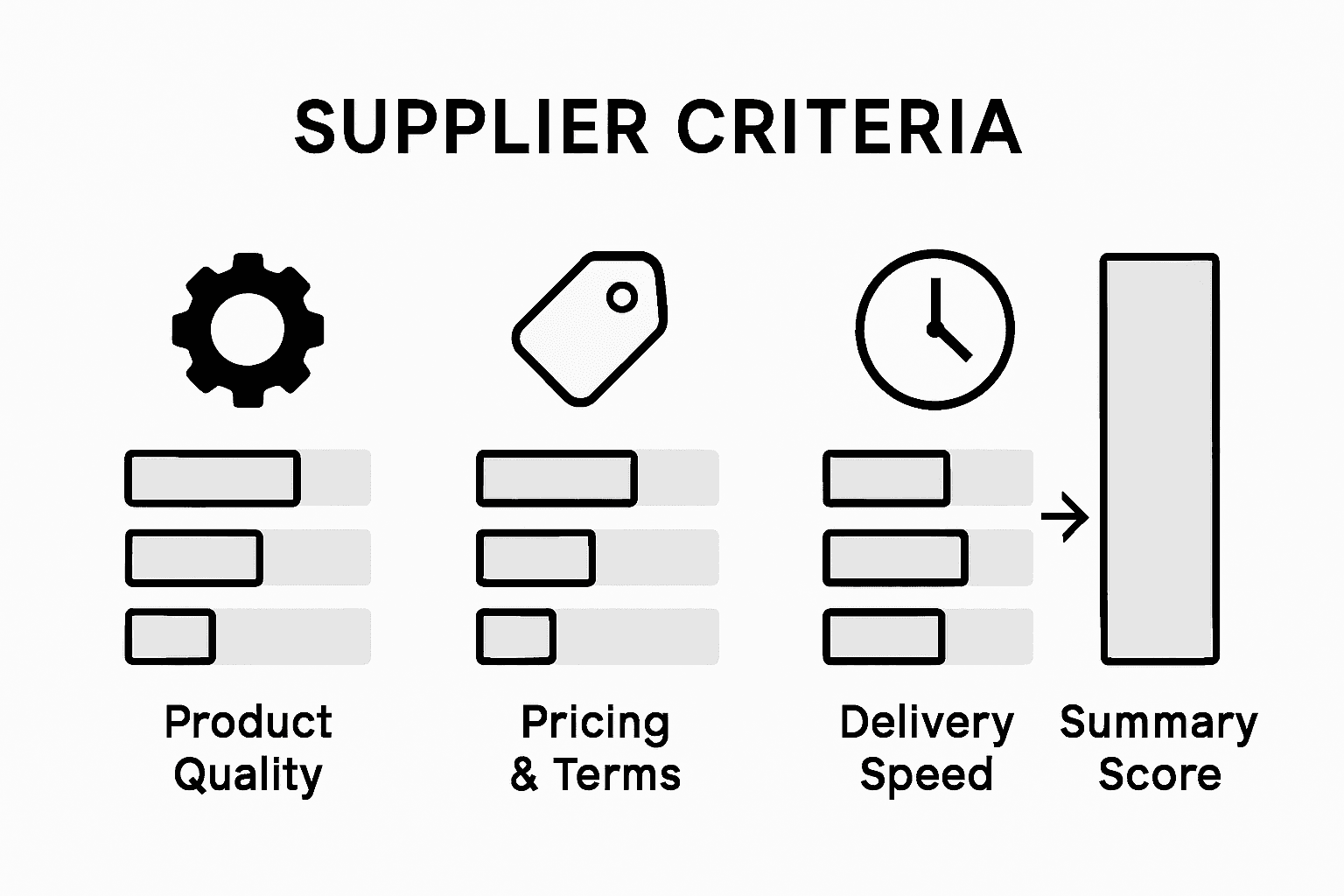
Start by creating a comprehensive evaluation matrix that tracks key supplier metrics including product quality, pricing structures, inventory depth, shipping capabilities, and customer support responsiveness. Research potential suppliers through industry trade publications, agricultural equipment conferences, online distributor directories, and professional networking platforms. Request detailed product catalogs, pricing sheets, and sample component specifications from multiple vendors to enable side by side comparisons.
Pay special attention to suppliers who demonstrate expertise in your specific tractor makes and models. Look for vendors offering technical support, warranty coverage, and flexible ordering options. Assess their inventory management systems, average order fulfillment times, and return policies. Consider establishing relationships with multiple suppliers to mitigate potential supply chain disruptions and create competitive pricing leverage.
Pro Tip: Create a standardized supplier assessment scorecard that objectively ranks potential wholesale partners across multiple performance criteria, enabling data driven vendor selection decisions.
Here’s a summary of key criteria to evaluate when selecting wholesale tractor part suppliers:
| Evaluation Criteria | Why It Matters | Example Considerations |
|---|---|---|
| Product Quality | Ensures reliable equipment operation | Certifications, customer feedback |
| Inventory Depth | Reduces wait times for critical parts | Range of stocked parts, availability |
| Technical Support | Assists with fit and troubleshooting | Access to experts, response time |
| Pricing Structure | Helps control procurement costs | Bulk discounts, transparent pricing |
| Shipping Capabilities | Impacts downtime and logistics | Delivery speed, tracking options |
| Return & Warranty Policy | Protects against defective products | Warranty terms, simple returns |
Step 3: Register for B2B and Set Up Wholesale Accounts
Registering for business to business wholesale accounts is a critical step in establishing your agricultural equipment parts procurement strategy. This process requires careful preparation and attention to detail to ensure smooth account setup and ongoing vendor relationships.
Begin by gathering essential business documentation, including your tax identification number, business registration certificates, and proof of compliance with industry equipment standards. Most wholesale suppliers will require comprehensive company information, including your business type, annual purchasing volume, specific equipment needs, and operational history. Prepare a professional business profile that highlights your company’s credibility and long term growth potential in the agricultural equipment sector.
Carefully review each supplier’s specific B2B registration requirements, which often involve submitting online applications, providing financial references, and potentially undergoing a credit check. Some wholesale suppliers may require additional documentation such as proof of business longevity, equipment usage records, or recommendations from current industry partners. Create a standardized digital folder containing all necessary documents to streamline the application process across multiple suppliers.
Pro Tip: Develop a dedicated business email address and professional contact system specifically for wholesale purchasing to enhance your company’s perceived reliability and organizational efficiency.
Step 4: Place Bulk Orders and Confirm Availability
Successfully navigating bulk orders for wholesale tractor parts requires a strategic approach that balances precision, communication, and careful inventory management. Your primary goal is to secure the right components while minimizing potential supply chain disruptions.
Begin by developing a comprehensive equipment inspection and verification checklist that accompanies your bulk order process. Create detailed purchase orders that specify exact part numbers, quantities, compatibility specifications, and required delivery timelines. Contact your selected wholesale suppliers directly to confirm real time inventory availability, potential lead times, and any volume discount opportunities that might apply to your specific order size.
Implement a robust tracking system to monitor your bulk order progression from initial placement through final delivery. Request written confirmations for each component, including detailed specifications, warranty information, and expected shipping dates. Consider establishing direct communication channels with supplier representatives who can provide immediate updates on order status and quickly address any potential complications or inventory challenges that might emerge during the procurement process.
Pro Tip: Develop a digital tracking spreadsheet with color coded status indicators to provide instant visibility into the progress of multiple bulk orders across different suppliers.
Step 5: Verify Delivery, Quality, and Transaction Details
Careful verification of wholesale tractor part deliveries is crucial to ensuring your operational integrity and protecting your significant investment. This final step requires meticulous attention to detail and a systematic approach to quality control.
Begin by conducting a comprehensive physical inspection of each delivered component, cross referencing the technical performance specifications and equipment analysis with your original order documentation. Carefully unpack each item, examining for any shipping damage, manufacturing defects, or discrepancies in part numbers, dimensions, and compatibility. Utilize a structured verification checklist that documents each component’s condition, matching the received items exactly against your original purchase order specifications.
Document every aspect of the transaction with photographic evidence and detailed written records. Immediately communicate any discrepancies or quality concerns to the supplier, providing clear photographic documentation and specific descriptions of identified issues. Maintain a digital file of all delivery documentation, including shipping manifests, invoices, warranty information, and inspection notes to establish a comprehensive record of your wholesale procurement process.
Pro Tip: Develop a standardized digital inspection form with dropdown menus and photo upload capabilities to streamline your quality verification process and create a consistent documentation workflow.
The following table illustrates essential documentation needed across the procurement process and its purpose:
| Document Type | Purpose | Who Uses It |
|---|---|---|
| Equipment Maintenance Logs | Track repair history & service schedule | Operations & Procurement |
| Product Specifications | Match correct parts to machinery | Procurement & Mechanics |
| Supplier Contracts | Clarify order terms and coverage | Management & Procurement |
| Proof of Compliance Certificates | Validate industry/legal requirements | Legal & Supplier Relations |
| Digital Inspection Forms | Standardize delivery quality checks | Receiving & Quality Control |
Streamline Your Wholesale Tractor Parts Procurement with Pexlivanidis.com
Managing the complex process of sourcing wholesale tractor parts demands precision and reliable supply to avoid costly downtime and costly mismatches. As highlighted in the guide Complete Guide to Wholesale Tractor Parts for Businesses, understanding detailed component requirements and verifying quality are critical. Many businesses struggle with supplier reliability, bulk order coordination, and accurate inventory tracking—issues that can disrupt agricultural operations and inflate costs.
At Pexlivanidis.com, we address these exact pain points by offering an extensive inventory of over 20,000 tractor parts, backed by transparent availability and bulk purchasing options designed for B2B customers. Whether you need quick fulfillment or expert assistance assessing part compatibility with your machinery, our platform provides professional support to reduce supply chain uncertainty. Explore our streamlined registration process, take advantage of free shipping in Greece on orders over 100€, and gain access to exclusive wholesale benefits tailored to your operational demands.
Don’t let broken parts slow you down. Visit Pexlivanidis.com now to browse comprehensive product listings, experience easy ordering, and secure your tractor parts with confidence. Prepare your business for smooth maintenance cycles and uninterrupted productivity by starting your wholesale account setup today.
Frequently Asked Questions
What are the key steps to assess tractor part requirements for my business?
To assess tractor part requirements, start by conducting a pre-operational inspection of your tractors. Create a comprehensive inventory tracking current equipment status, maintenance history, and anticipated replacement needs within your operational framework.
How do I research and compare wholesale tractor parts suppliers effectively?
Research wholesale tractor parts suppliers by creating an evaluation matrix that tracks product quality, pricing, and customer support responsiveness. Request detailed product catalogs and pricing sheets to compare offers transparently, ensuring you select suppliers who understand your specific equipment needs.
What documents do I need to register for B2B wholesale accounts?
To register for B2B wholesale accounts, gather essential business documentation such as your tax identification number, business registration certificates, and proof of compliance with industry standards. Ensure your company profile highlights your credibility and purchasing volume to establish strong relationships with suppliers.
How can I ensure successful placement of bulk orders for tractor parts?
To successfully place bulk orders, develop detailed purchase orders that specify exact part numbers and quantities. Confirm real-time inventory availability with suppliers and implement a tracking system to monitor your order from placement to delivery, aiming to reduce potential disruptions.
What should I check when verifying the delivery of wholesale tractor parts?
When verifying deliveries, conduct a physical inspection of each component and cross-reference them with your original order documentation. Document any discrepancies or quality issues immediately and maintain detailed records to support your procurement process.
How can I streamline quality verification of received parts?
Streamline quality verification by developing a digital inspection form with dropdown menus and photo upload capabilities. This approach will create a consistent documentation workflow and enhance your efficiency when inspecting the condition of delivered parts.