

TL;DR:
- Getting the correct New Holland blue paint is essential for maintaining a professional appearance and avoiding mismatched panels. Using the proper paint code, such as P72, ensures color accuracy, especially when restoring older or newer machines. Proper surface prep, testing, and applying the right mixing ratios are crucial steps for achieving a durable, high-quality finish.
If you’ve ever tried to touch up a New Holland tractor and ended up with a blue that’s just a shade off, you already know how frustrating that is. Getting new holland blue paint right matters more than it seems. The wrong shade looks amateur on a well-maintained machine, and it can actually signal poor upkeep to anyone who knows tractors. With New Holland announcing a shift from its long-standing Sky Blue to the new Dynamic Blue in 2026, the confusion around which color you actually need has never been greater. This guide cuts through that confusion with specifics on color codes, mixing ratios, application technique, and where to buy.
Table of Contents
- Key Takeaways
- History of New Holland blue paint colors
- Technical specs and New Holland blue paint codes
- Matching and applying the paint correctly
- Where to buy New Holland blue paint
- My take on why paint matching is worth your time
- Find the right parts and maintenance support at Pexlivanidis
- FAQ
Key Takeaways
| Point | Details |
|---|---|
| Sky Blue vs. Dynamic Blue | New Holland changed its signature color in 2026, so confirm which shade your machine originally used before buying. |
| Paint code accuracy | Use the paint code (like P72) instead of color names to avoid mismatches when ordering touch-up paint. |
| Mix ratio matters | Professional acrylic enamel kits use an 8:1:1 ratio of paint, hardener, and reducer for a correct high-gloss finish. |
| Test before you commit | Always test paint on a small area or test card first, since aging and surface differences change how color appears. |
| OEM quality pays off | Factory-approved paints deliver better color consistency and durability than generic alternatives. |
History of New Holland blue paint colors
New Holland’s blue has been one of the most recognizable colors in agriculture for decades. Farmers across the world could spot a New Holland machine from a field away, partly because of that distinctive Sky Blue finish. It became as tied to the brand’s identity as Ford red or John Deere green.
That changed at the 2026 National Farm Machinery Show, where New Holland announced Dynamic Blue as its new signature color, replacing the traditional Sky Blue used for generations. The new shade carries a deeper, more premium tone compared to the lighter, almost pastel feel of Sky Blue. It is part of a broader branding push that also standardizes silver rims and color schemes globally across hay tools and tractors.
For anyone restoring an older machine, this matters a great deal. Sky Blue and Dynamic Blue are visibly different hues, and mixing them up on a restoration project will leave you with panels that look mismatched even if they’re both “New Holland blue.”
Here is what you need to know about each era:
- Pre-2026 machines: These used Sky Blue, a lighter, classic shade. Any restoration or touch-up should match that original color specifically.
- 2026 and later machines: Dynamic Blue applies here. It is noticeably richer and deeper in tone.
- Transition period: Machines manufactured in late 2025 through early 2026 may fall in a gray zone. Check the serial number and production date before ordering paint.
- Global consistency: The Dynamic Blue change applies internationally, so sourcing paint from overseas suppliers should still yield a consistent result.
Pro Tip: If you are unsure which era your tractor belongs to, photograph your machine next to a white surface in natural light and compare swatches from both Sky Blue and Dynamic Blue suppliers before committing to a purchase.
Technical specs and New Holland blue paint codes
This is where most people get tripped up. Color names are useful shorthand, but they are not reliable for ordering paint. Two suppliers can both label a product “New Holland Blue” and ship you visibly different results. Paint codes are the only reliable identifiers.
The automotive touch-up code most commonly associated with New Holland Blue is P72. This code is used for products like paint pens and spray kits that range in price from around $19.95 for a basic touch-up pen to $1,299.95 for a full professional kit. However, there is a critical distinction you need to understand before ordering.
Automotive paint codes like P72 are tied to specialized automotive finishes and differ from industrial enamel paints formulated specifically for farm equipment. Automotive touch-up products are designed for vehicle body panels and use different carriers and bonding agents than what farm machinery requires. Using an automotive finish on a tractor can result in poor adhesion, faster chipping, and color that weathers differently under field conditions.
For professional restoration work, you want an industrial-grade acrylic enamel. The 8:1:1 mix ratio used in high-gloss single-stage gallon kits combines paint, wet-look hardener, and reducer in precise proportions to produce a durable, high-sheen finish suited for metal farm equipment.
Where to find paint codes on your machine:
- Door jamb or cab frame: Most New Holland tractors with enclosed cabs have a data plate here.
- Under the hood: Some models carry a sticker near the engine firewall.
- Owner’s manual or service records: If the original documentation is available, codes are often listed there.
- Manufacturer’s parts catalog: For models like the New Holland TN75NA or New Holland T5.120, parts catalogs sometimes include finish specifications.
Product types available vary by job size. Paint pens work for small scratches. Spray cans handle moderate touch-ups. Quart and gallon kits are the right choice for panel-level or full machine restoration.
Matching and applying the paint correctly
Good paint on a poorly prepped surface looks worse than no paint at all. The application process is where amateur jobs fall apart, and it starts well before you open a can.
Step 1: Test your color first. Visual matching from photos or screens is unreliable due to color calibration differences between monitors and real-world surfaces. Always apply a small test patch on a metal test card or a hidden panel area. Let it dry fully before comparing it against the original paint in natural daylight.
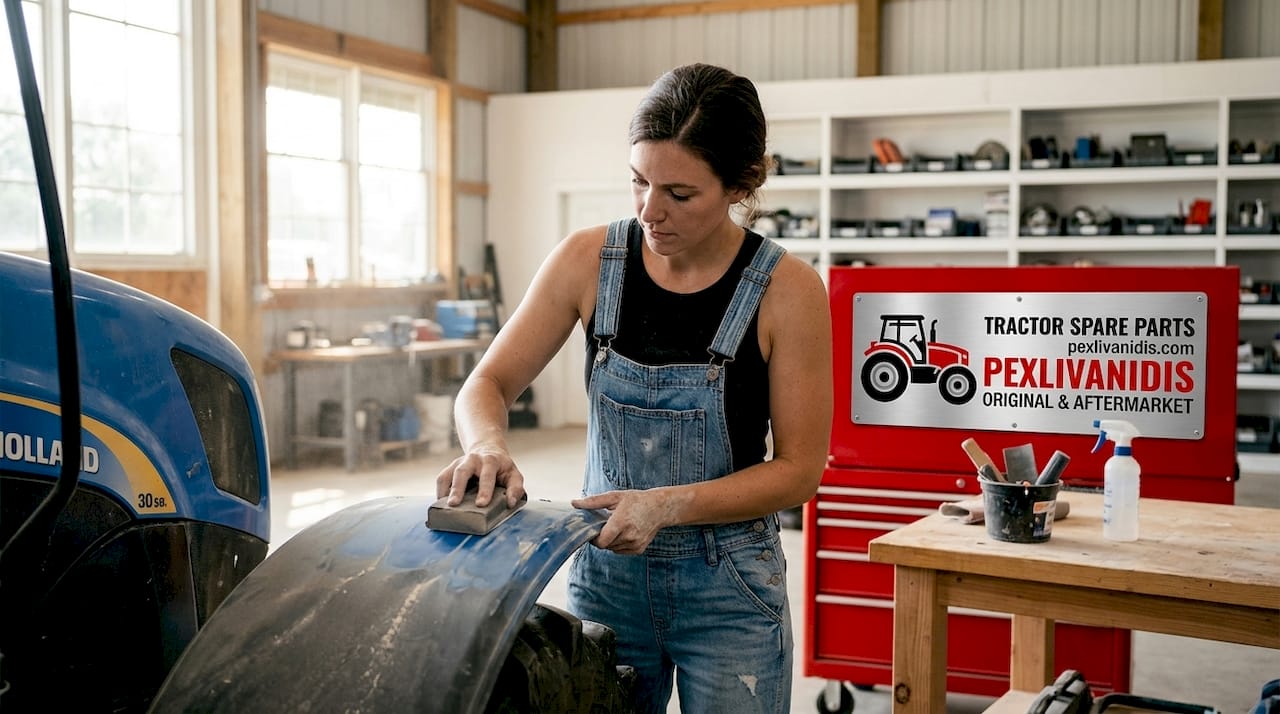
Step 2: Surface preparation. New Holland blue paint has no metallic flakes or pearl pigments, which means it is a solid color that shows every surface imperfection. Sand the repair area through progressively finer grits, typically finishing at 400 to 600 grit. Clean the surface thoroughly with a wax and grease remover before applying anything.
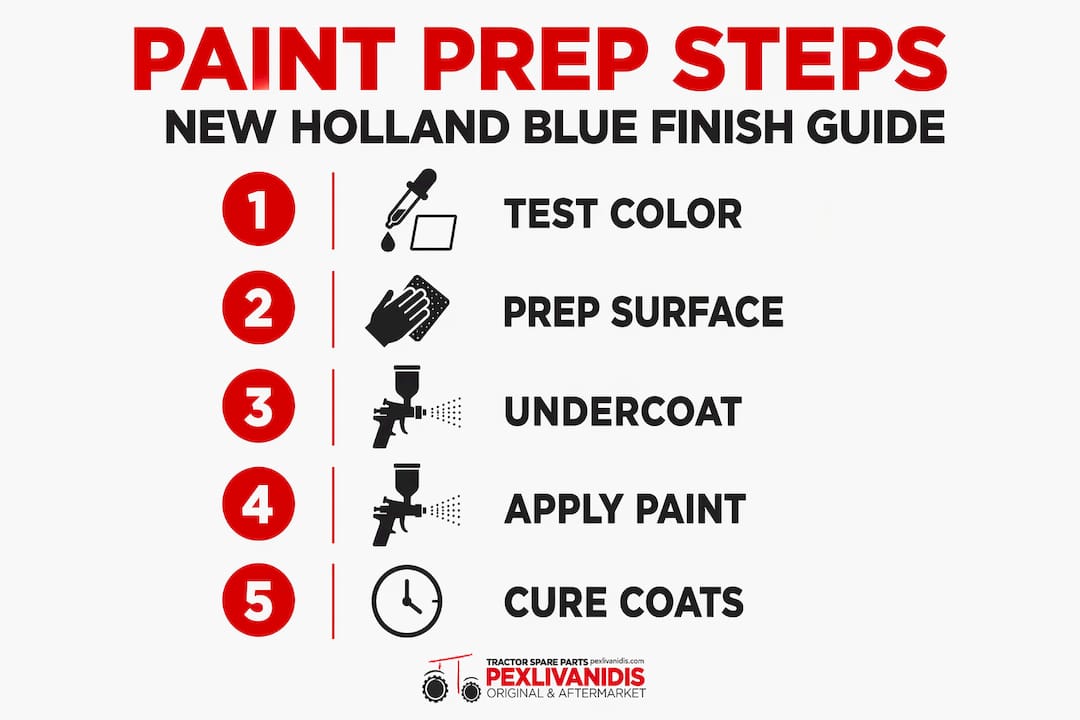
Step 3: Apply the undercoat. Using a dedicated undercoat before the main color coat is not optional if you want accurate color vibrancy. The undercoat creates a uniform base that prevents the existing surface color from bleeding through and affecting the final shade.
Step 4: Mix and apply the color coat. For professional acrylic enamel kits, use the 8:1:1 ratio. Apply in thin, even layers rather than one heavy coat. Heavy single coats cause runs, uneven sheen, and longer drying times. If you are using a spray can, shake it for at least 60 seconds before use, and maintain a consistent distance of roughly 10 to 12 inches from the surface.
Step 5: Let each coat cure properly. Rushing between coats traps solvents and causes blistering later. Follow the manufacturer’s cure time, especially in cool or humid weather.
| Method | Best for | Finish quality | Approximate cost |
|---|---|---|---|
| Touch-up pen | Small scratches, chips | Acceptable | $20 to $40 |
| Aerosol spray can | Moderate touch-ups | Good | $25 to $60 |
| Quart acrylic enamel kit | Panel repairs | Very good | $80 to $150 |
| Gallon acrylic enamel kit | Full machine restoration | Professional | $200 to $600 |
Pro Tip: On solid-color paints like New Holland Blue, blend your repair into a larger area rather than stopping at a hard edge. This hides the transition and makes the repair invisible from normal viewing distance.
Where to buy New Holland blue paint
Finding paint is easy. Finding the right paint from a source you can trust takes more thought.
Specialty automotive and equipment paint suppliers carry the P72 code products in multiple formats. Online platforms like PaintScratch stock a full range from touch-up pens to full gallon kits. Industrial paint suppliers often stock single-stage enamel kits designed specifically for agricultural and construction equipment, which are better suited for farm machinery than consumer-grade aerosols.
Before buying from any supplier, verify these factors:
- OEM or factory-approved labeling: OEM-approved paint products provide color consistency and durability that generic alternatives rarely match.
- Paint code clearly stated: The listing should explicitly show the code (P72 or equivalent) rather than relying solely on a color name.
- Product type matches your job: Automotive basecoats are not industrial enamels. Read the product description, not just the color name.
- Supplier reputation: Look for suppliers with customer photos showing real application results, not just rendered color swatches.
Price ranges across product types vary significantly. Touch-up pens start around $20. Spray cans run $25 to $60. A professional single-stage gallon paint kit ranges from $200 to over $600 depending on the brand and included components.
One common trap is relying on color-matching services at local hardware or paint stores. These services work well for interior wall colors, but they are not calibrated for agricultural equipment paints and frequently produce results that are close but visibly off once applied to aged metal surfaces. Stick to dedicated equipment paint suppliers and use paint codes instead of color name descriptions.
My take on why paint matching is worth your time
I’ve watched farmers spend weeks restoring a tractor only to slap on a coat of paint that was close but not quite right, and then quietly regret it every time someone looked at the machine. The color is the first thing people see. It communicates how seriously you take your equipment.
In my experience, the biggest mistake is treating paint as the last, easy step. It gets rushed because everything else is finished and you just want the machine back in service. That is exactly when you make the error of ordering by color name instead of code, or skipping the test patch, or not using a proper undercoat.
What I’ve learned is that accurate paint matching is really just accurate preparation. If you take the time to confirm whether your machine needs Sky Blue or Dynamic Blue, find the correct paint code, test a patch, and prep the surface properly, the final result is almost guaranteed to be good. Cut any one of those steps and you are rolling the dice.
There is also something worth saying about pride of ownership. A tractor that looks right tells your neighbors, your buyers, and frankly yourself that you run a tight operation. That is not vanity. It is part of professional farming. The paint is maintenance, and maintenance is reputation.
— George
Find the right parts and maintenance support at Pexlivanidis
Restoring or maintaining a New Holland tractor goes well beyond paint. At Pexlivanidis, you will find an inventory of over 20,000 agricultural machinery parts covering tractors from New Holland, Ford, Massey Ferguson, and more. Whether you are sourcing parts for a full restoration or keeping a working machine in top shape, the platform supports both retail and wholesale orders, with free shipping within Greece on orders over 100€.
For guidance on what to prioritize during maintenance, the agricultural machinery maintenance guide at Pexlivanidis covers surface care, component inspection, and service schedules in practical terms. You can also explore the types of agricultural machinery parts explained resource to understand what components matter most for long-term reliability. Getting the paint right is one part of keeping your equipment performing and looking its best, and Pexlivanidis is built to support the rest of that work.
FAQ
What is the correct paint code for New Holland Blue?
The most widely used automotive touch-up code for New Holland Blue is P72. For industrial applications on farm equipment, confirm whether you need an automotive basecoat or an industrial acrylic enamel, as these are different product types despite sharing the same color reference.
What is the difference between Sky Blue and Dynamic Blue?
Sky Blue is the original New Holland color used on machines built before 2026. Dynamic Blue is the updated shade announced at the 2026 National Farm Machinery Show. The two colors have notably different hues, with Dynamic Blue being deeper and richer in tone.
How do I mix New Holland blue paint for a professional finish?
Professional single-stage acrylic enamel kits use an 8:1:1 ratio of paint, hardener, and reducer. Apply the mixture in thin, even coats rather than a single heavy application to avoid runs and achieve a consistent high-gloss finish.
Where can I buy authentic New Holland blue paint?
Specialty agricultural and automotive paint suppliers stock New Holland Blue in formats ranging from touch-up pens to gallon kits. Always verify the paint code is listed explicitly and that the product type matches your application, whether automotive or industrial enamel.
Why does my touch-up paint look different from the original?
Solid-color paints like New Holland Blue show surface and aging differences very clearly. Screen-based color comparisons are unreliable. Test any paint on a small hidden area in natural daylight before applying it to the full repair zone.