

Choosing the right replacement parts can be the difference between smooth harvests and costly breakdowns for agricultural professionals across Northern Greece. With today’s machinery growing more complex, understanding the value of Original Equipment Manufacturer (OEM) parts becomes a top priority for wholesalers and repair specialists. This guide breaks down the distinct advantages of OEM parts over aftermarket alternatives, helping you safeguard reliability, warranty coverage, and the long-term performance of every essential piece of equipment.
Table of Contents
- Defining OEM in Machinery Parts
- OEM Versus Aftermarket Parts Explained
- Sourcing Genuine OEM Parts Effectively
- Risks of Using Non-OEM Machinery Parts
- OEM Impact on Machinery Longevity and Warranty
Key Takeaways
| Point | Details |
|---|---|
| OEM Importance | Choosing Original Equipment Manufacturer parts guarantees high quality, precise engineering, and system compatibility in agricultural machinery. |
| OEM vs. Aftermarket | OEM parts ensure better reliability and equipment value, while aftermarket parts may save costs but introduce risks of inefficiency and increased maintenance. |
| Sourcing Strategies | Verify manufacturer authenticity and assess compatibility and warranty options when sourcing genuine OEM parts for optimal machinery performance. |
| Warranty Benefits | OEM warranties offer comprehensive protection and support, enhancing long-term equipment reliability and reducing unexpected repair costs. |
Defining OEM in Machinery Parts
An Original Equipment Manufacturer (OEM) plays a critical role in agricultural machinery maintenance and repair, representing companies that produce original parts designed specifically for specific equipment systems. Original manufacturing specifications ensure precision and compatibility across complex agricultural machinery.
OEM parts have several distinctive characteristics that set them apart from alternative components:
- Manufactured by the original equipment producer
- Designed with exact specifications matching original machinery
- Guaranteed high-quality production standards
- Engineered for seamless system integration
- Maintain manufacturer’s performance and reliability expectations
Understanding OEM components requires recognizing their strategic importance in agricultural equipment maintenance. Manufacturing component standards represent a sophisticated process where manufacturers create precise parts enabling companies to focus on core design and marketing objectives.
The relationship between agricultural equipment manufacturers and OEM part producers represents a sophisticated engineering ecosystem. These specialized manufacturers develop components that meet rigorous performance standards, ensuring farmers can maintain complex machinery with reliable, purpose-built replacement parts.
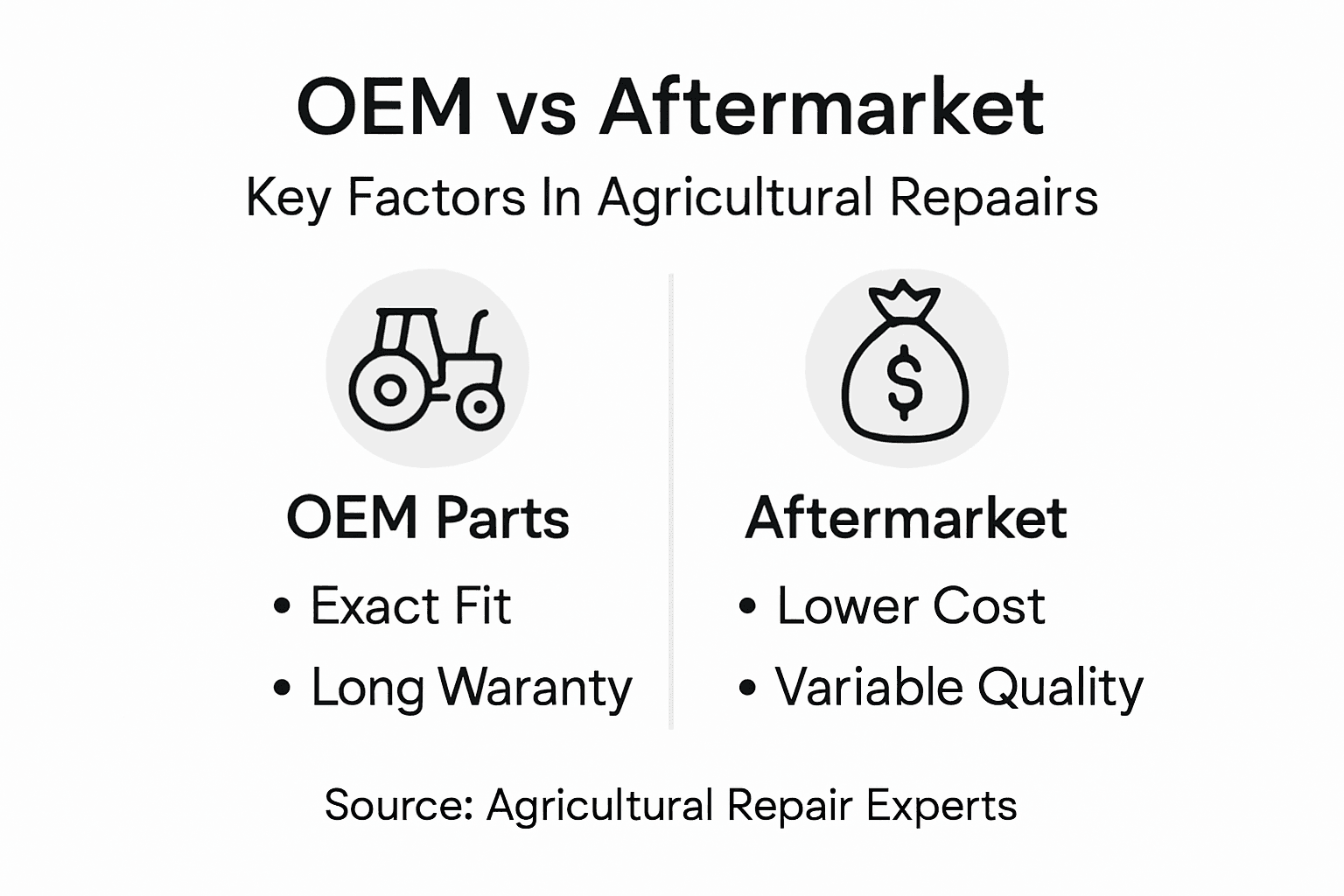
Pro tip: When selecting replacement parts for agricultural equipment, always verify the OEM certification to guarantee optimal machinery performance and system compatibility.
OEM Versus Aftermarket Parts Explained
Agricultural machinery maintenance involves critical decisions between Original Equipment Manufacturer (OEM) and aftermarket parts. Critical component selection criteria play a pivotal role in determining equipment reliability and long-term performance.
Key differences between OEM and aftermarket parts include:
- Manufacturing origin
- Quality control standards
- Price point variations
- Warranty coverage
- Performance consistency
- Compatibility with existing machinery
OEM parts represent the gold standard in agricultural equipment maintenance, offering precise engineering and guaranteed compatibility. Component manufacturing standards demonstrate that original manufacturers design parts with exacting specifications, ensuring optimal system integration and performance reliability.
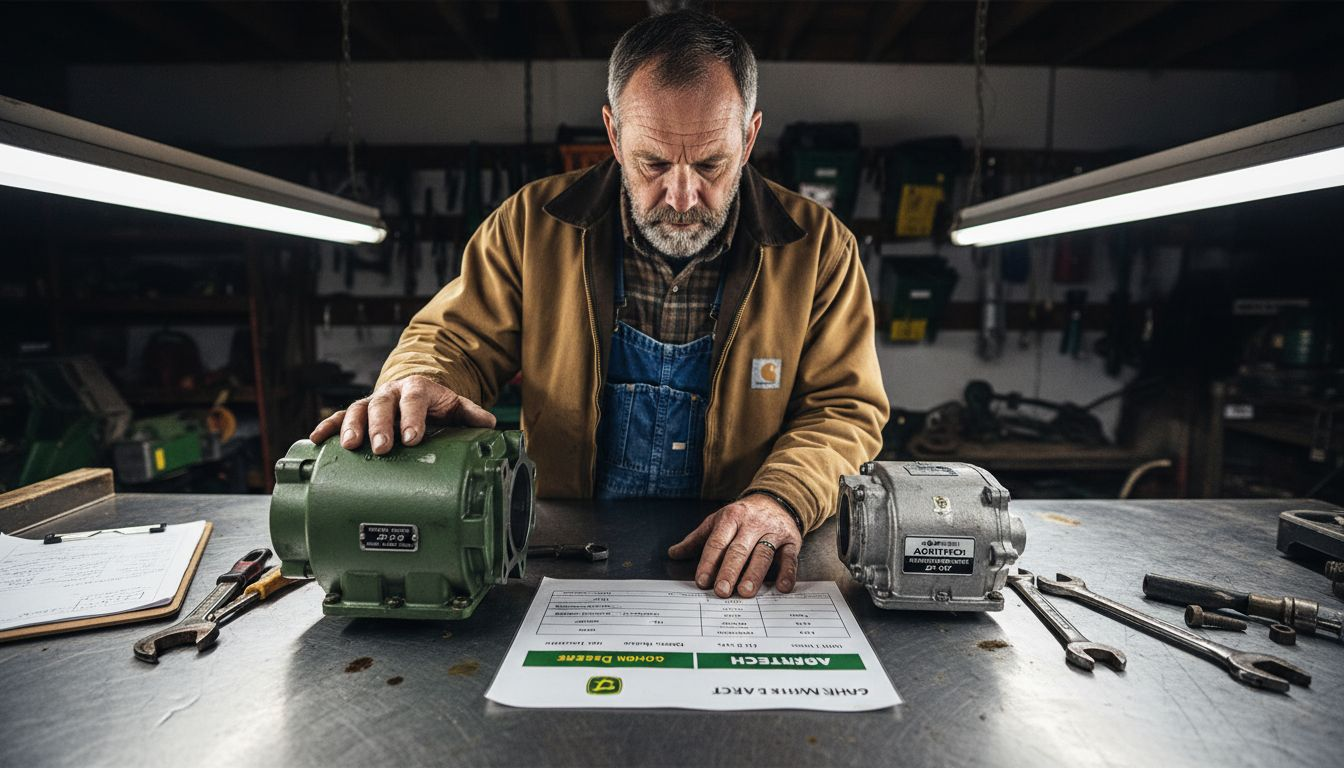
Aftermarket components present a complex alternative for agricultural equipment owners. While typically more affordable, these third-party parts introduce potential risks related to fit, durability, and long-term machinery performance. Farmers must carefully evaluate their specific equipment needs, budget constraints, and risk tolerance when selecting between OEM and aftermarket replacement parts.
The following table contrasts the real-world impact of OEM versus aftermarket parts on agricultural machinery operations:
| Dimension | OEM Parts Benefit | Aftermarket Parts Drawback |
|---|---|---|
| Machinery Downtime | Minimal, predictable | Increased, risk of fit issues |
| Long-Term Cost | Lower, due to reliability | Higher, more frequent repairs |
| Equipment Value | Maintains resale value | Can decrease resale appeal |
| Support Availability | Full, from manufacturer | Limited, varies by supplier |
Pro tip: Always compare warranty terms and potential long-term repair costs when deciding between OEM and aftermarket parts to make the most economically sound maintenance decision.
Sourcing Genuine OEM Parts Effectively
Successful agricultural equipment maintenance hinges on strategically sourcing genuine parts that optimize machinery performance and reliability.
Key strategies for effective OEM parts sourcing include:
- Verify manufacturer authenticity
- Check comprehensive part specifications
- Confirm compatibility with existing equipment
- Evaluate warranty and technical support options
- Consider long-term maintenance implications
- Compare pricing across authorized distributors
Companies must develop comprehensive sourcing strategies that prioritize equipment longevity and operational efficiency. Genuine parts optimization involves more than simply purchasing replacement components – it requires a holistic approach to machinery maintenance and technological integration.
Modern agricultural equipment owners must navigate complex supply chain dynamics, balancing cost considerations with performance reliability. Authorized dealers, direct manufacturer channels, and specialized agricultural equipment suppliers represent critical resources for securing genuine OEM parts that meet precise engineering specifications.
Pro tip: Develop relationships with authorized OEM part distributors and maintain detailed maintenance records to streamline future parts sourcing and equipment support.
Risks of Using Non-OEM Machinery Parts
Agricultural equipment owners face substantial risks when choosing non-OEM replacement parts, with potential consequences that extend far beyond immediate cost savings. Non-original parts risks can compromise machinery performance and create significant operational challenges.
Key risks associated with non-OEM machinery parts include:
- Potential warranty invalidation
- Compromised equipment safety
- Increased likelihood of mechanical failures
- Reduced operational efficiency
- Higher long-term maintenance expenses
- Potential legal and insurance complications
Beyond immediate technical concerns, critical system integrity represents a fundamental challenge with non-original parts. These components may appear visually identical but frequently lack critical engineering specifications that ensure reliable machinery performance, potentially introducing hidden structural weaknesses.
Manufacturers invest significant resources in designing precise mechanical interfaces and performance standards. Non-OEM parts often represent cost-cutting alternatives that can introduce unpredictable variables into complex agricultural machinery systems, potentially creating safety risks and operational disruptions.
Pro tip: Always request comprehensive documentation and performance certifications when considering alternative parts to validate their compatibility and reliability.
OEM Impact on Machinery Longevity and Warranty
Original Equipment Manufacturer (OEM) warranties represent a critical mechanism for ensuring agricultural machinery performance and reliability. Warranty service strategies provide farmers with essential protections and quality assurances for complex equipment investments.
Key components of OEM warranty impact include:
- Comprehensive defect protection
- Performance guarantee mechanisms
- Customer trust enhancement
- Long-term equipment reliability
- Technical support infrastructure
- Maintenance guideline compliance
The intricate relationship between warranty management challenges demonstrates how manufacturers balance technological innovation with durability commitments. Global supply chain complexities and increasing product sophistication create nuanced challenges for maintaining consistent warranty standards across agricultural machinery platforms.
Modern agricultural equipment warranties extend beyond simple repair coverage, representing sophisticated risk management strategies. Manufacturers increasingly design comprehensive warranty programs that incentivize proper maintenance, track equipment performance, and provide structured support for complex machinery systems.
Here’s a quick reference summarizing OEM warranty program advantages for agricultural equipment owners:
| Warranty Feature | OEM Coverage Advantage |
|---|---|
| Repair Cost Control | Predictable, covered for most failures |
| Service Provider Access | Certified, highly trained technicians |
| Claim Processing Speed | Fast, streamlined with accurate records |
| Parts Compatibility | Guaranteed, maintains system integrity |
Pro tip: Meticulously document all maintenance activities and retain original service records to maximize warranty protection and equipment longevity.
Secure Reliable Agricultural Repairs with Genuine OEM Parts
Choosing the right replacement parts is critical to maintaining your agricultural machinery’s performance and longevity. The article highlights the challenges of using non-OEM components that can lead to increased downtime, higher repair costs, and warranty issues. These pain points underscore the importance of sourcing parts that meet original equipment manufacturer specifications and come with dependable warranties.
At Pexlivanidis, we understand these challenges deeply. Our extensive inventory of over 20,000 genuine tractor accessories and spare parts ensures you get precisely engineered components for seamless system integration and lasting reliability. Whether you are a retail customer or a B2B member, enjoy the benefits of free shipping within Greece on orders over 100€ and expert support tailored to protect your investment. Explore our product listings to find the exact OEM parts you need now and safeguard your agricultural equipment’s performance and warranty.
Don’t risk operational disruptions or invalidated warranties by settling for less. Act now and experience peace of mind with quality parts backed by authenticity and service excellence from Pexlivanidis. Your agricultural machinery deserves nothing less.
Frequently Asked Questions
What is the definition of an Original Equipment Manufacturer (OEM) in machinery parts?
An Original Equipment Manufacturer (OEM) refers to companies that produce original parts designed specifically for certain equipment systems, ensuring compatibility and precision for agricultural machinery.
What are the advantages of using OEM parts over aftermarket parts in agricultural machinery?
OEM parts are manufactured by the original equipment producer with exact specifications, ensuring high-quality production standards, guaranteed compatibility, and optimal performance reliability, which reduces long-term maintenance costs and machinery downtime.
What risks do non-OEM parts pose to agricultural machinery?
Using non-OEM parts can lead to compromised equipment safety, increased likelihood of mechanical failures, potential warranty invalidation, and higher long-term maintenance expenses due to reduced operational efficiency and possible legal complications.
How do OEM warranties impact the maintenance of agricultural machinery?
OEM warranties provide comprehensive defect protection and performance guarantees, enhancing customer trust and ensuring long-term equipment reliability, while also offering technical support and guidelines for proper maintenance.