

TL;DR:
- Seasonal maintenance tasks are scheduled inspections designed to prevent breakdowns and preserve equipment value throughout the farming calendar. Farmers who adhere to a structured upkeep routine reduce unplanned downtime during critical periods, utilizing checklists, telematics, and engine-hour intervals for timely servicing. Proper fall, spring, and summer maintenance, combined with proactive planning and parts inventory, ensures machinery readiness and minimizes costly repairs.
Seasonal maintenance tasks for agricultural machinery are scheduled inspections and services aligned with the farming calendar to prevent breakdowns, protect equipment value, and keep operations running at full capacity. Farmers who follow a structured seasonal upkeep guide reduce unplanned downtime during the most demanding periods of the year, including planting, harvest, and winter storage. A tractor maintenance checklist covering 38 critical inspection points addresses every known failure mode that has caused injury or loss on working farms. This guide covers every season with specific, actionable steps built around engine-hour intervals, condition-based triggers, and telematics tools like JDLink.
1. What are the essential seasonal maintenance tasks for spring preparation?
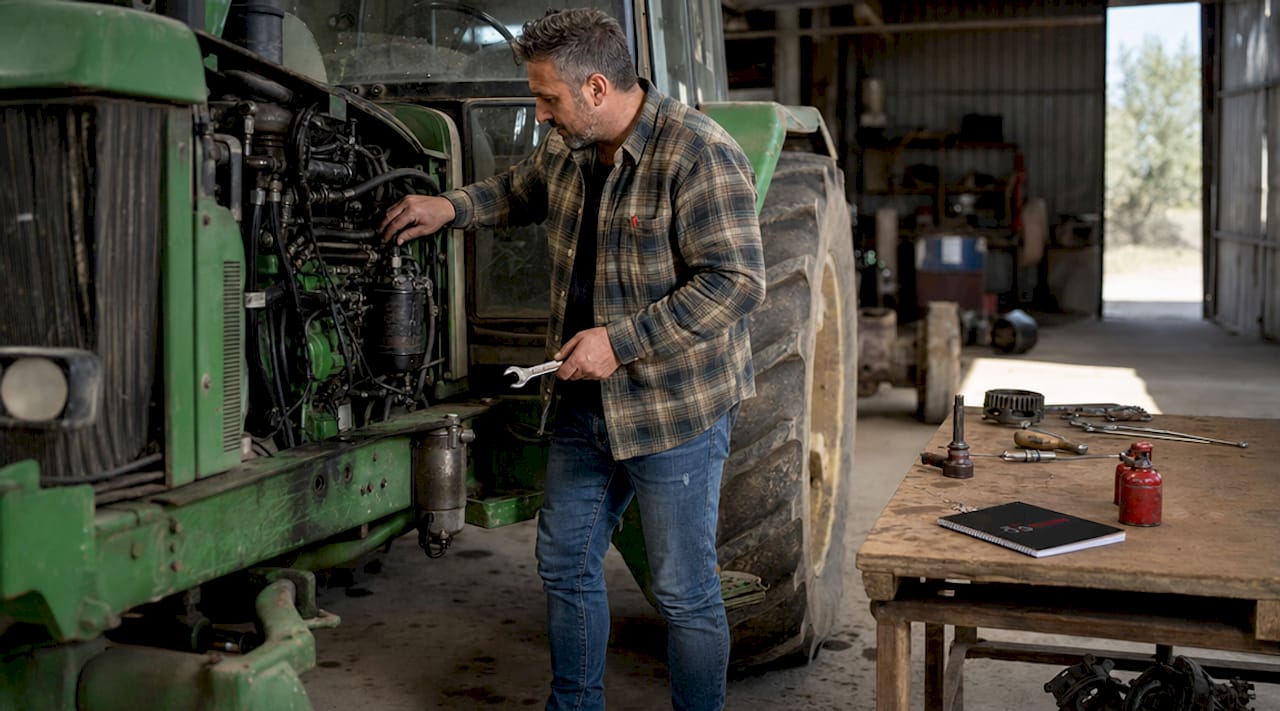
Spring preparation is the most consequential set of seasonal maintenance tasks you will perform all year. Equipment that sat through winter storage carries hidden risks: condensation in fuel systems, battery discharge, and dried-out seals. A 5-minute pre-start walk-around before the first field run of the season prevents 70 to 80 percent of common equipment breakdowns. That single habit pays for itself the first time it catches a cracked belt or low hydraulic fluid before you are two hours into a field.
Here is the full spring preparation checklist every farmer should run through:
- Fluid levels: Check engine oil, coolant, hydraulic fluid, and transmission fluid. Replace any fluid that looks dark, milky, or contaminated.
- Fuel and air filters: Replace fuel filters and air filters if they were not changed at winter storage. Clogged filters restrict flow and force the engine to work harder.
- Belts, rollers, and tensioners: Small cracks or abrasions cause belt failure under field load. Inspect every belt for fraying, glazing, or tension loss.
- Hydraulic system under load: Connect implements and test the hydraulic system under actual working pressure. Hydraulic leaks and pump wear only reveal themselves under load, not at idle.
- Battery terminals: Clean corrosion from terminals, check voltage, and load-test the battery. A battery that reads 12.4 volts at rest may still fail under starter load.
- Tire pressure and condition: Adjust pressure to manufacturer specs for field use. Inspect sidewalls for cracking from cold storage.
- Lighting and brakes: Test all field and road lights. Check brake pedal travel and response before any road transport.
- Grease points: Lubricate all chassis grease fittings, PTO shafts, and pivot points. Dry joints wear rapidly once fieldwork begins.
- Software diagnostics: Run a fault code scan using telematics platforms like JDLink or equivalent systems to catch electronic issues before they become field failures.
- Spare parts inventory: Stock critical wear items including filters, belts, fuses, and hydraulic fittings before the season starts. Mid-season sourcing delays cost more than the parts themselves.
Pro Tip: Run your tractor pre-season preparation at least two weeks before your first planned field day. That window gives you time to order parts without paying expedited shipping.
2. How to maintain farm equipment during summer for harvesting efficiency
Summer maintenance focuses on heat management and dust control. Combine harvesters, tractors, and sprayers all face peak stress during harvest, and the consequences of a breakdown during a narrow harvest window are severe. The following numbered steps cover the core summer repair tasks in order of priority.
- Cooling system maintenance. Flush and inspect the radiator, check coolant concentration, and clear debris from the radiator fins daily during harvest. Overheating is the leading cause of summer engine failures.
- Air filter replacement. Dusty harvest conditions clog air filters faster than any other season. Check filter restriction indicators daily and replace filters more frequently than the standard interval suggests.
- Tire pressure monitoring. Heat increases tire pressure. Check pressure in the morning before the tires warm up, and adjust to the correct field or road specification. Over-inflation on hard ground causes premature sidewall cracking.
- Belt and chain inspection. Heat accelerates wear on drive belts and roller chains. Inspect for stretch, cracking, and proper tension every 50 operating hours during harvest.
- Chassis lubrication. Grease all pivot points and moving parts every 10 hours during heavy harvest use. Heat reduces grease viscosity, and dry joints wear at an accelerated rate.
- Operator cab systems. Test air conditioning refrigerant charge and cabin filter condition. Operator fatigue from heat directly increases the risk of operating errors and accidents.
- Oil and filter changes on schedule. Follow engine-hour based intervals rather than calendar time during heavy use. A combine running 12-hour days may hit a 250-hour oil change interval in three weeks.
- Electrical connection inspection. Vibration and heat loosen connectors and corrode terminals. Check alternator output, battery connections, and sensor wiring every 100 hours.
Pro Tip: Keep a field maintenance kit on every machine during harvest. Include spare filters, belts, fuses, grease cartridges, and basic hand tools. Fixing a belt in the field in 20 minutes beats waiting three hours for a service truck.
3. What fall maintenance tasks are crucial for winterizing agricultural machinery?
Fall maintenance tasks are the foundation of winter preparation. Equipment that goes into storage without proper servicing comes out in spring with corroded components, degraded fluids, and pest damage. Winterizing farm vehicles requires protecting every vital system against cold, moisture, and inactivity.
The critical fall checklist includes:
- Tire inspection: Check for dry rot, sidewall cracks, and tread wear. Replace tires that show structural damage before storage. Cold temperatures make existing cracks worse.
- Engine belts: Tighten or replace worn belts before storage. A belt that barely passes a summer inspection will fail after months of cold-induced contraction.
- Fluid stabilization: Top off engine oil, hydraulic fluid, coolant, and transmission fluid. Add diesel fuel stabilizer to prevent gelling and microbial growth in the tank over winter.
- Battery care: Fully charge batteries before storage. Disconnect terminals on machines stored for more than 60 days, or connect a maintenance charger to prevent sulfation.
- Lubrication of all moving parts: Grease every fitting to displace moisture and prevent corrosion. Pay particular attention to PTO shafts, three-point hitch pins, and loader pivot points.
- Implement preparation: Clean all implements thoroughly, retract hydraulic cylinder rods fully, and coat exposed rod surfaces with a light film of grease or corrosion inhibitor.
- Exhaust and intake sealing: Plug the exhaust outlet and air intake with foam or a fitted cap to prevent rodents from nesting in the intake tract or muffler.
- Final diagnostics and documentation: Run a full fault code scan and record all maintenance performed. This documentation supports warranty claims, insurance records, and spring planning.
The table below compares the consequences of completing versus skipping key fall maintenance tasks:
| Fall task | Completed | Skipped |
|---|---|---|
| Fuel stabilization | Clean fuel system in spring | Gelled fuel, injector damage |
| Battery maintenance | Ready to start in spring | Dead or sulfated battery |
| Cylinder rod protection | No corrosion on seals | Seal damage, hydraulic leaks |
| Pest sealing | Clean intake and exhaust | Rodent nest, engine damage |
| Fluid top-off | No condensation in systems | Fluid acidification, corrosion |
4. How to organize preventive maintenance with engine-hour intervals and telematics
Preventive maintenance (PM) in agricultural equipment follows a multi-trigger approach combining engine hours, calendar time, and condition-based signals. Relying solely on the hour meter is a documented mistake. Dual-trigger maintenance requires both engine hours and calendar time because fluids degrade chemically even when a machine sits idle. The standard rule for engine oil is a change at 250 engine hours or 6 months, whichever comes first.
John Deere’s PM tier structure, which reflects industry-wide standards, organizes service intervals as follows:
| Service interval | Key tasks |
|---|---|
| 250 hours / 6 months | Engine oil and filter, fuel filter, grease all points |
| 500 hours / 12 months | Hydraulic filter, transmission filter, coolant check |
| 1,000 hours / 2 years | Air filter replacement, belt inspection, full diagnostics |
| 2,000 hours / 4 years | Hydraulic fluid flush, transmission fluid, coolant flush |
John Deere specifies Plus-50 II engine oil, Hy-Gard hydraulic fluid, and Cool-Gard II coolant for warranty compliance. Using off-spec fluids at any interval voids coverage and accelerates wear.
Telematics platforms like JDLink change the maintenance equation by providing real-time data on fault codes, fuel consumption, and engine hours across your entire fleet. Using telematics transforms maintenance from reactive fixes into predictive scheduling based on actual machine wear. A tractor that runs 400 hours in spring planting needs its 500-hour service in early summer, not in fall when the calendar says so.
“Critical farm equipment should undergo deep diagnostics before peak seasons, while low-use assets require minimal inspections.” This 3-tier maintenance allocation prioritizes return on investment and prevents over-servicing low-priority machines while protecting your highest-value assets.
One more risk that farmers consistently underestimate: idle tractors face more sudden failures than those used regularly. Stagnation causes fluid acidification and condensation buildup in fuel systems. A machine that sat unused for four months needs the same attention as one that just completed a full harvest season. Learn more about organizing farm machinery checks around your specific operational calendar to build a schedule that fits your farm’s reality.
Key takeaways
Effective seasonal maintenance for farm machinery requires combining engine-hour intervals, calendar triggers, and telematics data to prevent breakdowns before they happen.
| Point | Details |
|---|---|
| Spring preparation is highest priority | Run a full inspection checklist two weeks before the first field day to allow time for parts sourcing. |
| Hydraulics must be tested under load | Leaks and pump wear only appear under working pressure, not at idle or on a lift. |
| Fall winterizing protects spring readiness | Stabilize fuel, protect cylinder rods, seal openings, and document every service performed. |
| Use dual-trigger PM scheduling | Change engine oil at 250 hours or 6 months, whichever comes first, to prevent acid-induced corrosion. |
| Idle machines still need servicing | Fluid acidification and condensation damage equipment in storage just as real-world use does. |
What I’ve learned from years of watching farmers skip the basics
The most common and costly mistake I see is treating fall maintenance as optional. Farmers finish harvest exhausted, park the equipment, and tell themselves they will sort it out before spring. By March, they are dealing with a gelled fuel system, a dead battery, and a hydraulic seal that corroded because the cylinder rod sat exposed all winter. Every one of those failures was preventable with two hours of work in October.
The second pattern I notice is over-reliance on the hour meter. A tractor that ran 200 hours last season but sat for eight months still needs an oil change. The calendar trigger exists for exactly this reason. Acid buildup in degraded oil does not care whether the engine was running or not.
Telematics adoption among smaller farms is still lower than it should be. JDLink and similar systems are not just for large operations. Even a two-tractor farm benefits from automated hour tracking and fault code alerts. The data removes guesswork and replaces it with a schedule you can actually trust.
My practical advice: build your annual maintenance schedule in January, before the season pressure starts. Assign every machine a service date based on projected hours and calendar limits. Stock the filters, belts, and fluids you will need. When the service date arrives, you have everything on hand and no reason to delay. That discipline, more than any single inspection item, is what separates farms that run reliably from farms that spend harvest season waiting for parts.
— George
Keep your machinery running with Pexlivanidis
Pexlivanidis stocks over 20,000 agricultural machinery parts, including filters, belts, hydraulic components, and tractor accessories, to support every item on your seasonal maintenance checklist. Whether you are preparing for spring planting or winterizing after harvest, having the right parts on hand before the season starts is the difference between a smooth operation and a costly delay. Explore the machinery maintenance guide for detailed service schedules and part specifications, or browse the full catalog of essential machinery parts to identify what your fleet needs before the next season begins. Free shipping within Greece applies to orders over 100€.
FAQ
What are the most critical seasonal maintenance tasks for tractors?
The most critical tasks are pre-season fluid checks, filter replacements, belt inspections, hydraulic load testing, and battery servicing. A full checklist covers 38 inspection points addressing every known failure mode on working farms.
How often should engine oil be changed on farm tractors?
Engine oil should be changed at 250 engine hours or 6 months, whichever comes first. Relying only on the hour meter risks acid-induced corrosion in machines that run low hours but sit for extended periods.
Why do idle tractors fail more often than active ones?
Idle tractors suffer fluid acidification and condensation buildup in fuel systems during storage. A machine parked for four months needs the same fluid and battery attention as one that completed a full harvest season.
What does a fall maintenance checklist for farm equipment include?
Fall maintenance covers tire inspection, belt replacement, fuel stabilization, battery charging, full lubrication, cylinder rod protection, exhaust and intake sealing, and a final fault code diagnostic scan before winter storage.
How does telematics improve farm equipment maintenance?
Telematics platforms like JDLink monitor fault codes, fuel consumption, and engine hours in real time, allowing farmers to schedule maintenance based on actual machine wear rather than fixed calendar dates.