

Most tractors in Greece face costly breakdowns each season, yet routine maintenance can cut repair expenses by up to forty percent. Whether you farm near Thessaloniki or operate in the fields of Kavala, understanding practical american maintenance practices empowers you to keep equipment running longer and avoid unexpected failures. This guide delivers clear steps, actionable tips, and expert insights focused on preserving your investment and saving money year after year.
Table of Contents
- Step 1: Gather Essential Tools And Parts
- Step 2: Inspect Fluids And Filters
- Step 3: Clean And Lubricate Key Components
- Step 4: Check Electrical And Safety Systems
- Step 5: Test Operation And Confirm Results
Quick Summary
| Key Point | Explanation |
|---|---|
| 1. Gather Necessary Tools and Parts | Collect all essential maintenance tools, parts, and safety gear for an efficient repair process. |
| 2. Inspect Fluids and Filters | Regularly check the levels and condition of fluids and filters to prevent equipment breakdowns. |
| 3. Clean and Lubricate Components | Thoroughly clean and lubricate key tractor parts to ensure smooth operation and prevent wear. |
| 4. Check Electrical and Safety Systems | Regularly evaluate electrical connections and safety features to ensure operator safety and reliable performance. |
| 5. Test Operation After Maintenance | Conduct a complete operational test post-maintenance to verify systems function correctly and safely. |
Step 1: Gather Essential Tools and Parts
Successful tractor maintenance begins with proper preparation and having the right equipment at your fingertips. Before you start any maintenance work, you will want to collect all necessary tools, replacement parts, and safety gear to ensure a smooth and efficient process.
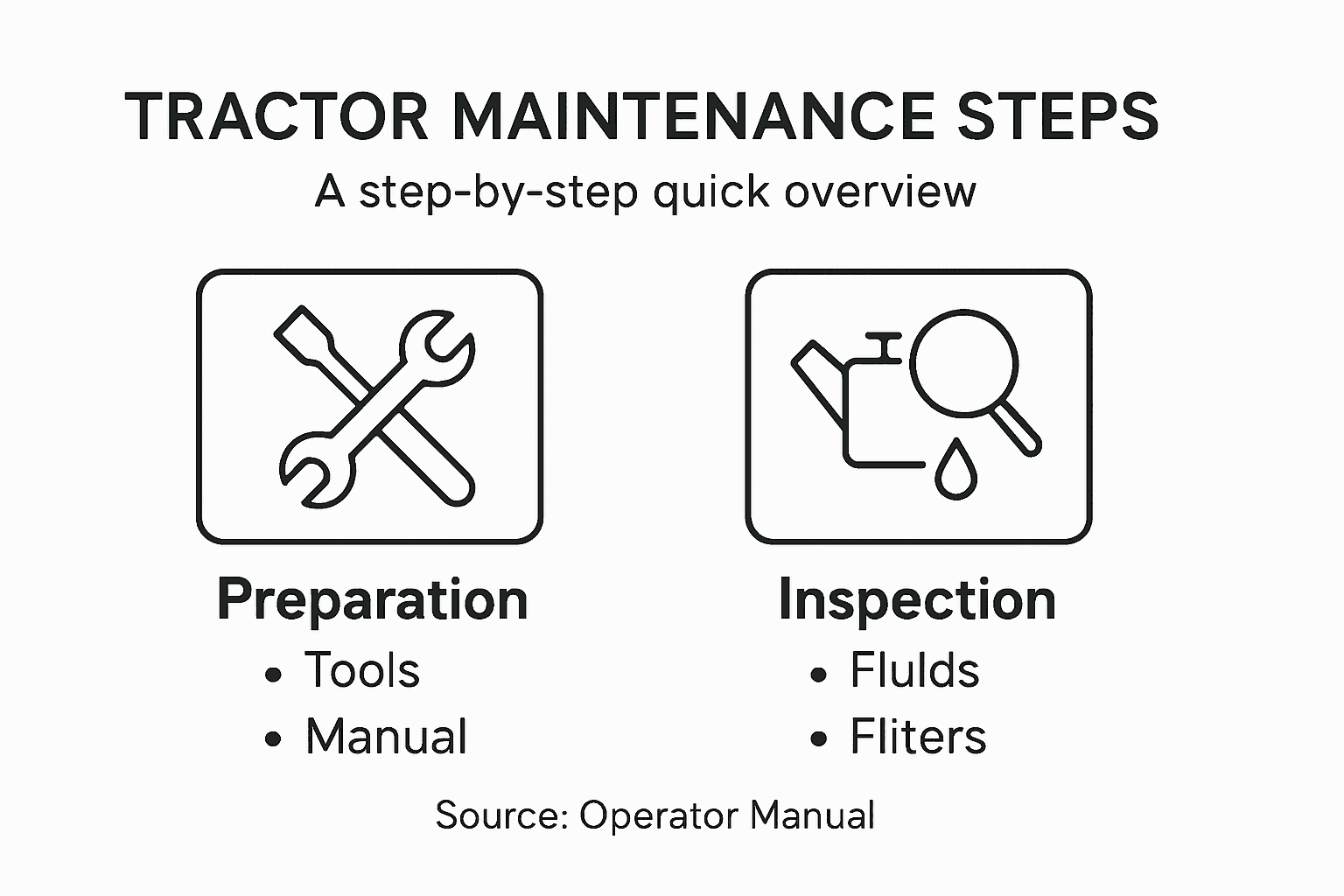
First, consult your tractor’s operator manual to understand specific maintenance requirements. Tractor maintenance checklists recommend gathering key items like engine oil, coolant, hydraulic fluid, hand tools, and safety equipment. Create a comprehensive toolkit that includes wrenches, pliers, screwdrivers, socket sets, torque wrenches, and jack stands. Check your replacement parts inventory for items like filters, belts, spark plugs, and lubricants specific to your tractor model. Additionally, agricultural maintenance guides suggest keeping a clean work area and having absorbent materials ready for potential fluid spills.
As you compile your toolkit, organize components systematically and ensure everything is clean, accessible, and in good working condition. This preparatory step will save you time and prevent unnecessary interruptions during maintenance.
Pro Tip: Store your maintenance tools in a dedicated, waterproof toolbox with labeled compartments to keep everything organized and protected from moisture and dirt.
Here’s a quick reference for essential tractor maintenance supplies:
| Item Type | Example Supplies | Importance |
|---|---|---|
| Fluids | Engine oil, coolant, hydraulic | Prevents overheating, wear |
| Filters | Air, oil, fuel | Ensures clean operation |
| Safety Gear | Gloves, goggles, absorbents | Protects operator, work area |
| Tools | Wrenches, pliers, grease gun | Enables accurate maintenance |
| Replacement Parts | Belts, spark plugs, seals | Reduces downtime, enhances life |
Step 2: Inspect Fluids and Filters
Checking your tractor’s fluids and filters is a critical maintenance step that prevents unexpected breakdowns and ensures optimal machine performance. By systematically examining all vital fluid levels and filter conditions, you will protect your equipment and extend its operational life.
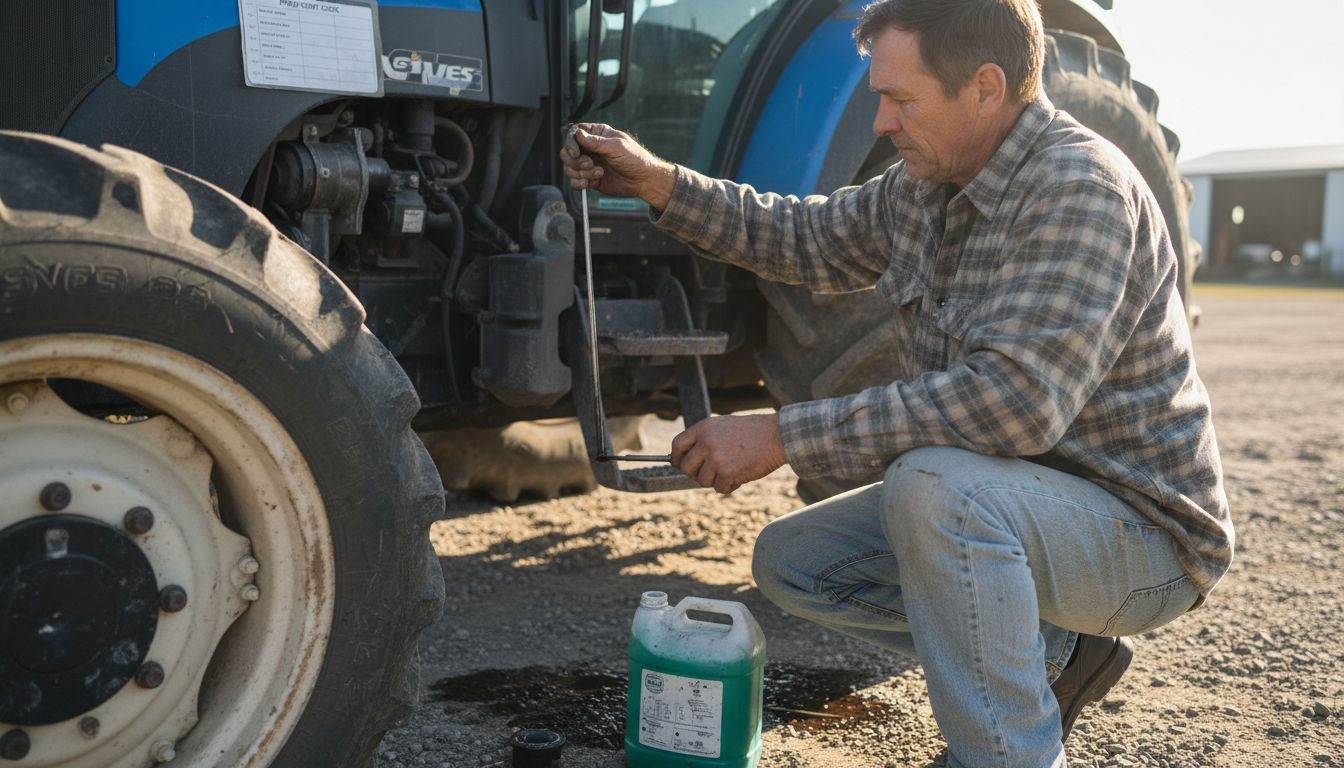
Tractor maintenance checklists recommend thoroughly inspecting engine oil, coolant, hydraulic fluid, and fuel levels. Start by parking your tractor on level ground and allowing the engine to cool down. Check engine oil using the dipstick, ensuring it is between minimum and maximum marks. Examine the oil for discoloration or contamination that might indicate internal wear. For coolant, verify the reservoir level and look for signs of leaks or corrosion. When checking hydraulic fluid, confirm it meets the manufacturer’s specifications and appears clean without debris. Agricultural safety guidelines emphasize inspecting air and oil filters for accumulated dirt and potential blockages that could compromise engine efficiency.
Remember that consistent fluid maintenance is not just about topping up levels but understanding what the fluid’s condition tells you about your tractor’s overall health. Regular inspections can help you catch potential issues before they become expensive repairs.
Pro Tip: Keep a maintenance log to track fluid changes, filter replacements, and any observations during inspections to establish a comprehensive service history.
Step 3: Clean and Lubricate Key Components
Preparing to clean and lubricate your tractor is a critical maintenance task that will help prevent premature wear and ensure smooth mechanical performance. By systematically addressing each component with care and precision, you will protect your valuable equipment and extend its operational lifespan.
Machinery maintenance guidelines emphasize the importance of thorough cleaning and strategic lubrication. Begin by thoroughly removing dirt and debris from external surfaces using compressed air or soft brushes. Pay special attention to areas around joints, bearings, and hydraulic connections. Tractor maintenance procedures recommend using manufacturer approved lubricants for each specific component. Focus on pivot points, linkages, and moving parts that experience high friction. Apply grease sparingly and precisely using a grease gun at designated zerk fittings. Wipe away excess lubricant to prevent dust and dirt accumulation.
Remember that proper lubrication is not just about quantity but also about using the right type of lubricant for each specific component and applying it at recommended intervals. Consistent maintenance will significantly reduce mechanical stress and potential equipment failure.
Pro Tip: Keep a color coded system for different types of lubricants to prevent accidental misuse and maintain organization in your maintenance toolkit.
Step 4: Check Electrical and Safety Systems
Ensuring your tractor’s electrical and safety systems are fully functional is a crucial step in maintaining equipment reliability and operator protection. By methodically examining these critical components, you will prevent potential accidents and unexpected mechanical failures.
Tractor inspection checklists recommend a comprehensive evaluation of electrical systems and safety features. Begin by checking battery connections for corrosion, ensuring terminals are clean and securely fastened. Inspect all wiring harnesses for signs of wear, fraying, or damage that could compromise electrical performance. Test headlights, brake lights, turn signals, and the Slow Moving Vehicle (SMV) emblem to confirm they are fully operational. Agricultural safety guidelines emphasize verifying safety interlocks that prevent accidental engagement of moving parts. Carefully examine seat belts, rollover protection structures (ROPS), and safety guards to confirm they are intact and functioning correctly.
Remember that electrical and safety system checks are not just routine maintenance but a critical investment in your personal safety and equipment longevity. A few minutes of careful inspection can prevent potentially dangerous situations and costly equipment failures.
Pro Tip: Keep a small multimeter in your toolkit to quickly test electrical connections and identify potential issues before they become serious problems.
Step 5: Test Operation and Confirm Results
The final stage of tractor maintenance involves thoroughly testing all systems to ensure your equipment operates safely and efficiently. This critical verification process validates the effectiveness of your maintenance work and prevents potential mechanical issues down the line.
Tractor inspection checklists recommend a comprehensive operational test after completing maintenance tasks. Start by starting the engine and carefully monitoring engine oil pressure, listening for unusual sounds, and observing instrumentation for any abnormal readings. Check the responsiveness of all controls, including steering, brakes, and hydraulic systems. Agricultural safety guidelines emphasize performing a complete walk around inspection after starting the tractor, confirming that all recently serviced components function correctly. Test lighting systems, turn signals, and verify that safety interlocks engage properly.
Remember that testing is more than a mechanical procedure its your final line of defense against potential equipment failure. Take your time, be methodical, and trust your senses during the operational test. Any slight irregularity should prompt further investigation before considering the maintenance process complete.
Pro Tip: Keep a maintenance log documenting each test performed, including date, observed conditions, and any adjustments made to create a comprehensive service history.
The following table highlights major tractor systems and their common failure prevention practices:
| System | Critical Check | Impact of Maintenance |
|---|---|---|
| Fluids & Filters | Inspect levels, replace filters | Reduces breakdown risk |
| Moving Components | Clean, lubricate pivot points | Enhances performance |
| Electrical & Safety | Test lights, check seatbelts | Ensures operator safety |
| Controls | Check brakes, steering | Maintains reliable operation |
Keep Your Tractor Running Smoothly With Trusted Parts and Expert Support
Maintaining your tractor’s optimal performance requires more than just routine checks of fluids, filters, and electrical systems. The challenge lies in sourcing the right high-quality replacement parts and reliable accessories for flawless upkeep. At pexlivanidis.com, we understand how critical it is to have easy access to over 20,000 genuine agricultural machinery parts that fit your exact tractor model so you can confidently follow each maintenance step without worry.
Whether you need engine oils, filters, belts, or safety components, our extensive inventory combined with fast shipping across Thessaloniki, Kavala, and nearby regions ensures you get the right parts when you need them most. Don’t let poor-quality or delayed parts interrupt your maintenance routine or risk equipment failure. Visit pexlivanidis.com today to browse our comprehensive collection and take advantage of free shipping on orders over 100€. Start elevating your tractor care with trustworthy supplies now to protect your investment and keep your equipment performing at its best.
Frequently Asked Questions
What essential tools do I need for tractor maintenance?
To perform tractor maintenance, gather tools like wrenches, pliers, screwdrivers, and socket sets, along with replacement parts such as filters and lubricants. Organize these tools in a waterproof toolbox with labeled compartments for easy access during maintenance tasks.
How often should I inspect fluids and filters in my tractor?
You should check your tractor’s fluids and filters at least once every 50 hours of operation or before each major use. Regularly monitor levels and conditions to prevent engine wear and ensure optimal performance.
What steps should I take to clean and lubricate key components of my tractor?
Start by thoroughly cleaning the tractor’s exterior surfaces and removing dirt from critical areas like joints and hydraulic connections. Follow this by lubricating pivot points and moving parts with the appropriate greases, ensuring that excess lubricant is wiped away to avoid attracting dirt.
How can I check the electrical and safety systems of my tractor?
Examine the battery connections for corrosion and test all electrical components such as lights and safety features. Regularly inspect wiring for damage and confirm that safety interlocks are functional to maintain operator safety and reliability.
What should I do after completing maintenance to ensure my tractor operates correctly?
Perform a comprehensive operational test to check the functionality of the engine, controls, and safety systems. Start the engine, monitor its performance, and confirm that all components are working properly to prevent any mechanical issues during use.
Why is keeping a maintenance log important for my tractor?
Maintaining a detailed log helps you track fluid changes, filter replacements, and observations during inspections. This record allows you to identify patterns and address potential issues proactively, ultimately extending your tractor’s lifespan.