

Rising costs from unexpected machinery breakdowns impact over 60 percent of farmers in Thessaloniki and Kavala every season. When reliable american tractors or spare parts need attention, dependable technical support becomes the difference between a good harvest and costly downtime. Staying ahead with professional guidance means operators can extend equipment life, maximize daily performance, and secure their investment by reducing preventable failures before they escalate.
Table of Contents
- Defining Technical Support in Agriculture
- Types of Technical Support Services Offered
- How Technical Support Enhances Machinery Efficiency
- Common Challenges in Agricultural Support
- Responsibilities of Support Providers and Farmers
Key Takeaways
| Point | Details |
|---|---|
| Comprehensive Support | Technical support in agriculture goes beyond advice, offering farmers knowledge, technology, and strategies for enhanced productivity and sustainability. |
| Leveraging Technology | Modern technical support utilizes advanced tools and digital resources to facilitate informed decision-making and improve agricultural efficiency. |
| Overcoming Challenges | Agricultural support faces barriers such as low technology adoption and resource limitations, which require tailored strategies and effective communication. |
| Collaborative Responsibilities | A successful technical support system relies on a partnership between support providers and farmers, emphasizing mutual engagement and feedback for continuous improvement. |
Defining Technical Support in Agriculture
Technical support in agriculture represents a critical infrastructure that empowers farmers with knowledge, technologies, and strategic guidance to enhance agricultural productivity and sustainability. At its core, this support system goes far beyond simple advice – it is a comprehensive approach to transforming agricultural practices through targeted interventions and expert assistance.
The Food and Agriculture Organization defines technical support as a multifaceted service that encompasses research and extension systems designed to increase agricultural productivity. These systems integrate multiple components including knowledge transfer, technology dissemination, policy recommendations, and capacity development for farmers. By bridging gaps between scientific research and practical farming techniques, technical support enables agricultural professionals to adopt innovative strategies that improve crop yields, resource management, and overall farm efficiency.
Modern technical support in agriculture leverages advanced technologies and multimedia tools to deliver targeted educational resources. According to research published in agricultural journals, these support services now include sophisticated interventions such as digital pest control innovations, precision farming techniques, and data-driven agricultural management strategies. The goal is not just information transfer, but comprehensive farmer empowerment through practical, actionable insights that can be immediately implemented in agricultural operations.
Here’s a summary of how technical support advances farming operations:
| Area of Impact | Traditional Approach | With Technical Support | Long-Term Benefits |
|---|---|---|---|
| Crop Management | Manual methods dominate | Data-driven decision-making | Higher crop yields |
| Machinery Use | Frequent breakdowns | Predictive maintenance | Reduced downtime |
| Knowledge Access | Limited local advice | Digital, interactive resources | Constant skills improvement |
| Technology Adoption | Slow and hesitant | Guided training and support | Faster innovation uptake |
Pro tip: Farmers should actively seek technical support resources from local agricultural extension offices and online platforms to stay updated on the latest farming technologies and best practices.
Types of Technical Support Services Offered
Agricultural technical support services are diverse and strategically designed to address the complex needs of modern farmers. These services range from hands-on field consultations to advanced digital platforms, providing comprehensive assistance across multiple agricultural domains. The primary objective is to equip farmers with the knowledge, tools, and strategies necessary for sustainable and productive farming operations.
The Food and Agriculture Organization highlights several key categories of technical support, including research and extension systems that deliver targeted interventions. These services typically encompass:
- Advisory Support: Direct consultations providing expert guidance on crop management, soil health, and agricultural best practices
- Capacity Development: Training programs designed to enhance farmers’ skills and technological understanding
- Policy Consultation: Strategic recommendations for agricultural policy improvements
- Technology Transfer: Introduction and implementation of innovative agricultural technologies
- Digital Education: Multimedia training resources and online learning platforms
Modern technical support services increasingly leverage digital technologies to provide sophisticated interventions. Agricultural journals document how these services now integrate advanced tools such as precision farming techniques, real-time crop monitoring systems, and data-driven management strategies. These technological interventions enable farmers to make informed decisions, optimize resource utilization, and improve overall agricultural productivity.
Pro tip: Farmers should develop a comprehensive network of technical support contacts, including local agricultural extension offices, online platforms, and digital resource centers to maximize their access to cutting-edge agricultural knowledge and support.
How Technical Support Enhances Machinery Efficiency
Technical support plays a transformative role in optimizing agricultural machinery performance, bridging the gap between technological potential and practical agricultural implementation. By integrating advanced diagnostic tools, predictive maintenance strategies, and comprehensive monitoring systems, technical support services dramatically improve machinery efficiency and operational reliability.
Research demonstrates that precision agriculture technologies are revolutionizing machinery management through sophisticated interventions. These technologies incorporate cutting-edge solutions like Internet of Things (IoT) sensors, artificial intelligence algorithms, and real-time data analytics that enable farmers to:
- Monitor equipment performance continuously
- Detect potential mechanical issues before they escalate
- Optimize fuel consumption and operational parameters
- Reduce unexpected machinery breakdowns
- Extend overall equipment lifespan
Advanced technical support goes beyond traditional repair services by providing comprehensive machinery management strategies. Modern support systems utilize complex data analysis to create predictive maintenance schedules, recommend performance improvements, and help farmers make informed decisions about equipment usage and replacement. This approach transforms agricultural machinery from simple mechanical tools into intelligent, data-driven assets that can significantly enhance farm productivity and operational efficiency.
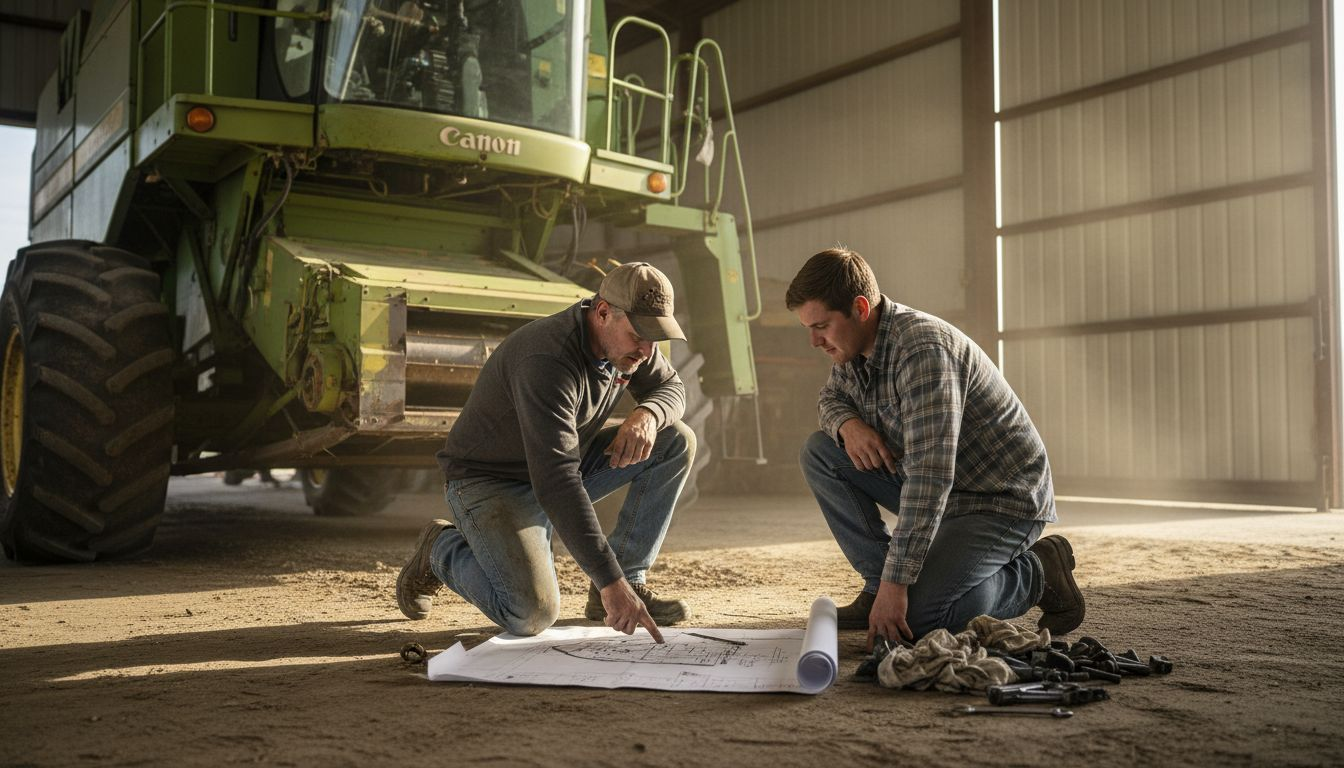
Pro tip: Invest in regular technical consultations and maintain detailed machinery performance records to maximize the effectiveness of technical support interventions and optimize long-term equipment performance.
Common Challenges in Agricultural Support
Agricultural technical support encounters complex barriers that significantly impact its effectiveness and reach across diverse farming environments. These challenges are multifaceted, ranging from technological adoption hurdles to socioeconomic constraints that limit the implementation of innovative agricultural strategies.
Research highlights agricultural technology adoption barriers that emerge from intricate decision-making dynamics and varying farm characteristics. Key challenges include:
- Inconsistent government support mechanisms
- Wide disparities in farm size and resource availability
- Resistance to technological change among traditional farmers
- Limited financial resources for technology implementation
- Complex communication channels between support services and farmers
- Regional environmental condition variations
The complexity of agricultural support is further compounded by methodological limitations in evaluating intervention effectiveness. Different farming contexts require nuanced approaches, making it challenging to develop standardized support strategies that can be universally applied. Technological interventions must be carefully tailored to specific regional needs, farmer skill levels, and local agricultural ecosystems to ensure meaningful impact and sustainable adoption.
This table compares main challenges faced and solutions offered by agricultural technical support providers:
| Challenge Faced | Strategic Solution | Expected Outcome |
|---|---|---|
| Low tech adoption | Hands-on training | Increased use of new tools |
| Resource limitations | Tailored interventions | Better resource allocation |
| Communication gaps | Building direct channels | Stronger farmer engagement |
| Policy barriers | Advocacy and guidance | Improved support policies |
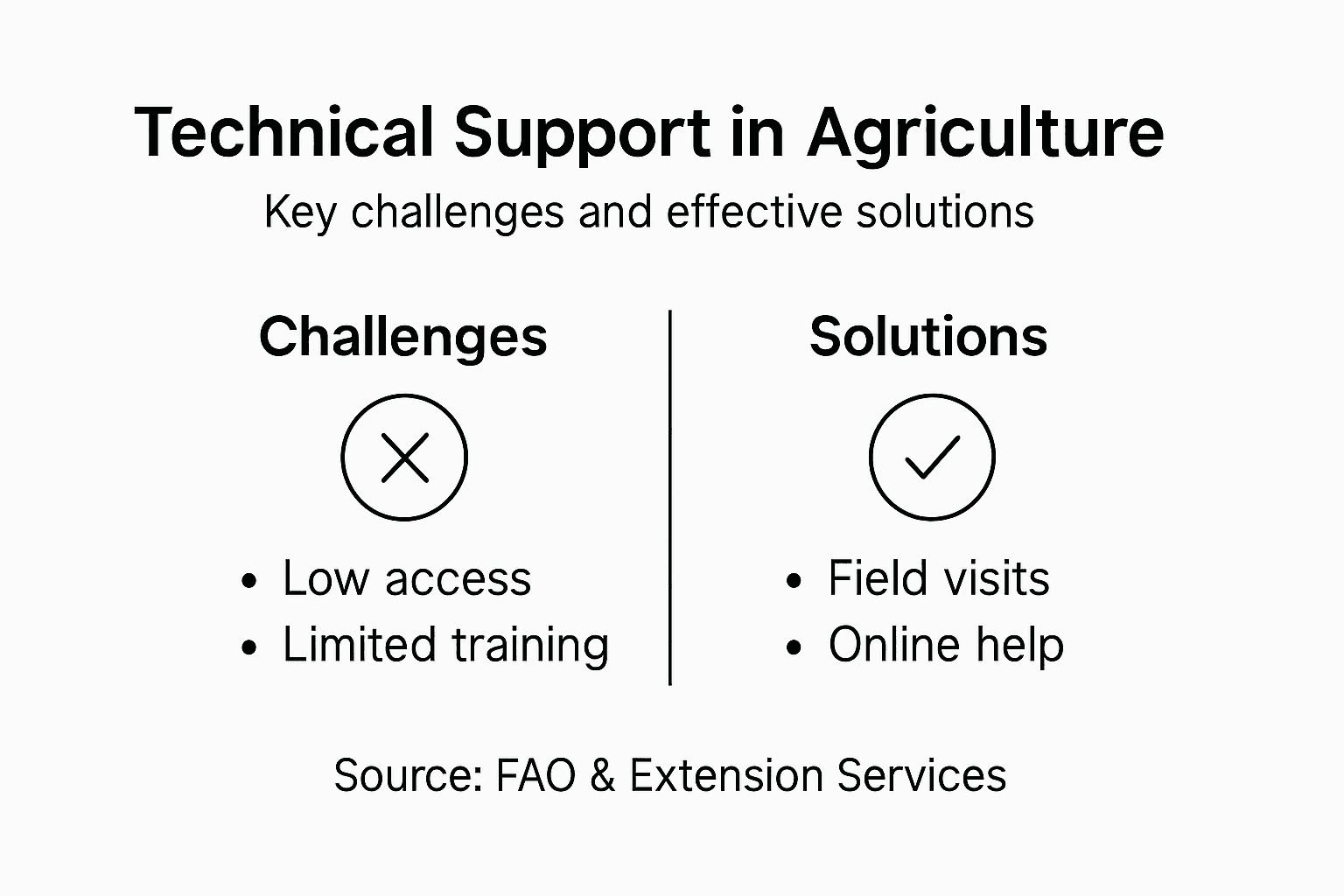
Pro tip: Develop flexible, context-specific support strategies that prioritize farmer education, provide hands-on training, and demonstrate tangible economic benefits to overcome technological adoption resistance.
Responsibilities of Support Providers and Farmers
Successful agricultural technical support hinges on a collaborative partnership between support providers and farmers, where each party plays a critical and interconnected role in driving agricultural innovation and productivity. This dynamic relationship requires mutual commitment, clear communication, and shared objectives to overcome challenges and achieve sustainable agricultural development.
The Food and Agriculture Organization emphasizes the responsibilities of agricultural support systems that extend far beyond traditional advisory roles. Support providers are tasked with:
- Delivering comprehensive technical knowledge
- Facilitating technology transfer and innovation adoption
- Developing targeted capacity-building programs
- Providing timely and accurate agricultural information
- Creating adaptive learning environments
- Ensuring policy coherence and stakeholder collaboration
Corresponding farmer responsibilities are equally crucial in this ecosystem. Farmers must actively engage with support services by participating in training programs, implementing recommended practices, providing constructive feedback, and demonstrating openness to technological and methodological innovations. This two-way interaction creates a robust feedback loop that continuously refines agricultural support strategies, making them more responsive to real-world farming challenges and regional variations.
Pro tip: Establish regular communication channels and structured feedback mechanisms between support providers and farmers to create a dynamic, responsive agricultural support environment that evolves with changing technological and environmental landscapes.
Elevate Your Agricultural Success with Reliable Machinery Support
The article highlights common challenges such as inconsistent equipment performance and limited technical assistance that can hinder farming productivity. If you are seeking to overcome barriers like frequent machinery breakdowns or inefficient parts management, aligning with a trusted source for agricultural machinery parts is essential. At pexlivanidis.com, we understand how crucial predictive maintenance and guided support are to your farm’s success.
Browse our extensive inventory of over 20,000 tractor accessories and spare parts designed to keep your equipment running smoothly. Whether you need expert advice, fast shipping across Greece, or wholesale options, our platform is built to empower farmers with the technical resources they need right now. Take the first step toward optimized machinery and improved crop management by visiting Agricultural Machinery Parts today. Don’t wait for costly downtime when dependable solutions are just a click away.
Frequently Asked Questions
What is technical support in agriculture?
Technical support in agriculture refers to a comprehensive system designed to empower farmers with knowledge, technologies, and strategic guidance aimed at enhancing agricultural productivity and sustainability.
How does technical support enhance crop management?
Technical support transforms crop management by introducing data-driven decision-making, which leads to higher crop yields and improved resource management.
What types of services can farmers expect from agricultural technical support?
Farmers can expect services such as advisory support, capacity development training, policy consultation, technology transfer, and digital education resources.
What challenges do agricultural technical support providers face?
Providers face challenges such as low technology adoption, resource limitations, communication gaps, and policy barriers, which can affect the effectiveness of their services.