

Managing fields across Thessaloniki and Kavala often means guessing whether machinery is wasting fuel or missing maintenance cycles. This uncertainty turns daily decisions into risks, rather than opportunities. Adopting telematics promises a shift to data-driven decisions, where real-time GPS tracking and sensors reveal exactly how your equipment performs and guide smarter choices for improving crop yield and operational efficiency.
Table of Contents
- Defining Telematics In Agriculture Today
- Key Technologies And Data Integration Methods
- Practical Applications For Modern Farmers
- Operational Benefits And Economic Impacts
- Common Pitfalls And How To Avoid Them
Key Takeaways
| Point | Details |
|---|---|
| Telematics Enhances Decision-Making | Accessing real-time data on fuel consumption and equipment performance allows farmers to make data-driven decisions instead of relying on intuition. |
| Integration of Technologies Improves Efficiency | Combining IoT and AI technologies in telematics systems streamlines operations, reduces human error, and enhances resource management. |
| Precision Application Lowers Costs | Telematics enables precise irrigation and fertilizer application, significantly reducing water and input costs while increasing yields. |
| Early Detection of Issues Increases Resilience | Utilizing sensors for early disease detection and maintenance alerts allows farmers to address issues proactively, minimizing crop loss and downtime. |
Defining Telematics in Agriculture Today
Telematics blends two powerful concepts: telecommunications and information technology working together to track your farm machinery in real time. It’s not about one isolated sensor or data point—it’s a complete system collecting information about your equipment’s performance, location, and resource consumption while you work.
For farmers in Thessaloniki and Kavala managing multiple fields or extensive operations, telematics transforms how decisions get made. Instead of guessing about fuel consumption or equipment wear, you access actual data. This shift from intuition to data-driven decisions separates efficient operations from struggling ones.
Core Components of Telematics Systems
Every functional telematics setup includes essential hardware and software working in tandem.
- GPS receivers track precise location and enable field-level navigation
- Sensors monitor engine temperature, fuel levels, and operating hours
- Data transmission sends information wirelessly to your devices or cloud storage
- Analytics software transforms raw numbers into actionable insights
- Mobile applications let you monitor operations from your phone or computer
The integration of IoT and AI technologies in agriculture has created systems where these components communicate automatically, eliminating manual data entry and reducing human error significantly.
To better understand telematics hardware components and their business impact, see the table below:
| Component | Core Function | Business Impact |
|---|---|---|
| GPS Receiver | Tracks machinery location | Enables efficient routing |
| Engine Sensor | Measures performance | Predicts maintenance needs |
| Data Transmission | Sends info wirelessly | Reduces manual data handling |
| Mobile Application | Provides remote access | Supports real-time monitoring |
How Telematics Connects to Your Daily Operations
Your tractor sits idle for extended periods—you need to know why. A telematics system shows exactly when equipment runs, how hard it works, and whether maintenance is needed soon. GPS data reveals inefficient routes, overlapped field passes, or time wasted on transitions between work areas.
Real-time machinery data eliminates guesswork and replaces it with evidence-based decision making.
When you have actual fuel consumption numbers, you can identify which equipment wastes resources. When you track operating hours precisely, preventative maintenance becomes scheduled, not reactive. Breakdowns become less frequent and less expensive.
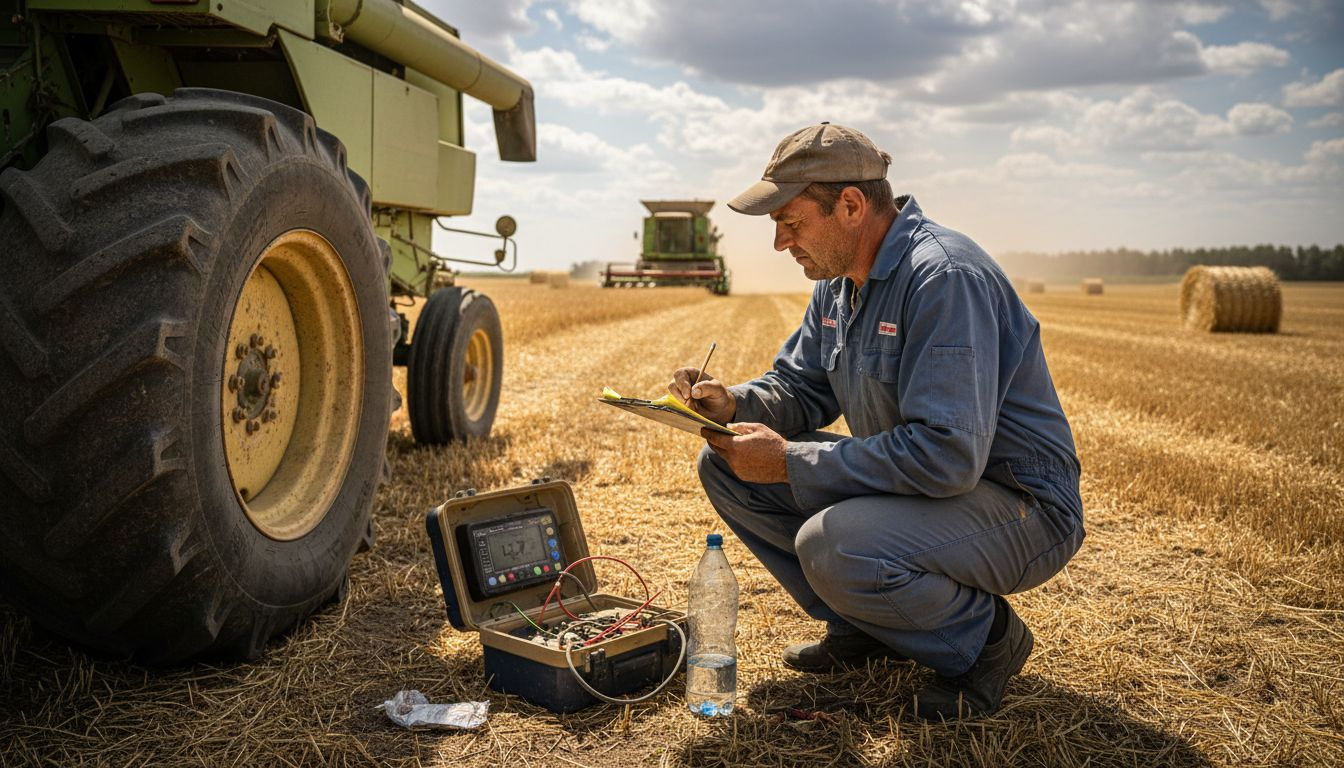
Telematics also connects to broader farm management. Farm automation technologies increasingly rely on telematics data to coordinate operations across your entire property. Your irrigation system adjusts based on soil sensors. Your equipment routes optimize based on field conditions tracked in real time.
Why Telematics Matters for Your Yield
Higher yields come from precision. You water the right areas, fertilize based on actual soil data, and harvest when conditions are optimal. Telematics enables this precision by providing location-specific equipment performance data that guides better timing and resource allocation.
Equally important: efficiency directly impacts profitability. Fuel saved is money kept. Hours optimized mean more work completed in the same timeframe. Maintenance prevented is stress eliminated during critical seasons.
Pro tip: Start with one piece of equipment when adopting telematics—perhaps your primary tractor—to understand the system before expanding to additional machinery and gaining confidence in your data interpretation.
Key Technologies and Data Integration Methods
Your telematics system relies on specific hardware and software working as an interconnected ecosystem. Understanding what powers these systems helps you make smarter choices when selecting solutions for your farm.
The backbone consists of three layers: sensors collecting data, platforms managing that data, and applications turning information into decisions. Each layer matters equally.
Sensor Technologies Leading the Way
Different sensor types monitor different aspects of your operation.
- Soil sensors measure moisture, pH, and nutrient levels for precision irrigation and fertilization
- Plant stress sensors detect water or nutrient deficiencies before visible damage occurs
- Temperature and humidity sensors track environmental conditions affecting crop health
- Engine sensors monitor fuel consumption, operating hours, and mechanical strain
- GPS receivers provide precise location data for navigation and field mapping
These sensors work independently but communicate through standardized protocols. Your soil sensor doesn’t need to “understand” your GPS receiver—they speak the same language through the data platform.
How Data Integration Platforms Work
IoT platforms and cloud computing consolidate information from dozens of sensors into one unified dashboard. Instead of checking five different systems, you access one interface showing comprehensive farm conditions.
Cloud storage means your data is accessible from anywhere. Check equipment status while visiting a supplier in Kavala. Analyze soil readings from your office in Thessaloniki. This flexibility transforms how you manage operations.
Integration platforms eliminate data silos and enable real-time decision making across your entire property.
Machine Learning and Analytics
Raw sensor data becomes useful through artificial intelligence and machine learning models. These algorithms identify patterns humans would miss. A random forest model predicts equipment failure before it happens. A CNN analyzes satellite imagery to detect crop stress.
Your telematics system learns from historical data. It recognizes that certain soil moisture levels combined with temperature ranges typically reduce yields by a specific percentage. It alerts you to act before problems develop.
Real-World Integration Challenges
Adopting these technologies faces practical obstacles in your region.
- Rural connectivity limits data transmission speeds in remote fields
- Infrastructure costs for sensors and cloud subscriptions add up quickly
- Interoperability issues arise when different manufacturers use incompatible protocols
- Data management complexity requires training or expertise to interpret correctly
These barriers exist, but solutions continue improving. More affordable sensors emerge. Connectivity infrastructure expands. Technical support becomes more accessible.
Pro tip: Begin with a single integrated solution from one manufacturer rather than combining systems from multiple vendors—this eliminates compatibility headaches and simplifies troubleshooting when issues arise.
Practical Applications for Modern Farmers
Telematics moves beyond theory when it solves real problems you face daily. Your machinery runs in fields without supervision. Your water budget gets stretched thin during dry seasons. Your fertilizer costs climb every year. These aren’t abstract challenges—they’re immediate pressures on your bottom line.
Telematics addresses each one through concrete, measurable applications that transform how you operate.
Machinery Tracking and Route Optimization
Your equipment represents significant capital investment. Knowing where it operates, how long it runs, and whether it sits idle matters tremendously.
- GPS-based tracking shows real-time equipment location across multiple fields
- Route optimization eliminates overlapping field passes that waste fuel and time
- Idle time alerts notify you when machinery sits unnecessarily during work hours
- Automated reporting tracks equipment movement patterns to identify inefficiencies
GPS-based machinery tracking and route optimization typically reduces fuel consumption by 15–25% through better navigation and reduced redundant field passes.
Precision Water and Fertilizer Application
One of telematics’ greatest strengths is controlling expensive inputs with laser precision. Smart irrigation systems adjust water delivery based on real-time soil moisture data. Variable rate application systems deliver fertilizer only where soil conditions indicate need.
Precise input application reduces waste while increasing yields—a rare combination that improves both economics and environmental impact.
Instead of applying identical fertilizer rates across your entire field, telematics enables zone-based application. Areas with naturally lower soil phosphorus receive more, while nutrient-rich zones receive less. Your water bills drop. Your yields stabilize.
Disease Diagnosis and Crop Monitoring
Smart farming technologies including IoT devices and AI now identify crop diseases with high accuracy before symptoms become visible to human inspection. Visual monitoring through sensors catches stress indicators early.
You detect problems days or weeks ahead of manual scouting. This window allows preventative action rather than reactive disease management. Treatment costs drop. Crop loss decreases dramatically.
Labor Efficiency Through Automation
Operating agricultural machinery demands skilled attention. Autonomous systems reduce this burden while maintaining precision. Telematics enables automated machinery operation for tasks like autonomous tractor routing and guidance systems.
Your equipment follows GPS waypoints without constant operator input. This applies to irrigation scheduling, pest management timing, and harvest operations. Labor becomes available for higher-value tasks requiring human judgment.
Real-World Impact for Your Farm
These applications deliver measurable results:
- Reduced fuel costs through optimized routing
- Lower water consumption through smart irrigation
- Decreased disease losses through early detection
- Improved machinery utilization across seasons
When combined, these applications create compound efficiency gains. Agricultural equipment upgrades paired with telematics systems amplify their effectiveness significantly.
Here’s a quick comparison of telematics benefits versus common adoption challenges in agriculture:
| Telematics Advantage | Economic Impact | Key Challenge |
|---|---|---|
| Route Optimization | 15–25% fuel savings | Rural connectivity limitations |
| Precision Irrigation | 20–30% water savings | High upfront equipment costs |
| Early Disease Detection | Reduced crop loss | Data management complexity |
| Labor Automation | Increased efficiency | Operator training requirements |
Pro tip: Start by monitoring your three highest-cost inputs—fuel, water, and fertilizer—before expanding telematics to other areas, since these generate visible cost savings that justify the investment quickly.
Operational Benefits and Economic Impacts
Telematics isn’t just about technology for its own sake. The real value emerges in your bank account through concrete cost reductions and revenue increases. When your machinery operates more efficiently, when inputs get applied precisely, and when preventative maintenance stops catastrophic failures, profitability improves dramatically.
Let’s examine how these operational improvements translate into economic gains that matter to your bottom line.
Direct Cost Reductions
Telematics creates immediate savings across multiple expense categories.
- Fuel costs drop 15–25% through route optimization and idle time elimination
- Maintenance expenses decrease when predictive systems prevent equipment breakdown
- Water consumption falls 20–30% with precision irrigation systems
- Fertilizer usage optimizes through variable-rate application, cutting excess input costs
- Labor efficiency improves as automation handles repetitive tasks
Real-time machinery tracking and precision input application maximize yields while minimizing waste simultaneously. This dual benefit transforms operations from break-even into profitable.
Productivity and Yield Improvements
Beyond cutting expenses, telematics increases what your farm produces. Better soil moisture management means better crop development. Earlier disease detection prevents loss. Precise nutrient application creates optimal growing conditions.
Yield increases of 8–15% are documented with comprehensive telematics implementation. For a typical farm in Thessaloniki or Kavala growing wheat or corn, this translates to thousands of euros in additional revenue per season.
Operational efficiency and increased yields work together—reduced costs and higher output create compound economic benefits.
Risk Management and Resilience
Farming faces unpredictable challenges. Extreme weather disrupts water availability. Market prices fluctuate. Equipment fails at critical moments. Telematics strengthens your farm’s resilience to external shocks.
Digital innovations including telematics enhance farm system responsiveness to weather disruptions and market shifts. When drought strikes, your smart irrigation adapts automatically. When disease pressure increases, sensors alert you immediately. When equipment stress indicators appear, maintenance happens before failure.
This responsiveness means you weather crises better than competitors without these systems.
Long-Term Economic Sustainability
Telematics supports your farm’s viability over decades, not just seasons. Reduced environmental footprint through precise input use aligns with evolving regulations. Lower resource consumption improves sustainability credentials that affect market access and premium pricing.
Your farm becomes more attractive to potential buyers or investors. Banks view digitally managed operations as lower-risk lending candidates.
Calculating Your Return on Investment
Implementation costs vary depending on your farm size and technology scope. A basic telematics system costs 3,000–8,000 euros initially. However, fuel savings alone recover this investment within 12–18 months on most operations.
When you add reduced maintenance costs, optimized water usage, and improved yields, payback accelerates dramatically. Year two typically shows net positive returns that compound annually.
Pro tip: Calculate your current fuel, water, and fertilizer expenses for one season, then apply conservative savings percentages (10% fuel, 15% water, 12% fertilizer) to see your realistic annual benefit before committing to full implementation.
Common Pitfalls and How to Avoid Them
Telematics adoption doesn’t guarantee success. Many farmers rush implementation, encounter unexpected obstacles, and abandon systems before realizing benefits. Understanding common mistakes helps you navigate the transition smoothly and avoid costly setbacks.
The problems are predictable. The solutions are straightforward.
Data Overload and Interpretation Paralysis
Your telematics system collects thousands of data points daily. Without proper management, this abundance becomes overwhelming rather than helpful.
Many farmers receive so much information that they struggle deciding which metrics matter. Engine temperature fluctuations seem important until you realize they’re irrelevant. Dozens of alerts flood your phone daily, yet few require immediate action.
Effective data management strategies prevent information overload from paralyzing decision-making.
Solve this by establishing clear data priorities. Focus initially on three metrics: fuel consumption, equipment utilization hours, and maintenance alerts. Ignore everything else. Once you master these, expand gradually to additional data points.
Connectivity and Infrastructure Issues
Rural areas around Kavala and Thessaloniki often lack reliable internet coverage. Data transmission becomes unreliable when you’re deep in fields. Connectivity constraints in remote agricultural areas limit real-time telematics functionality.
Don’t assume cellular coverage matches your assumptions. Test connectivity at actual field locations before purchasing equipment. Consider systems with local data storage that sync when connectivity improves, rather than requiring constant real-time transmission.
High Initial Investment Without ROI Planning
Telematics systems cost real money upfront. Without strategic planning, expenses spiral beyond budget. Some farmers purchase unnecessary features that add cost without value for their operation size.
Define your budget before shopping. Identify the specific problems you’ll solve first. Purchase scalable systems that grow with your needs rather than overbuying capabilities you won’t use for years.
Knowledge Gaps and Inadequate Training
Your equipment operators need training on telematics basics. Farmer education and training programs prevent knowledge gaps that cause underutilization or misinterpretation of data.
Don’t skip training. Budget time and money for staff education. Your supplier should provide hands-on instruction, not just documentation.
Data Security and Privacy Risks
Your telematics system collects sensitive information about your operations. Cybersecurity threats and data privacy violations pose real risks to farm data security.
Verify that your provider uses encryption, secure backups, and clear data ownership policies. Never grant unlimited data access to third parties. Ask about cybersecurity measures explicitly.
Integration and Interoperability Failures
Different manufacturers’ systems often don’t communicate seamlessly. Standardized communication protocols ensure compatibility across equipment and platforms.
Before purchasing, confirm that systems use standardized protocols like ISOBUS or MQTT. This prevents costly integration headaches later.
Pro tip: Request a one-month trial or visit an operational farm using the exact system you’re considering—real-world testing reveals integration issues and usability problems that demonstrations often hide.
Drive Your Farm Efficiency with Reliable Machinery Parts from Pexlivanidis.com
Telematics technology gives you precise data to boost your farm’s yield and cut costs by optimizing fuel use, maintenance schedules, and input application. But to truly unlock these benefits you need durable, high-quality tractor accessories and spare parts that ensure your machinery operates flawlessly every day. Whether managing equipment tracking, maintenance alerts, or precision fertilizer and water application, your farm depends on parts you can trust.
At Pexlivanidis.com we understand the challenges of running modern agricultural operations in Thessaloniki, Kavala, and beyond. Our extensive inventory with over 20,000 items covers the essential components that keep your telematics-enabled machinery performing at its best. Enjoy free shipping on orders over 100€ and explore options for both retail and wholesale customers. Don’t let equipment downtime slow your progress—start upgrading your farm’s efficiency today by visiting Pexlivanidis.com and discover parts tailored for your telematics-driven success.
Frequently Asked Questions
What are the core components of a telematics system in agriculture?
A telematics system in agriculture typically includes GPS receivers, various sensors, data transmission mechanisms, analytics software, and mobile applications that work together to track machinery performance and optimize operations.
How can telematics improve decision-making for farmers?
Telematics provides real-time data on fuel consumption, equipment wear, and operational efficiency, allowing farmers to make data-driven decisions rather than relying on intuition, ultimately leading to better resource management and increased productivity.
What are the potential cost savings from implementing telematics?
Implementing telematics can result in significant cost savings, including a reduction of fuel costs by 15-25%, lower maintenance expenses through predictive systems, and a decrease in water and fertilizer usage, all of which contribute to improved profitability.
How does telematics facilitate precision agriculture?
Telematics enables precision agriculture by providing location-specific equipment performance data. This allows for better timing and resource allocation for activities such as irrigation and fertilization, ensuring inputs are applied efficiently for optimal yields.