

TL;DR:
- Choosing the right tractor attachment depends on farm size, crop type, terrain, and tractor compatibility.
- Core attachments like plows, harrows, seeders, and mowers are essential for efficient farming operations.
- Rotating attachments seasonally and maintaining equipment maximizes their value and lifespan.
Picking the wrong tractor attachment is an expensive mistake. You waste money, lose time, and sometimes damage your equipment in the process. Greek farmers face this challenge constantly, especially with so many options on the market and fields that range from flat plains to steep vineyard slopes. The good news is that the right attachment, matched to your specific farm and tractor, can dramatically cut labor hours and boost output. This guide walks you through how to choose, compare, and get the most from your agricultural attachments, whether you run a small family plot or a large commercial operation.
Table of Contents
- How to select the right agricultural attachments
- Essential agricultural attachments every farm should consider
- Comparing top attachment types for different needs
- Specialty attachments for advanced operations
- Our expert perspective: Maximize value by rotating your attachments
- Explore tractors and attachments for every need
- Frequently asked questions
Key Takeaways
| Point | Details |
|---|---|
| Right attachment selection | Choosing compatible attachments increases efficiency and equipment lifespan. |
| Core tool categories | Plows, seeders, cultivators, and sprayers cover most general farm tasks. |
| Use specialty tools wisely | Invest in specialty attachments only when they address specific operational needs or boost yields. |
| Maintenance is essential | Regular upkeep of attachments prevents breakdowns and keeps your operation running smoothly. |
How to select the right agricultural attachments
With the range of choices in mind, let’s look at how to decide which attachments matter most for your operation.
Selecting the right attachment is not just about what looks useful in a catalog. It starts with a clear-eyed look at your own farm. What crops do you grow? How large is your land? Is your terrain flat, hilly, or rocky? These questions sound basic, but most purchasing mistakes happen because farmers skip them.
Your tractor’s horsepower and hydraulic capacity are equally important. A heavy-duty plow attached to an underpowered tractor will strain the engine and wear out components faster. As a starting point, attachments must fit both tractor capabilities and farm needs, which means cross-checking your operator manual before committing to any purchase.
Here are the key factors to evaluate before buying any attachment:
- Farm size: Larger farms benefit from wider, faster implements. Smaller plots need compact, maneuverable tools.
- Crop type: Grain crops need different tools than vegetables, vineyards, or orchards.
- Terrain: Rocky or sloped land demands more robust, adjustable attachments.
- Tractor power: Always match the attachment’s power requirement to your tractor’s rated output.
- Attachment category: Tillage, planting, maintenance, and harvesting are the four main groups. Know which category covers your biggest bottleneck.
- After-sales support: Warranty coverage and local parts availability matter just as much as the initial price.
Pro Tip: Before purchasing, pull out your tractor’s operator manual and check the three-point hitch category and PTO (power take-off) speed. Many compatibility problems can be avoided in five minutes of reading.
For a broader view of what fits your workflow, browsing efficient farming accessories can help you identify gaps in your current setup before spending a euro.
Essential agricultural attachments every farm should consider
Now that you know what to look for, here’s a breakdown of core attachments that make everyday farm jobs more efficient.
Certain attachments see use in nearly every farming operation, regardless of crop or region. These are the workhorses. Getting familiar with them helps you build a practical, versatile toolkit.
- Plows: Break up compacted soil before planting. Essential for fields that have not been worked recently or after heavy harvests.
- Harrows: Smooth and level soil after plowing. Disc harrows break up clods, while tine harrows prepare a finer seedbed.
- Cultivators: Loosen soil between crop rows, control weeds, and improve water infiltration without turning the soil completely.
- Seeders: Distribute seeds evenly at the correct depth and spacing. Precision seeders reduce seed waste significantly.
- Sprayers: Apply fertilizers, pesticides, or herbicides across large areas quickly and uniformly.
- Mowers: Cut grass, cover crops, or crop residue. Rotary mowers handle tough vegetation, while flail mowers give a cleaner finish.
- Front loaders: Move soil, manure, feed, or harvested material. One of the most versatile attachments on any farm.
Each of these tools addresses a specific stage of the farming cycle. A well-timed plow pass, for example, can reduce weed pressure for the entire growing season. A quality sprayer ensures your inputs reach the plant, not the ground.
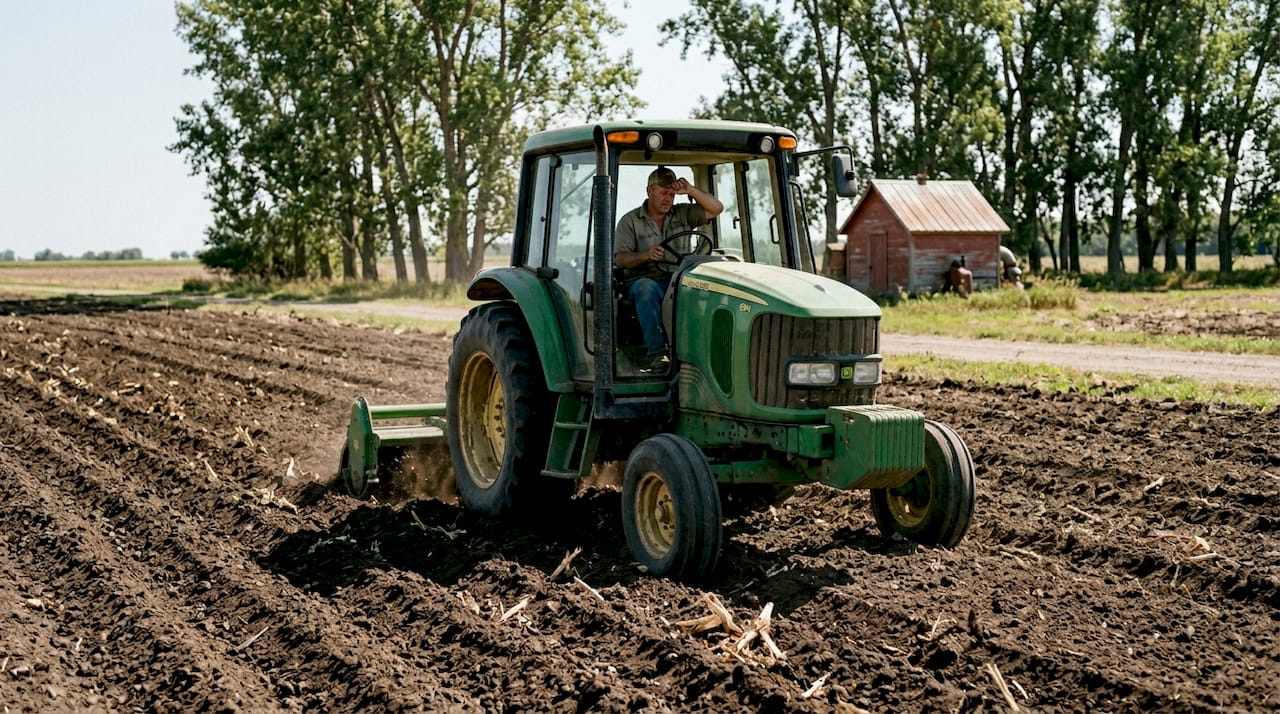
For a deeper look at what fits your tractor model, the essential tractor accessories resource covers current options across multiple brands and categories.
Pro Tip: After each use, remove soil buildup from cutting edges and moving parts. A quick wash and a light coat of grease can double the working life of most attachments. If you need step-by-step help, the assembly guide for attachments walks you through proper setup and care.
Comparing top attachment types for different needs
Understanding individual attachments is helpful, but a side-by-side look makes choosing much easier.
Choosing the right attachment boosts efficiency and lowers cost over the long run. The table below compares four core attachments across the factors that matter most to Greek farmers.
| Attachment | Primary use | Soil compatibility | Best for | Relative cost |
|---|---|---|---|---|
| Plow | Initial soil breaking | Heavy clay, compacted | Large fields, new land | Medium |
| Cultivator | Weed control, aeration | Most soil types | Row crops, vineyards | Low to medium |
| Seeder | Precision planting | Prepared seedbeds | Grain, vegetable farms | Medium to high |
| Mower | Residue and grass cutting | Not soil-dependent | Orchards, cover crops | Low to medium |
Small farms (under 5 hectares) often get the most value from a cultivator and a mower, since these two tools cover soil prep, weed management, and residue clearing. Larger operations benefit more from investing in a quality seeder and a heavy-duty plow, where the time savings per hectare justify the higher cost.
Here is a quick decision checklist before you finalize any purchase:
- Does the attachment match your tractor’s hitch category and PTO speed?
- Is it designed for your primary soil type?
- Does the supplier offer spare parts and local support?
- Have you seen it work in conditions similar to your farm?
- Is the safe attachment setup process clearly documented?
Running through this list takes less than ten minutes and can save you months of frustration.
Specialty attachments for advanced operations
Beyond general purposes, some farms need attachments for unique tasks or efficiency boosts.
Specialty attachments support precision agriculture and increased yields when standard tools simply cannot handle the job. Greece has a diverse agricultural landscape, from cotton fields in Macedonia to olive groves in the Peloponnese and vineyards on the islands. Each environment creates demand for tools that go beyond the basics.
Here are the specialty attachments worth knowing:
- Subsoilers: Break up hardpan layers deep below the surface, improving drainage and root penetration. Critical for fields with compaction problems.
- Rotary tillers: Create a fine, uniform seedbed in one pass. Excellent for vegetable farms and greenhouses where soil texture matters.
- Potato planters: Automate the spacing and depth of potato sets, reducing labor and improving uniformity.
- Vineyard sprayers: Narrow-profile sprayers designed to fit between vine rows, delivering targeted coverage without damaging plants.
| Attachment | Function | Ideal for |
|---|---|---|
| Subsoiler | Deep soil fracturing | Compacted fields, clay soils |
| Rotary tiller | Fine seedbed preparation | Vegetables, greenhouses |
| Potato planter | Automated seed placement | Potato farms |
| Vineyard sprayer | Targeted chemical application | Vineyards, orchards |
Investing in a precision attachment matched to your specific crop can reduce input costs by 15 to 25 percent and cut labor time significantly over a single season. The upfront cost pays back faster than most farmers expect.
If you are exploring which tractor platform supports the widest range of specialty tools, the guide on types of farm tractors gives a solid overview of what each class can handle.
Our expert perspective: Maximize value by rotating your attachments
With the major and specialty options covered, what do most farmers overlook in practice?
Here is what we see repeatedly: farmers invest in solid attachments, use them heavily during one season, then leave them sitting idle for the rest of the year. That is money parked in a shed.
The smarter approach is seasonal rotation. A rotary tiller used for spring seedbed prep can serve a second role in fall cover crop incorporation. A mower used in summer for orchard management can clear stubble in autumn. Matching each tool to multiple tasks across the calendar squeezes real value from every purchase.
Maintenance is the other half of this equation. Attachments that are cleaned, greased, and stored correctly retain their function and resale value far longer. Following machinery maintenance tips between seasons is not optional if you want your equipment to last. It is the difference between a tool that works for fifteen years and one that fails after five. Taking one afternoon each season to audit your implements, identify what is underused, and plan a rotation schedule is one of the highest-return activities a farm manager can do.
Explore tractors and attachments for every need
To put these insights into action, here are resources for next steps.
At Pexlivanidis, we carry over 20,000 agricultural parts and accessories, with free shipping across Greece on orders over 100€. Whether you are buying your first seeder or upgrading to a specialty vineyard sprayer, our catalog has options for every farm size and budget. Start with the agricultural machinery parts guide to understand what each component does, then browse tractor accessories for smarter farming for current product recommendations. Ready to shop? See all attachments across our full inventory, or contact us directly for a personalized recommendation based on your tractor model and crop type. We are here to help you make the right call.
Frequently asked questions
What are the most widely used tractor attachments in Greece?
The most commonly used attachments include plows, seeders, cultivators, and sprayers for general crop cultivation and maintenance. Certain attachments see use in nearly every farming operation across the country.
How can I ensure my attachment fits my tractor?
Check the tractor’s manual for compatible attachments and only purchase those rated for your tractor’s size and power. Remember that attachments must fit both tractor capabilities and your specific farm needs to avoid costly mismatches.
Are specialty attachments worth the investment?
Specialty attachments can greatly increase efficiency for niche crops or challenging terrain, justifying their higher cost for specific needs. Specialty attachments support precision agriculture and can reduce input costs meaningfully within a single season.
How should I maintain my tractor attachments?
Clean, grease, and store all attachments properly after use to prolong their life and ensure safe operation. Following structured machinery maintenance tips between seasons keeps your tools performing at their best for years.