

Every farmer knows the frustration of wasted time when a crucial tractor attachment is missing a tool or connection. Gathering the right equipment and following careful steps can make the process much smoother and safer on fields from Thessaloniki to Kavala. This guide covers efficient assembly and thorough safety checks for tractor attachments, helping you set up your equipment the right way and avoid costly setbacks during your work.
Table of Contents
- Step 1: Gather Required Tools And Parts
- Step 2: Prepare Your Tractor For Attachment
- Step 3: Connect The Attachment Securely
- Step 4: Adjust And Calibrate The Attachment
- Step 5: Test And Inspect For Safe Operation
Quick Summary
| Key Insight | Explanation |
|---|---|
| 1. Gather all necessary tools | Preparation with the right tools ensures a smooth assembly process with fewer complications. |
| 2. Conduct thorough safety checks | Inspect safety features and connections to prevent accidents and ensure safe operation. |
| 3. Ensure precise attachment connection | Proper alignment and secure coupling are vital for stability and safe usage of tractor attachments. |
| 4. Calibrate the attachment correctly | Adjust draft arms and settings for optimal performance and prevent strain on the tractor. |
| 5. Perform a pre-operation inspection | Conduct a thorough check for wear and functionality to confirm readiness for safe use. |
Step 1: Gather Required Tools and Parts
Before you begin assembling your tractor attachment, you need to collect all necessary tools and components. Proper preparation ensures efficient assembly and reduces the risk of complications during the process. Start by reviewing your tractor’s operator manual to identify the specific tools and parts required for your particular attachment.
Typically, you’ll want to gather a comprehensive toolkit that includes adjustable wrenches, socket sets, torque wrenches, safety gloves, and measuring tape. Inspect equipment connections carefully before assembly to ensure you have all necessary pins, hydraulic fittings, electrical connectors, and mounting hardware. Lay out your tools and parts in an organized workspace, grouping similar components together and checking that each piece matches the specifications in your equipment manual.
Pro Tip: Keep a clean, well-lit workspace and take a photograph of your parts layout before disassembling anything so you can easily reference the original configuration if needed.
Step 2: Prepare Your Tractor for Attachment
Before connecting any implement, you must thoroughly prepare your tractor to ensure safe and efficient operation. Comprehensive safety checks are critical for preventing potential accidents and equipment damage. Start by parking your tractor on a level surface with the parking brake engaged and the engine turned off.
Carefully inspect all safety features, including the rollover protective structure, seat belts, and control mechanisms. Verify all safety devices are fully operational and that warning labels are clearly visible and legible. Check tire pressure, hydraulic connections, and ensure all attachment points are clean and free from rust or debris. Confirm that your tractor’s weight distribution and horsepower match the requirements of the specific attachment you plan to install.
Here’s a quick summary of essential safety checks to perform before attaching any implement:
| Safety Item | Why It Matters | How to Verify |
|---|---|---|
| Rollover protection | Prevents injuries from tipping | Inspect for damage |
| Seat belts | Keeps operator secure during use | Test latch and tension |
| Warning labels | Delivers critical safety instructions | Confirm visibility |
| Tire pressure | Ensures stable operation | Check with gauge |
| Hydraulic connections | Prevents leaks and malfunctions | Look for wear, test flow |
| Attachment points | Prevents unsafe equipment detachment | Remove rust, clean surfaces |
Pro Tip: Always keep your tractor’s operator manual nearby during preparation and consult it for model specific guidance on attachment procedures and safety requirements.
Step 3: Connect the Attachment Securely
Connecting your tractor attachment requires precision and careful attention to ensure a safe and stable connection. Three-point hitch systems demand careful alignment of draft arms, pins, and hydraulic connections. Start by positioning your attachment directly behind the tractor, ensuring it is level and aligned with the connection points.
Detailed attachment mechanisms involve precise coupling of lifting arms, stabilizers, and top link. Lower the three-point hitch to its lowest position, then carefully align the attachment’s mounting points with the tractor’s draft arms. Insert the connection pins fully and secure them with safety clips. Check that the top link is adjusted to the correct length to maintain proper angle and weight distribution. Verify all hydraulic and electrical connections are correctly seated and locked in place.
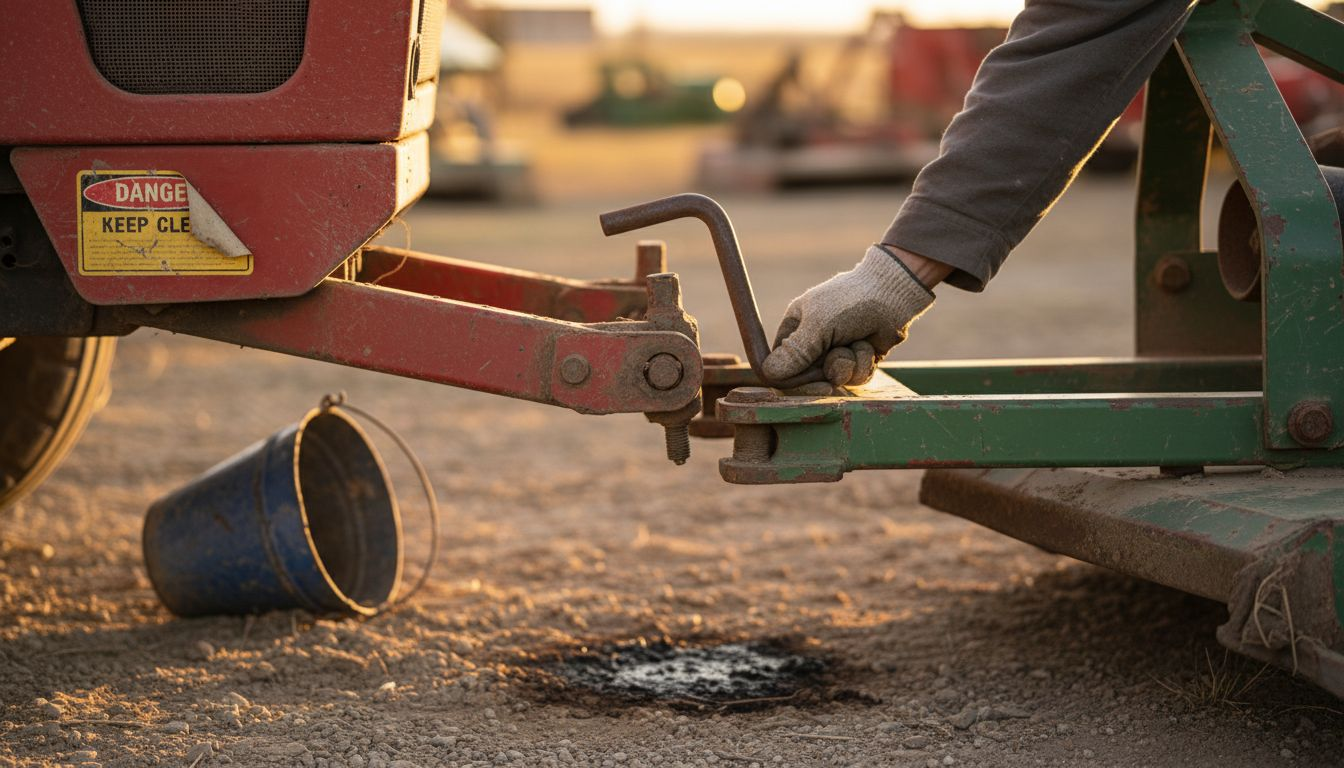
Pro Tip: Always perform a slow test connection first without fully engaging the attachment, allowing you to make minor adjustments and ensure perfect alignment before final securing.
Step 4: Adjust and Calibrate the Attachment
Precise adjustment is crucial for optimal performance and safety when working with tractor attachments. Proper hitch system calibration ensures your implement functions efficiently and maintains balanced tractor stability. Begin by carefully adjusting the draft arms to achieve the correct alignment and working angle for your specific attachment.
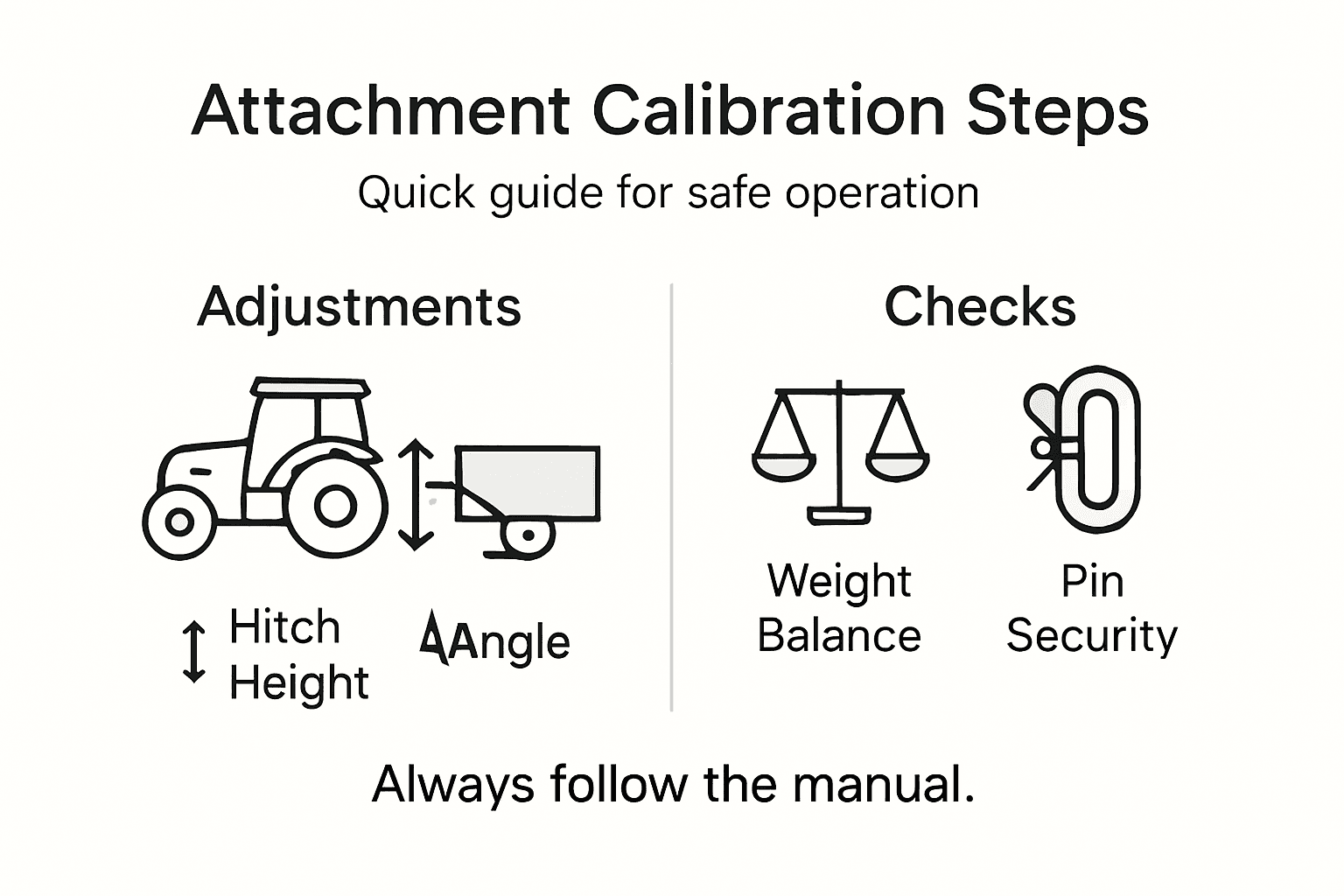
Mechanical interactions between tractor and implement require meticulous attention to weight distribution and draft control settings. Slowly raise and lower the attachment while observing its movement, making incremental adjustments to the top link and stabilizers. Check that the implement maintains a consistent depth and angle during operation. Fine tune the hydraulic draft control to ensure smooth weight transfer and prevent excessive strain on your tractor or attachment.
Use this reference table to understand the impact of correct attachment calibration:
| Calibration Aspect | Benefit | Risk if Neglected |
|---|---|---|
| Arm alignment | Ensures even soil contact | Uneven wear, poor performance |
| Top link adjustment | Maintains proper implement angle | Reduced efficiency, imbalance |
| Hydraulic draft control | Smooth transfer of implement weight | Tractor strain, unstable handling |
Pro Tip: Keep a notebook to record your specific attachment settings for each implement, which will help you quickly replicate optimal configurations in future work sessions.
Step 5: Test and Inspect for Safe Operation
Comprehensive pre-operation inspection is critical to ensure your tractor and attachment are ready for safe use. Start by conducting a thorough visual examination of the entire setup, checking for any signs of wear, damage, or loose components that could compromise operational safety.
Safety device functionality tests are essential before beginning work. Systematically verify all hydraulic connections, electrical systems, and mechanical linkages. Test the attachment’s movement through its full range of motion while stationary, ensuring smooth operation and proper alignment. Check fluid levels, inspect tire pressure, and confirm that all safety guards and protective shields are securely in place and undamaged.
Pro Tip: Always perform a slow test run in an open area without load to confirm the attachment operates smoothly and responds correctly to your control inputs before starting actual work.
Secure Your Tractor Attachments With Confidence
Assembling tractor attachments safely and correctly requires precision and reliable parts you can trust. This article highlights common challenges like proper tool preparation, secure connection of three-point hitch systems, and careful calibration to avoid equipment damage or unsafe operation. At the heart of these tasks is the need for high-quality components that fit perfectly and perform consistently.
Don’t risk delays or accidents caused by incompatible or worn parts. pexlivanidis.com offers a vast inventory of over 20,000 agricultural machinery parts including essential tractor accessories and spare parts designed to match your specific model’s requirements. Whether you need mounting hardware, hydraulic fittings, or replacement pins, you can find everything in one place with convenient features like free shipping in Greece on orders over 100 euros and easy product inquiries.
Ready to assemble your tractor attachment with confidence and ease right now Visit our website for detailed product information and sign up to explore wholesale membership benefits for accessible pricing. Let us support you in making your attachment process efficient and safe. Explore our trusted selection at pexlivanidis.com and get started today.
Frequently Asked Questions
What tools do I need to assemble tractor attachments safely?
To assemble tractor attachments safely, you typically need adjustable wrenches, socket sets, torque wrenches, safety gloves, and measuring tape. Gather these tools before beginning your project to ensure an efficient assembly process.
How do I prepare my tractor before attaching an implement?
Prepare your tractor by parking it on level ground, engaging the parking brake, and turning off the engine. Conduct a thorough inspection of safety features, tire pressure, hydraulic connections, and attachment points to prevent accidents.
What steps should I follow to securely connect the attachment to my tractor?
To connect the attachment securely, align its mounting points with your tractor’s draft arms, insert the connection pins, and secure them with safety clips. Ensure the top link is adjusted to maintain the correct angle and weight distribution for safe operation.
How do I adjust and calibrate the attachment for optimal performance?
Adjust the attachment by setting the draft arms to the correct alignment and working angle. Fine-tune the top link and hydraulic draft control to achieve smooth weight transfer, ensuring your implement maintains consistent depth and angle during operation.
What should I inspect before operating my tractor with the new attachment?
Before operating your tractor, conduct a comprehensive visual inspection of the setup, checking for wear, damage, or loose parts. Verify the functionality of all safety devices and test the attachment’s movement to ensure safe, efficient operation during use.
How can I ensure my tractor attachment functions safely over time?
Regularly inspect and maintain your tractor attachment by looking for signs of wear, ensuring safety devices are functioning, and keeping hydraulic connections clean. Set a schedule for inspection every month to help catch issues early and maintain operational safety.