

Finding new business contacts and reliable equipment upgrades can feel overwhelming for farmers and machinery operators in Northern Greece. Agricultural trade fairs have evolved into comprehensive hubs where professionals from Thessaloniki and Kavala gather for hands-on equipment demos, networking, and direct access to certified inputs. Attending these events means gaining real-world solutions and connections to help you tackle everyday challenges and stay ahead in a competitive marketplace.
Table of Contents
- Understanding Agricultural Trade Fairs And Their Purpose
- Key Benefits For Farmers And Machinery Operators
- Types Of Exhibitions And What They Offer
- Networking Opportunities And Business Connections
- Common Pitfalls And Maximizing Trade Fair Value
Key Takeaways
| Point | Details |
|---|---|
| Understanding Purpose | Agricultural trade fairs serve as platforms for innovation, knowledge exchange, and networking within the agricultural ecosystem. |
| Direct Access to Solutions | Attending fairs allows farmers and machinery operators to compare equipment and negotiate directly with suppliers, enhancing purchasing decisions. |
| Networking Value | Personal connections made at trade fairs can lead to long-lasting business relationships and access to insider information. |
| Avoiding Common Pitfalls | Setting clear objectives, following up promptly, and making informed comparisons are essential for maximizing value from trade fair attendance. |
Understanding Agricultural Trade Fairs and Their Purpose
Agricultural trade fairs represent far more than just gatherings where farmers and equipment suppliers meet. These events serve as comprehensive platforms where the entire agricultural ecosystem converges, from machinery distributors to agricultural professionals seeking the latest innovations. If you’re involved in farming or agricultural machinery operations in Thessaloniki, Kavala, or surrounding areas, understanding what these fairs actually accomplish helps you recognize their real value beyond the surface level.
At their core, agricultural fairs showcase innovations and serve as gathering points for knowledge exchange that has been essential to rural communities for centuries. These events provide tangible opportunities to examine actual equipment, observe live demonstrations, and engage directly with industry professionals. For someone operating tractors or managing farm machinery, this means you can inspect spare parts and tractor accessories in person, compare solutions from multiple suppliers at once, and make informed decisions based on hands on experience rather than online descriptions alone. The modern agricultural fair has evolved significantly from its historical roots, now emphasizing technology demonstrations, practical problem solving, and direct networking that can influence your purchasing and business decisions for the coming years.
Trade fairs facilitate cross border partnerships and enable businesses to expand their markets while exchanging valuable ideas. For agricultural machinery operators and farm equipment users in your region, this international dimension means access to European and global solutions that might not be readily available locally. Suppliers use these fairs to introduce new products, gather feedback on existing ones, and understand what farmers actually need. You gain the ability to discover alternative suppliers, compare pricing structures directly, explore wholesale or B2B membership opportunities, and establish relationships with distributors who understand your specific challenges. Beyond the commercial aspects, these gatherings foster genuine community engagement where experienced farmers share practical solutions, equipment failures are discussed openly, and best practices circulate quickly among peers who face identical terrain, climate, and operational demands.
The educational component deserves particular attention. Agricultural trade fairs host seminars, demonstrations, and training sessions where you learn about maintenance practices, efficiency improvements, and emerging technologies that could reduce downtime or increase productivity. For an agricultural machinery operator in Northern Greece, attending means you stay current on industry standards, understand regulatory changes affecting agricultural operations, and build your professional network with suppliers, mechanics, consultants, and fellow operators. These connections often prove invaluable when you face unexpected equipment challenges or need trusted recommendations for parts sourcing.
Pro tip: Arrive early on the first day of an agricultural trade fair to avoid crowds, spend quality time at booths relevant to your specific machinery needs, and collect contact information from suppliers for follow up conversations about wholesale pricing or bulk orders.
Key Benefits for Farmers and Machinery Operators
When you attend an agricultural trade fair, you’re not just browsing booths or collecting brochures. You’re positioning yourself to capture concrete, measurable advantages that directly impact your farm’s profitability and operational efficiency. For agricultural machinery operators and farmers in Thessaloniki and Kavala, the benefits extend far beyond what you might initially expect, touching everything from your equipment purchasing decisions to your long term business strategy.
The most immediate advantage is direct access to quality inputs and technologies in one centralized location. Rather than spending weeks contacting different suppliers, traveling to multiple locations, or relying on incomplete online information, you can examine tractor accessories, spare parts, and agricultural machinery solutions side by side. Market linkages at these fairs overcome common barriers like transportation costs and minimum purchase requirements that typically frustrate smaller operations. You meet distributors face to face, negotiate pricing on the spot, and often secure better terms than you would through standard channels. For someone managing farm equipment in your region, this means you can compare quality standards, discuss warranty options, and understand exactly what you’re purchasing before committing your budget. The transparency here matters enormously. You see the actual product condition, ask mechanics and technical experts on site about durability and maintenance requirements, and make decisions based on real world experience rather than sales promises.
Beyond the immediate purchasing benefits, trade fairs create opportunities for building professional relationships that last years. The suppliers, mechanics, consultants, and fellow operators you meet become your informal advisory network. When equipment fails unexpectedly during harvest season, you have trusted contacts who understand your specific challenges. When new regulations affect agricultural operations, your network shares information quickly. Many farmers report that these relationships prove more valuable than any single purchase they make at a fair. You also gain access to practical guidance on selecting inputs appropriate for your soil type, climate, and crop rotation strategy. This knowledge transfer happens naturally through conversations, demonstrations, and informal advice exchanges. For operators in Northern Greece dealing with specific seasonal demands and terrain conditions, this localized wisdom significantly reduces trial and error costs.
Improved practices and increased productivity result from exposure to emerging technologies and proven methods demonstrated at these events. You learn about maintenance practices that extend equipment life, efficiency improvements that reduce fuel consumption or labor requirements, and solutions from certified suppliers that meet recognized quality standards. This continuous exposure to innovation helps you stay competitive and adapt when market conditions shift. The agricultural sector changes constantly. New equipment designs emerge, regulations evolve, and best practices improve. By attending trade fairs regularly, you avoid falling behind competitors who adopt new solutions earlier. Your machinery operates more efficiently, downtime decreases, and ultimately your operating costs trend downward while productivity increases.
For those considering wholesale or B2B relationships, trade fairs offer ideal settings to explore partnership opportunities with distributors who understand your volume needs and specific requirements. You can discuss bulk pricing, payment terms, and ongoing support arrangements without the formality of traditional business meetings. This informal negotiation environment often produces more favorable outcomes than standard procurement processes.
Pro tip: Before attending, identify 5 to 7 specific suppliers or machinery categories you want to explore, and plan your route through the fair to maximize your time at relevant booths while leaving room for unexpected discoveries and conversations with fellow operators.
Types of Exhibitions and What They Offer
Not all agricultural trade events serve the same purpose or attract the same audience. Understanding the different types of exhibitions helps you choose which ones deserve your time and travel investment. Each category offers distinct advantages depending on your specific interests, equipment needs, and business goals. For farmers and machinery operators in Thessaloniki and Kavala, recognizing these differences means you can prioritize events that deliver real value rather than attending everything and wasting valuable time.
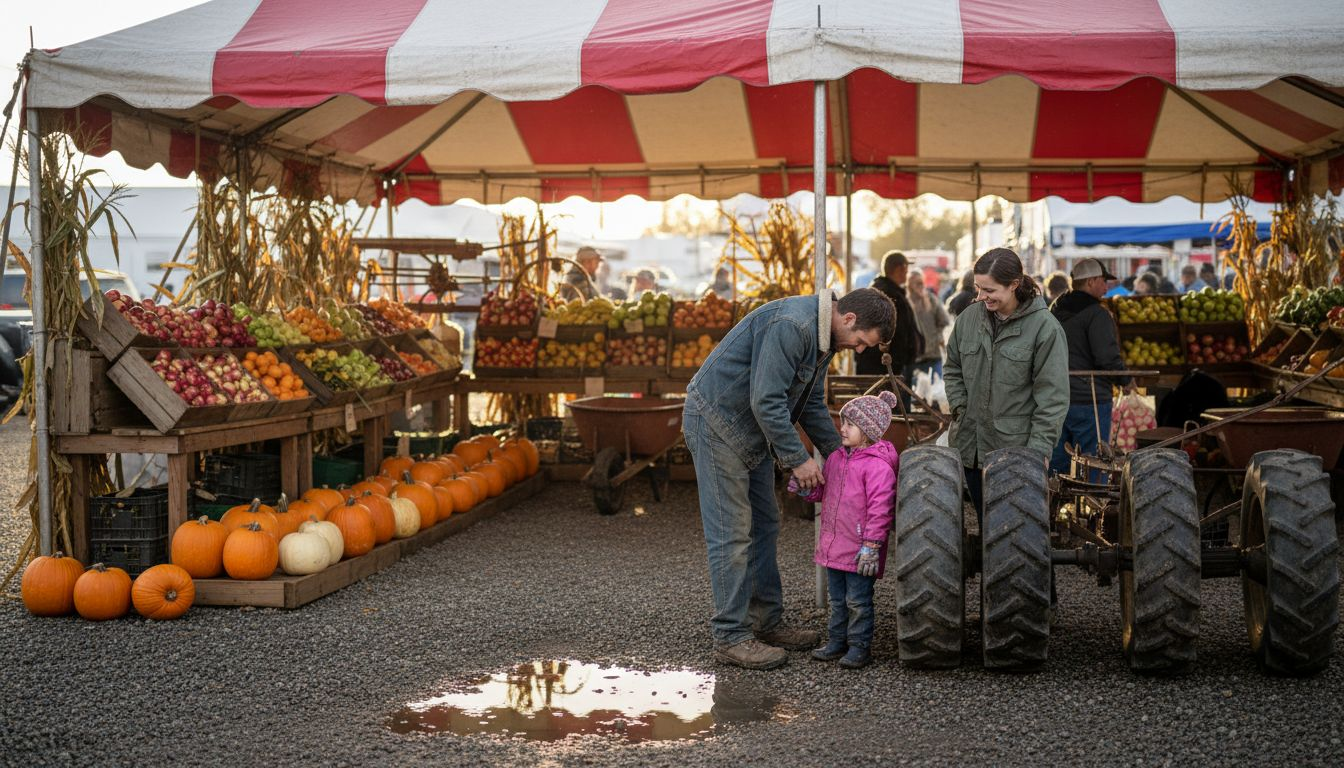
County and state fairs represent the largest scale agricultural gatherings, showcasing the full spectrum of regional agriculture including produce competitions, livestock exhibitions, and heavy machinery displays. These events attract thousands of visitors and hundreds of exhibitors, creating significant opportunities for networking and discovering solutions you might not encounter locally. The machinery sections at county fairs often feature the latest tractor models, implements, and specialized equipment relevant to your climate zone and soil conditions. You see equipment in action through live demonstrations, watch operators discuss performance characteristics, and compare brands side by side. For someone operating agricultural machinery in Northern Greece, attending a well organized county fair exposes you to equipment designed for similar climates and terrain. The downside is the crowds. You must navigate massive attendances and compete for attention from booth staff. State fairs also tend to run for several days, requiring significant time commitment.
Specialty fairs focus on particular agricultural segments rather than trying to cover everything. You might find fairs dedicated entirely to organic farming practices, machinery and equipment, or specific crop production. Agricultural exhibitions showcase innovations in machinery and sustainable farming, allowing you to dive deep into your area of expertise. If you operate equipment primarily for vegetable production or vineyard management, a specialty fair targeting those crops provides highly relevant information, suppliers, and fellow operators facing identical challenges. These events attract fewer people but higher quality participants. You spend less time filtering irrelevant booths and more time in substantive conversations with people who understand your specific operational demands.
Local and community fairs emphasize grassroots engagement and support for local producers and suppliers. These smaller events might seem less impressive than massive state fairs, but they offer genuine advantages for regional operators. You connect directly with local mechanics, suppliers who understand Thessaloniki and Kavala’s specific conditions, and fellow farmers operating in your exact geographic area. Local fairs create opportunities for ongoing relationships because you see the same people regularly. A supplier you meet at a community fair becomes someone you might work with for years. The pressure here is also lower. Conversations feel less transactional and more collaborative.
Beyond these traditional categories, modern agricultural events include specialized conferences and educational sessions designed around emerging technologies like precision agriculture and smart machinery. These events combine expo floors with structured learning opportunities through workshops and presentations. You gain technical knowledge while exploring equipment innovations. Some fairs also offer live demonstrations and hands on learning where you can operate equipment, test solutions, or watch expert technicians solve common problems.
Choosing between event types depends on your goals. If you seek broad exposure to multiple machinery options and competitors, attend larger county or state fairs. If you want deep expertise in a specific area, target specialty fairs. If you prioritize building local relationships and supporting regional suppliers, community fairs deliver better returns on your time investment.
Here is a quick comparison of agricultural trade fair types and their ideal use cases:
| Event Type | Best For | Audience Size | Example Advantages |
|---|---|---|---|
| County/State Fair | Broad equipment overview | Large, thousands | See new models, big networking |
| Specialty Fair | Deep insight into one segment | Medium, hundreds | Focused expertise and vendors |
| Local/Community | Building local relationships | Small, dozens | Regional solutions, close suppliers |
| Educational Event | Learning new technologies | Varies, targeted | Hands-on demos, expert sessions |
Pro tip: Research upcoming agricultural exhibitions in your region before the event, identify which category best matches your equipment needs and schedule availability, then register early to access any discounted admission rates or reserved parking for your vehicle.
Networking Opportunities and Business Connections
The real value of attending agricultural trade fairs often emerges long after the event ends. While the equipment demonstrations and product displays grab immediate attention, the relationships you build prove far more valuable to your business over time. For agricultural machinery operators and farmers in Thessaloniki and Kavala, these personal connections become your competitive advantage. You gain access to insider information, preferential treatment from suppliers, and trusted advisors who understand your exact operational challenges.
Trade fairs create concentrated opportunities to connect with people you would never meet in your daily routine. You encounter equipment manufacturers, spare parts distributors, maintenance specialists, financial advisors, and fellow operators all in one location. Strategic partnerships and idea exchange happen naturally at agricultural events where industry leaders, innovators, and decision makers gather specifically to connect. Unlike random encounters, these are intentional networking moments where everyone expects professional conversations. A distributor you meet at a fair booth might become your primary supplier for specialized tractor accessories. A fellow operator facing similar soil challenges might share solutions that save you thousands of euros in equipment experimentation. These connections create informal but powerful business networks that benefit you repeatedly.
One underestimated networking advantage is access to people who make purchasing decisions at larger operations or agricultural cooperatives. If you supply equipment, services, or products to farms, trade fairs put you directly in front of buyers. You can discuss their specific needs, understand their budget constraints, and propose solutions tailored to their operations. For machinery operators seeking to expand into equipment rental, custom work, or consulting services, these conversations reveal market opportunities you might not discover otherwise. The relaxed booth environment also makes these conversations feel less formal than traditional sales meetings. People are more open to discussing challenges and exploring possibilities when they are walking through an exhibition rather than sitting across from a salesperson at a desk.
Trade fairs also facilitate connections with suppliers you might switch to or work alongside. Perhaps your current spare parts vendor cannot reliably supply a specific component. At a trade fair, you discover alternatives with different pricing, availability, or service terms. You evaluate whether switching makes sense or whether you should maintain dual relationships with multiple suppliers for critical items. For operators in your region considering wholesale or B2B membership arrangements, fairs provide ideal settings to negotiate these partnerships directly with distributors who understand your volume, payment preferences, and specific equipment lineup.
The networking benefits extend beyond immediate business transactions. Industry conversations reveal emerging regulations, market trends, and competitive pressures affecting your sector. If new emissions standards are coming, you learn about them from manufacturers and other operators. If equipment designs are shifting in a particular direction, you understand why and can prepare. This market intelligence keeps you ahead of sudden changes and allows you to make strategic decisions proactively rather than reactively.
Building these networks requires intentionality. Show up prepared. Identify people you genuinely want to meet. Ask questions. Exchange contact information. Follow up afterward. The farmers and operators who maximize networking value treat trade fairs as serious business meetings, not casual browsing trips.
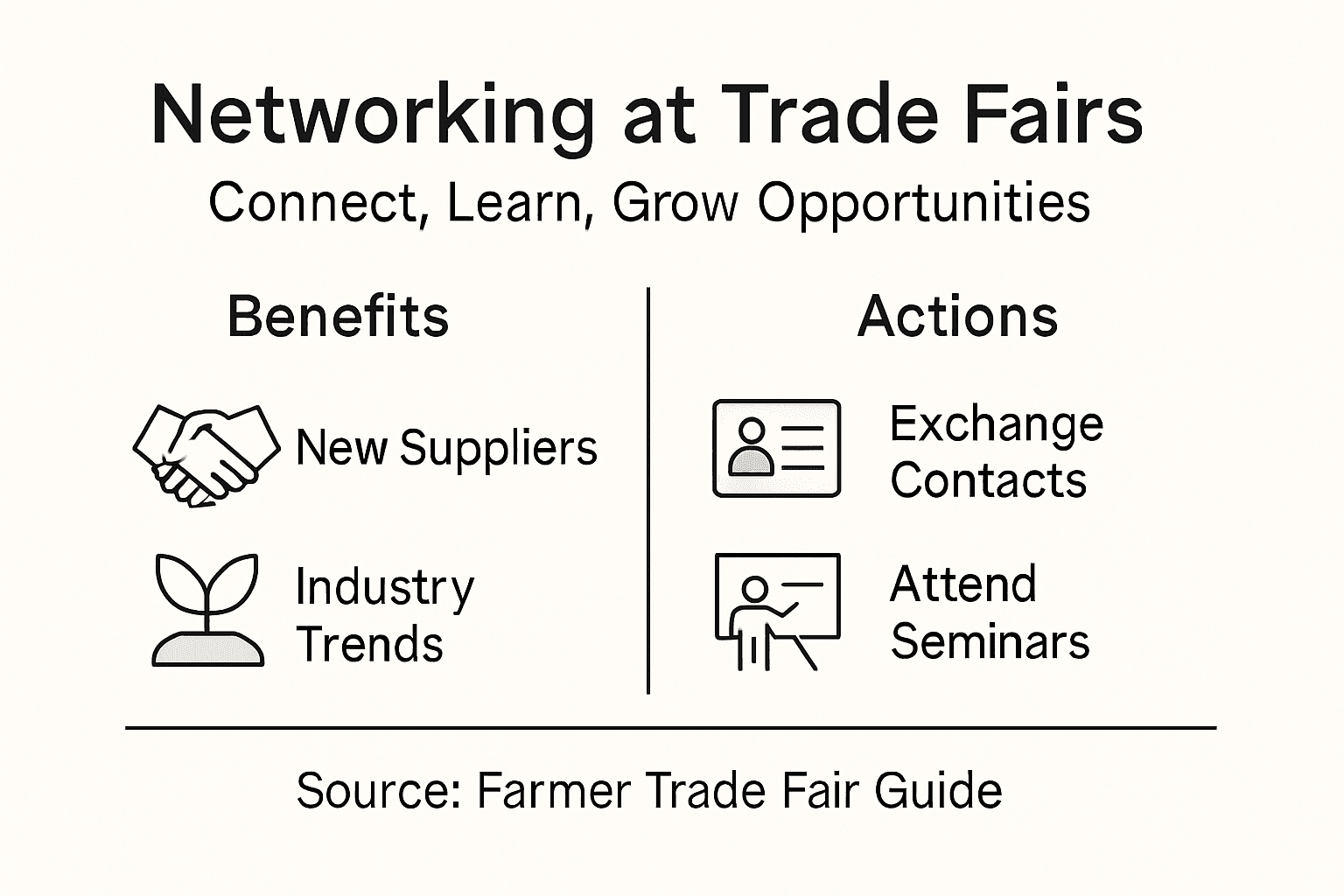
Pro tip: Bring a notebook or use your phone to record contact information immediately after each conversation, noting specific details about what the person discussed and what action you might take, then schedule time within one week to send follow up messages while the conversation remains fresh.
Common Pitfalls and Maximizing Trade Fair Value
Attending a trade fair without clear planning guarantees you will waste time and money without capturing meaningful benefits. Many agricultural machinery operators approach these events reactively, wandering through booths, collecting brochures they never read, and making impulse decisions they later regret. Understanding common mistakes helps you sidestep these traps and return from the fair with concrete progress toward your business goals.
The first major pitfall is arriving without objectives. Before you set foot at a trade fair, ask yourself specific questions. Are you searching for a new spare parts supplier because your current one proves unreliable? Do you need to evaluate specific machinery for an upcoming equipment purchase? Are you seeking information about new regulations or technologies affecting your operations? Generic attendance produces generic results. You wander aimlessly, talk to random booth staff, and leave without actionable next steps. Instead, write down three to five concrete objectives before the event. This focus ensures you spend time where it matters and skip what does not.
A second pitfall involves trusting verbal promises without documentation. During trade fair conversations, suppliers make claims about pricing, availability, delivery timelines, and warranty terms. These promises often sound better in the excitement of the moment than they prove to be later. Awareness of unfair trading practices including delayed payments and unilateral contract changes helps protect you when negotiating with new suppliers. Always request written quotes, pricing lists, and standard terms before committing to any arrangement. Get the booth representative’s direct contact information. Follow up within 48 hours with written confirmation of what was discussed. This creates a paper trail that protects both parties and prevents misunderstandings. Delayed payments and cost shifting by larger suppliers disproportionately affect smaller operators, so establishing clear, transparent agreements from the start matters enormously.
Many operators also fail to follow up after the fair. You collect dozens of business cards, take photos of equipment, and note supplier names. Then weeks pass and you do nothing with this information. The connections fade. The momentum disappears. The real value emerges only through systematic follow up. Within one week of returning home, contact the people you met. Reference specific conversations. Ask clarifying questions. Request formal proposals for serious inquiries. This follow up transforms casual fair encounters into actual business relationships.
Lacking a comparison strategy represents another common mistake. You see one piece of equipment that looks good and consider purchasing it. But you have no basis for comparison. What if a different manufacturer offers superior specifications at lower cost? What if warranty terms differ significantly? Strategic planning with clear criteria helps you evaluate options systematically. Before attending, research competitor offerings. Create a simple comparison spreadsheet noting specifications, pricing, warranty, and service availability. During the fair, gather information that fills in your spreadsheet. This structured approach prevents emotional or impulse purchases.
Many operators also underestimate the educational value of trade fairs. They skip seminars and demonstrations to spend more time shopping the exhibit floor. Yet the seminars often contain critical information about emerging technologies, regulatory changes, or best practices that directly affect your profitability. Make time for educational sessions, even if it means visiting fewer vendor booths. The knowledge gained often proves more valuable than any single product you encounter.
The following table summarizes common trade fair pitfalls and how to avoid them:
| Pitfall | Typical Consequence | Prevention Tip |
|---|---|---|
| No clear objectives | Wasted time, no results | Set three to five goals pre-event |
| Trusting verbal promises | Disputes or unmet expectations | Request written confirmation |
| Failing to follow up | Lost connections, missed deals | Contact new contacts within one week |
| Lack of comparison strategy | Poor purchasing decisions | Use a simple comparison spreadsheet |
Finally, do not neglect the B2B and wholesale opportunities available at trade fairs. If you operate multiple pieces of equipment or manage several operations, formal wholesale or bulk purchasing agreements with distributors can reduce costs significantly. Trade fairs provide ideal settings to explore these arrangements because distributor representatives have authority to negotiate terms directly.
Pro tip: Before leaving the trade fair venue, spend 30 minutes reviewing your notes, highlighting priority contacts and decisions, and scheduling specific follow up tasks in your calendar so the momentum carries into action rather than fading during your busy work week.
Unlock the Full Potential of Agricultural Trade Fairs with Reliable Machinery Support
Attending agricultural trade fairs offers invaluable opportunities to explore new tractor accessories, compare spare parts, and build trusted relationships with suppliers and fellow operators. If you want to turn those insights into actionable advantages for your farm or machinery business in Thessaloniki, Kavala, or nearby areas, partnering with a dependable supplier is key. The challenges of verifying product quality, securing fair pricing, and maintaining equipment efficiency can feel overwhelming after the excitement of a fair if you do not have a reliable source to turn to quickly.
At pexlivanidis.com, you will find a vast inventory of over 20,000 agricultural machinery parts designed to meet the specific demands revealed during trade fair visits. Whether you need tractor accessories, spare parts, or wholesale purchasing options, this platform bridges the gap between your new knowledge and practical business solutions. With free shipping on orders over 100 euros within Greece and tailored B2B memberships, you can confidently transform fair discoveries into tangible savings and improved equipment performance today.
Explore how seamless ordering and expert supplier support can multiply the benefits gained from attending agricultural trade fairs. Start by browsing the extensive product selection at pexlivanidis.com and contact the team to discuss how wholesale opportunities can optimize your operations. Don’t let the momentum from your next trade fair fade away. Act now and turn insights into results.
Frequently Asked Questions
What are the main benefits of attending agricultural trade fairs?
Attending agricultural trade fairs provides access to the latest equipment and technologies, opportunities to build professional relationships with suppliers and peers, and insights into emerging practices and regulations that can improve productivity and efficiency on your farm.
How do agricultural trade fairs facilitate better purchasing decisions?
Trade fairs allow you to inspect agricultural machinery and accessories in person, compare them side by side, negotiate pricing with suppliers directly, and gain first-hand insights into product durability and maintenance from experts, helping you make informed decisions.
What types of educational sessions can you find at agricultural trade fairs?
Educational sessions at agricultural trade fairs include seminars, live demonstrations, and workshops focused on maintenance practices, efficiency improvements, and emerging technologies that can enhance productivity and reduce operational costs.
How can networking at trade fairs benefit my farming operation?
Networking at trade fairs can lead to valuable connections with suppliers, mechanics, and fellow farmers who share insights and solutions to common challenges. These relationships can provide ongoing support, market intelligence, and collaborative opportunities that benefit your operation long after the event.