
Choosing the wrong tractor spare part can turn a simple repair into a costly problem for Greek farmers working near Thessaloniki or Kavala. When tractors break down during busy harvests, every hour counts and the price of downtime adds up quickly. Genuine parts are engineered for exact fit and function, reducing failures and keeping your tractor working smoothly when you need it most. This article offers straightforward advice to help you make smart decisions that protect your equipment and your income.
Table of Contents
- What Are Genuine Spare Parts and Why They Matter
- Original vs. Aftermarket Parts for Tractors
- How Genuine Parts Affect Tractor Performance
- Warranty Protection and Safety Compliance
- Long-Term Costs and Common Pitfalls
Key Takeaways
| Point | Details |
|---|---|
| Genuine Parts Ensure Compatibility | Genuine spare parts are designed to meet exact specifications, ensuring seamless integration with your tractor and optimal performance. |
| Cost Savings Over Time | While genuine parts may have a higher upfront cost, they often result in lower total ownership costs due to their durability and warranty protection. |
| Increased Resale Value | Equipment maintained with genuine parts retains higher resale value as buyers appreciate the assurance of quality and proper maintenance. |
| Safety and Compliance Risks | Using non-genuine parts can void warranties and lead to safety hazards, legal issues, and regulatory noncompliance affecting your operation. |
What Are Genuine Spare Parts and Why They Matter
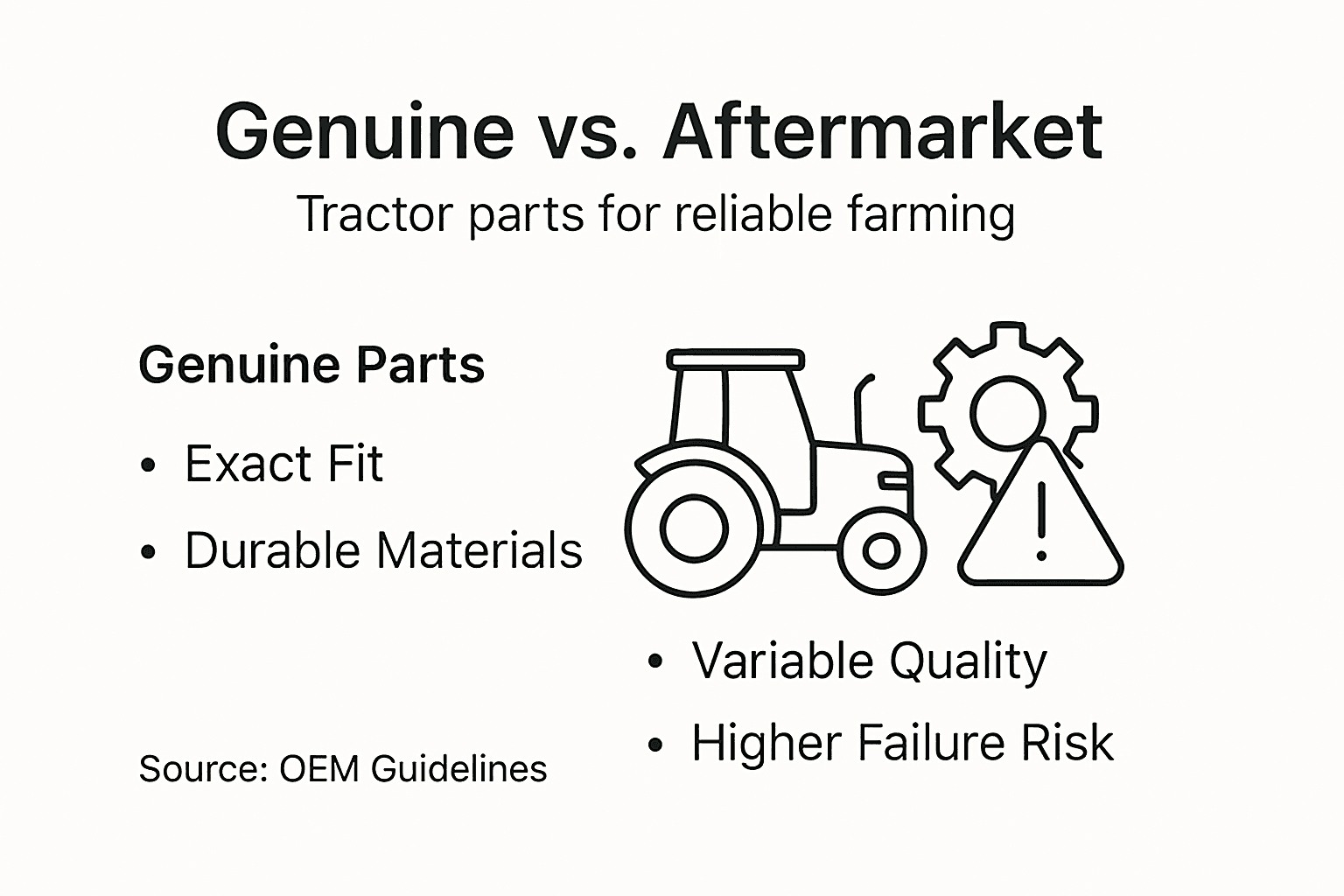
Genuine spare parts are components manufactured by the original equipment manufacturer (OEM) or authorized suppliers specifically designed to match your tractor’s exact specifications. These parts are engineered using the same materials, tolerances, and quality standards as the components that came from the factory. When you buy a genuine alternator, hydraulic filter, or transmission seal from Pexlivanidis, you’re getting a part that has been tested and validated to work perfectly with your specific tractor model.
Here’s why this distinction matters more than you might think. Your John Deere, Case IH, or Massey Ferguson tractor was built with precision engineering. Every component fits together within exact specifications—sometimes measured in fractions of a millimeter. Counterfeit or aftermarket parts that don’t meet these specifications can create problems that ripple through your entire machine. A cheap hydraulic fluid that doesn’t meet OEM viscosity standards won’t flow properly through your system, causing sluggish movement in your loader or implement controls. An aftermarket fuel filter with improper filtration ratings allows debris into your injection pump, leading to costly damage down the line. These aren’t theoretical problems—farmers across Northern Greece have experienced them, and they’re expensive to fix.
When you’re operating equipment worth tens of thousands of euros, the cost difference between genuine and counterfeit parts becomes almost insignificant. A genuine fuel injector costs more upfront, but a failed counterfeit version can damage your entire fuel system, requiring repairs that cost five to ten times the price of the original component. Genuine parts also come with warranty protection, meaning you have recourse if something fails unexpectedly. More importantly, genuine parts preserve your tractor’s resale value. When you eventually sell your equipment, buyers will recognize that it’s been maintained with proper components, justifying a better price. Understanding the benefits of quality tractor parts helps you see this as investment, not expense.
The reliability factor extends to your operation’s continuity as well. During harvest season in September and October, equipment downtime directly translates to crop loss. Genuine parts are manufactured to exacting standards that ensure consistent performance. They’re less likely to fail suddenly, which means fewer emergency repairs during critical working periods. When you purchase through Pexlivanidis with our extensive inventory of over 20,000 genuine items, you’re choosing parts from suppliers who understand the demands of Greek agricultural operations.
Pro tip: Always verify that replacement parts match your tractor’s exact model and serial number before purchase—genuine parts are designed for specific machines, and installing the wrong version, even if it seems to fit, can cause performance issues that damage your engine or transmission.
Original vs. Aftermarket Parts for Tractors
When your tractor needs repairs, you face a choice that feels simple on the surface but carries serious consequences beneath. Original Equipment Manufacturer (OEM) parts come directly from or are authorized by the company that built your tractor. Aftermarket parts are produced by third-party manufacturers who are not affiliated with the original builder. The difference between these two categories extends far beyond brand loyalty or price tags. Understanding OEM tractor parts benefits helps clarify why this choice matters for your operation’s long term success.
Original parts are manufactured to the exact specifications outlined in your tractor’s engineering blueprints. Every dimension, material composition, and performance characteristic has been tested and validated to work seamlessly with your machine. When a John Deere part is installed on a John Deere tractor, there’s no guesswork involved. Aftermarket alternatives often attempt to replicate this functionality, but they frequently cut corners to achieve lower prices. A counterfeit transmission gasket might use a material that degrades faster under heat stress. An aftermarket alternator might deliver slightly lower amperage output, causing your battery to charge more slowly. These seem like minor differences until they compound into serious mechanical failures. Greek farmers operating in the challenging terrain around Thessaloniki and Kavala understand that equipment reliability directly impacts profitability. When you’re racing against weather windows during planting or harvest, a part failure costs you crops, not just repair bills.
Cost considerations require honest analysis. Yes, aftermarket parts typically cost 20 to 40 percent less than OEM equivalents. A genuine fuel filter from Pexlivanidis costs more than a generic alternative. But here’s the financial reality that many operators miss: the price difference disappears when you factor in longevity. An OEM hydraulic hose lasts significantly longer than a cheap aftermarket version before it develops leaks or cracks. When you multiply this across dozens of components on your tractor, the total cost of ownership actually favors genuine parts. Additionally, OEM parts carry manufacturer warranties, meaning you have protection if something fails unexpectedly. Aftermarket parts rarely offer this assurance, leaving you responsible for any damage caused by failure.
Resale value represents another financial factor that gets overlooked. When you eventually sell your equipment, buyers investigate maintenance history and what components have been installed. A tractor maintained exclusively with genuine parts from reputable suppliers like Pexlivanidis commands higher resale prices than one cobbled together with bargain aftermarket replacements. Buyers recognize that genuine parts mean fewer hidden problems and greater remaining service life. They’re willing to pay a premium for that confidence. Over a tractor’s 15 to 20 year operational lifespan, this resale value difference can easily exceed the initial savings you might have achieved by choosing cheaper aftermarket components.
Here is a concise comparison of genuine vs. aftermarket tractor parts:
| Aspect | Genuine Parts | Aftermarket Parts |
|---|---|---|
| Manufacturer Support | Backed by OEM warranty | Limited or no warranty |
| Part Lifespan | Designed for long-term use | Often shorter durability |
| Compatibility | Exact fit for specific model | Possible minor mismatches |
| Impact on Resale | Increases equipment value | Can lower resale potential |
| Maintenance History | Easy to document for buyers | Harder to prove authenticity |
| Warranty Protection | Maintained when installed | Often voids OEM warranty |
| Risk of Hidden Damage | Very low | Higher due to spec variance |
Performance and Compatibility Issues
Aftermarket parts introduce compatibility risks that extend beyond simple mechanical fit. Your tractor’s engine control systems rely on specific sensor readings from various components. An aftermarket oxygen sensor might provide slightly inaccurate readings, causing your engine to run lean or rich. This affects fuel efficiency, increases emissions, and can damage your catalytic converter over time. Hydraulic system components require precise pressure ratings and flow characteristics. Install an aftermarket pump or valve with incorrect specifications, and you’ll experience erratic implement control, sluggish loader movement, or unexpected drift in your positioning systems. These performance degradations accumulate gradually, making them difficult to diagnose until significant damage occurs.
Pro tip: Build a relationship with a trusted supplier like Pexlivanidis who stocks genuine parts for your specific tractor models, and keep detailed maintenance records showing which components you’ve replaced—this documentation protects your warranty and maximizes resale value when you eventually upgrade your equipment.
How Genuine Parts Affect Tractor Performance
Your tractor’s performance depends on thousands of individual components working in perfect harmony. When you install genuine parts, you’re maintaining that harmony. When you compromise with inferior replacements, you introduce discord that ripples through every system. Genuine parts are engineered for exact fit and function, which means they integrate seamlessly with your existing equipment rather than forcing your machine to adapt to their specifications. This distinction creates measurable differences in how your tractor performs during daily operations.
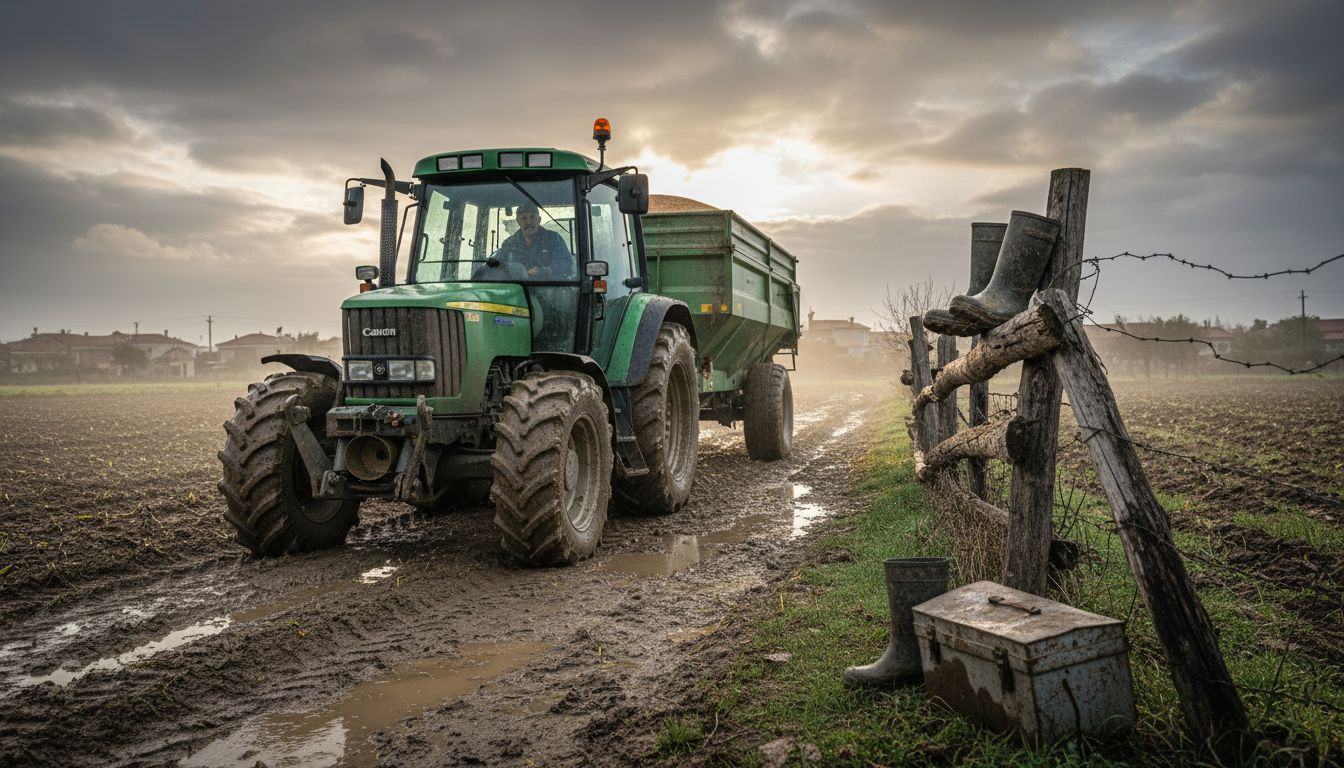
Consider what happens when you’re pulling a loaded grain trailer through muddy fields near Kavala during the rainy season. Your hydraulic system needs to deliver consistent pressure to your loader controls, rear hitch, and steering assist. Install a genuine hydraulic pump from a trusted supplier like Pexlivanidis, and you get precise pressure regulation that responds instantly to your inputs. The loader raises smoothly. The hitch holds position without creeping. The steering feels responsive even when navigating uneven terrain. Now replace that pump with an aftermarket alternative that cuts corners on internal tolerances. Pressure fluctuates. Your loader movements become sluggish and unpredictable. Your hitch drifts downward, forcing you to make constant adjustments. These performance degradations don’t just affect your comfort; they reduce your operational efficiency and increase the physical strain on your equipment. A tractor that’s fighting itself consumes more fuel and wears faster.
Engine performance shows the clearest performance differences. Genuine fuel injectors spray fuel at precise angles and pressures, creating optimal combustion conditions inside each cylinder. Counterfeit injectors produce inconsistent spray patterns, leading to incomplete fuel burn, higher emissions, and reduced power output. You notice this immediately during heavy pulling tasks. Your tractor labors harder to move the same load. Fuel consumption climbs noticeably. The engine develops a rough idle that wasn’t there before. Genuine air filters maintain exact filtration ratings, preventing dust and debris from reaching your engine while minimizing air restriction. Cheap aftermarket filters either allow contaminants through or create excessive backpressure that chokes your engine’s air supply. Both scenarios damage performance and accelerate engine wear. When you multiply these issues across your cooling system, fuel system, electrical system, and transmission, your tractor’s overall capabilities decline measurably.
Long Term Reliability and Consistency
Beyond immediate performance, genuine parts preserve your tractor’s reliability over extended periods. Superior durability and manufacturing quality reduce the likelihood of unexpected failures during critical work periods. You’re operating equipment worth tens of thousands of euros in an environment where downtime directly translates to lost income. A genuine starter motor functions reliably year after year. A counterfeit alternative might fail without warning during early morning startup when temperatures drop. Genuine belts and hoses withstand the thermal cycles and mechanical stresses of seasonal work. Aftermarket versions degrade faster, developing cracks or leaks that force unexpected repairs. The financial impact of a single failure during harvest season typically exceeds the total savings you might achieve by using cheap parts for an entire year.
Your tractor’s power transmission depends on consistent, reliable components. Genuine clutch plates, gears, and bearings are manufactured to exact tolerances that ensure smooth, predictable power delivery. Aftermarket alternatives introduce slight variations in dimensions and material properties that accumulate into noticeable performance loss. Your transmission shifts differently. Acceleration feels less responsive. The tractor tires spin more easily on soft ground because power transfer becomes inconsistent. Over months of operation, these reliability differences become impossible to ignore. Farmers across Northern Greece who maintain their equipment with genuine parts from Pexlivanidis consistently report fewer unexpected breakdowns and more predictable performance compared to those who experiment with budget alternatives.
Pro tip: Track your tractor’s fuel consumption and operating temperature regularly; sudden changes in either metric often signal that a recently installed part isn’t performing to genuine specifications, allowing you to identify and address problems before they cause major damage.
Warranty Protection and Safety Compliance
Installing counterfeit or unauthorized aftermarket parts on your tractor creates a legal and financial vulnerability that most operators don’t fully appreciate. When you use genuine parts, you maintain your equipment’s warranty coverage. When you deviate from manufacturer specifications, you void that protection entirely. This distinction matters far more than you might think, especially when a major component fails unexpectedly. Manufacturers design warranty terms around the use of genuine components because they can guarantee performance only when equipment is maintained with approved parts. Install an aftermarket transmission and later experience catastrophic failure, and the manufacturer will refuse to cover repair costs. You become responsible for the entire bill, which can reach thousands of euros. Genuine parts ensure that mandatory spare parts availability698869_EN.pdf) aligns with manufacturer warranties, protecting your investment and keeping your equipment legally compliant with European Union regulations.
Safety compliance represents another critical consideration that extends beyond your personal risk. Modern tractors are designed with integrated safety systems that depend on specific components functioning within exact parameters. Your tractor’s brake system, for example, relies on brake fluid with precise viscosity and boiling point specifications. Install an incorrect fluid, and your brakes might feel spongy, fail to lock up properly during emergency stops, or lose pressure on steep slopes. The liability consequences reach beyond equipment damage. If an accident occurs because your equipment failed due to improper components, you could face legal responsibility for injuries or property damage. Insurance companies often deny claims when accidents involve non-genuine parts, classifying them as operator negligence rather than equipment failure. Greek agricultural authorities and EU safety regulations mandate that operators maintain equipment according to manufacturer specifications. Using genuine parts from suppliers like Pexlivanidis provides documented proof that you’re meeting these requirements.
Electrical and hydraulic systems introduce additional safety considerations. Genuine wiring harnesses and connectors are designed to handle specific amperage loads and environmental exposure. Aftermarket alternatives might fail under normal operating conditions, potentially causing electrical fires or loss of essential functions like steering assist or braking systems. Genuine hydraulic hoses are manufactured with precise internal dimensions and material compositions that ensure safe pressure handling. A burst hose on a genuine system fails under controlled circumstances, venting pressure safely. A counterfeit hose can rupture violently, spraying pressurized hydraulic fluid that causes severe burns or eye damage. These aren’t theoretical risks. Agricultural workers across Europe have suffered serious injuries from equipment failures caused by substandard components. When you operate a tractor, you’re responsible for maintaining it safely. Using genuine parts demonstrates that you’re taking this responsibility seriously.
Documentation and Legal Protection
Maintaining detailed maintenance records using genuine parts provides essential documentation that protects you legally and financially. When you eventually sell your equipment, buyers conduct thorough inspections. Documented maintenance history with genuine parts from reputable suppliers demonstrates that you’ve operated the equipment responsibly. This documentation becomes especially important if disputes arise regarding equipment condition or functionality. Insurance companies require proof of proper maintenance when processing claims. Banks and lenders view equipment maintained with genuine parts more favorably when considering financing options. Keep receipts from Pexlivanidis and other suppliers showing part numbers, installation dates, and maintenance work performed. This documentation transforms warranty coverage from a theoretical promise into a practical protection that actually covers your equipment when problems arise.
Regulatory inspection and certification processes in Greece and the European Union increasingly emphasize proper maintenance documentation. Agricultural equipment must meet emissions standards, safety specifications, and operational requirements. Using genuine parts ensures your tractor meets these standards. Using counterfeit alternatives might cause your equipment to fail inspections or become subject to operational restrictions. Some regions now require proof of genuine component usage before allowing equipment to operate in certain areas. This regulatory landscape continues evolving, making genuine parts increasingly important for long term compliance and operational freedom.
Pro tip: Keep a dedicated maintenance log with photographs of installed parts, supplier receipts, and work dates; this documentation protects your warranty coverage and proves proper maintenance if you ever need to file an insurance claim or demonstrate compliance during regulatory inspections.
Long-Term Costs and Common Pitfalls
The math on genuine versus aftermarket parts rarely works out the way operators initially think. You see a cheap alternator priced at 40 euros less than a genuine replacement and think you’re getting a bargain. But genuine parts reduce total long-term maintenance costs through durability and warranty coverage that aftermarket alternatives simply cannot match. Over a five year period, the initial savings from buying cheap parts evaporates quickly when you factor in replacement frequency, associated damage, and lost productivity. A genuine fuel pump costs more upfront but operates reliably for thousands of hours. A counterfeit version might fail within months, forcing you to replace it multiple times. Each replacement means taking your tractor out of service during critical working periods, losing income while parts are ordered and installed. The hidden costs accumulate far faster than the upfront savings ever could.
Chain reaction damage represents one of the most devastating pitfalls farmers encounter with substandard components. Installing a cheap transmission fluid that doesn’t meet OEM specifications seems harmless at first. But improper viscosity causes increased friction inside your transmission, generating excess heat. That heat accelerates wear on gears and bearings. Within months, you notice sluggish shifting and loss of power. You take your tractor to a mechanic expecting a simple fluid change fix. Instead, the technician discovers that gears have already worn beyond safe limits. Now you’re looking at a complete transmission rebuild costing thousands of euros, rather than the couple hundred euros you might have saved with proper fluid from the start. Using substandard spare parts causes frequent failures that trigger cascading damage throughout interconnected systems. A cheap fuel injector delivers improper fuel spray patterns, causing incomplete combustion. This damages your catalytic converter. It stresses your engine’s piston rings. It clogs your air filter faster. Each problem creates additional costs that multiply far beyond the original component failure.
Downtime costs hit hardest during harvest season. You’re racing against weather windows in September and October when rain can destroy unharvested grain. Equipment failure during these critical weeks doesn’t just cost repair expenses; it costs lost crops. A single week of downtime during harvest can eliminate your entire season’s profit margin. Genuine parts minimize unexpected failures because they’re manufactured to exact standards and backed by warranty coverage. Aftermarket parts carry significantly higher failure rates, meaning statistically you’re more likely to experience breakdowns during precisely when you can least afford them. The financial planning becomes clear when you understand the actual risk profile. Genuine parts cost more but provide insurance against catastrophic downtime. Aftermarket parts save money upfront while transferring risk directly to you as the operator.
This table summarizes common long-term pitfalls when using non-genuine parts:
| Pitfall | Cause | Potential Consequence |
|---|---|---|
| Chain Reaction Failures | Substandard fluids/filter | Expensive system-wide damage |
| Frequent Replacements | Low parts durability | Increased downtime, more costs |
| Voided Warranty | Unauthorized part installation | No coverage for repairs |
| Safety Compromises | Incompatible materials | Risk of injury or accidents |
| Regulatory Noncompliance | Fails official inspections | Legal fines, denied insurance |
| Decreased Performance | Imperfect fit/function | Lower efficiency, more wear |
Common Installation Mistakes
Many operators make additional mistakes beyond part selection that compound these problems. Improper installation of even genuine parts can void warranty coverage and create reliability issues. Installing an aftermarket belt that doesn’t meet tension specifications causes premature wear on pulleys and alternators. Using incorrect fasteners when installing components creates vibration and stress points that lead to failure. Mixing genuine and aftermarket parts throughout your hydraulic system creates incompatibility issues as pressure ratings and flow characteristics don’t align properly. A genuine pump paired with an aftermarket valve creates conflicts that damage both components. Operators in Thessaloniki and Kavala often benefit from having qualified mechanics handle critical installations. Pexlivanidis can recommend technicians in your area who understand proper installation procedures for the specific parts you’re purchasing.
Temperature management represents another overlooked pitfall. Genuine coolant with correct boiling points and corrosion inhibitors keeps your engine at safe operating temperatures. Cheap aftermarket coolant breaks down faster, allowing corrosion to develop inside your engine block. You don’t notice problems immediately because engine overheating develops gradually. By the time symptoms become obvious, internal corrosion has already damaged cylinder walls and water passages. Similarly, genuine lubricants contain additives that protect against wear and reduce friction at exact levels your engine was engineered to expect. Aftermarket oils lack these formulations, leading to accelerated bearing wear that eventually causes catastrophic engine failure. These gradual failures are particularly insidious because they feel like normal aging rather than consequences of poor component choices.
Pro tip: Calculate your true cost of ownership by tracking actual replacement frequency and repair expenses over three years with aftermarket parts, then compare that total against estimated costs using genuine parts from Pexlivanidis—most operators discover that genuine parts cost 15 to 25 percent less when accounting for all failures and downtime.
Secure Your Tractor’s Future with Genuine Parts from Pexlivanidis
The challenge every tractor owner faces is clear Maintaining performance and avoiding costly breakdowns means choosing genuine parts that meet exact specifications instead of risking unreliable aftermarket options Your tractor depends on precision engineered components like fuel injectors and hydraulic filters that protect its value and ensure peak operation in demanding Greek terrains
At Pexlivanidis, we provide access to over 20,000 authentic tractor parts backed by OEM quality standards and warranties With free shipping inside Greece for orders over 100€ and dedicated support for both retail and wholesale customers in Thessaloniki, Kavala, and surrounding areas you have expert assistance every step of the way Stop risking downtime during critical seasons and protect your investment by choosing parts that guarantee compatibility safety and long-term savings Explore our extensive inventory and secure your tractor’s reliability today at https://pexlivanidis.com and discover why genuine is the only choice for serious farmers
Frequently Asked Questions
What are genuine spare parts for tractors?
Genuine spare parts are components manufactured by the original equipment manufacturer (OEM) or authorized suppliers that are specifically designed to match your tractor’s exact specifications, ensuring compatibility and reliability.
Why are genuine parts important for tractor performance?
Genuine parts ensure that each component fits together seamlessly, maintaining optimal performance and reducing the likelihood of mechanical failures due to poor fit or function.
How do genuine spare parts affect the longevity of my tractor?
Genuine parts are engineered using high-quality materials and strict tolerances, which allow them to last longer than counterfeit or aftermarket alternatives, ultimately reducing total maintenance costs over time.
Can using aftermarket parts damage my tractor?
Yes, using aftermarket parts that don’t meet OEM specifications can lead to performance issues, unexpected failures, and even cause damage to other components due to mismatches in fit and functionality.