
When your tractor grinds to a halt in the middle of peak season, every lost hour can set back an entire week of work. Reliable machinery keeps farms across Northern Greece running smoothly, which is why choosing quality spare parts matters much more than price alone. Quality components built to precise standards minimize downtime, extend your tractor’s working life, and protect your daily productivity from unexpected failures.
Table of Contents
- What Are Quality Spare Parts for Tractors
- Types and Standards of Spare Parts Available
- How Quality Parts Impact Machinery Performance
- Risks of Low-Quality and Counterfeit Components
- Cost, Longevity, and Safety Considerations
Key Takeaways
| Point | Details |
|---|---|
| Quality Spare Parts Maintain Reliability | Installing quality spare parts minimizes equipment downtime and ensures your tractor operates effectively through critical farming periods. |
| Costs of Low-Quality Components | Using low-quality or counterfeit parts leads to frequent breakdowns and potentially costly damage, negating any initial savings. |
| Choose Reputable Suppliers | Purchasing from established distributors guarantees safety, quality, and adherence to industry standards, protecting your investment. |
| Investment in Quality Increases Longevity | Higher upfront costs for quality parts result in lower long-term maintenance expenses and improved machinery performance. |
What Are Quality Spare Parts for Tractors
Quality spare parts for tractors are interchangeable components designed to replace worn, damaged, or defective parts while maintaining the machine’s original performance and reliability. These aren’t generic aftermarket components that might fit loosely or fail after a few months of operation. Instead, quality spare parts meet strict manufacturing standards, match your tractor’s original specifications, and restore equipment to proper working condition without compromise.
Think of quality spare parts as the backbone of effective maintenance. They fall into several categories that matter for your daily operations. Capital parts are long-life, critical components that prevent costly downtime when replaced properly. Consumables like filters, belts, and fluids get used up during normal operation and need regular replacement to maintain engine efficiency. Inspection spares are components examined during planned maintenance routines, often reusable if they pass quality checks. Operational spares work within your equipment during scheduled use without requiring inspection. Each type serves a specific purpose, but all share one essential characteristic: they keep your tractor productive and reliable. Quality spare parts ensure maintainability and reliability by replacing defective units efficiently, minimizing downtime that eats into your harvest season or daily farm operations.
What separates quality spare parts from poor substitutes comes down to precision and durability. A quality replacement component fits exactly where the original part belonged, functions at the same efficiency level, and lasts long enough to justify the investment. Poor quality parts might seem cheaper upfront, but they often fail prematurely, require frequent replacement, and can damage surrounding components through improper fit or performance. When you purchase spare parts from established distributors like Pexlivanidis, you gain access to components that have been tested and verified to work with Northern Greek farming conditions and equipment types you operate daily.
Pro tip: When ordering spare parts, verify the exact model and year of your tractor before purchasing, as seemingly identical parts can vary significantly between model generations and manufacturers.
Types and Standards of Spare Parts Available
Spare parts for tractors come in different types, each serving specific functions depending on your machinery’s needs and operational demands. Understanding these categories helps you make informed purchasing decisions and maintain appropriate inventory for your farm. The main types include engine components such as pistons, cylinders, and gaskets; transmission and drivetrain parts like clutches and gears; hydraulic system components including hoses and seals; cooling system parts such as radiators and thermostats; and electrical components like alternators and starter motors. Beyond individual components, you’ll encounter complete assemblies that combine multiple parts into functional units, offering convenient replacement options when entire systems fail.
Industry standards play a crucial role in ensuring spare parts work reliably across different tractor models and manufacturers. Established national and international standards govern agricultural machinery and components, covering power take-off definitions, operating requirements, belt drives, and component attachment methods. These standards ensure compatibility, safety, and performance consistency in spare parts used worldwide, meaning a quality replacement part meets rigorous specifications regardless of where you purchase it. When you buy from reputable suppliers like Pexlivanidis, you’re receiving components that conform to these recognized standards, providing confidence in fit and function.
Quality standards extend beyond just mechanical compatibility. Safety-critical equipment and spare parts require stringent procurement procedures to mitigate risks of component failure, a principle directly applicable to agricultural equipment like tractors that require reliable and standardized parts. Critical spare parts are those whose failure could cause significant downtime, safety hazards, or cascading damage to other systems. Your engine’s fuel injectors, brake system components, and steering linkages fall into this category. Establishing proper procurement standards means verifying supplier certifications, checking part traceability, and confirming that components have passed quality testing before installation.
When sourcing spare parts, you’ll encounter original equipment manufacturer (OEM) parts, which are produced by your tractor’s manufacturer and guarantee exact compatibility. Aftermarket quality parts are produced by third-party manufacturers who meet the same standards as OEM suppliers but often cost less. Budget parts might seem attractive initially but frequently fail to meet proper standards, leading to poor performance and premature replacement.
Pro tip: Always request documentation confirming that spare parts meet recognized industry standards and ask suppliers for part traceability information, ensuring you’re purchasing components that won’t compromise your tractor’s performance or safety.
How Quality Parts Impact Machinery Performance
The quality of spare parts you install directly shapes how your tractor performs, how often it breaks down, and ultimately how much money stays in your pocket. Reliability and performance of machinery are directly influenced by the quality of spare parts used. When you install quality components, you reduce failure rates significantly, which translates to fewer unexpected breakdowns during critical farming periods. High-quality parts improve the reliability and maintainability of equipment by enabling quicker repairs when issues do occur. Think of it this way: a quality fuel filter keeps contaminants out of your injectors, preventing costly damage down the line. A cheap alternative might let debris slip through, and suddenly you are facing thousands of euros in engine repairs that could have been prevented with a five-euro component.
Downtime costs you real money. Every hour your tractor sits idle is an hour you’re not working your fields, and during harvest season, hours compound into lost yields and income. Spare parts quality significantly affects maintenance costs, operational downtime, and machinery availability. A worn bearing replacement using quality parts lasts 800 operating hours before wearing out again. The same bearing replaced with a budget alternative might fail after 200 hours, forcing you back to the mechanic or worse, leaving you stranded in the field. Over a single season, this difference could mean multiple repair visits, extended downtime, and equipment unreliability that undermines your entire operation.
Quality parts also protect your investment in the tractor itself. When you install substandard components, they often damage surrounding systems through improper fit or performance degradation. A low-quality hydraulic hose might rupture under normal pressure, spraying fluid across critical engine components and potentially causing secondary failures. Quality hydraulic hoses maintain proper pressure ratings and durability, protecting your entire hydraulic system. This cascading protection means investing in quality parts today prevents exponentially more expensive repairs tomorrow.
The operational environment in Northern Greece, with its variable weather conditions and demanding agricultural work, puts stress on tractors year-round. Quality parts are engineered to handle these conditions consistently. Budget parts might function adequately in ideal conditions but fail when temperatures drop in winter or humidity rises during humid seasons. Choosing quality components ensures your machinery performs reliably regardless of seasonal challenges, keeping your farm operations on schedule.
Pro tip: Track which spare parts fail most frequently on your specific tractor models, then prioritize purchasing quality replacements for those high-failure items first, allocating your budget where it makes the biggest performance difference.
Risks of Low-Quality and Counterfeit Components
Counterfeit and low-quality spare parts represent a genuine threat to your tractor’s safety, performance, and your financial security. Trade in counterfeit goods, including automotive spare parts, poses serious health, safety, and environmental risks due to substandard quality and bypassed safety standards. These fake components often look identical to genuine parts, making them nearly impossible to distinguish without expert inspection. A counterfeit fuel pump might pass initial visual inspection but fail catastrophically after weeks of use, leaving you stranded or causing engine damage. The cost savings from buying cheap counterfeits evaporates instantly when you face repair bills that dwarf the original part cost.
The real danger lies in how counterfeit parts infiltrate legitimate supply chains. Unscrupulous sellers mix fake components into batches of genuine parts, and buyers have no way to know what they are purchasing until failure occurs. Counterfeit parts infiltrate supply chains risking system integrity, mission delays, and user safety. When you buy from unauthorized distributors or suspiciously cheap online sellers, you increase your exposure to these risks exponentially. What starts as a small budget compromise on one brake component can cascade into catastrophic system failures. Imagine installing counterfeit brake seals that fail mid-operation, leaving you unable to stop your tractor safely. The legal liability alone could exceed your farm’s annual income if someone is injured.
Low-quality components damage surrounding machinery through wear and poor performance. A substandard water pump bearing might seize, forcing the serpentine belt to snap and taking the alternator and power steering pump with it. A single cheap bearing becomes three expensive failures. Low-quality pistons and rings allow excessive blow-by gases to escape the combustion chamber, reducing power output and increasing oil consumption. Your engine works harder to achieve the same results, accelerating wear on other components and reducing overall lifespan.
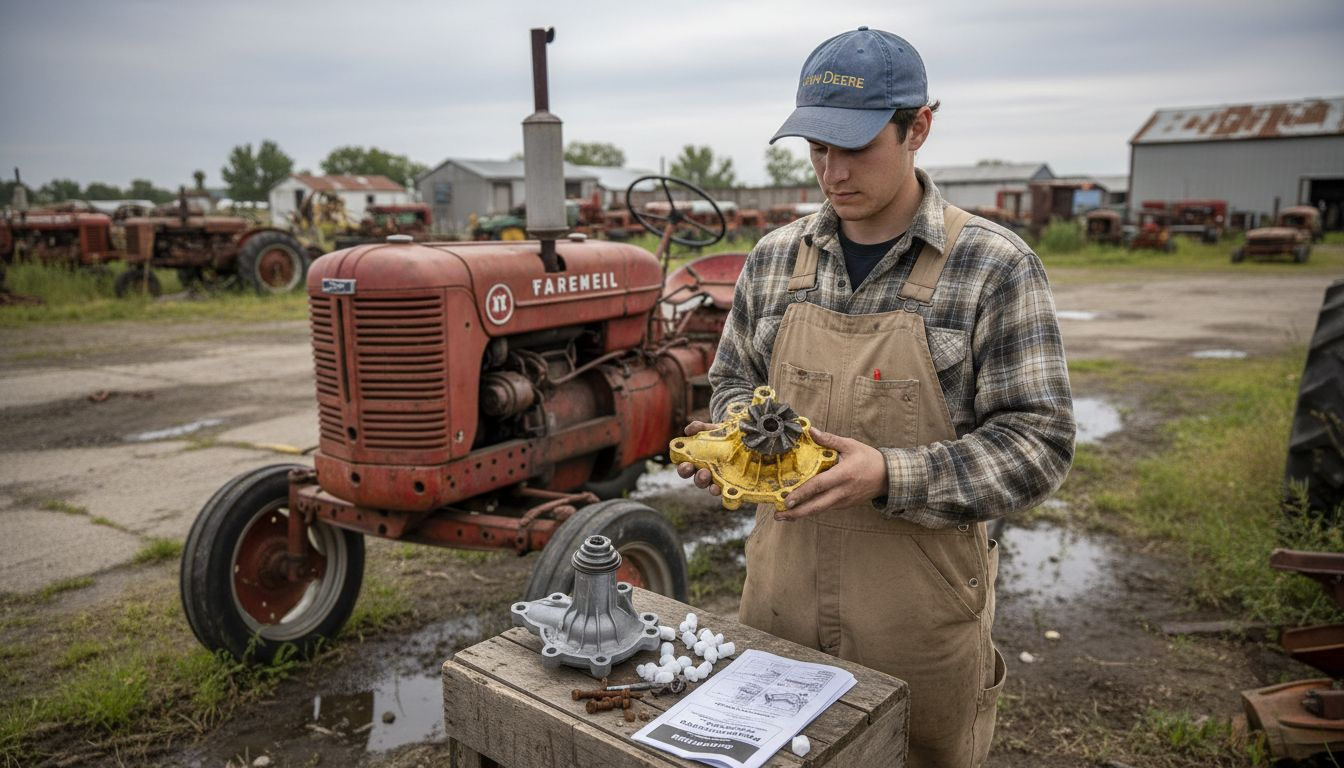
Where you purchase spare parts matters tremendously. Established suppliers like Pexlivanidis verify their supply chains, maintain relationships with legitimate manufacturers, and stand behind their products. Reputable vendors provide warranties, traceability documentation, and customer support if issues arise. Buying from unknown sellers to save a few euros puts everything at risk.
Pro tip: Purchase spare parts exclusively from established distributors who provide invoices with part numbers and manufacturer information, and never buy critical safety components from sellers who cannot verify their supply chain or offer warranties.
This table summarizes key risks and outcomes of using counterfeit vs. authentic spare parts:
| Source | Risk Level | Common Consequences | Supplier Accountability |
|---|---|---|---|
| Authorized Distributor | Low | Consistent performance | Warranty & traceability |
| Unauthorized Seller | Very High | Part failure, safety hazard | No warranty, no support |
| Counterfeit Supplier | Extreme | Major damage, legal issues | Cannot verify source |
Cost, Longevity, and Safety Considerations
The upfront cost of quality spare parts often seems higher than budget alternatives, but this comparison ignores the real economics of farm machinery ownership. Investing in quality spare parts extends machinery life, reduces downtime, and improves safety. Consider your tractor’s total ownership cost over its operational lifetime. A 50-euro quality fuel injector versus a 15-euro counterfeit might feel like a significant difference at checkout, but when you factor in the cost of replacing your entire fuel system after the cheap injector fails, the math shifts dramatically. Quality parts preserve your machinery’s resale value, reduce repair frequency, and keep your tractor earning money instead of sitting in the shop.
Machinery depreciation happens whether you maintain it well or not, but proper maintenance with quality spare parts slows that depreciation significantly. Every breakdown costs you not just in repair expenses but in lost productivity during harvest season or critical farm operations. A 100-euro replacement belt installed with quality sprockets prevents the 2,000-euro engine overhaul that results when a cheap belt snaps and damages internal components. Over a 15-year ownership cycle, the cumulative savings from using quality parts typically exceed the original purchase price of your tractor multiple times over. You are not spending more money on quality parts; you are spending less money overall by avoiding catastrophic failures.
Safety cannot be valued in euros. Safety critical spare parts must be carefully managed to maintain equipment reliability and personnel safety through rigorous procurement and risk assessments. Brake components, steering linkages, and seat belt systems are not places to economize. A counterfeit brake cylinder could fail without warning, leaving you unable to stop your tractor on a hillside or near other workers. The legal consequences of an accident caused by defective parts extend beyond repair costs to personal injury liability, property damage claims, and potential criminal charges. Quality spare parts protect your family, your employees, and yourself from harm.
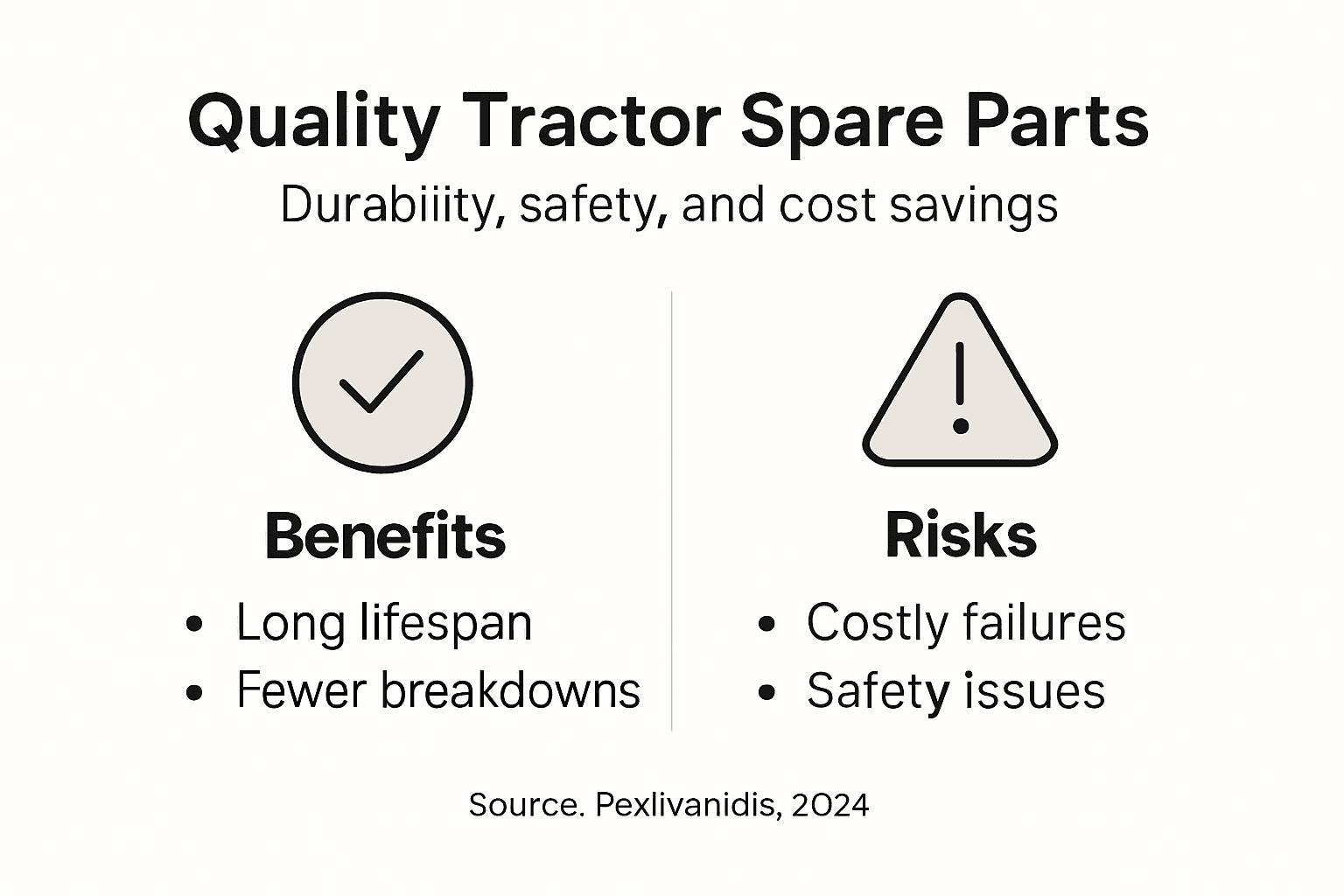
Longevity planning matters for your farm’s financial health. When you consistently purchase quality replacements, you establish predictable maintenance costs and can plan your budget accordingly. You know when major services are needed, allowing you to schedule work during slow seasons rather than emergency repairs during peak times. This reliability transforms your tractor from a source of stress into a dependable tool that shows up every day ready to work.
Here’s a comparison of spare part quality tiers and their long-term effects on tractor ownership:
| Quality Tier | Typical Cost | Lifespan (hours) | Impact on Reliability |
|---|---|---|---|
| OEM / High Quality | Highest | 800+ | Maximizes uptime, safest |
| Third-Party Quality | Moderate | 500–800 | Good performance, lower cost |
| Budget / Counterfeit | Lowest | 200 or less | Frequent failures, safety risk |
Pro tip: Calculate your machinery’s true annual operating cost by tracking all maintenance and repair expenses over several years, then use this baseline to evaluate whether spending more on quality parts actually reduces your total cost per operating hour.
Ensure Your Tractor Delivers Peak Performance with Quality Spare Parts
The article highlights the critical challenge farmers face: finding reliable, durable spare parts that maintain their tractor’s performance and safety throughout demanding seasons. Using low-quality or counterfeit components brings risks such as frequent breakdowns, unexpected downtime, and costly repairs — problems no farmer wants during a harvest. At Pexlivanidis, we understand your goals to maximize uptime and protect your investment by offering a vast inventory of over 20,000 high-quality tractor spare parts that meet strict industry standards.
Ready to avoid costly failures and keep your machinery running smoothly? Explore our comprehensive selection of tractor spare parts designed for exact fit and long-lasting performance. Benefit from free shipping in Greece on orders over 100 euros. Whether you need trusted OEM quality or certified aftermarket parts, we provide reliable solutions tailored to Northern Greek farming conditions. Don’t wait until a breakdown stops your work. Visit Pexlivanidis.com today to secure the quality parts your tractor deserves and safeguard your farm’s future.
Frequently Asked Questions
What are quality spare parts for tractors?
Quality spare parts for tractors are interchangeable components specifically designed to replace worn, damaged, or defective parts while maintaining the machine’s original performance and reliability. They adhere to strict manufacturing standards and match your tractor’s original specifications.
How do quality spare parts affect tractor performance?
Quality spare parts directly influence a tractor’s reliability and performance. Installing high-quality components significantly reduces failure rates, which leads to fewer unexpected breakdowns and lower maintenance costs, ultimately enhancing overall productivity.
What are the risks of using low-quality or counterfeit spare parts?
Using low-quality or counterfeit spare parts poses significant risks, including part failure, safety hazards, and potential damage to surrounding machinery. These components may not meet safety standards and can result in costly repairs and downtime.
How do I know if a spare part meets industry standards?
To confirm if a spare part meets industry standards, request documentation that demonstrates compliance with recognized quality and safety specifications. Purchase from reputable suppliers who provide traceability information and warranties for their products.