

Replacing tractor parts often feels like a balancing act between cost and reliability for farmers in Thessaloniki and Kavala. When equipment breaks down in the middle of the season, the difference between original parts and generic alternatives can mean extra hours lost and higher maintenance bills. Choosing precision-engineered original tractor parts helps sustain equipment performance, reduces unexpected repairs, and safeguards operational efficiency. Discover how the right parts directly impact longevity and keep your machinery running even under tough agricultural conditions.
Table of Contents
- Defining Original Parts In Agriculture Machinery
- Types Of Tractor Parts And Key Distinctions
- Performance, Compatibility, And Warranty Preservation
- Safety Standards And Legal Compliance Explained
- Financial Impact And Comparing Alternatives
- Common Pitfalls Of Using Non-Original Parts
Key Takeaways
| Point | Details |
|---|---|
| Invest in Original Parts | Using original parts enhances equipment reliability and longevity while reducing maintenance costs. |
| Understand Warranty Implications | Utilizing original parts helps maintain warranty protection, avoiding potential costs from using non-original components. |
| Prioritize Safety and Compliance | Adhering to safety standards and regulations is crucial for operator protection and equipment functionality. |
| Analyze Total Costs | Consider long-term operational performance and ownership costs when evaluating parts, rather than just initial purchase prices. |
Defining Original Parts in Agriculture Machinery
In the world of agricultural machinery, original parts represent precision-engineered components manufactured directly by the original equipment manufacturer (OEM). These parts are specifically designed to match exact specifications for each piece of farm equipment, ensuring compatibility, performance, and reliability.
Original parts differ significantly from aftermarket alternatives in several critical ways:
- Precise Engineering: Manufactured to exact factory specifications
- Material Quality: Constructed using high-grade materials matching original design
The core distinction lies in the essential characteristics of agricultural machinery parts. Unlike generic replacements, original parts undergo rigorous testing and quality control processes that guarantee optimal performance under demanding agricultural conditions.
Farmers investing in original parts benefit from enhanced equipment longevity, reduced maintenance costs, and minimized unexpected breakdowns. These components are engineered with specific tolerances that aftermarket alternatives cannot consistently replicate, making them crucial for maintaining machinery effectiveness.
Here’s a comparison of original and non-original agricultural machinery parts to highlight critical business impacts:
| Criteria | Original Parts | Non-Original Parts |
|---|---|---|
| Reliability | High, factory-tested | Variable, often inconsistent |
| Warranty Protection | Maintained with correct use | Frequently voided |
| Total Maintenance Cost | Lower over equipment lifespan | Higher due to failures |
| Equipment Downtime | Reduced, predictable | Increased, often unexpected |
| Operator Safety | Meets standards | May compromise safety |
Original parts represent more than just replacements – they are precision investments in agricultural equipment reliability.
Pro tip: Always verify part numbers and compatibility before purchasing replacement components to ensure maximum equipment performance and protection.
Types of Tractor Parts and Key Distinctions
Tractor parts encompass a diverse range of components critical for agricultural machinery performance. Understanding these parts requires recognizing their specialized functions and the unique engineering design of agricultural vehicles.
Tractors typically include several fundamental component categories:
- Powertrain Components: Engine, transmission, and drive systems
- Hydraulic Systems: Pumps, valves, and fluid management mechanisms
- Electrical Components: Alternators, starters, and wiring harnesses
- Structural Parts: Chassis, axles, and mounting frames
- Attachments and Implements: Equipment connection points and interface systems
The classification of tractor parts extends beyond simple mechanical categories. Agricultural tractors can be distinguished by their structural configurations, which significantly impact part design and functionality. Wheel tractors, crawler tractors, and walking tractors represent distinct engineering approaches, each requiring specialized parts tailored to their specific operational requirements.
Precision in part selection determines not just immediate performance, but long-term machinery reliability and operational efficiency.
Different tractor types demand unique part specifications. Row crop tractors, general-purpose tractors, and specialized agricultural vehicles each have distinct part requirements that reflect their intended use, terrain, and operational intensity.
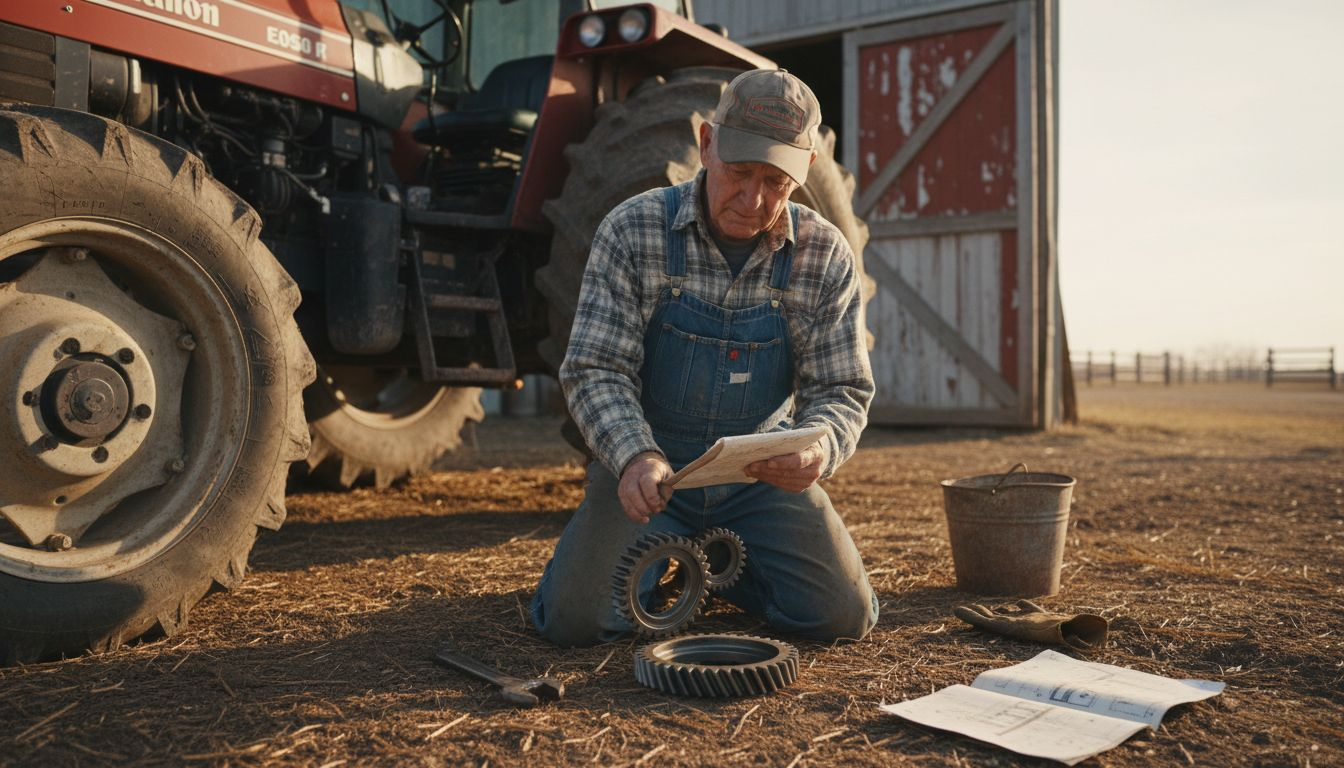
Pro tip: Always match replacement parts precisely to your specific tractor model and intended agricultural application to ensure optimal performance and equipment longevity.
Performance, Compatibility, and Warranty Preservation
Warranty preservation represents a critical consideration for agricultural machinery owners, directly impacting long-term equipment reliability and operational cost-effectiveness. Formal testing and evaluation processes play a fundamental role in ensuring mechanical performance and compatibility.
Key factors influencing performance and warranty maintenance include:
- Precise Part Matching: Ensuring exact specifications for replacement components
- Manufacturer Compliance: Adhering to original equipment guidelines
- Regular Maintenance: Following recommended service intervals
- Documentation: Maintaining comprehensive service records
- Quality Verification: Using certified and authenticated replacement parts
The landscape of machinery regulations continues to evolve, with increasingly stringent requirements for equipment performance and safety. Modern agricultural machinery must now meet complex conformity assessment rules that validate component reliability and functional integrity.
Compatibility is not just about physical fit – it’s about maintaining the intricate engineering balance of agricultural machinery systems.
Manufacturers and farmers alike must navigate new machinery regulation standards that emphasize precise technical specifications and comprehensive performance validation.
Pro tip: Create and maintain a detailed service log for each piece of equipment, documenting every part replacement and maintenance activity to support warranty claims and track long-term performance.
The table below summarizes factors influencing long-term tractor performance and cost efficiency:
| Factor | Impact on Performance | Effect on Costs |
|---|---|---|
| Part Matching | Ensures system functionality | Prevents excessive repairs |
| Service Records | Validates warranty coverage | Supports lower operating cost |
| Quality Standards | Boosts equipment value | Lowers risk of breakdowns |
| Regulation Compliance | Protects operator and asset | Avoids legal penalties |
Safety Standards and Legal Compliance Explained
Agricultural machinery safety represents a complex intersection of engineering, regulatory requirements, and operational protocols. International safety standards establish critical guidelines that protect both equipment operators and agricultural professionals.
Key safety compliance elements include:
- Equipment Design: Integrated protective mechanisms
- Hazard Identification: Comprehensive risk assessment protocols
- Operator Training: Mandatory safety education requirements
- Maintenance Protocols: Regular inspection and system validation
- Documentation: Comprehensive safety record-keeping
Legal compliance in agricultural machinery involves multiple stakeholder responsibilities. Manufacturers must design equipment with inherent safety features, employers need to implement rigorous training programs, and operators must follow prescribed safety guidelines and operational procedures.
Safety is not an afterthought – it’s the fundamental foundation of responsible agricultural machinery management.
The regulatory landscape continues to evolve, with increasingly sophisticated requirements for machine design, operator protection, and systemic risk mitigation. Modern agricultural equipment must meet stringent standards that balance technological innovation with human safety considerations.
Pro tip: Develop a comprehensive safety checklist for each piece of agricultural machinery, ensuring consistent compliance and proactive risk management.
Financial Impact and Comparing Alternatives
Agricultural machinery investments require sophisticated financial analysis that extends beyond simple purchase price considerations. Farm machinery cost estimates reveal complex economic dynamics involving multiple interconnected expense categories.
Critical financial considerations include:
- Ownership Costs: Depreciation, interest, taxes, insurance
- Operating Expenses: Fuel, lubricants, repairs, labor
- Downtime Potential: Lost productivity during equipment failures
- Long-Term Reliability: Projected maintenance requirements
- Performance Efficiency: Comparative operational capabilities
The economic landscape of agricultural machinery parts demands a nuanced approach to evaluating alternatives. Cost efficiency strategies emphasize the importance of understanding total lifecycle expenses rather than focusing solely on immediate purchase prices.
True financial wisdom in agricultural machinery lies not in minimizing initial costs, but in optimizing long-term operational performance.
Comparing original and aftermarket parts requires a comprehensive assessment of potential risks and benefits. While alternative parts might offer lower upfront expenses, they frequently introduce hidden costs through increased maintenance requirements, reduced equipment reliability, and potential productivity interruptions.
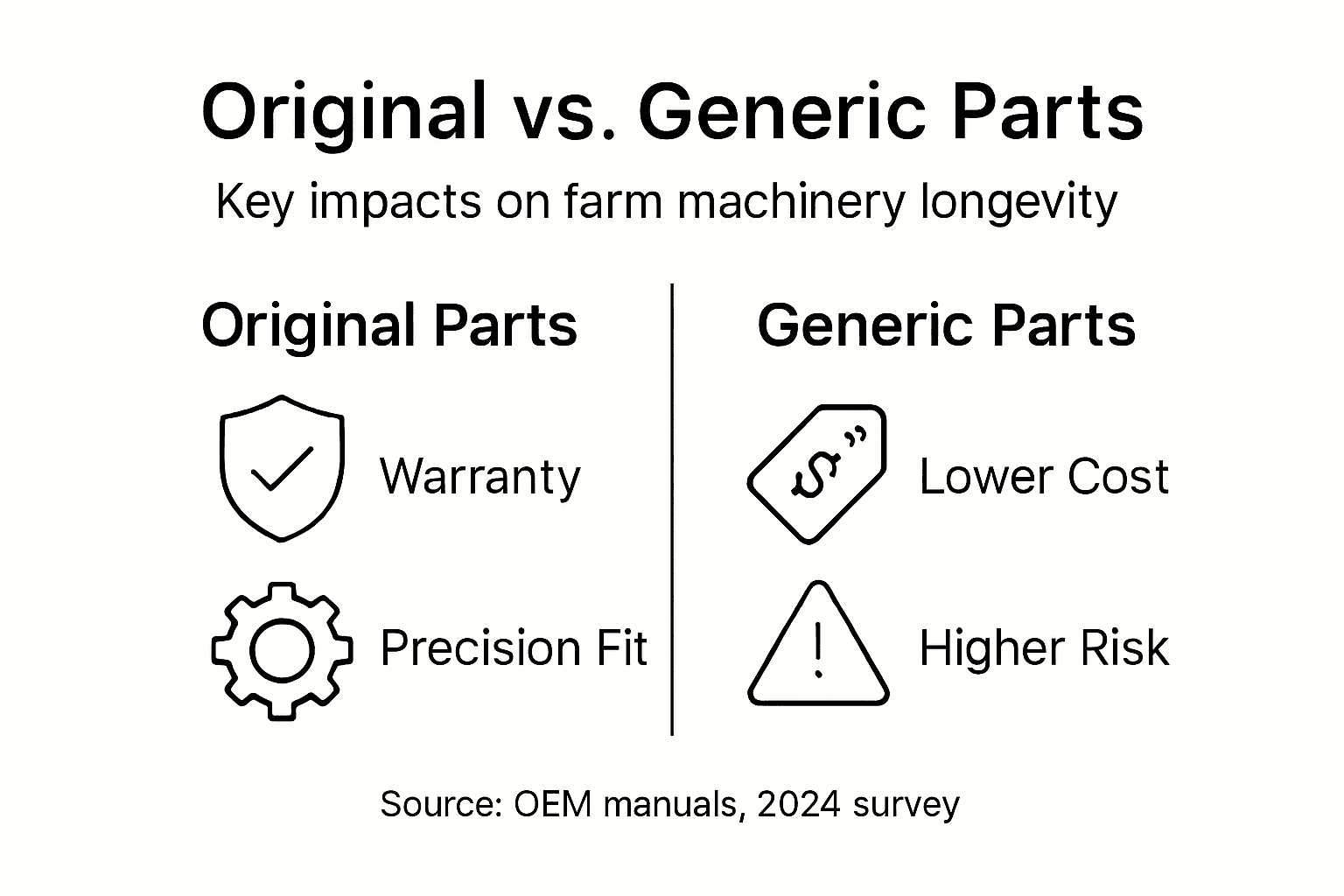
Pro tip: Calculate your total machinery ownership cost by tracking not just purchase price, but comprehensive expenses including maintenance, downtime, and potential productivity losses.
Common Pitfalls of Using Non-Original Parts
Non-original parts introduce substantial risks that extend far beyond simple mechanical incompatibility. Machinery safety incidents frequently arise from seemingly minor component substitutions that compromise equipment integrity.
Significant risks associated with non-original parts include:
- Structural Weaknesses: Compromised load-bearing capabilities
- Performance Degradation: Reduced operational efficiency
- Safety Hazards: Increased potential for mechanical failures
- Precision Misalignment: Potential calibration and tolerance issues
- Warranty Invalidation: Loss of manufacturer protection
The consequences of using unauthorized replacement components extend beyond immediate mechanical concerns. Safety standard evaluations demonstrate that improperly fitted parts can introduce unexpected operational risks, potentially endangering equipment operators and compromising overall machinery functionality.
Non-original parts are not just alternative components – they represent potential systemic risks to agricultural machinery performance and operator safety.
Farmers and agricultural professionals must recognize that cost savings from generic parts often translate into significantly higher long-term expenses through increased maintenance, reduced reliability, and potential catastrophic equipment failures.
Pro tip: Always consult manufacturer specifications and conduct thorough compatibility assessments before installing any replacement parts to mitigate potential operational risks.
Secure Your Farm Machinery’s Longevity with Genuine Parts
The article highlights the critical challenges farmers face in maintaining equipment reliability and preserving warranties when substituting parts. Using original parts designed with precise engineering and tested quality ensures you avoid unexpected breakdowns and costly repairs. Protect your investment against performance loss, safety hazards, and invalidated warranties by choosing components that guarantee compatibility and durability.
Explore our vast inventory of over 20,000 genuine agricultural machinery parts at Pexlivanidis. Benefit from free shipping within Greece on orders over 100€ and take advantage of wholesale options tailored for professional farmers. Act now to maintain your tractor’s peak performance and secure your equipment’s future. Visit our website to find the perfect tractor accessories and spare parts that match your exact model and operational needs.
Frequently Asked Questions
What are original parts in agricultural machinery?
Original parts are precision-engineered components manufactured by the original equipment manufacturer (OEM) designed to match exact specifications for agricultural machinery, ensuring compatibility and reliability.
How do original parts differ from aftermarket alternatives?
Original parts are manufactured to exact factory specifications and made from high-grade materials, whereas aftermarket parts may vary in quality and compatibility, leading to potential performance issues and reliability concerns.
Why is it important to maintain warranty protection with original parts?
Using original parts preserves the manufacturer’s warranty on agricultural machinery, ensuring coverage for repairs and replacement, while using non-original parts may void this warranty.
What are the potential risks of using non-original parts?
Non-original parts can lead to several issues, including compromised structural integrity, performance degradation, increased safety hazards, and potential warranty invalidation, all of which can significantly impact machinery longevity.