

Fast repairs are crucial when tractors break down in Thessaloniki or Kavala. For agricultural machinery professionals, the difference between a swift harvest and costly delays often hinges on working with a trusted agri spare parts distributor. Understanding the role of these businesses within the broader agribusiness supply chain helps workshops source quality tractor accessories and plan wholesale procurement that keeps farms running efficiently across Northern Greece.
Table of Contents
- Defining Agri Spare Parts Distributors And Their Role
- Types Of Agri Spare Parts Distributors Explained
- How Distribution And Sourcing Processes Work
- Quality Standards And Inventory Management Practices
- Challenges In Buying And Supplier Relationships
Key Takeaways
| Point | Details |
|---|---|
| Role of Distributors | Agri spare parts distributors are essential to maintaining agricultural machinery by sourcing and delivering high-quality replacement components. |
| Types of Distributors | There are three primary distributor types: manufacturer-direct, independent regional suppliers, and online parts marketplaces, each with unique advantages and limitations. |
| Inventory Management | Effective inventory management is critical, utilizing real-time tracking and predictive analytics to ensure parts availability and reduce operational risks. |
| Supplier Relationships | Strong supplier relationships and comprehensive evaluation processes are vital for overcoming challenges related to quality consistency and procurement efficiency. |
Defining Agri Spare Parts Distributors and Their Role
Agri spare parts distributors are specialized business professionals who play a critical role in the agricultural machinery ecosystem by sourcing, managing, and delivering essential replacement components for tractors and farming equipment. These professionals operate at the intersection of manufacturing, logistics, and agricultural technology, ensuring farmers maintain operational continuity and equipment performance. Agricultural logistics experts emphasize their significance in minimizing machinery downtime and supporting agricultural productivity.
Within the broader agribusiness supply chain, these distributors serve as crucial intermediaries connecting equipment manufacturers, repair workshops, and farmers. Their core responsibilities include maintaining comprehensive inventories of high-quality spare parts, understanding complex machinery specifications, and providing technical guidance. By anticipating farmers’ needs and maintaining robust procurement networks, they help agricultural operations remain efficient and responsive to seasonal demands.
Distributors typically manage an extensive range of components – from minor mechanical parts like bolts and filters to complex system replacements for tractors, harvesters, and agricultural machinery. They must possess deep technical knowledge, strong supplier relationships, and sophisticated inventory management skills. Their expertise allows them to quickly identify precise part requirements, source replacements from multiple manufacturers, and provide timely solutions that prevent extended equipment downtime.
Pro Tip: When selecting an agricultural spare parts distributor, prioritize those offering comprehensive technical support and demonstrating extensive inventory depth across multiple equipment brands.
Types of Agri Spare Parts Distributors Explained
Agricultural spare parts distributors can be categorized into several distinct types, each serving unique segments of the farming equipment market. Agricultural parts sourcing strategies reveal three primary distribution models that support farmers’ operational needs: manufacturer-direct distributors, independent regional suppliers, and specialized online parts marketplaces.
Manufacturer-Direct Distributors represent the primary channel for original equipment manufacturers (OEMs). These distributors work exclusively with specific tractor or agricultural equipment brands, providing authorized replacement parts that guarantee precise compatibility and maintain manufacturer warranty standards. They often have direct access to engineering specifications, technical documentation, and quality control protocols, ensuring farmers receive genuine components specifically designed for their equipment.
Independent regional suppliers represent another critical distribution segment, offering more flexible procurement options. These distributors typically maintain extensive inventories of parts compatible with multiple equipment brands, allowing farmers greater choice and more competitive pricing. They often serve local agricultural communities, understanding regional equipment preferences and maintenance challenges. These suppliers frequently develop deep relationships with local farming operations, providing personalized technical support and rapid parts procurement services that larger, centralized distributors might not offer.
Online parts marketplaces have emerged as a sophisticated distribution model, leveraging digital platforms to connect farmers directly with global spare parts inventories. These digital distributors aggregate parts from multiple manufacturers and independent suppliers, providing comprehensive search capabilities, detailed product specifications, and streamlined ordering processes. They often include user reviews, technical compatibility filters, and real-time inventory tracking, enabling farmers to make informed purchasing decisions without geographic limitations.
Here’s a comparison of the main types of agricultural spare parts distributors and their unique benefits:
| Distributor Type | Market Focus | Key Advantages | Typical Limitations |
|---|---|---|---|
| Manufacturer-Direct | Single OEM brands | Authentic parts, warranty support | Limited to specific brands |
| Independent Regional | Multiple local equipment | Broad selection, personal service | May lack rare OEM parts |
| Online Parts Marketplace | Global, multi-brand | Wide access, extensive search | Varies in support, quality |
Pro Tip: When evaluating spare parts distributors, prioritize those offering comprehensive technical support, transparent warranty policies, and multiple procurement channels to ensure equipment reliability.
How Distribution and Sourcing Processes Work
The distribution and sourcing processes for agricultural spare parts represent a complex, multifaceted system that requires strategic planning and precise execution. Agricultural supply chain management involves intricate networks of suppliers, manufacturers, distributors, and end-users working collaboratively to ensure seamless parts procurement and delivery.

The initial stage of sourcing begins with comprehensive supplier evaluation and selection. Distributors conduct rigorous assessments of potential parts suppliers, examining criteria such as manufacturing quality, production capacity, price competitiveness, delivery reliability, and technical compatibility with various agricultural equipment models. This meticulous screening process helps minimize potential risks associated with unreliable component sourcing and ensures that only high-quality parts enter the distribution pipeline.
Once suppliers are identified, the procurement strategy shifts toward establishing robust contractual frameworks and communication channels. Hybrid sourcing models integrate global sourcing capabilities with localized management approaches, enabling distributors to optimize inventory levels, negotiate favorable pricing, and maintain flexible supply chains. These strategies typically involve creating detailed agreements that specify quality standards, delivery timelines, warranty conditions, and performance expectations for each component.
The final distribution phase focuses on sophisticated logistics management, which includes inventory tracking, warehousing, order processing, and transportation coordination. Advanced digital platforms now enable real-time inventory monitoring, allowing distributors to predict demand patterns, manage stock levels efficiently, and provide farmers with accurate availability information. These systems help minimize equipment downtime by ensuring rapid parts procurement and delivery across diverse agricultural regions.
Pro Tip: Develop strong relationships with multiple suppliers and invest in advanced inventory management technologies to create a resilient and responsive parts distribution network.
Quality Standards and Inventory Management Practices
Inventory management in agricultural spare parts distribution represents a critical strategic function that directly impacts equipment reliability and operational efficiency. Agricultural supply chain sustainability has become increasingly sophisticated, focusing on precise inventory control mechanisms that minimize waste and maximize parts availability.
Quality standards for agricultural spare parts involve rigorous technical specifications and comprehensive testing protocols. Distributors must implement multi-stage quality assessment processes that evaluate components based on multiple criteria, including material durability, manufacturing precision, performance consistency, and compatibility with specific agricultural machinery models. These standards typically involve destructive and non-destructive testing methods, dimensional analysis, metallurgical examinations, and stress testing to ensure each component meets or exceeds original equipment manufacturer requirements.
Modern inventory management practices leverage advanced digital technologies to create dynamic, responsive supply chain ecosystems. Sophisticated enterprise resource planning (ERP) systems now enable real-time tracking of parts inventory, predictive demand forecasting, and automated reordering processes. These intelligent systems analyze historical usage patterns, seasonal agricultural activity, equipment maintenance cycles, and regional farming trends to optimize inventory levels, reducing both overstock risks and potential parts shortages that could interrupt critical farming operations.
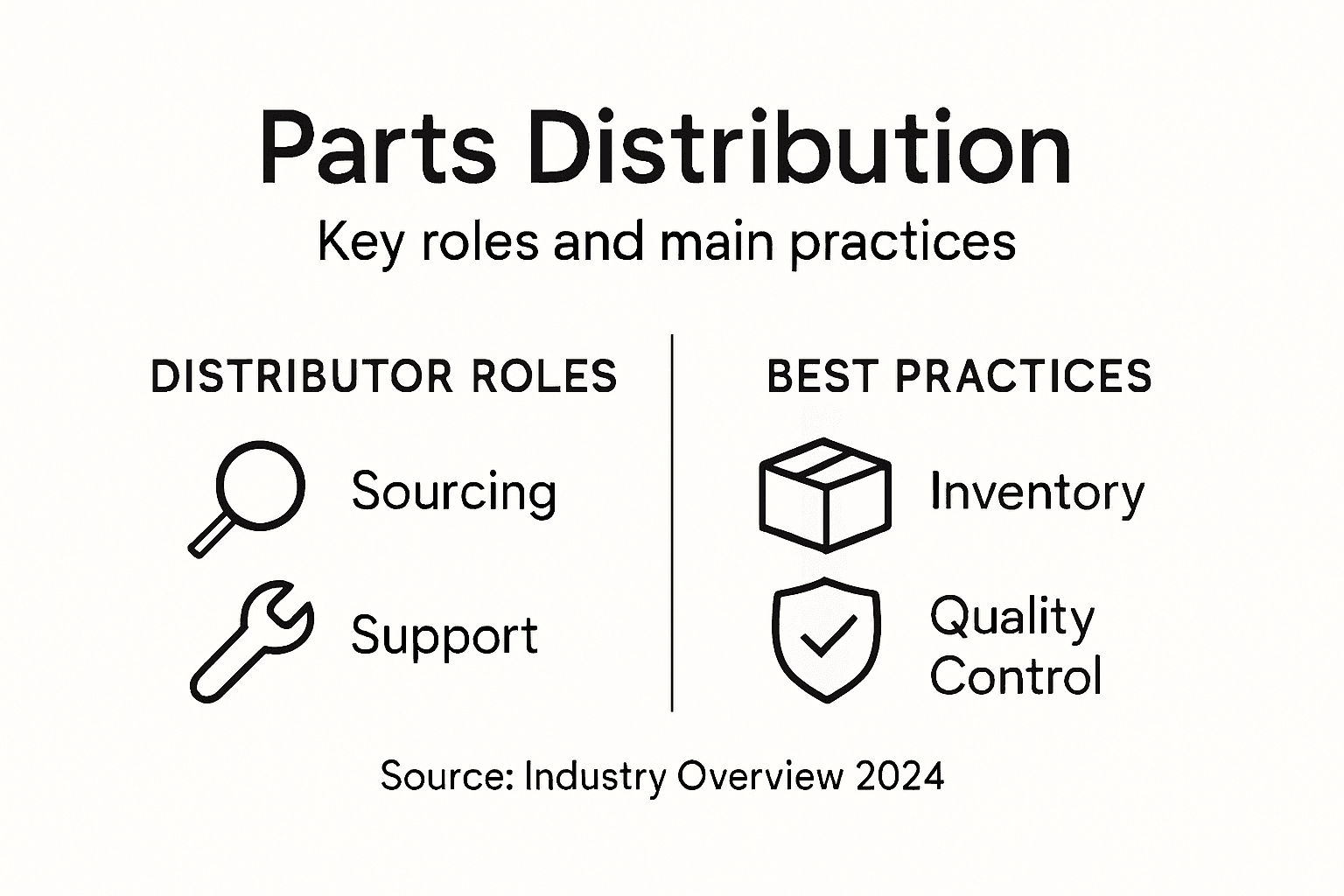
The most effective inventory management strategies integrate just-in-time procurement principles with comprehensive risk mitigation approaches. This involves maintaining strategic buffer stocks of critical components, developing robust supplier relationships, and creating flexible procurement frameworks that can rapidly adapt to unexpected market fluctuations or equipment maintenance requirements. Successful distributors continuously refine their inventory models, using data analytics to balance cost efficiency with reliable parts availability.
The following table summarizes best practices for inventory management in agri spare parts distribution:
| Practice | Business Impact | Typical Technology Used |
|---|---|---|
| Real-time inventory tracking | Reduces shortages and overstock | ERP platforms, RFID systems |
| Predictive demand forecasting | Ensures part availability | Data analytics, AI algorithms |
| Automated reordering | Minimizes manual errors | Inventory management software |
| Just-in-time procurement | Lowers holding costs | Supplier integration tools |
Pro Tip: Implement a digital inventory management system that provides real-time tracking, predictive analytics, and automated reordering to maintain optimal parts availability and reduce operational risks.
Challenges in Buying and Supplier Relationships
The agricultural spare parts procurement landscape presents complex challenges that demand sophisticated relationship management strategies. Agricultural supply chain dynamics reveal intricate buyer-supplier interactions that require nuanced approaches to overcome persistent market obstacles and ensure reliable parts procurement.
One primary challenge involves navigating quality inconsistency across different supplier networks. Agricultural equipment parts distributors must develop robust verification protocols that go beyond standard quality checks, implementing comprehensive evaluation frameworks that assess manufacturing precision, material durability, and technical compatibility. This requires extensive technical expertise, sophisticated testing methodologies, and the ability to maintain consistently high standards across diverse global supply chains with varying regulatory environments and production capabilities.
Supplier relationship management has evolved from transactional interactions to strategic partnerships that demand deep technological integration and mutual trust. Successful distributors now invest significant resources in developing collaborative frameworks that align technological capabilities, share performance data, and create transparent communication channels. These advanced relationship models involve joint product development initiatives, shared risk management strategies, and continuous performance optimization processes that transform traditional procurement approaches into dynamic, responsive supply ecosystems.
Financial and logistical complexities further challenge agricultural spare parts procurement. Distributors must balance multiple competing priorities, including cost management, inventory optimization, global sourcing considerations, and rapid response capabilities. This requires sophisticated financial modeling, predictive demand forecasting, and flexible procurement strategies that can adapt to rapidly changing agricultural technology landscapes and regional market variations.
Pro Tip: Develop a comprehensive supplier evaluation scorecard that assesses technical capabilities, financial stability, quality consistency, and technological adaptability to build resilient procurement networks.
Keep Your Tractor Running Smoothly with Trusted Agri Spare Parts
Managing the challenges of equipment downtime and sourcing authentic, high-quality agri spare parts can be overwhelming. From navigating complex supplier networks to ensuring timely delivery of the right components your tractor needs, the reliability of your machinery depends on expert distribution and inventory management. This article highlights key pain points like maintaining technical compatibility, avoiding long wait times, and securing genuine OEM parts to keep your agricultural operations efficient.
At pexlivanidis.com, we understand these challenges firsthand. With over 20,000 spare parts available, including trusted tractor accessories and components, we offer a vast inventory designed to meet your urgent and seasonal needs. Benefit from free shipping within Greece for orders over 100€, personalized support, and options for both retail and wholesale customers. Don’t risk costly downtime or unreliable parts from unknown suppliers. Visit our platform now and explore how our seamless ordering, stock transparency, and technical guidance can keep your farm equipment at peak performance. Start your search for dependable agri parts today at pexlivanidis.com and experience the difference of a distributor that prioritizes your operational continuity.
Frequently Asked Questions
What are the main types of agri spare parts distributors?
Agri spare parts distributors can be categorized into manufacturer-direct distributors, independent regional suppliers, and online parts marketplaces. Each type serves unique segments of the farming equipment market, providing various benefits and limitations.
How do agricultural spare parts distributors ensure quality?
Distributors implement rigorous quality standards, including multi-stage testing processes that assess factors such as material durability and compatibility. This ensures that only high-quality parts enter the distribution pipeline, helping to maintain equipment reliability.
What challenges do agri spare parts distributors face in procurement?
Distributors face challenges such as quality inconsistency across suppliers, financial and logistical complexities, and the need for effective supplier relationship management. These factors require sophisticated strategies to ensure reliable procurement of spare parts.
What role does inventory management play for agri spare parts distributors?
Inventory management is crucial for minimizing waste and maximizing parts availability. Distributors leverage advanced technology for real-time tracking, predictive demand forecasting, and automated reordering to ensure operational efficiency and reduce equipment downtime.