

Most farm equipment operators across Greece know that a single broken component in a combine harvester can slow down harvesting for days. Keeping modern machines running demands understanding each part, from cutting systems to power transmission. With the rising popularity of American technology in places like Thessaloniki and Kavala, local farmers need reliable details on combine harvester parts. This guide reveals how each component works and gives practical advice to help you reduce downtime and lower maintenance costs.
Table of Contents
- What Are Combine Harvester Parts?
- Types Of Headers And Cutting Systems
- Threshing, Cleaning, And Grain Handling Components
- Power, Transmission, And Mobility Systems
- Maintenance Practices For Peak Performance
- Common Issues And Costs Of Repairs
Key Takeaways
| Point | Details |
|---|---|
| Combine Harvester Components | Essential systems include cutting, feeding, threshing, cleaning, grain storage, and power transmission, each crucial for harvesting efficiency. |
| Header Types Impact Efficiency | Different header configurations, like grain, corn, rapeseed, and forage headers, are designed for specific crops, enhancing harvesting performance. |
| Regular Maintenance is Essential | Routine inspections and maintenance practices are vital for preventing breakdowns and ensuring optimal performance during harvest time. |
| Repair Costs Vary by Component | Header units and electrical systems often incur the highest repair costs; planning maintenance can help manage expenses effectively. |
What Are Combine Harvester Parts?
Combine harvesters represent complex agricultural machines designed to streamline harvesting processes by simultaneously performing multiple critical tasks. At their core, these powerful machines integrate several key systems that work together to transform standing crops into stored grain with remarkable efficiency. Sophisticated agricultural technology enables farmers to process entire fields quickly and accurately.
The primary components of a combine harvester include multiple interconnected systems that handle different stages of crop harvesting. These systems typically encompass the cutting system, feeding mechanism, threshing unit, cleaning apparatus, grain storage, and power transmission components. Each system plays a crucial role in transforming raw crops from field-standing plants into cleanly separated and stored grain ready for market.
The cutting system represents the initial contact point with crops, featuring a cutter header, reel, and auger designed to slice and gather crops efficiently. Behind the cutting mechanism, the feeding system uses powerful augers and conveyors to transport crop material into the threshing drum. Within the threshing unit, rotating mechanisms separate grain kernels from stalks and chaff through a combination of impact, rubbing, and sieving actions. The cleaning system then uses strategic air currents and sieves to further refine grain quality, ensuring only clean kernels enter the grain tank.
Here is a summary of the main systems within a combine harvester and their impact on efficiency:
| System | Main Function | Impact on Harvesting Efficiency |
|---|---|---|
| Cutting System | Slices and gathers crops | Enables fast, uniform initial crop collection |
| Feeding Mechanism | Transports crops to threshing | Maintains steady material flow |
| Threshing Unit | Separates grain from stalks | Ensures maximum kernel extraction |
| Cleaning Apparatus | Refines grain purity | Reduces waste and improves grain quality |
| Grain Storage | Stores cleaned grain | Allows continuous operation, less downtime |
| Power Transmission | Distributes engine power | Supports synchronized multi-system operation |
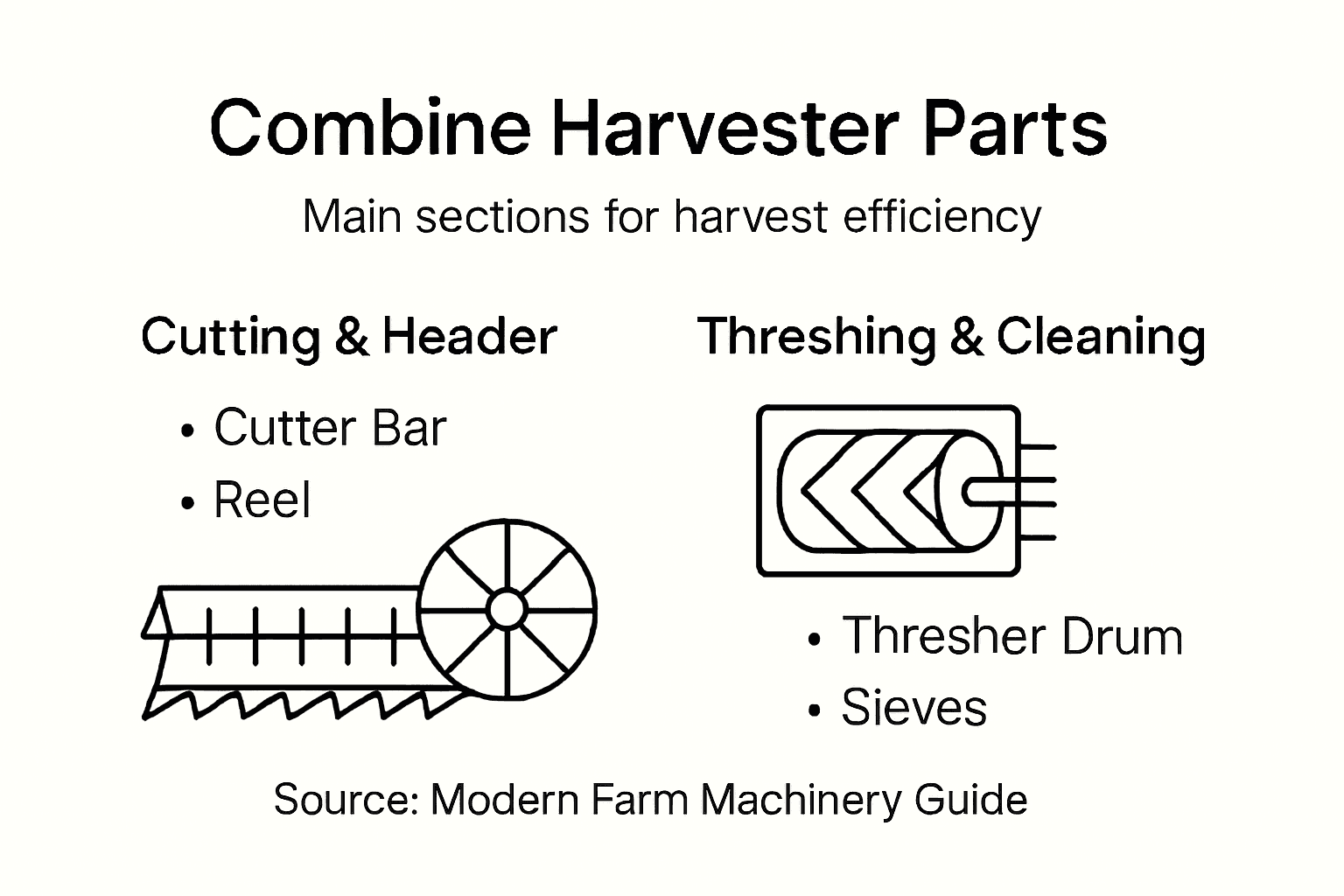
Pro tip: Conduct regular maintenance checks on your combine harvester’s cutting and threshing components to prevent unexpected breakdowns during critical harvest periods.
Types of Headers and Cutting Systems
Combine harvester headers represent specialized agricultural attachments designed to optimize crop collection across diverse farming environments. Different header configurations play a crucial role in determining overall harvesting efficiency, with specific designs tailored to unique crop types and terrain conditions.
Farmers can choose from several specialized header types, each engineered to handle specific agricultural scenarios. Grain headers are optimized for wheat, barley, and similar grains, featuring wide cutting decks and integrated reel systems that smoothly gather standing crops. Corn headers utilize unique snapping rollers designed to strip kernels from corn stalks, ensuring minimal kernel loss during harvesting. Rapeseed headers feature low-cutting mechanisms perfect for close-to-ground crops, while forage headers incorporate advanced shredding capabilities for processing multiple plant types.
The mechanical design of these headers focuses on maximizing crop collection while minimizing potential damage. Cutting systems typically include sharp knife sections, adjustable cutting heights, and adaptive reel mechanisms that can respond to varying crop densities and ground conditions. Advanced headers now incorporate electronic monitoring systems that help operators fine-tune cutting performance in real-time, allowing for precision adjustments based on crop type, moisture content, and terrain variations.
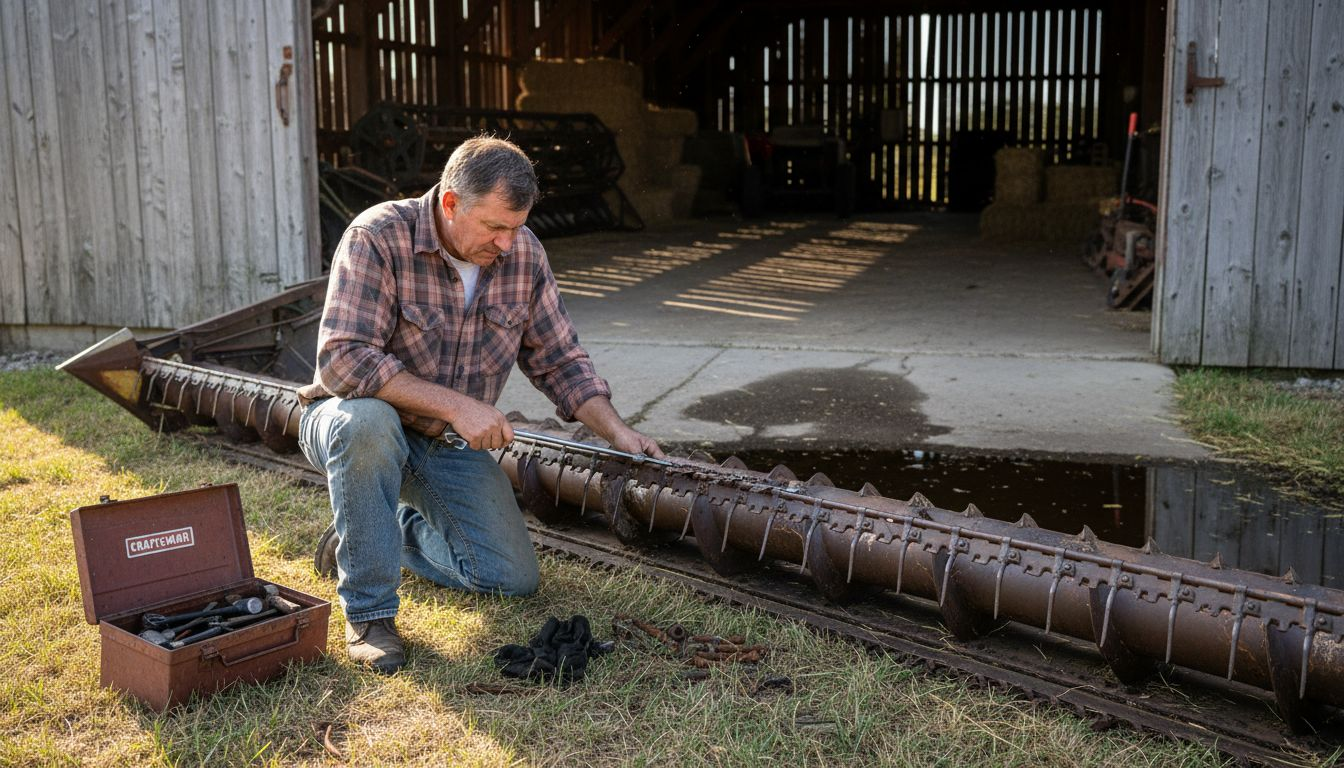
Below is a comparison of common combine harvester header types and their typical uses:
| Header Type | Suitable Crop Types | Notable Features |
|---|---|---|
| Grain Header | Wheat, barley | Wide deck, integrated reel system |
| Corn Header | Corn | Snapping rollers, minimal kernel loss |
| Rapeseed Header | Rapeseed, canola | Low-cutting mechanism for ground crops |
| Forage Header | Silage, forage | Advanced shredding for diverse plants |
Pro tip: Inspect header knife sections and alignment before each harvesting season to ensure clean, consistent crop cutting and prevent unnecessary plant damage.
Threshing, Cleaning, and Grain Handling Components
Threshing and cleaning systems form the critical heart of combine harvester functionality, transforming raw harvested crops into marketable grain through sophisticated mechanical processes. Complex multi-parameter control systems enable precise grain separation and quality management across diverse agricultural conditions.
The threshing system represents the primary mechanism for separating grain kernels from plant stalks and chaff. Rotating cylindrical drums with strategically positioned concave surfaces use mechanical impact and rubbing actions to break apart crop material. Threshing drum speed, concave clearance, and rotational angle are carefully calibrated to minimize grain damage while maximizing kernel extraction efficiency. These components work in concert to ensure minimal grain loss and maximum separation quality.
The cleaning unit plays an equally crucial role in processing harvested crops. Advanced cleaning technologies incorporate grain pans, powerful fans, and multi-level sieves designed to remove debris and ensure grain purity. Airflow dynamics and sieve configuration are meticulously engineered to separate grain from chaff, straw fragments, and other impurities. Electronic monitoring systems now allow real-time adjustments, enabling operators to optimize cleaning performance based on specific crop characteristics and field conditions.
Pro tip: Regularly calibrate and clean threshing and sieve components to maintain optimal grain separation efficiency and prevent potential mechanical wear.
Power, Transmission, and Mobility Systems
Combine harvesters represent complex machines requiring sophisticated power management and transmission systems to operate efficiently across challenging agricultural terrains. Powertrain modeling techniques reveal the intricate power distribution demands across multiple machine components, from headers to ground drive systems.
The power transmission system serves as the critical backbone of combine harvester functionality, distributing mechanical energy from the primary engine to various operational components. Major power consumers include the header cutting mechanism, threshing drums, separation units, and cleaning systems. Hydrostatic ground drive systems enable precise speed control and maneuverability, allowing operators to adjust machine movement according to crop conditions and terrain complexity. Sophisticated hydraulic and mechanical power branches ensure efficient energy transfer while minimizing power losses.
Electrification and intelligent control technologies are rapidly transforming combine harvester mobility systems. Modern machines increasingly incorporate CAN bus networks that facilitate real-time sensor communication, enabling more responsive and adaptive performance. Electric drive technologies provide unprecedented precision in controlling reaping, threshing, and mobility functions, significantly improving overall energy efficiency and operational flexibility. Advanced control systems now allow for dynamic power redistribution, ensuring optimal performance across varying field conditions.
Pro tip: Conduct regular hydraulic system inspections and maintain proper fluid levels to prevent power transmission inefficiencies and potential mechanical failures.
Maintenance Practices for Peak Performance
Effective combine harvester maintenance represents a critical strategy for ensuring operational reliability and maximizing agricultural productivity. Advanced fault diagnosis systems now enable farmers to predict and prevent potential mechanical issues with unprecedented accuracy.
Maintenance practices require a structured approach divided into daily, weekly, and seasonal tasks. Daily inspections should focus on critical components such as belts, chains, fluid levels, and cutting component sharpness. Operators must meticulously check hydraulic systems, engine oil, coolant levels, and air filters. Lubrication points demand special attention, with precise greasing of moving parts to reduce friction and prevent premature wear. Thorough visual and functional assessments help identify potential issues before they escalate into costly breakdowns.
Comprehensive maintenance protocols extend beyond routine checks to include systematic cleaning and calibration of complex systems. Seasonal maintenance involves deep cleaning of radiators, comprehensive threshing component inspections, and thorough hydraulic system evaluations. Technological advancements now support real-time monitoring, with sophisticated diagnostic platforms offering predictive maintenance insights. These systems can identify potential failures with accuracy rates approaching 98%, dramatically reducing unexpected downtime and extending machine longevity.
Pro tip: Create a detailed maintenance log tracking each inspection, repair, and component replacement to establish a comprehensive service history and optimize long-term machine performance.
Common Issues and Costs of Repairs
Combine harvester maintenance and repair represent significant investments for agricultural operators, with repair costs directly correlating to machine age, operational intensity, and component complexity. Comprehensive repair cost analysis reveals that certain machine systems are more prone to failure and expense than others.
The most financially impactful repair components typically include headers, threshing mechanisms, separation systems, cleaning shoes, engines, electrical systems, and tires. Header units often require the most frequent and expensive interventions, with mechanical stress and environmental conditions contributing to accelerated wear. Electrical system repairs can be particularly costly, involving sophisticated sensors, control modules, and interconnected electronic networks that demand specialized diagnostic tools and expert technical knowledge.
Seasonal repair patterns demonstrate significant variations in maintenance requirements and expenses. Off-season periods frequently involve more extensive repairs, focusing on components like pump bushes, track systems, bearings, and header mechanisms. In-season maintenance shifts toward critical operational elements such as speed variators, cutting knives, and lubrication systems. These nuanced repair cycles underscore the importance of strategic maintenance planning and proactive component management to minimize unexpected downtime and control overall ownership costs.
Pro tip: Develop a comprehensive repair tracking system that logs every maintenance intervention, helping predict future repair needs and budget more accurately.
Enhance Your Harvest Efficiency with Reliable Combine Harvester Parts
Maintaining peak performance of your combine harvester means understanding and sourcing the right parts for critical components such as cutting systems, threshing units, and power transmission elements. We know the challenges you face—unexpected breakdowns, uneven cutting, and costly repairs can quickly disrupt your harvest schedule and add stress during crucial periods. With over 20,000 high-quality tractor and agricultural machinery parts, pexlivanidis.com is your trusted partner to keep every system running smoothly.
Don’t let equipment wear or missing components slow you down. Explore our extensive inventory designed to fit key combine harvester parts including header knives, threshing drums, cleaning apparatus components, and more. Benefit from free shipping within Greece on orders over 100€ and exclusive options for wholesale B2B clients. Visit our online store now and secure the parts you need before your next harvest. Act today to avoid downtime and ensure your farm’s productivity stays at its peak.
Frequently Asked Questions
What are the main parts of a combine harvester?
The main parts of a combine harvester include the cutting system, feeding mechanism, threshing unit, cleaning apparatus, grain storage, and power transmission components. Each part plays a vital role in efficiently harvesting crops by transforming them from field plants into stored grain.
How does the cutting system of a combine harvester work?
The cutting system is the first point of contact with crops and consists of a cutter header, reel, and auger. It is designed to slice and gather crops efficiently, enabling fast and uniform initial crop collection.
What types of headers are available for combine harvesters?
Common header types include grain headers for wheat and barley, corn headers for corn, rapeseed headers for close-to-ground crops, and forage headers for processing diverse plant types. Each header is designed for specific crop types and conditions to optimize harvesting efficiency.
How can I maintain my combine harvester for optimal performance?
Regular maintenance practices should include daily inspections of belts, fluids, and cutting components, as well as seasonal deep cleaning and calibration of threshing and hydraulic systems. Keeping a detailed maintenance log can help track repairs and optimize machine performance.