

TL;DR:
- Komatsu construction machinery combines autonomous systems and digital platforms to enhance productivity and safety. The company’s integrated technology includes autonomous haul trucks, AI-assisted controls, and fleet management tools like My Komatsu, which improve efficiency and sustainability. Proper evaluation of used machines relies on verifying documentation, service history, and regional emissions compliance to ensure reliable investments.
Komatsu construction machinery is defined as a category of heavy equipment that combines autonomous systems, AI-assisted controls, and integrated digital platforms to deliver measurable gains in productivity and site safety. Komatsu holds a recognized leadership position in this space, having commissioned its 1,000th ultra-class autonomous haul truck globally as of april 2026. That milestone signals where the industry is heading: machines that generate data, reduce operator exposure to hazardous conditions, and cut fuel costs through connected intelligence. For contractors evaluating Komatsu heavy equipment, understanding both the technology stack and the purchasing fundamentals is the difference between a smart capital investment and an expensive mistake.
What technologies differentiate Komatsu construction machinery?
Komatsu’s technology advantage centers on three integrated systems: the FrontRunner Autonomous Haulage System, AI-assisted machine controls, and the My Komatsu digital platform. Each system works independently, but their combined effect on site efficiency is where the real gains appear.
FrontRunner Autonomous Haulage System
The FrontRunner system removes human operators from repetitive haulage cycles, which reduces fatigue-related incidents and keeps trucks running on tighter, more consistent schedules. Autonomous Water Trucks and unified fleet management contribute to site-wide safety improvements beyond just the haul trucks themselves. The system also supports decarbonization goals. Electric drive haul trucks combined with FrontRunner reduce environmental impact alongside productivity gains, which matters for contractors working on projects with sustainability requirements.
AI-assisted controls and digital integration
Models like the PC220LCi-12 excavator use AI-assisted controls to reduce fuel consumption and improve cycle times. The machine guidance technology adjusts bucket angles and swing speeds in real time, which means less rework and fewer operator errors on grading tasks. My Komatsu, the brand’s fleet management platform, centralizes machine health data, service records, and utilization reports in one dashboard. Contractors who use this data actively, rather than just collecting it, report faster maintenance decisions and fewer unplanned downtime events.
Key technology features across Komatsu’s current lineup include:
- FrontRunner AHS: Unified autonomous control for haul trucks with scalable fleet deployment
- Machine guidance (iMC): Real-time 3D design data fed directly to blade and bucket controls
- My Komatsu platform: Remote monitoring, fuel tracking, and service scheduling in one interface
- AI-assisted controls: Adaptive machine responses that reduce operator skill dependency
- Electric drive options: Lower emissions profiles for sustainability-focused project bids
Pro Tip: Connect every machine on your fleet to My Komatsu from day one. The utilization and idle-time data it generates will identify your biggest fuel waste sources within the first 30 days of operation.
How does Komatsu’s lineup meet varied project needs?
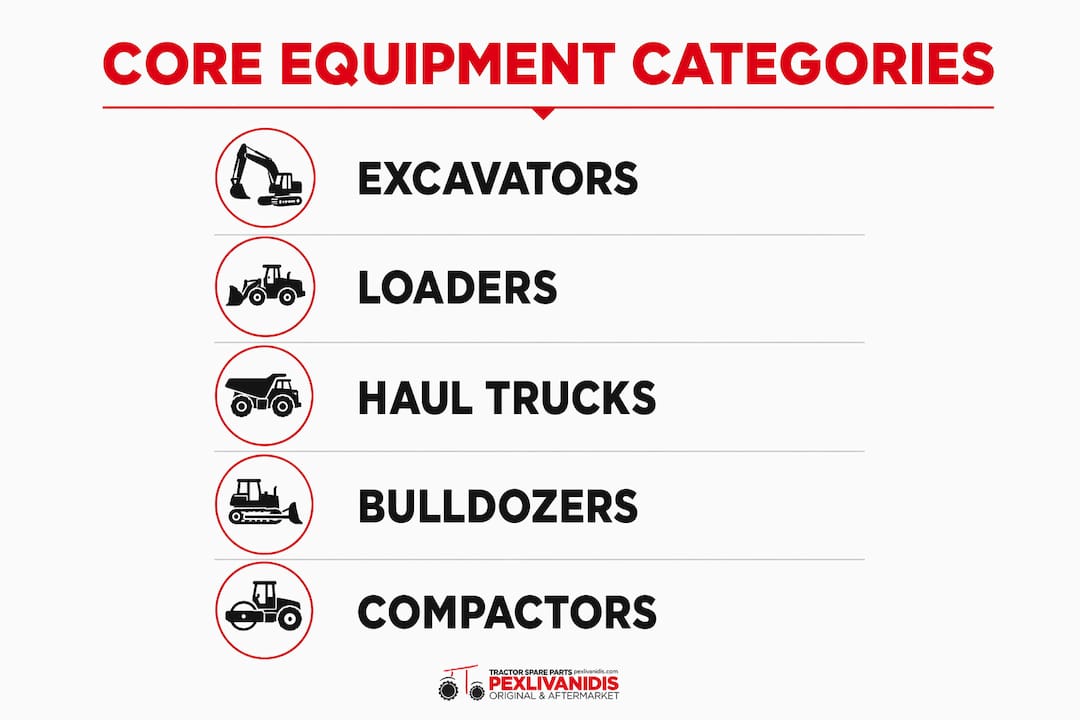
Komatsu produces equipment across four primary categories, each scaled to match specific project demands. The range covers everything from urban utility work to large-scale earthmoving on infrastructure projects.
Core equipment categories
- Excavators: From compact 1.5-ton mini excavators for confined urban sites to the PC4000 mining excavator for large-scale earthmoving
- Dozers: The D39, D65, and D155 series cover light grading through heavy push applications
- Haul trucks: The HD785 and 930E series handle high-volume material movement on major civil and mining projects
- Wheel loaders: The WA series ranges from small yard loaders to high-capacity port and quarry machines
| Machine category | Typical application | Key capacity range |
|---|---|---|
| Excavators | Trenching, grading, demolition | 1.5 tons to 700+ tons |
| Dozers | Land clearing, road base preparation | 8 tons to 100+ tons |
| Haul trucks | Bulk material transport | 40 tons to 360+ tons |
| Wheel loaders | Loading, stockpile management | 3 tons to 30+ tons |
Komatsu also offers a broad attachment ecosystem. Quick couplers, hydraulic breakers, tiltrotators, and compaction wheels extend machine versatility without requiring additional units on site. For contractors managing tight equipment budgets, one well-specified excavator with the right attachments can replace two or three single-purpose machines on mid-size projects.
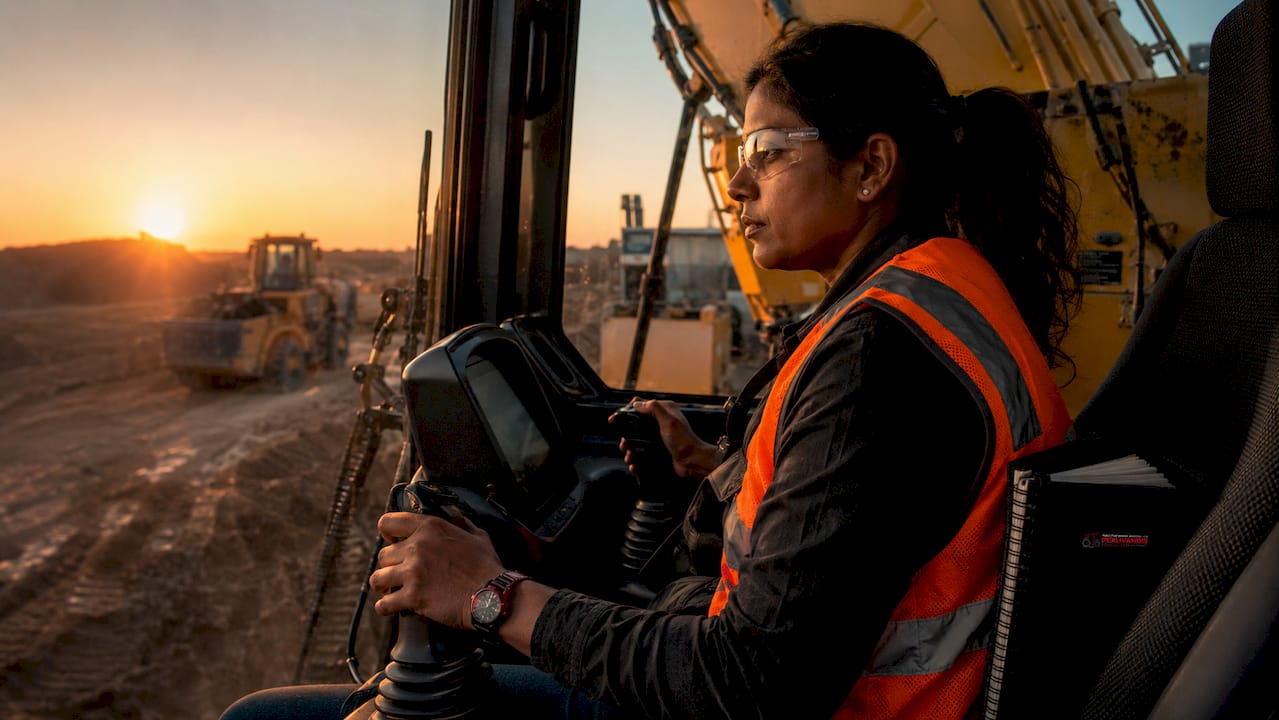
Design features across the lineup prioritize operator comfort and productivity. Komatsu’s KOMTRAX telematics system is factory-fitted on most models, which means fleet data collection starts the moment the machine leaves the dealer lot. Cab ergonomics, visibility angles, and control layouts follow ISO standards, which reduces retraining time when operators switch between models.
What should contractors know when buying used Komatsu machinery?
Used Komatsu machinery offers significant cost savings, but the purchase requires more diligence than buying new. Price, condition, and documentation all affect the true cost of ownership over the machine’s remaining service life.
A concrete example anchors the market reality: a 2020 Komatsu PC490-LC with 8,228 hours was listed at $125,000 as of june 2026. That price reflects a machine past its mid-life point, which means buyers should budget for undercarriage wear, hydraulic seal replacement, and potential engine work within the next 2,000–3,000 hours.
Steps for evaluating a used unit
- Pull the KOMTRAX history. Most Komatsu machines built after 2005 carry KOMTRAX telematics. Request a full utilization and fault-code report from the seller before any physical inspection.
- Verify the serial number against the model designation. Serial number verification confirms exact model configuration and maintenance history. A PC490-11 and a PC490-12 share a name but carry different hydraulic specs and parts compatibility.
- Inspect undercarriage wear percentage. On tracked machines, undercarriage replacement can cost $15,000–$40,000 depending on size. A wear percentage above 60% should trigger a price renegotiation.
- Check fluid analysis records. Engine oil, hydraulic fluid, and coolant samples tell you more about internal wear than a visual inspection ever will.
- Confirm regional variant compliance. Komatsu builds machines to different emissions standards by region. A machine imported from a different market may not meet local Tier 4 Final or Stage V requirements.
Pro Tip: Always request the machine’s full service history from the Komatsu dealer network before finalizing a used purchase. Dealer-serviced machines carry documented records that independent shops often cannot match.
Condition factors matter as much as hours. A 6,000-hour machine with consistent dealer servicing often outperforms a 4,000-hour machine that ran without scheduled maintenance. When you buy Komatsu machinery used, treat documentation as a core part of the asset, not an afterthought.
How do Komatsu’s digital systems transform jobsite management?
Komatsu describes its current direction as “Connected Performance,” a framework that treats machines as data-generating assets rather than standalone tools. The shift is practical, not theoretical. Analyzing machine data for productivity and sustainability gains directly reduces total cost of ownership when contractors act on what the data shows.
Smart Construction and real-world deployment
Komatsu’s Smart Construction platform integrates drone surveys, 3D design models, and machine guidance into a single workflow. The result is a site where the excavator knows the target grade before the operator makes the first cut. Komatsu introduced Smart Construction to Singapore through a landmark deployment at Changi Airport Terminal 5, one of the most complex infrastructure projects in Southeast Asia. That deployment demonstrated that digital construction workflows scale to mega-project environments, not just controlled test sites.
Fleet management benefits include:
- Real-time machine location and utilization tracking across the entire fleet
- Predictive maintenance alerts that flag component wear before failure occurs
- Fuel consumption benchmarking by operator, shift, and machine type
- Production reporting that ties machine output to project schedule milestones
The digital construction ecosystem trend is accelerating. Contractors who purchase equipment without checking digital platform compatibility risk running machines that cannot integrate with project management software their clients already require. Future-proofing a fleet purchase means confirming My Komatsu compatibility, iMC readiness, and telematics data export formats before signing a purchase order.
Autonomous equipment deployment works best as a fleet-level decision. Unified control frameworks outperform isolated machine replacements because the efficiency gains compound when multiple autonomous units share the same operational logic and scheduling system. A single autonomous truck on a mixed fleet delivers modest gains. Ten autonomous trucks operating under FrontRunner on a coordinated haul cycle deliver transformational throughput.
For contractors exploring how machinery automation trends are reshaping equipment decisions across sectors, the pattern is consistent: data integration drives the next layer of efficiency gains after the hardware purchase is made.
Key Takeaways
Komatsu construction machinery delivers its strongest return when contractors treat each machine as a connected digital asset, not just a mechanical tool.
| Point | Details |
|---|---|
| Technology is the core differentiator | FrontRunner AHS, iMC guidance, and My Komatsu separate Komatsu from standard heavy equipment options. |
| Used machinery requires documentation | Serial number verification and KOMTRAX history reports are non-negotiable steps before any used purchase. |
| Digital compatibility matters at purchase | Confirm My Komatsu and iMC readiness before buying to avoid integration gaps on modern jobsites. |
| Fleet-level deployment multiplies gains | Autonomous systems deliver compounding efficiency when deployed across coordinated fleets, not single units. |
| Smart Construction scales to mega-projects | The Changi Airport Terminal 5 deployment proves digital workflows perform at the highest project complexity levels. |
What I’ve learned from watching contractors use Komatsu equipment
Most contractors I’ve spoken with focus almost entirely on machine specs when evaluating Komatsu heavy equipment. Bucket capacity, engine horsepower, and operating weight dominate the conversation. The contractors who get the most out of their investment focus on something different: the data layer.
The machines that sit idle for two hours every shift while operators wait for instructions, or that run at 60% utilization because nobody checked the KOMTRAX reports, cost far more in lost productivity than their purchase price suggests. Komatsu’s digital tools exist precisely to surface these inefficiencies, but they only work if someone on the team is assigned to read and act on the reports.
The other pattern I’ve noticed is that contractors underestimate the value of the dealer relationship when buying used Komatsu machinery. A dealer with access to the machine’s full service history and the ability to pull KOMTRAX data is worth more than a private seller offering a lower price with no documentation. The $10,000 you save on purchase price can disappear in the first major repair if you bought a machine with a hidden fault-code history.
My honest view is that Komatsu’s autonomous and connected systems represent a genuine shift in how construction sites will operate over the next decade. Contractors who start building familiarity with these platforms now, even on a single machine, will have a real operational advantage when autonomous equipment becomes a standard project requirement rather than a differentiator.
— George
Pexlivanidis: support for machinery owners and buyers
Keeping heavy equipment running at full capacity depends as much on parts availability and maintenance discipline as it does on the original purchase decision. Pexlivanidis carries over 20,000 machinery parts and accessories, with a focus on supporting contractors and equipment owners who need reliable components without long lead times. Whether you are maintaining a fleet or preparing a single machine for the next project season, the essential machinery parts guide at Pexlivanidis covers the key component categories every owner should understand. For contractors focused on keeping operating costs predictable, the machinery maintenance tips available through Pexlivanidis provide practical, schedule-based guidance that applies across equipment types.
FAQ
What is Komatsu construction machinery?
Komatsu construction machinery refers to the full range of heavy equipment produced by Komatsu Ltd., including excavators, dozers, haul trucks, and wheel loaders. These machines integrate telematics, AI-assisted controls, and autonomous systems to improve productivity and site safety.
How many autonomous haul trucks has Komatsu deployed?
Komatsu commissioned its 1,000th ultra-class autonomous haul truck globally as of april 2026, with over 500 units of the 930E-5AT model included in that total.
What should I check before buying used Komatsu machinery?
Request the KOMTRAX telematics history, verify the serial number against the exact model designation, and inspect undercarriage wear percentage. Dealer-serviced machines with documented records carry significantly lower purchase risk than privately sold units.
What is Komatsu’s Smart Construction platform?
Smart Construction is Komatsu’s digital workflow system that integrates drone surveys, 3D design models, and machine guidance into a unified site management platform. It was deployed at scale on the Changi Airport Terminal 5 project in Singapore.
Does Komatsu offer electric construction equipment?
Komatsu produces electric drive haul trucks that combine with the FrontRunner Autonomous Haulage System to reduce emissions and support contractor sustainability commitments on major infrastructure and mining projects.