

TL;DR:
- Proper lubrication reduces wear by 40% and prevents costly breakdowns.
- Using the correct lubricants and following scheduled steps ensures optimal tractor performance.
- Regular, systematic maintenance extends tractor lifespan and minimizes unplanned downtime.
Skipping lubrication is one of the most expensive mistakes a tractor operator can make. A single missed grease fitting or the wrong oil grade can trigger a chain of failures that sidelines your machine during the busiest weeks of the season. Improper or skipped lubrication significantly increases breakdown risk, turning a small oversight into a major repair bill. The good news is that a structured, repeatable lubrication process eliminates most of that risk entirely. This guide walks you through the tools, steps, common mistakes, and practical tips you need to keep your tractor running at full strength, season after season.
Table of Contents
- Understanding the importance of tractor lubrication
- Gathering the right tools and lubricants
- Step-by-step lubrication process for tractors
- Troubleshooting and avoiding common mistakes
- A practical perspective: What most tractor owners overlook
- Take your tractor maintenance further
- Frequently asked questions
Key Takeaways
| Point | Details |
|---|---|
| Lubrication prevents breakdowns | Consistent lubrication greatly reduces wear and risk of breakdown on tractors. |
| Use correct lubricants | Choosing the right lubricant type for your climate and tractor model ensures best performance. |
| Step-by-step matters | Following a clear lubrication process improves efficiency and extends tractor life. |
| Check hard-to-reach parts | Missing even a single fitting can lead to costly failures and downtime. |
Understanding the importance of tractor lubrication
Before diving into the process, it’s crucial to understand why lubrication is a non-negotiable for tractor health. At its core, lubrication creates a thin protective film between moving metal surfaces. Without it, those surfaces grind against each other, generating heat, accelerating wear, and eventually failing. This is not a slow process. Under heavy field loads, an unlubricated bearing can seize in a matter of hours.
“Proper lubrication reduces tractor component wear by 40%, making it one of the highest-return maintenance habits you can build.”
Think about what that number means in practice. Forty percent less wear translates directly to longer service intervals, fewer replacement parts, and a machine that holds its resale value far longer. The lubrication benefits extend well beyond just avoiding breakdowns.
Here are the most common failures that stem from poor lubrication:
- Seized bearings: Friction without a lubricant film causes metal-to-metal contact that locks components solid.
- Degraded seals: Heat from friction dries out rubber seals, leading to oil leaks and contamination.
- Overheating: Engine and hydraulic systems run hotter when lubricant is old, thin, or absent.
- Premature gear wear: Transmission gears without adequate oil film develop pitting and scoring fast.
- Corrosion on exposed joints: Joints that lose their grease coating are exposed to moisture and rust.
The financial case is just as strong as the mechanical one. A seized front axle bearing repair on a mid-size tractor can cost several times more than an entire year of scheduled lubrication. When you look at lubricating agricultural equipment as a cost-avoidance strategy rather than a chore, the priority shift becomes obvious.
Regular lubrication also keeps your tractor operating within its designed performance envelope. Engines that run on fresh, correct-grade oil maintain compression better. Hydraulic systems with clean fluid respond faster and lift more precisely. Every system benefits, and the cumulative effect over a tractor’s working life is enormous.
Gathering the right tools and lubricants
Armed with an understanding of why lubrication is essential, the next step is to gather everything you’ll need for the job. Walking out to the barn without the right supplies is a guaranteed way to cut corners and miss critical points.
Essential tools and supplies:
- Lever-action or pistol-grip grease gun with flexible extension
- Oil can with a long spout for hard-to-reach fill points
- Clean shop rags and paper towels
- Safety gloves and eye protection
- Drain pan for used oil
- Flashlight or headlamp for inspecting dark areas
- Wire brush for cleaning dirty grease fittings (called Zerk fittings)
Choosing tractor oil is where many operators make their first mistake. Not all lubricants are interchangeable. Using the proper lubricant grade ensures optimal protection and performance across every system in your machine.
Here is a quick reference for common lubricant types used on Greek farm tractors:
| System | Lubricant type | Typical specification |
|---|---|---|
| Engine | Multi-grade engine oil | 15W-40 or 10W-30 |
| Transmission | UTTO (Universal Tractor Fluid) | API GL-4 |
| Hydraulics | Hydraulic fluid | ISO 46 or OEM spec |
| Front axle | Gear oil | 80W-90 |
| Grease fittings | Multi-purpose grease | NLGI Grade 2 |
Always cross-reference this table with your owner’s manual. Manufacturers sometimes specify proprietary blends, especially for newer common-rail diesel engines. If the manual is missing, the manufacturer’s label on the fill cap often lists the required spec directly.
Pro Tip: Before you start, run the tractor for five minutes to warm up the oil. Warm lubricant flows out of drain plugs faster and carries more contaminants with it, giving you a cleaner system after the change.
For operators interested in reducing environmental impact, eco-friendly lubrication options like bio-based hydraulic fluids are increasingly available and compatible with many tractor systems. Always verify compatibility before switching.
Step-by-step lubrication process for tractors
With tools in hand, you’re ready to follow a proven set of steps for reliable tractor lubrication. Rushing this process is the number one cause of missed points, so work methodically from one end of the machine to the other.
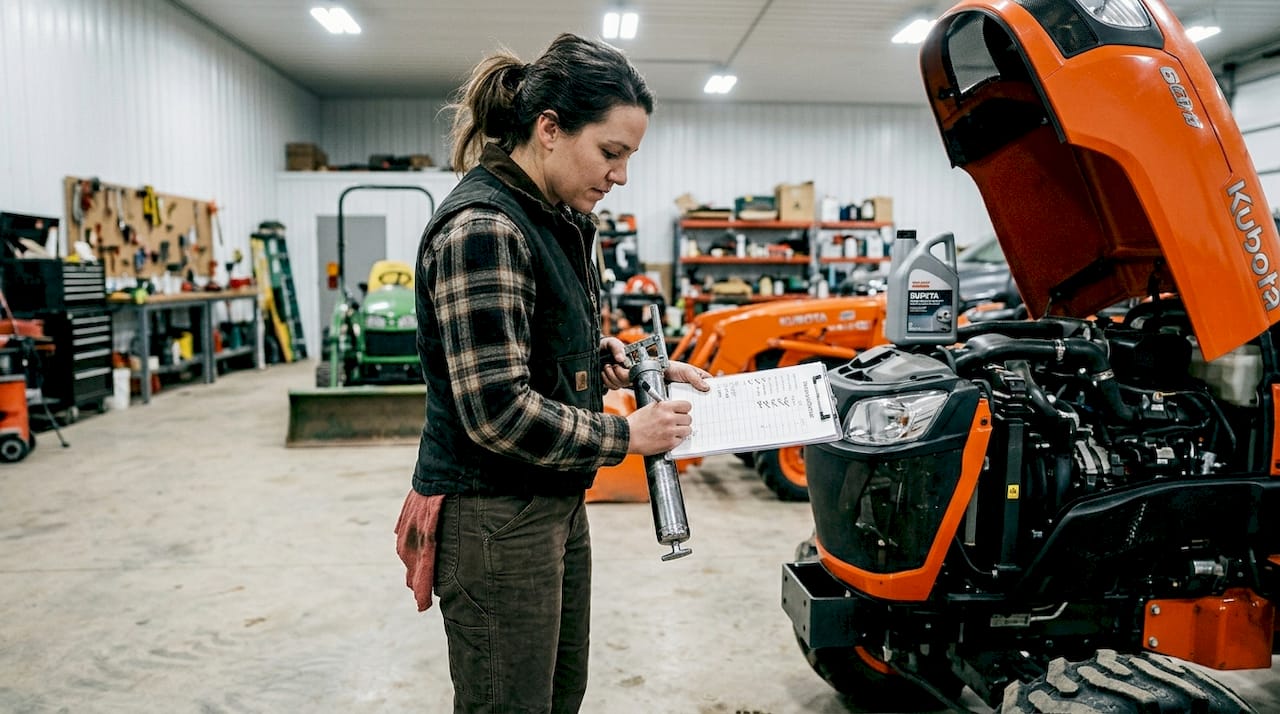
- Clean before you lubricate. Wipe all grease fittings, fill caps, and dipsticks with a clean rag before opening them. Dirt pushed into a fitting contaminates the system immediately.
- Inspect as you go. Look for cracked hoses, leaking seals, and worn boots at every joint. Lubrication time is your best inspection window.
- Engine oil: Check the level cold, then drain and refill at the manufacturer’s interval. Reinstall the drain plug before adding new oil.
- Transmission and hydraulics: Check fluid levels through the sight glass or dipstick. Top off or change according to your service schedule.
- Grease all Zerk fittings: Apply grease slowly until fresh grease appears at the edge of the joint. Do not rush this. Forcing grease too fast can blow out seals.
- Front axle and steering linkage: These points take heavy lateral loads and need attention every 50 hours.
- PTO shaft and implement connections: Grease the PTO splines and any universal joints on attached implements.
- Test after lubricating. Run the tractor for ten minutes and check for leaks, unusual noise, or warning lights.
Following a systematic lubrication schedule reduces unplanned downtime, which is one of the most disruptive and costly problems during planting or harvest season.
| Method | Advantages | Disadvantages |
|---|---|---|
| Manual lubrication | Low cost, full control, easy inspection | Time-intensive, easy to miss points |
| Automated lubrication system | Consistent delivery, no missed points | Higher upfront cost, needs monitoring |
For large fleets or high-hour machines, automated systems pay for themselves quickly. For most single-tractor operations in Greece, a disciplined manual routine combined with solid tractor longevity tips is entirely sufficient.
Pro Tip: Use a laminated checklist attached to your grease gun. Mark off each fitting as you go. It takes thirty seconds to make and eliminates the most common cause of missed lubrication points.
Troubleshooting and avoiding common mistakes
Even with the best instructions, mistakes can happen. Here’s how to troubleshoot fast.
The three most frequent lubrication errors are using the wrong lubricant, over-lubricating grease fittings, and skipping hard-to-reach points. Each one carries real consequences.
Common mistakes and their symptoms:
- Wrong lubricant: Causes foaming, overheating, or rapid wear. Check for milky-colored oil, which signals water contamination or the wrong fluid type.
- Over-greasing: Excess grease blows out seals and attracts dirt. If grease is squeezing out from behind a seal, you’ve applied too much.
- Missed fittings: Neglecting hard-to-reach areas is a frequent cause of failure, particularly on rear linkage pins and mid-mount pivot points.
- Skipping intervals: Oil that runs past its service life loses viscosity and protective additives, leaving metal surfaces exposed.
“The fittings that are hardest to reach are usually the ones that fail first, because they’re the ones most often skipped.”
If you notice unusual grinding or squealing noises during operation, stop the tractor and identify the source before continuing. Noise is the earliest warning sign, and catching it early can mean the difference between adding grease and replacing a component.
Increased engine temperature on the gauge, stiffer steering, or sluggish hydraulic response are all signs that lubrication is overdue or incorrect. Do not wait for a warning light. By the time a sensor triggers an alert, damage may already be underway.
For detailed tractor maintenance guidance on diagnosing specific issues, always start with the symptom and work backward to the system. Hydraulic sluggishness points to fluid level or quality. Bearing noise points to grease quantity or type. Systematic thinking gets you to the answer faster.
A practical perspective: What most tractor owners overlook
Most operators think about lubrication only in terms of preventing catastrophic failure. That’s the right instinct, but it misses a quieter set of benefits that show up every single day in the field.
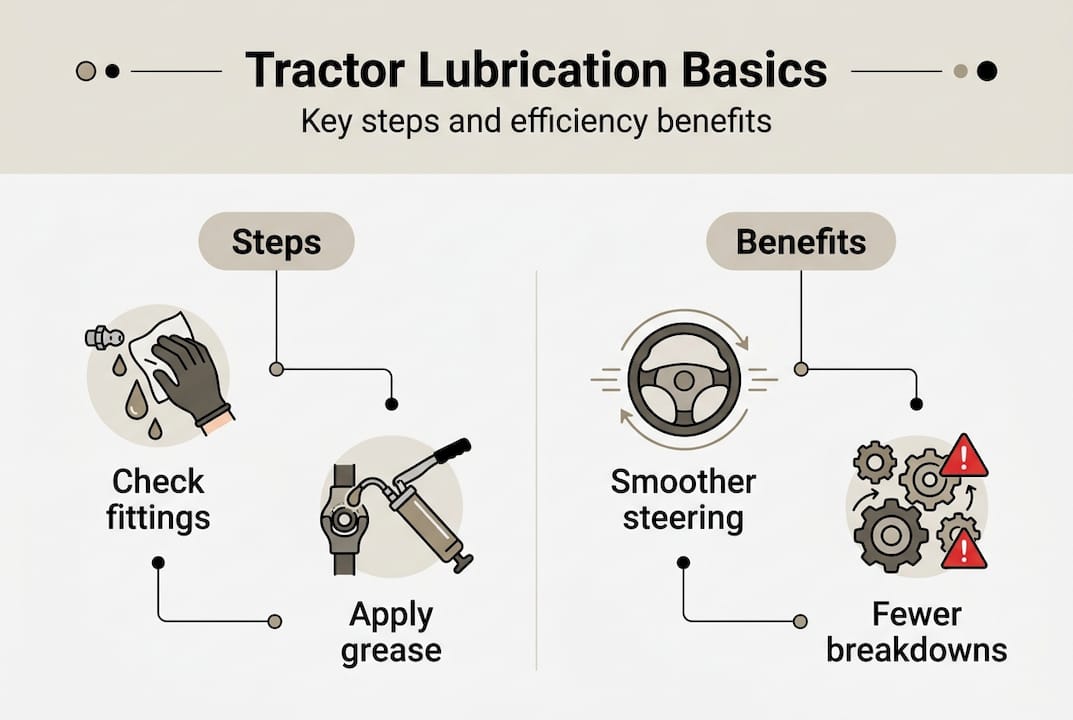
A well-lubricated tractor is noticeably smoother to operate. Steering requires less effort. Gear changes feel cleaner. The hydraulic loader responds with less lag. Over a ten-hour workday, that reduction in physical resistance adds up to real operator fatigue savings. Your body feels the difference, even if you never consciously connect it to the grease you applied that morning.
Another thing most owners skip entirely is record-keeping. Writing down the date, hour meter reading, and what you lubricated takes two minutes per session. Over a season, that log becomes an invaluable diagnostic tool. If a bearing fails, you can check exactly when it was last serviced. That information protects you with warranty claims and helps you spot patterns before they become failures.
Here’s the insight that changes how most people think about this: no single part replacement delivers the compounding return that consistent lubrication does. You can install a brand-new hydraulic pump, but if you don’t maintain the fluid, it will wear out faster than the old one did. Lubrication is the foundation that makes every other investment in your machine worthwhile. Building a habit around it is how you extend tractor life beyond what most operators think is possible.
Take your tractor maintenance further
If you’re ready to keep your machinery running at its best year-round, Pexlivanidis has the resources and parts inventory to support every step of your maintenance routine. With over 20,000 items in stock and free shipping within Greece on orders over 100€, getting the right lubricants, filters, and agricultural machinery parts has never been more straightforward. Whether you’re sourcing grease for a single fitting or restocking your entire maintenance supply, our catalog covers the full range of tractor needs. Explore our detailed agricultural maintenance tips guides to build a complete service plan that protects your investment through every season.
Frequently asked questions
How often should I lubricate my tractor?
Tractor lubrication should be done every 50 operating hours or as recommended in your owner’s manual. Regular lubrication intervals minimize mechanical wear and help you catch problems before they become costly.
Which type of lubricant is best for Greek farming conditions?
High-quality, multi-grade oils designed for Mediterranean climates work best for Greek farms. Proper lubricant selection accounts for both seasonal temperature swings and the heavy-duty demands of field work.
What are the signs that my tractor needs immediate lubrication?
Unusual noises, increased engine temperature, and stiffer controls are clear signs lubrication is overdue. Equipment noises and overheating signal lubrication problems that need attention before you continue operating.
Can improper lubrication void my tractor’s warranty?
Yes, neglect or use of the wrong lubricants can lead to warranty rejection if damage occurs. Improper maintenance can impact warranty eligibility, so always follow the manufacturer’s specified lubricant types and service intervals.