

Over 60 percent of machinery breakdowns on Greek farms happen due to skipped routine checks. For farmers in Thessaloniki and Kavala, every minute lost to preventable tractor downtime means lower yields and frustration. Following proven American maintenance steps can help you protect your investment and save critical working hours. This guide breaks down simple, actionable safety and inspection steps that keep your equipment reliable and your operation running smoothly.
Table of Contents
- Step 1: Prepare Tools And Safety Equipment
- Step 2: Inspect Critical Engine And Fluid Levels
- Step 3: Examine Tires, Brakes, And Steering Systems
- Step 4: Clean Filters And Electrical Contacts
- Step 5: Test Operation And Confirm Proper Function
Quick Summary
| Key Point | Explanation |
|---|---|
| 1. Gather essential safety gear | Include gloves, glasses, and boots to protect yourself during equipment checks. Ensure equipment is in good condition before use. |
| 2. Inspect vital engine fluids | Regularly check oil, coolant, hydraulic, and transmission fluids to prevent machinery breakdown and extend equipment lifespan. |
| 3. Examine tires and brakes | Regularly inspect tire pressure, tread, and brake responsiveness to ensure safe operation and avoid accidents in the field. |
| 4. Clean filters and contacts | Maintain air and fuel filters plus electrical contacts to improve efficiency and reliability, preventing performance issues. |
| 5. Conduct thorough operational tests | Test machinery functions and controls after maintenance to ensure all systems are working properly before returning to use. |
Step 1: Prepare tools and safety equipment
Before starting any machinery inspection, gathering the right tools and safety equipment can mean the difference between a smooth operation and a potential accident. Proper preparation protects both you and your valuable agricultural machinery.
Your safety kit should include essential personal protective equipment like sturdy work gloves, safety glasses, steel toed boots, and hearing protection. Additionally, you will want a comprehensive set of mechanical tools including wrenches, screwdrivers, pliers, and a reliable torque wrench. Agricultural equipment safety checklists recommend having all necessary tools organized and easily accessible before beginning any maintenance work.
Each piece of safety equipment serves a critical purpose. Safety glasses protect against flying debris, work gloves prevent cuts and abrasions, and steel toed boots guard against potential crushing injuries. Always inspect your protective gear for any signs of wear or damage before putting it on. Having a systematic approach to tool and equipment preparation minimizes risks and sets the stage for efficient machinery maintenance.
Pro Tip: Keep a dedicated toolbox or cart specifically for farm machinery maintenance to ensure you always have the right tools organized and ready for immediate use.
Step 2: Inspect critical engine and fluid levels
Inspecting critical engine and fluid levels is crucial for maintaining your farm machinery’s performance and preventing unexpected breakdowns. A thorough fluid check can help you catch potential issues before they become expensive problems.
Start by checking engine oil levels using the dipstick. Ensure the machine is on level ground and the engine is cool. Pull out the dipstick, wipe it clean, reinsert it fully, and then check the oil level. It should be between the minimum and maximum marks. Emission standards for farm equipment engines recommend maintaining proper oil levels to ensure optimal engine performance and reduce environmental impact.
Next, examine other critical fluids including coolant, hydraulic fluid, and transmission fluid. Look for signs of contamination, discoloration, or low levels. Check the reservoir tanks and top up as needed with the manufacturer recommended fluids. Pay attention to any unusual smells or consistency changes that might indicate internal machinery problems. Consistent fluid maintenance not only prevents mechanical failures but also extends the overall life of your agricultural equipment.
Pro Tip: Keep a fluid log to track your machine’s fluid levels and changes, helping you identify patterns and potential maintenance needs before they become critical.
Compare these fluid types and typical warning signs of issues:
| Fluid Type | Typical Role | Trouble Signs |
|---|---|---|
| Engine Oil | Lubricates moving parts | Low level, black or milky color |
| Coolant | Keeps engine from overheating | Low, rusty, or thick appearance |
| Hydraulic Fluid | Powers moving equipment | Foaming, strong odor, leaks |
| Transmission Fluid | Enables gear shifting | Brown color, burnt smell, drips |
Step 3: Examine tires, brakes, and steering systems
Ensuring your farm machinery’s tires, brakes, and steering systems are in top condition is critical for safe and efficient agricultural operations. A comprehensive examination of these components can prevent potential accidents and costly equipment failures.
Agricultural machinery maintenance protocols emphasize systematic inspection of tires first. Check tire pressure using a reliable gauge, ensuring it matches the manufacturer’s recommended specifications. Look closely for signs of uneven wear, sidewall damage, cuts, or bulges that might compromise tire integrity. Inspect the tire tread depth and look for any objects embedded in the tire that could cause future punctures.
Next, focus on the brake system. Test the brake pedal for proper resistance and responsiveness. Listen for any unusual sounds when applying brakes and check for fluid leaks around brake lines and calipers. The steering system requires equal attention. Check for any play or unusual movement in the steering wheel, which could indicate worn components or alignment issues. Ensure all connections are tight and lubricated, and the steering responds smoothly without resistance or unexpected movement.
Pro Tip: Use a tire pressure log and mark inspection dates directly on each tire to track wear patterns and maintain consistent maintenance records.
Step 4: Clean filters and electrical contacts
Maintaining clean filters and electrical contacts is essential for keeping your farm machinery running smoothly and preventing unexpected performance issues. This critical maintenance step helps ensure optimal engine efficiency and electrical system reliability.

Agricultural machinery maintenance protocols recommend starting with air and fuel filters. Carefully remove the air filter and inspect it for dust, debris, and excessive dirt buildup. If the filter appears clogged, replace it with a new one. For fuel filters, use a clean rag to wipe away any external dirt before removing and replacing according to manufacturer specifications.
When cleaning electrical contacts, use electrical contact cleaner and a soft wire brush or specialized cleaning tool. Carefully clean battery terminals, removing any corrosion or buildup that might impede electrical connection. Inspect wiring harnesses for signs of wear, fraying, or damage. Ensure all connections are tight and free from moisture or dirt that could cause electrical resistance or short circuits. A clean and well maintained electrical system reduces the risk of unexpected machinery failure and supports consistent agricultural operations.
Pro Tip: Keep dielectric grease on hand to protect electrical connections after cleaning and prevent future corrosion.
Step 5: Test operation and confirm proper function
Testing your farm machinery after maintenance ensures that all systems are functioning correctly and safely. This final step allows you to verify that the previous inspection and maintenance steps have been completed effectively.
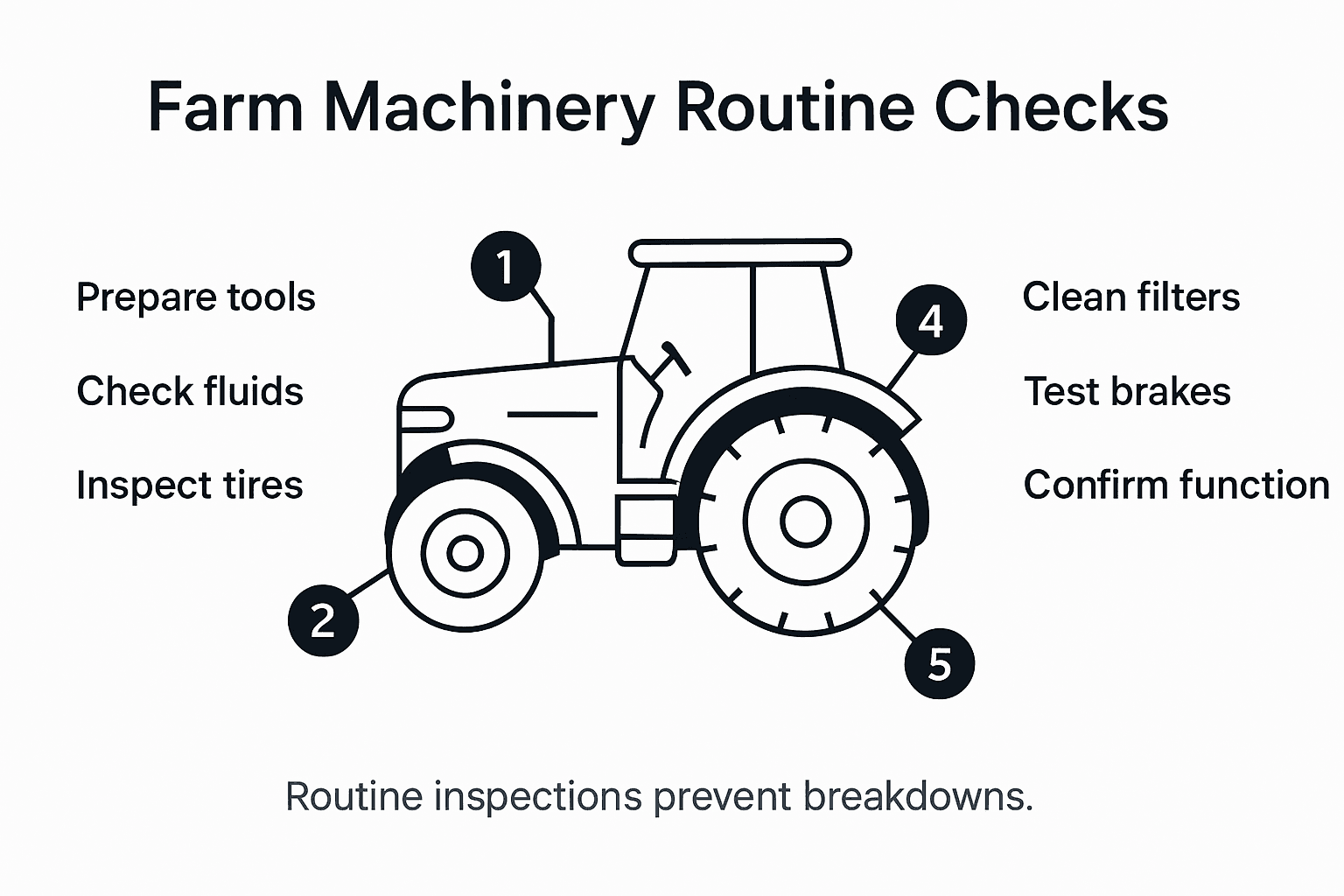
Agricultural machinery testing protocols recommend a systematic approach to operational testing. Start the engine and let it warm up to normal operating temperature, listening carefully for any unusual sounds or vibrations. Check all control systems including hydraulics, power takeoff, and steering responsiveness. Verify that each system engages smoothly and performs as expected under various operational conditions.
Move the machinery through a comprehensive functional test in a safe open area. Test all gear ranges, engage different attachments, and simulate typical working conditions. Pay close attention to brake performance, steering alignment, and overall machine stability. Watch for warning lights, monitor temperature gauges, and ensure that all previously inspected systems are functioning optimally. Any unexpected behavior or performance issues should be immediately noted and addressed before returning the machinery to regular field operations.
Pro Tip: Keep a detailed operational testing checklist specific to your machinery model to ensure consistent and thorough performance verification.
Here is a summary of key inspection steps and their maintenance impact:
| Inspection Step | Main Purpose | Maintenance Benefit |
|---|---|---|
| Tool & Safety Prep | Prevent injuries and disorganization | Safer, faster inspections |
| Check Engine & Fluids | Spot low or contaminated fluids | Prevents breakdowns, extends lifespan |
| Tires, Brakes, Steering | Identify wear or defects early | Reduces accident risk |
| Clean Filters/Contacts | Remove clogs and corrosion | Boosts efficiency and reliability |
| Operational Testing | Confirm all systems work | Detect issues before fieldwork |
Keep Your Farm Machinery in Top Shape with Reliable Parts from Pexlivanidis.com
Routine checks for farm machinery focus on critical engine fluids, tire condition, brakes, steering systems, and electrical contacts. These steps help prevent accidents, reduce downtime, and extend the life of your equipment. If you want to maintain peak performance and avoid costly repairs after your inspections, having access to quality replacement parts and accessories is essential.
At Pexlivanidis.com, you will find a vast inventory of over 20,000 agricultural machinery parts designed to keep your tractors and equipment running smoothly. Whether you need engine components, tires, hydraulic parts, or electrical supplies, our catalog supports all your maintenance needs. Do not wait until a small issue turns into a major breakdown. Visit Pexlivanidis.com now to explore our selection and benefit from free shipping in Greece on orders over 100 euros. Take control of your machinery’s performance today by investing in trusted parts from a dependable source.
Frequently Asked Questions
What tools and safety equipment should I prepare for farm machinery inspections?
Gather essential tools such as wrenches, screwdrivers, and a torque wrench, along with safety equipment like sturdy work gloves, safety glasses, and steel toed boots. Ensure you have everything organized for easy access before starting the inspection to create a safer environment and streamline the maintenance process.
How do I check the engine and fluid levels in my farm machinery?
Start by checking the engine oil level with a dipstick, ensuring the machine is on level ground and cool. Record any low levels and top them up with the manufacturer-recommended fluids to maintain optimal engine performance and prevent breakdowns.
What signs should I look for when examining tires, brakes, and steering systems?
While inspecting tires, check for uneven wear, pressure levels, and any visible damage. For brakes and the steering system, test for responsiveness, listen for unusual sounds, and check for leaks to ensure safe operation and avoid costly repairs.
How can I clean filters and electrical contacts in my farm machinery?
Carefully remove air and fuel filters for cleaning and replace them if clogged. Use electrical contact cleaner and a soft brush to clean battery terminals and wiring, ensuring all connections are tight and free from corrosion, which will improve efficiency and reliability.
What should I do to test the operation of my farm machinery after maintenance?
Start your machinery and let it warm up to normal operating temperature, listening for any unusual sounds. Perform a comprehensive operational test that checks all systems, including hydraulic and steering functions, ensuring everything runs smoothly and safely before returning it to fieldwork.