

Every minute of tractor downtime in Thessaloniki or Kavala impacts productivity and profit potential for local farms. Studies show that adopting american precision standards in maintenance can cut unexpected equipment failures by nearly 40 percent. For farm managers and agricultural technicians aiming to keep operations running smoothly, mastering strategic tractor maintenance workflows means more than ticking off a checklist. You’ll discover how advanced diagnostics, targeted interventions, and thorough documentation keep machinery performing at its best and help prevent costly delays.
Table of Contents
- Defining Tractor Maintenance Workflow Processes
- Types of Tractor Maintenance Tasks
- Step-by-Step Preventive Maintenance Procedures
- Essential Parts, Tools, and Safety Measures
- Common Mistakes and How to Avoid Them
Key Takeaways
| Point | Details |
|---|---|
| Tractor Maintenance Workflow | A structured maintenance workflow enhances equipment performance and minimizes disruptions through preventive assessments, diagnostic evaluations, and systematic interventions. |
| Maintenance Task Categories | Key tasks include preventive maintenance, diagnostic assessments, mechanical repairs, and safety evaluations, each crucial for extending equipment lifespan and safety. |
| Systematic Preventive Procedures | Implementing systematic pre-operational inspections and documentation can significantly reduce equipment failures and optimize operational reliability. |
| Common Mistakes | Awareness of common maintenance errors—such as fluid negligence and safety feature disregard—can guide farmers to implement proactive strategies for improved equipment management. |
Defining Tractor Maintenance Workflow Processes
A strategic tractor maintenance workflow represents more than a routine checklist – it’s a comprehensive system designed to maximize agricultural equipment performance and minimize unexpected operational disruptions. Understanding systematic maintenance approaches enables farmers to transform reactive repair strategies into proactive performance optimization.
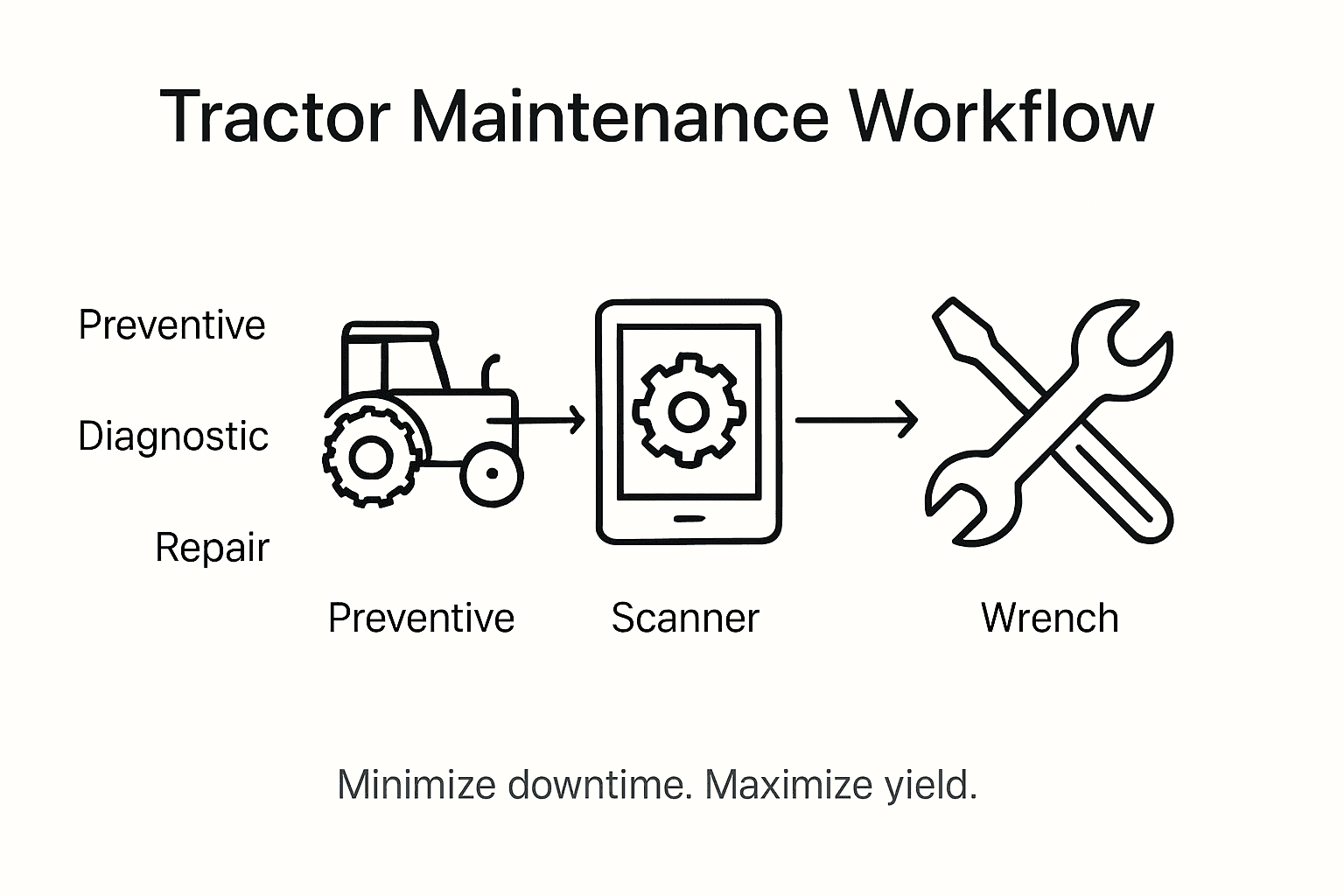
The core of an effective maintenance workflow involves three critical interconnected stages: preventive assessment, diagnostic evaluation, and systematic intervention. Preventive assessment focuses on routine inspections and identifying potential mechanical vulnerabilities before they escalate. Diagnostic evaluation uses advanced technological tools to analyze equipment performance metrics, detecting subtle deviations that might signal impending mechanical failures. Systematic intervention then strategically addresses identified issues through targeted repairs and component replacements.
Successful tractor maintenance workflows integrate multiple sophisticated techniques, including vibration analysis, thermal imaging, and predictive monitoring technologies. These methods transform traditional maintenance from a reactive process to a data-driven, strategic operation. By implementing comprehensive workflows that prioritize early detection and precise intervention, agricultural professionals can significantly reduce equipment downtime, extend machinery lifespan, and ultimately optimize agricultural productivity.
Pro Tip: Develop a digital maintenance log tracking every inspection, repair, and performance metric to create a comprehensive historical record of your tractor’s operational health.
Types of Tractor Maintenance Tasks
Tractor maintenance encompasses a comprehensive array of specialized tasks critical for ensuring optimal agricultural equipment performance and longevity. Maintenance tasks range from routine inspections to complex mechanical interventions, requiring systematic approaches that address multiple equipment dimensions simultaneously.
The primary categories of tractor maintenance tasks can be strategically divided into four essential domains: preventive maintenance, diagnostic assessments, mechanical repairs, and safety system evaluations. Preventive maintenance includes daily fluid level checks, lubrication point assessments, and visual equipment inspections. Diagnostic assessments utilize advanced technological tools to monitor equipment performance, detecting potential mechanical anomalies before they escalate into significant failures. Mechanical repairs address specific component replacements, system adjustments, and structural integrity checks. Safety system evaluations ensure all protective mechanisms, including brake systems, rollover protection structures, and emergency shutdown protocols, function precisely as designed.
Professional agricultural technicians recognize that effective maintenance tasks extend beyond simple mechanical interventions. These tasks require a holistic understanding of equipment dynamics, combining technical expertise with systematic documentation and proactive monitoring strategies. By implementing comprehensive maintenance protocols that integrate detailed record-keeping, predictive technologies, and precision-driven repair techniques, farmers can significantly extend equipment lifespan and optimize operational reliability.
Here’s a summary of key maintenance task domains and their benefits:
| Task Domain | Main Focus | Typical Tools Used | Key Benefit |
|---|---|---|---|
| Preventive Maintenance | Routine inspections, fluid checks | Inspection log, flashlights | Reduces breakdown risk |
| Diagnostic Assessments | Monitoring performance data | Diagnostic scanners, thermal cameras | Early issue detection |
| Mechanical Repairs | Component repairs and adjustments | Wrenches, replacement parts | Extends tractor life |
| Safety Evaluations | Protective system checks | PPE, safety checklists | Minimizes accidents |
Pro Tip: Create a dedicated digital maintenance log with timestamps, specific task details, and performance metrics to track your tractor’s health comprehensively and identify potential issues before they become critical problems.
Step-by-Step Preventive Maintenance Procedures
Preventing equipment failure requires a systematic approach to tractor maintenance, beginning with comprehensive pre-operational inspection protocols. These structured procedures form the foundation of proactive agricultural equipment management, ensuring optimal performance and minimizing unexpected downtime that can critically impact farming operations.

The preventive maintenance process can be effectively broken down into several critical stages: initial visual inspection, fluid system evaluation, mechanical component assessment, and safety system verification. During the visual inspection, farmers should carefully examine the tractor’s exterior for visible damage, checking for loose components, signs of wear, or potential structural issues. Fluid system evaluation involves meticulously checking and topping off essential fluids including engine oil, hydraulic fluid, coolant, and transmission fluid, ensuring each system maintains optimal performance levels. Mechanical component assessment focuses on examining critical systems like belts, hoses, filters, and moving parts for signs of potential wear or imminent failure.
Successful preventive maintenance extends beyond routine checks, requiring a holistic approach that integrates detailed documentation, technological monitoring, and proactive repair strategies. Professional agricultural technicians recommend developing a comprehensive maintenance schedule that tracks each inspection, repair, and performance metric. This systematic documentation allows farmers to identify emerging patterns, predict potential mechanical issues, and implement targeted interventions before minor problems escalate into costly equipment failures.
Pro Tip: Create a digital maintenance tracking system with date-stamped inspection records, including photographs of critical components, to build a comprehensive historical profile of your tractor’s mechanical health.
Essential Parts, Tools, and Safety Measures
Understanding the critical components and safety protocols of agricultural equipment begins with comprehensive knowledge of tractor system fundamentals. Modern tractors represent complex machinery with intricate systems requiring specialized maintenance approaches and in-depth understanding of their core mechanical and electrical components.
The essential parts critical to tractor functionality can be categorized into several primary systems: engine, transmission, hydraulic, electrical, and operational control mechanisms. The engine system includes components like pistons, crankshaft, cooling systems, and fuel delivery mechanisms. Transmission systems manage power transfer, incorporating gears, clutches, and drive mechanisms. Hydraulic systems control lifting, steering, and auxiliary equipment functions through pressurized fluid networks. Electrical systems manage everything from starter motors and alternators to advanced diagnostic and monitoring technologies. Operational control mechanisms include steering wheels, pedals, levers, and digital interfaces that enable precise equipment management.
Safety measures represent a critical dimension of tractor maintenance, requiring meticulous attention to protective equipment, operational protocols, and systematic inspection processes. Operators must utilize personal protective equipment, understand emergency shutdown procedures, and maintain clear visibility and communication channels. Critical safety tools include rollover protection structures, seatbelts, fire extinguishers, first aid kits, and standardized warning signage. Regular equipment inspections, adherence to manufacturer guidelines, and continuous operator training form the cornerstone of comprehensive agricultural equipment safety strategies.
Pro Tip: Develop a color-coded maintenance checklist that systematically tracks each critical component’s condition, enabling quick visual assessments and preventing potential equipment failures.
Common Mistakes and How to Avoid Them
Agriculture professionals must recognize that equipment maintenance involves more than routine checks – it requires strategic awareness of potential pitfalls that can compromise operational efficiency. Systematic pre-operational inspections help farmers identify and mitigate critical maintenance errors, transforming potential equipment failures into proactive management opportunities.
The most prevalent maintenance mistakes typically fall into several critical categories: fluid system negligence, mechanical component oversight, safety feature disregard, and inadequate documentation practices. Fluid system negligence includes failing to monitor engine oil levels, hydraulic fluid conditions, and coolant quality, which can rapidly accelerate equipment wear. Mechanical component oversight involves ignoring subtle signs of component stress such as unusual vibrations, incremental performance degradation, or emerging structural weaknesses. Safety feature disregard represents perhaps the most dangerous mistake, where operators neglect critical protective mechanisms like rollover protection structures, seatbelt functionality, and emergency shutdown protocols.
Professional agricultural technicians recommend developing a comprehensive error prevention strategy that integrates technological monitoring, systematic documentation, and continuous operator education. This approach transforms maintenance from a reactive process into a proactive management system. By implementing digital tracking tools, establishing consistent inspection protocols, and fostering a culture of mechanical awareness, farmers can significantly reduce equipment downtime, extend machinery lifespan, and optimize overall agricultural productivity.
The table below compares common maintenance mistakes with recommended avoidance strategies:
| Mistake Type | Example Problem | Proactive Avoidance |
|---|---|---|
| Fluid System Negligence | Ignoring oil/coolant levels | Schedule regular fluid checks |
| Mechanical Oversight | Missed vibration or noise issues | Train operators to spot signs |
| Safety Feature Disregard | Disabled safety devices | Conduct safety audits monthly |
| Poor Documentation | Incomplete maintenance records | Use digital maintenance logs |
Pro Tip: Create a digital maintenance tracking system with automated alerts for upcoming inspections, potential component replacements, and performance anomalies to stay ahead of potential equipment failures.
Enhance Your Tractor Maintenance with Reliable Parts and Support
Maintaining an efficient tractor workflow means staying ahead of issues like unexpected breakdowns and costly downtime. This article highlights crucial challenges such as preventive maintenance, safety evaluations, and precise component repairs. For farmers and technicians seeking to extend machinery lifespan and maximize yield, having access to high-quality tractor accessories and spare parts is essential. Avoid delays caused by mechanical failures by ensuring you have the right components when you need them.
Discover how pexlivanidis.com can support your maintenance strategy with a vast inventory of over 20,000 agricultural machinery parts. From hydraulic system components to safety equipment, you get reliable products that fit your workflow process. Take advantage of free shipping in Greece for orders above 100€ and explore our options for wholesale B2B memberships to optimize your purchasing power. Don’t wait for an issue to disrupt your operations. Visit our main store now and secure the essential parts that keep your tractors running smoothly. Your well-planned maintenance deserves the best supply solution available today.
Frequently Asked Questions
What are the key stages in a tractor maintenance workflow?
The key stages in a tractor maintenance workflow include preventive assessment, diagnostic evaluation, and systematic intervention, focusing on inspections, performance analysis, and targeted repairs.
How can I implement preventive maintenance for my tractor?
To implement preventive maintenance, establish a routine for visual inspections, fluid system checks, and mechanical component assessments. Document all findings to track your tractor’s health over time.
What tools are essential for effective tractor maintenance?
Essential tools for tractor maintenance include diagnostic scanners, thermal cameras, inspection logs, wrenches for repairs, and safety gear for protective measures.
What common mistakes should I avoid during tractor maintenance?
Common mistakes include fluid system negligence, neglecting mechanical inspections, disregarding safety features, and poor documentation practices. Regularly schedule checks and maintain detailed maintenance logs to avoid these pitfalls.