

TL;DR:
- Farm implements are tools attached to power units like tractors, performing specific field tasks. They are distinct from machinery, which provides the power, as selecting the right implement enhances farm productivity and efficiency. Modern technology and careful matching of implements to tractors improve precision, reduce costs, and optimize seasonal workflows.
If you’ve ever stood in a farm supply catalog wondering whether you need a “cultivator” or a “tractor attachment,” you already understand the confusion around what are farm implement tools versus farming machinery. They’re related but not the same, and mixing them up leads to expensive, redundant purchases. This guide breaks down the definition of farm implements, walks through the main categories and real-world examples, and explains why choosing the right implement makes the difference between a productive season and a frustrating one.
Table of Contents
- Key takeaways
- What are farm implements, defined and categorized
- Common types of farm implements and their uses
- Why use farm implements: benefits and modern technology
- Selecting the right implements: tips and common mistakes
- Ground-driven vs. PTO-driven implements
- My take on getting the most from your implements
- Upgrade your implement setup with Pexlivanidis
- FAQ
Key takeaways
| Point | Details |
|---|---|
| Implements vs. machinery | Farm implements are the working tools; tractors and engines are the power units that move them. |
| Six core categories | Soil preparation, planting, cultivation, irrigation, harvesting, and post-harvest each have dedicated implements. |
| Ground-driven vs. PTO-driven | Ground-driven implements burn less fuel and cause less leaf loss, making them better for forage operations. |
| Technology is changing the field | Modern implements with GPS and IoT sensors are improving precision and reducing waste on farms of every size. |
| Small farms need versatility | Multi-function implements deliver more value per dollar for hobbyists and small-scale operations than single-purpose tools. |
What are farm implements, defined and categorized
The short answer: a farm implement is a device attached to a power unit, like a tractor, or used by hand, to carry out a specific field task. The tractor provides movement and power. The implement does the actual work, whether that’s turning soil, dropping seeds, or cutting grain. This distinction is the foundation of smart equipment planning.
Think of it this way. A tractor without implements is just a vehicle. An implement without a tractor is just a tool sitting in the barn. The two work together, but they serve entirely different roles. Understanding that split is what the term farm equipment meaning really comes down to.
Here is how agricultural implements break down by function:
- Soil preparation: Ploughs, subsoilers, disc harrows, and rotavators that open, turn, and condition the soil before planting
- Planting: Seed drills, broadcast spreaders, transplanters, and planters that get seeds or seedlings into the ground at the right depth and spacing
- Cultivation: Row cultivators, weeders, and inter-row hoes that manage weeds and aerate soil after the crop has emerged
- Irrigation: Surface drip systems, sprinkler booms, and furrow irrigation tools that deliver water efficiently to crops
- Harvesting: Combines, balers, mowers, and forage harvesters that cut, collect, and process crops at season’s end
- Post-harvest: Grain augers, threshers, and crop driers that handle produce after it leaves the field
The global plowing and cultivating machinery market is projected to reach US$26.3 billion by 2033, which tells you how seriously the industry is investing in this category. That growth is being driven not just by larger farms, but by the rising demand for precision tools at every scale.
Common types of farm implements and their uses
Knowing the categories is helpful. Knowing what specific implements look like in practice is where the knowledge actually becomes useful. Below are the most widely used types across different stages of farming.
Soil preparation tools
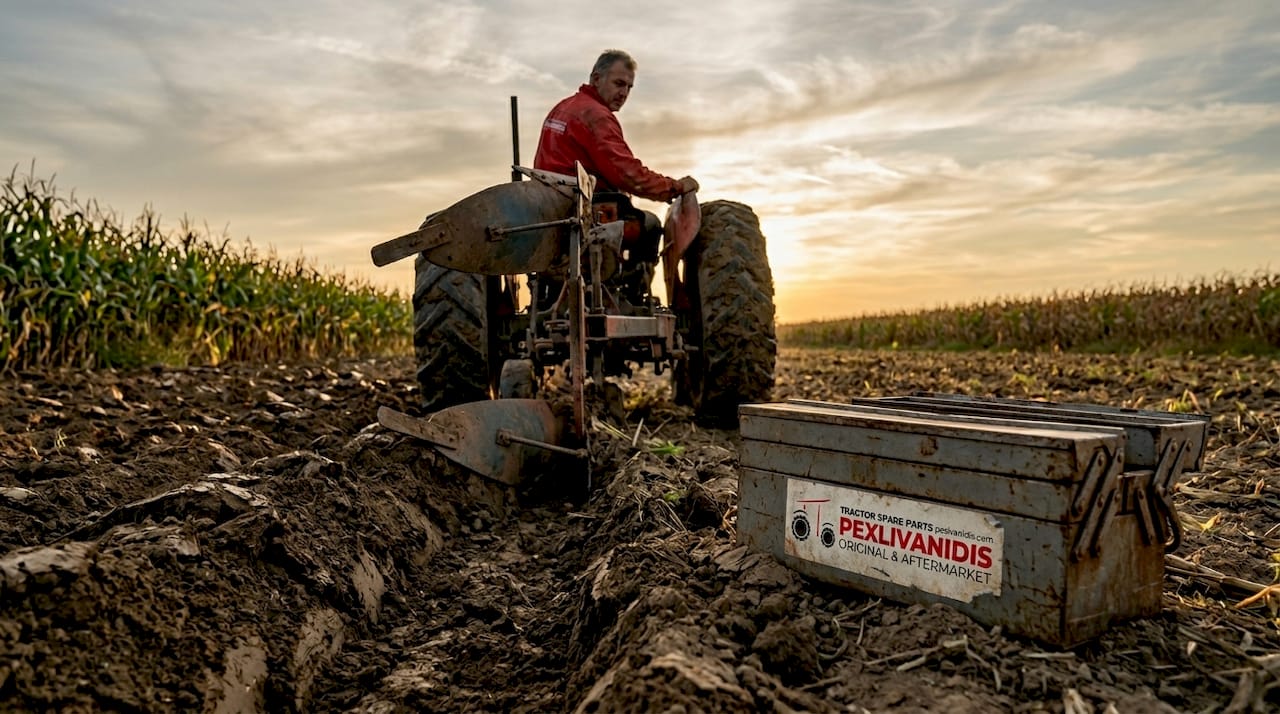
The plough is the oldest and most recognized farm implement on earth. Primary tillage ploughs, like moldboard and disc ploughs, cut deep into soil to break it up and bury crop residue. Secondary tillage tools, including harrows and rotavators, follow behind to refine the seedbed and improve soil structure. A rotavator does this in one pass by combining digging, pulverizing, and leveling.
Planting implements
Seed drills are one of the most efficient planting tools available. Unlike broadcast spreaders that scatter seed randomly, a seed drill places each seed at a controlled depth and spacing. Modern versions go further: GPS-guided seed drills use smart sensors to adjust seed placement in real time based on soil conditions, which directly improves germination rates.
Transplanters serve a similar precision function for seedlings. Rather than hand-planting crops like tomatoes or onions, a transplanter handles spacing and depth mechanically, cutting hours of labor per acre.
Cultivation and maintenance tools
Cultivators and weeders work between the rows once the crop is up. A row cultivator digs shallow furrows between plants to cut off weed roots without disturbing the crop. Some modern cultivators include AI-based weed recognition systems that only activate the digging mechanism when a weed is detected, leaving the crop untouched.
Harvesting implements
Combines are the most recognizable harvesting implements, handling cutting, threshing, and grain separation in a single pass. Balers collect dried hay or straw into compact bales for storage. Forage harvesters cut and chop green crop material for silage. Each of these is an example of farm implement designed around a specific crop and harvest method.
Pro Tip: If you farm multiple crop types, prioritize tractor-mounted implements with quick-attach systems. Swapping between a mower and a baler in under 30 minutes is realistic with the right mounting setup, and it reduces the total number of machines you need to own.
Why use farm implements: benefits and modern technology
The practical reasons for using farm implements go well beyond just getting things done faster. Using implements reduces labor costs while adapting a single tractor to multiple jobs throughout the season. One 80-horsepower tractor equipped with the right attachments can handle soil prep in spring, cultivation in summer, and baling in fall without ever needing a second engine-powered machine.
Modern implements are also delivering real gains in precision and sustainability:
- IoT-equipped sprayers monitor real-time weather and soil moisture to adjust application rates, reducing fertilizer and water overuse
- Laser land levelers create near-perfectly flat fields that dramatically cut irrigation water waste
- GPS-guided planters optimize row spacing across irregular terrain, removing human error from the equation
- Smart soil sensors built into tillage implements measure compaction and nutrient levels as they work
Precision agriculture tech integration in implements is no longer just for large operations. Smaller attachments now come with basic sensor packages that connect to a smartphone app, putting yield-relevant data in the hands of hobby farmers and small producers.
On the financial side, 48-month interest-free financing is now offered by many manufacturers, which has opened up access to mid-tier implements that were previously budget-prohibitive for smaller operations. That shift matters because it means a small vegetable farm can now afford a precision transplanter that was previously reserved for commercial growers.
Selecting the right implements: tips and common mistakes
The biggest mistake farmers and hobbyists make is confusing the power source with the implement. A tractor is not an implement. Mistaking the two leads to buying a second tractor when what you actually need is a new attachment for the one you already own. Before adding any machine to your fleet, ask clearly: “Is this the power unit, or is this the tool?”
Beyond that core confusion, here are practical selection considerations:
- Match implement size to tractor horsepower. An undersized tractor pulling an oversized disc harrow will bog down, wear components faster, and produce worse results than the right-sized pairing.
- Prioritize multi-function implements for small farms. A front loader with interchangeable attachments (forks, bale spears, bucket) costs less than three separate machines and handles more seasonal variety.
- Check the three-point hitch category. Most tractor-mounted implements are rated by Category I, II, or III hitch compatibility. Buying the wrong category means the implement simply will not connect.
- Account for PTO speed requirements. Some implements need 540 RPM, others 1,000 RPM. Running an implement at the wrong speed damages it and reduces performance.
Pro Tip: Before buying any new implement, run the numbers on your most time-consuming field tasks. If one implement eliminates 40% of your manual labor on just two tasks, it pays for itself faster than a specialized tool you use twice a year.
You can find a detailed breakdown of key implement examples at Pexlivanidis, which is worth bookmarking if you are still building out your equipment list.
Ground-driven vs. PTO-driven implements
Not all implements draw their operating power the same way. Understanding the difference helps you make better decisions about efficiency, maintenance, and field suitability.
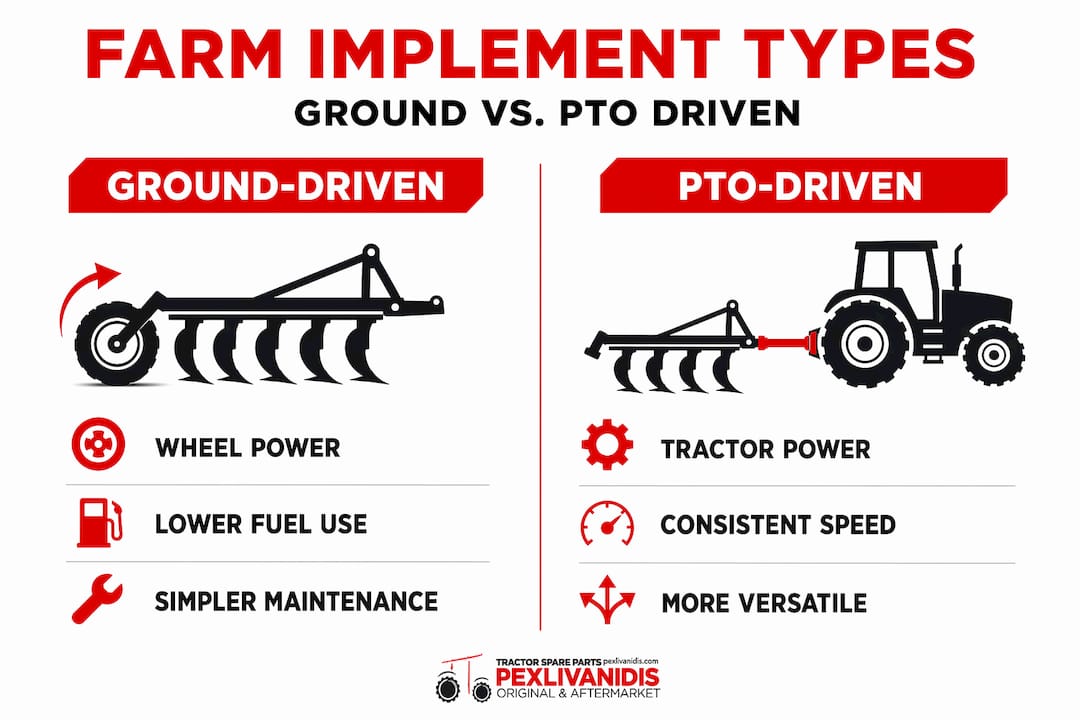
| Feature | Ground-driven | PTO-driven |
|---|---|---|
| Power source | Wheel contact with ground | Tractor’s power take-off shaft |
| Fuel consumption | Lower (no PTO drag) | Higher |
| Leaf/forage loss | Gentler, less leaf shatter | More aggressive, higher loss |
| Mechanical complexity | Simpler | More complex |
| Best use case | Hay and forage operations | Heavy tillage, large-scale harvesting |
| Typical example | 12-wheel V-rake | Rotary mower, flail chopper |
The difference is meaningful in real field conditions. A ground-driven hay rake reduces tractor fuel use by 15 to 20 gallons per 500 acres compared to PTO-driven alternatives, and it does a better job preserving delicate leaf matter in legume hay. The 12-wheel ground-driven V-rake, for example, sweeps a 6-meter windrow at 10 km/h while keeping forage loss below 2%.
PTO-driven implements, on the other hand, maintain consistent operating speed regardless of tractor ground speed, which makes them better suited for tasks like rotary mowing or heavy disc cultivation where torque and cutting consistency matter more than gentleness.
For most small to mid-size hay operations, ground-driven is the smarter choice. For tillage-heavy or large-scale operations, PTO-driven wins on throughput.
My take on getting the most from your implements
I have watched farmers spend serious money on the wrong equipment, and it almost always comes down to the same thing: they bought the machine they could visualize rather than the implement that solved their actual bottleneck.
In my experience, the farmers who get the most out of their equipment budgets are the ones who start with a versatile tractor and build their implement library around it methodically, one season at a time. A quality three-point hitch tractor with a good front loader and four well-chosen rear attachments will outperform a larger fleet of poorly matched machines.
What I have also seen is that technology adoption in implements is moving faster than most farmers expect. The gap between a basic seed drill and a GPS-enabled precision planter is no longer ten years and a fortune. It is often one or two model years and a financing plan. If you are still running the same implements you bought fifteen years ago, you are likely leaving measurable yield and fuel efficiency on the table.
My honest advice: treat your implements as a system, not a collection of individual tools. Understand what each one does, how it connects to your tractor, and how it fits into your seasonal workflow. That thinking produces better results than any single equipment upgrade ever will.
— George
Upgrade your implement setup with Pexlivanidis
If this guide has clarified what you need, the next step is finding the right parts and attachments to make it happen. Pexlivanidis carries over 20,000 agricultural machinery parts and tractor accessories, covering everything from hitch components and PTO shafts to wear parts for tillage and harvesting implements. Whether you are replacing a worn disc blade or sourcing a hard-to-find seed drill component, the inventory is built for both retail farmers and wholesale B2B buyers across Greece and the surrounding region.
For those still building out their equipment strategy, the agricultural machinery buying tips guide at Pexlivanidis covers how to match parts and implements to your specific tractor and farm type. And if you want to protect what you already own, the agricultural machinery maintenance tips guide walks through the service practices that extend implement life and prevent costly downtime.
FAQ
What is the difference between farm implements and farm equipment?
Farm equipment refers broadly to any tool or machine used in agriculture, including tractors, trucks, and power units. Farm implements specifically refer to the attachments or tools, like ploughs, seed drills, and balers, that are connected to a power unit to perform field tasks.
What are some common examples of farm implements?
Common examples include ploughs, harrows, rotavators, seed drills, cultivators, sprayers, balers, and forage harvesters. Each is designed for a specific stage of the farming process, from soil prep to harvest.
Why use farm implements instead of doing fieldwork manually?
Implements reduce labor time dramatically, improve accuracy and consistency, and allow a single tractor to handle tasks across multiple seasons. Modern implements also integrate GPS and sensor technology that improves yields while reducing input costs.
What are agricultural implements used for on small farms?
Small farms benefit most from multi-function implements that handle several tasks with one attachment. A front loader with interchangeable forks, buckets, and bale spears, for example, replaces multiple single-purpose machines and reduces total equipment cost.
What is the difference between ground-driven and PTO-driven implements?
Ground-driven implements draw power from wheel contact with the soil, which reduces fuel use and is gentler on crops like forage hay. PTO-driven implements draw power directly from the tractor’s power take-off shaft, offering more consistent operating speed for heavy tillage and cutting tasks.