

TL;DR:
- A box blade is a versatile attachment for tractors that levels and grades soil by using a front cutting edge, rear scraper, and scarifiers. Its effectiveness depends on proper use of the float setting and matching blade width to the task, with backing up producing better results than driving forward. Using the float correctly and selecting the appropriate size ensures smooth, professional grading and surface finishing.
A box blade is a three-sided metal implement that attaches to a tractor’s three-point hitch and moves, levels, and grades soil or loose material across a property. The industry term is “box scraper,” though box blade is the name most farmers and landowners use in the field. This attachment is one of the most versatile grading tools available for compact and utility tractors, handling everything from driveway maintenance to seedbed preparation. Understanding what a box blade does, how it works, and how to use it correctly separates a smooth, level surface from a rutted, uneven mess.
What is a box blade for a tractor, and how does it work?
A box blade operates by using three cutting surfaces working together: a front cutting edge, a rear scraper blade, and a set of internal scarifiers. The front blade cuts and pushes material forward. The rear blade scrapes and levels as the tractor moves. The scarifiers, which are adjustable steel teeth mounted inside the box, break up compacted soil before the blades move it.
The attachment connects to the tractor through the standard Category I or Category II three-point hitch system, using two lower lift arms and an adjustable top link. The top link controls the blade’s angle, which determines whether you are cutting aggressively or finishing lightly. Raising or lowering the hitch changes how deep the blade bites into the ground.
The most critical setting on the hitch is the float position. Enabling the float setting allows the box blade to follow the natural contour of the land independently, rather than copying every bump the tractor wheels hit. Without float, the blade mirrors tractor wheel bounce and produces a wavy, washboard surface instead of a smooth one.
- Front cutting edge: Pushes and collects material during forward passes.
- Rear scraper blade: Levels and smooths the surface as material exits the box.
- Scarifiers: Steel teeth that penetrate compacted soil before blades engage.
- Three-point hitch connection: Provides height and angle adjustment for depth control.
- Float setting: Lets the blade contour the land independently for a clean finish.
Pro Tip: Set your three-point hitch to float before your finishing pass. A fixed hitch position is the single most common cause of uneven, wavy grading results.
What is a tractor box blade used for on farms and properties?
A box blade handles a wider range of tasks than most landowners expect when they first buy one. The core function is land grading, which means cutting high spots and filling low spots to create a level surface. That applies equally to a farm field, a pasture, a dirt road, or a residential driveway.
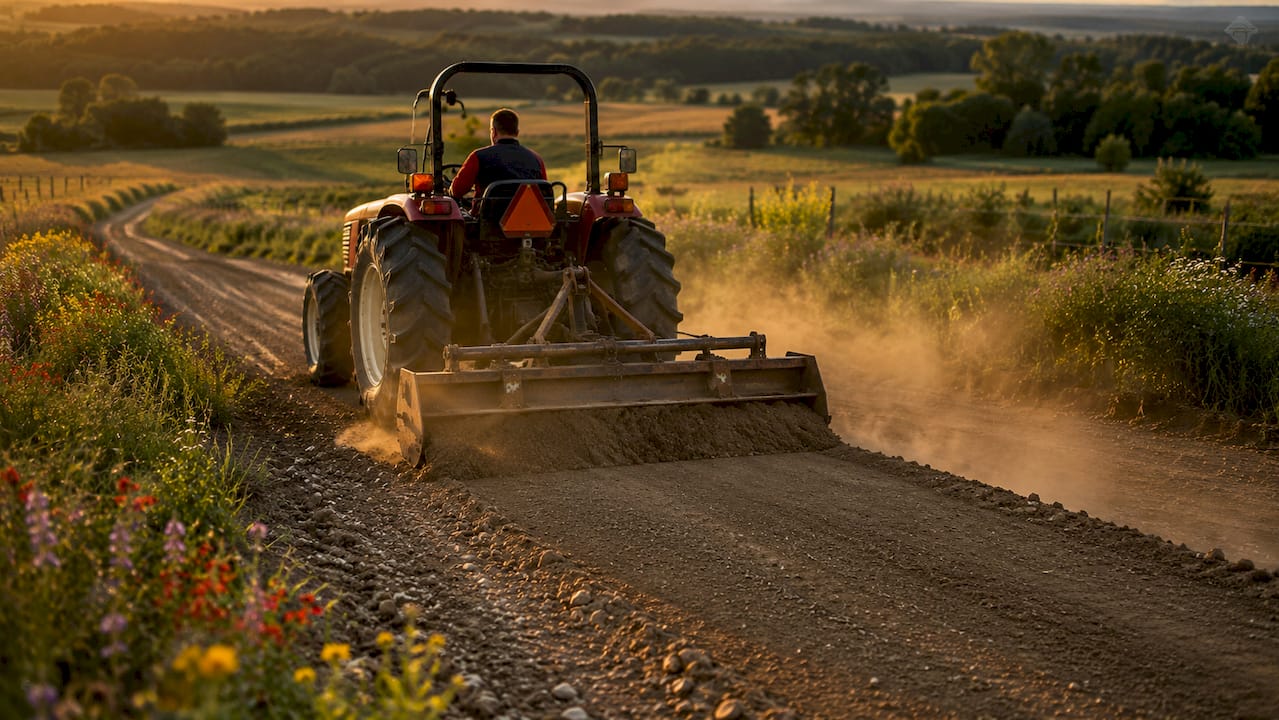
Driveway maintenance is one of the most frequent box blade tractor uses. Gravel driveways lose their crown over time as rain washes material to the edges. A box blade restores that crown by pulling material back toward the center, preventing water from pooling on the surface and causing erosion.
Box blades excel in heavy earthmoving compared to land planes, which are better suited for light finishing work. The box-shaped design physically carries material during a pass, which means you can move significant volumes of soil, gravel, or fill dirt in a single run. Land planes skim the surface; box blades move it.
Beyond grading, box blades are also usable for snow clearing and mild tilling, making them more multipurpose than most attachments in this price range. The scarifiers loosen compacted soil before planting or for weed control between rows. That one attachment covers grading, backfilling, spreading, tilling, and snow removal.
What features matter when choosing the best box blade for tractors?
Choosing the right box blade starts with width. A blade narrower than the tractor’s rear tires cannot eliminate the ruts those tires leave behind. Experts recommend selecting a box blade slightly wider than the rear tire width to grade over ruts cleanly on every pass.
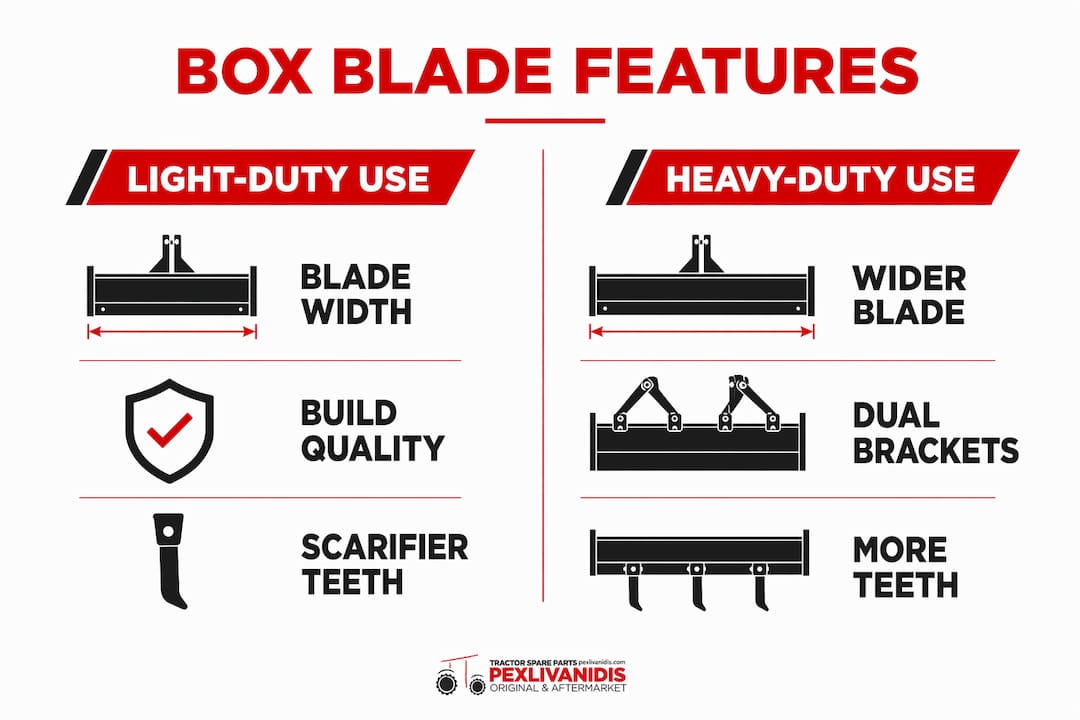
Build quality separates a box blade that lasts a decade from one that bends after a season of heavy use. Dual-bracket hitch attachments handle torque and grading stress far better than single-pin designs. If you plan to use scarifiers regularly in hard or rocky soil, the hitch connection takes significant force, and a single-pin setup will show wear quickly.
| Feature | Light-duty use | Heavy-duty use |
|---|---|---|
| Blade width | Matches tractor tire width | Wider than rear tires |
| Frame construction | Standard steel box frame | Reinforced heavy-gauge steel |
| Hitch attachment | Single-pin design | Dual-bracket design |
| Scarifier quantity | 5–7 teeth | 9–11 teeth |
| Cutting edge | Bolt-on standard edge | Reversible hardened edge |
The best box blade depends entirely on use case. Light residential tasks require smaller, lighter models. Heavy agricultural soil prep demands stronger, heavier equipment to prevent frame bending under load. Buying a light-duty blade for heavy farm work is the most expensive mistake you can make in this category.
Pro Tip: Count the scarifier teeth before you buy. More teeth mean finer soil breakup, but also more stress on the hitch. Match tooth count to your soil type, not just your budget.
How to use a box blade: techniques and best practices
Proper technique with a box blade produces results in a fraction of the time that guesswork takes. The sequence of passes matters as much as the equipment itself.
Step 1: Attach and adjust. Connect the box blade to the three-point hitch, set the top link so the blade sits level or slightly nose-down, and lower the scarifiers to the depth you need. For hard, compacted soil, drop the scarifiers fully. For loose gravel, raise them or retract them entirely.
Step 2: Make your cutting pass in reverse. Operating the box blade backward provides more digging power, similar to how a bulldozer pushes material. Backing up engages the scarifiers and rear blade to pull material toward the center of the path. This is the pass that restores a driveway crown or cuts down a high spot.
Step 3: Make your finishing pass forward. Drive forward over the same path with the hitch in float. The front blade pushes loose material, and the rear blade smooths it behind the tractor. Basic driveway maintenance using this reverse-then-forward sequence takes roughly 20 minutes for a standard residential driveway.
Step 4: Check your surface and repeat. Walk the graded area and look for low spots or ridges. One or two additional passes in float usually correct any remaining unevenness.
Step 5: Maintain the blade edge. A worn cutting edge drags instead of cuts. Check the bolt-on cutting edge after every few hours of use in rocky or abrasive soil. Reversible hardened edges double the service life before replacement.
Common mistakes to avoid:
- Locking the hitch: Keeping the three-point hitch rigid instead of using float produces a wavy, uneven finish every time.
- Wrong blade width: A blade narrower than the rear tires leaves visible ruts that no amount of additional passes will fix.
- Skipping the reverse pass: Driving only forward moves surface material but does not restore a crown or cut compacted high spots.
- Ignoring scarifier depth: Scarifiers set too deep in loose material cause the tractor to bog down. Set depth based on actual soil conditions.
For guidance on keeping your tractor and attachments performing reliably, the tractor maintenance tips from Pexlivanidis cover routine care that directly extends the life of implements like box blades.
Key Takeaways
A box blade is the most practical grading attachment for tractors when the task involves moving material, restoring crowns, or breaking compacted soil, and its performance depends almost entirely on correct hitch float use and proper blade sizing.
| Point | Details |
|---|---|
| Float setting is non-negotiable | Always use hitch float on finishing passes to prevent wavy, uneven surfaces. |
| Width determines rut removal | Choose a blade slightly wider than rear tires to grade over tire tracks cleanly. |
| Reverse pass cuts, forward pass finishes | Back up to move material and restore crown, then drive forward to smooth. |
| Dual-bracket hitches last longer | Dual-bracket designs handle scarifier torque better than single-pin attachments. |
| Match duty level to task | Light residential work suits smaller models; heavy soil prep requires reinforced frames. |
Why the float setting is the skill that separates good grading from great grading
Most landowners who struggle with a box blade are not using the wrong equipment. They are using the right equipment incorrectly. The float setting on the three-point hitch is the single feature that separates a professional-grade finish from a frustrating, wavy surface, and it is the one thing most new users skip entirely.
I have seen farmers run a box blade for an entire season with the hitch locked in position, wondering why their driveway looks worse after grading than before. The blade copies every bump the tractor tires hit. Lock the hitch, and you are essentially dragging a rigid steel box over uneven ground. Use float, and the blade reads the land on its own.
The second thing that surprises new users is how much the reverse pass matters. Most people instinctively drive forward and push material. Backing up is where the real work happens. The scarifiers dig in, the rear blade pulls material toward center, and the crown starts to form. The forward pass is just the finishing move.
On blade selection, I lean toward heavier-built equipment even for lighter tasks. A reinforced frame and a dual-bracket hitch cost more upfront, but they do not bend when you hit a buried rock or a hard clay shelf. Checking the tractor pre-season preparation steps before attaching any implement also catches wear issues before they become field failures.
The box blade is not complicated. It rewards the farmer who takes 10 minutes to understand float, width, and pass sequence over the one who just drops it and drives.
— George
Tractor attachment resources from Pexlivanidis
Getting the most from a box blade depends on the quality of the attachment and the condition of the tractor running it. Pexlivanidis carries over 20,000 agricultural machinery parts and accessories, covering the components that keep tractor attachments performing across seasons. Whether you need replacement cutting edges, hitch hardware, or scarifier teeth, the inventory supports both retail and wholesale needs across Greece. The agricultural machinery parts guide from Pexlivanidis breaks down the key component categories and compatibility considerations worth knowing before you buy. For ongoing care, the machinery maintenance guide covers peak-performance practices for the full range of farm implements.
FAQ
What is a box blade attachment on a tractor?
A box blade is a three-sided metal scraper that attaches to a tractor’s three-point hitch and grades, levels, or moves soil and loose material. It uses a front cutting edge, rear scraper blade, and internal scarifiers to handle both cutting and smoothing passes.
How is a box blade different from a grader blade?
A grader blade is a single flat blade that pushes material to one side, while a box blade encloses material in a three-sided box and carries it during the pass. Box blades move larger volumes of material and can restore surface crowns; grader blades are better for simple side-casting.
What size box blade do I need for my tractor?
Select a box blade slightly wider than your tractor’s rear tires. A blade narrower than the rear tires cannot grade over tire ruts, which defeats the purpose of leveling.
Can a box blade be used for snow removal?
Yes. A box blade works for light to moderate snow clearing, though it is not a dedicated snow blade. The rear scraper edge pushes snow effectively on flat surfaces like driveways or farm lanes.
What is the most common mistake when using a box blade?
Keeping the three-point hitch in a fixed position instead of using float is the most common error. A locked hitch causes the blade to mirror every bump the tractor wheels hit, producing a wavy, uneven surface finish.