

TL;DR:
- A live PTO on a tractor uses a two-stage clutch to keep implement power active when the tractor stops. It improves control, safety, and reduces downtime compared to non-live systems. Proper maintenance of clutch components and safety practices are essential for effective and safe operation.
A live PTO on a tractor is a power take-off system that keeps the attached implement running even when the tractor stops moving. It does this through a two-stage clutch mechanism that separates tractor movement from implement power. First introduced commercially in 1945 with the Cockshutt Model 30, live PTO marked a turning point in farm productivity and safety. For any operator running a baler, mower, or rotary tiller, understanding how this system works is the difference between smooth fieldwork and costly stalls.
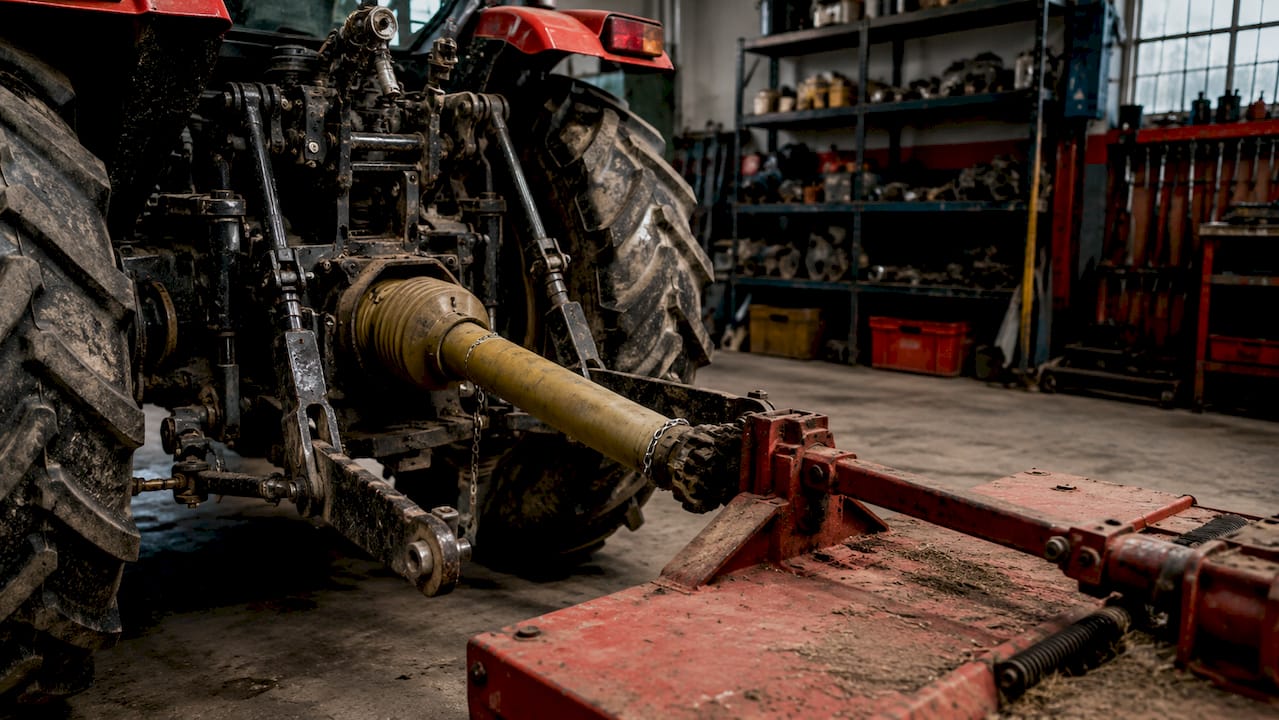
What is a live PTO on a tractor and how does it work?
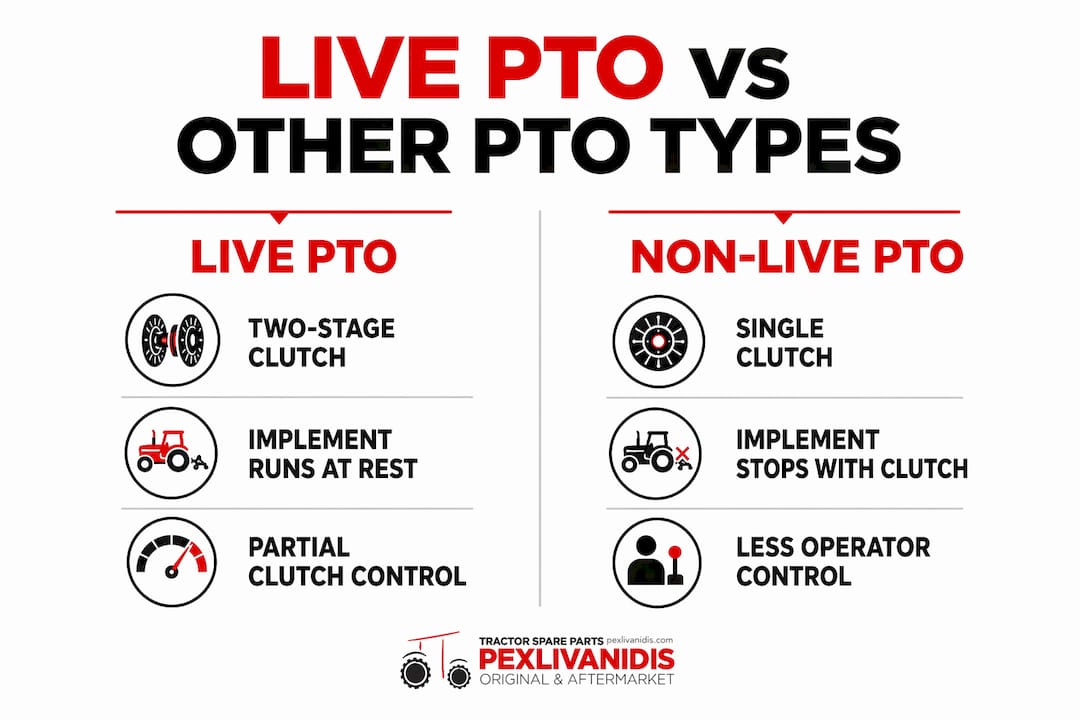
A live PTO is defined as a power take-off system that uses a two-stage clutch to control tractor movement and implement power independently. The clutch pedal has three distinct positions, and each one produces a different result.
At rest, with no pedal pressure, both the tractor transmission and the PTO shaft run normally. Press the pedal halfway and the tractor stops moving, but the PTO shaft keeps spinning. Press it all the way down and both the transmission and the PTO stop completely.
This is the core mechanic that separates live PTO from older designs. With a standard, non-live PTO, any clutch input cuts power to the implement immediately. That means every time you slow down, turn, or stop, your baler or mower loses power and can stall or jam.
The dual clutch assembly/04%3A_Controls_and_Instruments/4.10%3A_Power_Take-Off_and_Hydraulic_Motors-_The_Tractor’s_Secondary_Power_System) inside the tractor is what makes this possible. It contains two separate clutch plates stacked on the same shaft. The front plate controls the transmission. The rear plate controls the PTO. Pressing the pedal halfway releases only the front plate.
| Clutch pedal position | Tractor movement | PTO shaft status |
|---|---|---|
| Released (rest) | Moving | Running |
| Half-depressed | Stopped | Running |
| Fully depressed | Stopped | Stopped |
Pro Tip: Practice the half-pedal position in an open field before using it with an implement. Feeling the exact engagement point on your specific tractor prevents accidental full disengagement during fieldwork.
What are the advantages of a live PTO over standard systems?
Live PTO transformed farming operations by eliminating the machine stalls and field blockages that plagued earlier PTO designs. The practical benefits show up every day in the field.
Here is what live PTO delivers that a non-live system cannot:
- Continuous implement power during stops. You can halt the tractor at a field boundary, a gate, or an obstacle without cutting power to your baler or mower. The implement keeps running and clears itself before you move on.
- Better control during turns. On headland turns, you can slow the tractor to a crawl while the PTO-driven implement maintains full speed. This prevents material buildup inside balers and reduces mower scalping on uneven ground.
- Reduced implement damage. Sudden power loss to high-inertia implements like rotary mowers causes mechanical shock. Live PTO lets you manage stops gradually, protecting gearboxes and drive shafts.
- Improved operator safety. Operators can navigate turns and obstructions without stopping PTO-driven implements, which reduces the risk of stalling and the dangerous conditions that follow.
- Less downtime. Fewer stalls mean fewer manual restarts. On a full day of baling, that adds up to a meaningful difference in acres covered.
Live PTO does have one real limitation compared to independent PTO systems. The operator still controls PTO engagement through the clutch pedal. That requires active foot management throughout the workday, which adds to fatigue on long shifts. Independent PTO removes this requirement entirely by using a separate hydraulic control.
How does live PTO differ from independent PTO and non-live PTO?
The three PTO types found on tractors represent three different levels of operator control, and confusing them leads to real problems in the field.
Non-live PTO is the oldest and simplest design. The PTO shaft is directly linked to the transmission. The moment you press the clutch, the implement stops. There is no separation between tractor movement and implement power. Using a brush mower on a non-live PTO tractor without an overrunning clutch creates a genuine safety hazard. The spinning inertia of the mower blade can actually push the tractor forward when the clutch is depressed, a condition known as overdrive.
Live PTO solves that problem with the two-stage clutch described above. The implement keeps running during a half-clutch stop. Full clutch stops everything. This gives operators meaningful control without adding complex hydraulic systems.
Independent PTO takes control one step further. It uses a separate hydraulic or electrohydraulic clutch to engage and disengage the PTO shaft. The tractor’s main clutch pedal has no effect on PTO operation at all. You can stop the tractor completely, shift gears, and restart without touching the implement’s power supply.
| Feature | Non-live PTO | Live PTO | Independent PTO |
|---|---|---|---|
| PTO stops with clutch | Yes | Partially (full pedal only) | No |
| Operator control method | Clutch pedal | Two-stage clutch pedal | Separate hydraulic control |
| Implement protection | Low | Medium | High |
| Complexity and cost | Low | Medium | High |
| Best suited for | Light, low-inertia tools | Balers, mowers, tillers | Heavy, continuous-use implements |
Pro Tip: When evaluating a used tractor, ask the seller to demonstrate the half-clutch position with the PTO engaged. If the implement stops when the pedal is halfway down, the tractor has a non-live PTO regardless of what the listing says.
What safety tips and maintenance practices should operators follow?
Live PTO is safer than non-live PTO, but it still demands respect and proper technique. Misuse of the two-stage clutch causes operator fatigue and accidental implement engagement or stall. These are the practices that keep you and your equipment safe.
- Learn your tractor’s clutch engagement point. Every tractor has a slightly different feel at the half-pedal position. Spend time identifying it before fieldwork. A clutch that slips past the halfway point unexpectedly will cut implement power at the worst moment.
- Never step over or reach across a spinning PTO shaft. Live PTO means the shaft can be turning even when the tractor is stationary. Always shut down completely before approaching the rear of the tractor.
- Install an overrunning clutch (ORC) when using high-inertia implements on older tractors. If you run a brush mower on a tractor without live PTO, an overrunning clutch on the shaft prevents the implement’s momentum from pushing the tractor forward when you disengage.
- Inspect the PTO shaft guard before every use. The guard must be intact and secured. A missing or cracked guard on a live PTO tractor is a serious injury risk because the shaft can spin unexpectedly.
- Check clutch adjustment regularly. A worn or misadjusted clutch on a live PTO tractor may not hold the half-pedal position correctly. Schedule clutch inspection as part of your pre-season tractor preparation routine.
- Verify PTO type before buying a used tractor. Live PTO is sometimes listed as optional on older models. Retrofitting a non-live system is costly and not always practical. Confirm the PTO type in person before purchase.
Tractor safety features like live PTO work best when operators understand both their function and their limits. Training matters as much as the equipment itself.
Pro Tip: Keep a log of clutch pedal feel and engagement point. If the half-pedal position starts feeling different from one week to the next, that is an early sign of clutch wear before it becomes a field failure.
Key Takeaways
A live PTO is the minimum recommended standard for safe, efficient fieldwork with power-driven implements, and mastering its two-stage clutch is the single most important skill for any operator using one.
| Point | Details |
|---|---|
| Live PTO definition | A two-stage clutch system that keeps the implement running when the tractor stops moving. |
| Half-pedal is the key skill | Pressing the clutch halfway stops the tractor but keeps the PTO shaft spinning. |
| Live vs. independent PTO | Independent PTO uses a separate hydraulic control; live PTO still relies on the clutch pedal. |
| Safety with high-inertia tools | Always use an overrunning clutch on non-live PTO tractors running brush mowers or heavy implements. |
| Maintenance priority | Regular clutch adjustment and PTO shaft guard inspection prevent the most common field failures. |
Why live PTO still matters more than most operators realize
Farmers often focus on horsepower and hydraulics when evaluating a tractor, and the PTO system gets treated as an afterthought. That is a mistake I have seen cause real problems in the field.
A live PTO does not just add convenience. It changes how you work an entire field. When I watch operators run balers on non-live PTO tractors, the pattern is always the same: slow down on a turn, the baler stalls, the operator climbs off to clear it, and fifteen minutes disappear. Multiply that across a full hay season and you are looking at days of lost productivity.
The two-stage clutch also teaches you something about your tractor that most operators never learn: the exact relationship between ground speed and implement power. Mastering that half-pedal position makes you a better operator across every task, not just PTO work.
Where live PTO falls short is on very long continuous operations, like running a large rotary tiller for hours. The constant foot management gets tiring. That is where independent PTO earns its premium price. But for the majority of farm tasks, a well-maintained live PTO system on a properly trained operator delivers results that match far more expensive equipment.
The operators who get the most out of live PTO are the ones who treat clutch maintenance as seriously as engine maintenance. A worn clutch that slips past the half-pedal point is not just an inconvenience. It is a safety hazard and a productivity drain. Check it, adjust it, and replace it on schedule.
— George
Pexlivanidis: parts and guidance for your PTO system
Keeping a live PTO system in working order depends on having the right parts available when you need them. Pexlivanidis stocks over 20,000 agricultural machinery parts, including clutch components, PTO shaft guards, and tractor accessories for both retail and wholesale customers across Greece. Whether you are replacing a worn clutch plate or sourcing an overrunning clutch for an older tractor, the inventory covers a wide range of makes and models. The agricultural machinery parts guide on the Pexlivanidis website walks through the key component categories and helps you identify exactly what your tractor needs. For operators focused on long-term reliability, the machinery maintenance guide covers service intervals and best practices that apply directly to PTO system care.
FAQ
What is the live PTO tractor definition in simple terms?
A live PTO is a power take-off system that uses a two-stage clutch to keep the implement running even when the tractor stops moving. Pressing the clutch halfway stops the tractor but leaves the PTO shaft spinning.
How does live PTO differ from independent PTO?
Live PTO still uses the tractor’s clutch pedal to control PTO engagement through two stages. Independent PTO uses a separate hydraulic clutch that operates completely independently of the main clutch pedal.
Is live PTO safe for high-inertia implements like brush mowers?
Live PTO is significantly safer than non-live PTO for high-inertia implements. On tractors without live PTO, an overrunning clutch on the shaft is required to prevent the implement’s momentum from pushing the tractor forward.
What maintenance does a live PTO system require?
Regular clutch adjustment is the most critical maintenance task. Inspect the PTO shaft guard before each use and check clutch engagement feel weekly during heavy-use seasons to catch wear before it causes a field failure.
Can you retrofit live PTO onto an older tractor without it?
Retrofitting a non-live PTO tractor with a live PTO system is technically possible but costly and mechanically complex. Most operators find it more practical to source a tractor that already has live PTO as a factory feature.