
TL;DR:
- ISOBUS is the standard communication protocol that allows tractors and implements from different brands to connect via a shared digital language. It operates over a CAN-bus network, enabling automatic recognition and real-time data exchange for improved precision and efficiency.
ISOBUS is the international communication protocol that allows tractors and agricultural implements from different manufacturers to work together through a shared digital language. Formally standardized as ISO 11783, it functions as the agricultural equivalent of a USB port: plug in a compliant implement, and the tractor recognizes it automatically. Before ISOBUS, farmers dealt with a separate proprietary monitor for every implement in the shed. This guide explains what ISOBUS is on a tractor, how it works technically, what it delivers in the field, and what you need to know before retrofitting older equipment.
How does ISOBUS work on a tractor?
ISOBUS runs on a CAN-bus network, a high-speed controller area network that operates over a single two-wire electrical line. That simplicity is the point. One cable carries all the digital signals between the tractor and the implement, replacing the tangle of brand-specific wiring that previously cluttered the cab.
When you connect an implement to the tractor’s ISOBUS port, the system initiates an automatic recognition sequence. The implement’s Electronic Control Unit (ECU) and the tractor’s ECU perform a handshake, negotiating which functions each side supports. That ECU handshake/03%3A_Tractor_Drive_Control_and_Auxiliary_Systems/3.16%3A_ISO-Bus_and_Digital_Integration-_Speaking_the_Same_Language) determines whether advanced features like Section Control and Task Controller become available. A failed negotiation means limited functionality even if the physical connection is solid.
The data exchanged across the network covers everything the operator needs in real time:
- Tractor speed and PTO status sent to the implement for rate calculations
- Hydraulic pressure signals for automatic depth and pressure control
- Implement status including section on/off states and fault codes
- Task data such as application rates and field boundary coordinates
The standard also supports power circuits up to 55A, giving implements enough electrical capacity for demanding actuators and sensors. That power headroom matters for large sprayers and planters with dozens of individual section valves.
Pro Tip: Before connecting a new implement, check that both the tractor and implement firmware are updated. Outdated firmware is the most common cause of failed ECU handshakes and missing features.
What are the main benefits of ISOBUS for farmers?
The most visible benefit is cab simplification. ISOBUS lets operators control multiple implements from different manufacturers using one Universal Terminal display. Instead of three separate monitors mounted at awkward angles, you have one screen showing everything.
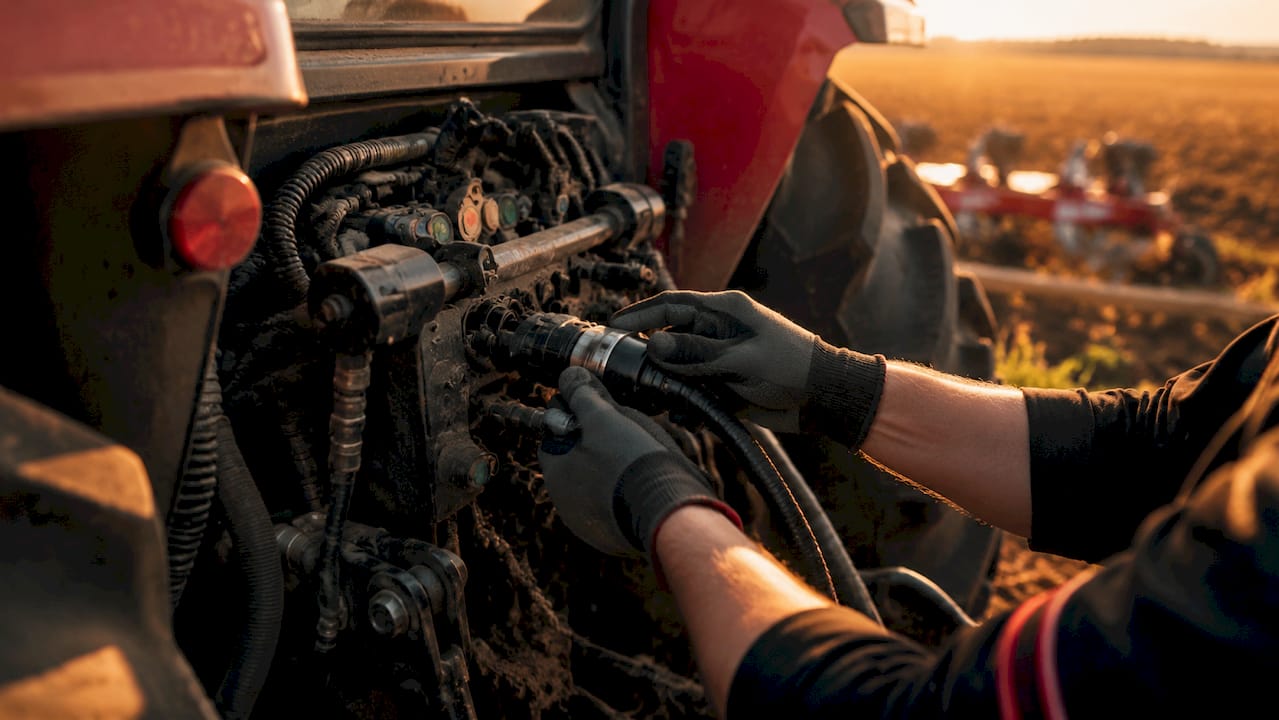
The brand-agnostic design is equally significant. A John Deere tractor can run a Horsch planter or a Kverneland sprayer through the same ISOBUS port without custom adapters or proprietary software. That freedom matters when you are buying equipment based on performance and price rather than brand loyalty.
The Task Controller function adds a precision farming layer that was previously available only through expensive proprietary systems. It handles:
- Variable rate application adjusting seed or chemical rates across field zones
- Automated section control switching boom sections on and off to prevent overlap
- Field data logging recording application maps and yield data automatically
- GPS-linked task automation triggering implement actions at defined field boundaries
The ISOBUS Virtual Terminal standardizes the user interface across different brands’ displays. Operators can switch between ISOBUS-ready implements without learning a new control system each time. That consistency cuts training time and reduces the chance of operator error during busy seasons.
Reduced operator fatigue is a real, measurable outcome. Managing fewer screens, fewer buttons, and fewer manual adjustments across a long working day adds up. The Agricultural Industry Electronics Foundation (AEF) describes ISOBUS as converting isolated machines into an intelligent network, and that description holds up in practice.
How does ISOBUS enable Tractor Implement Management (TIM) and automation?
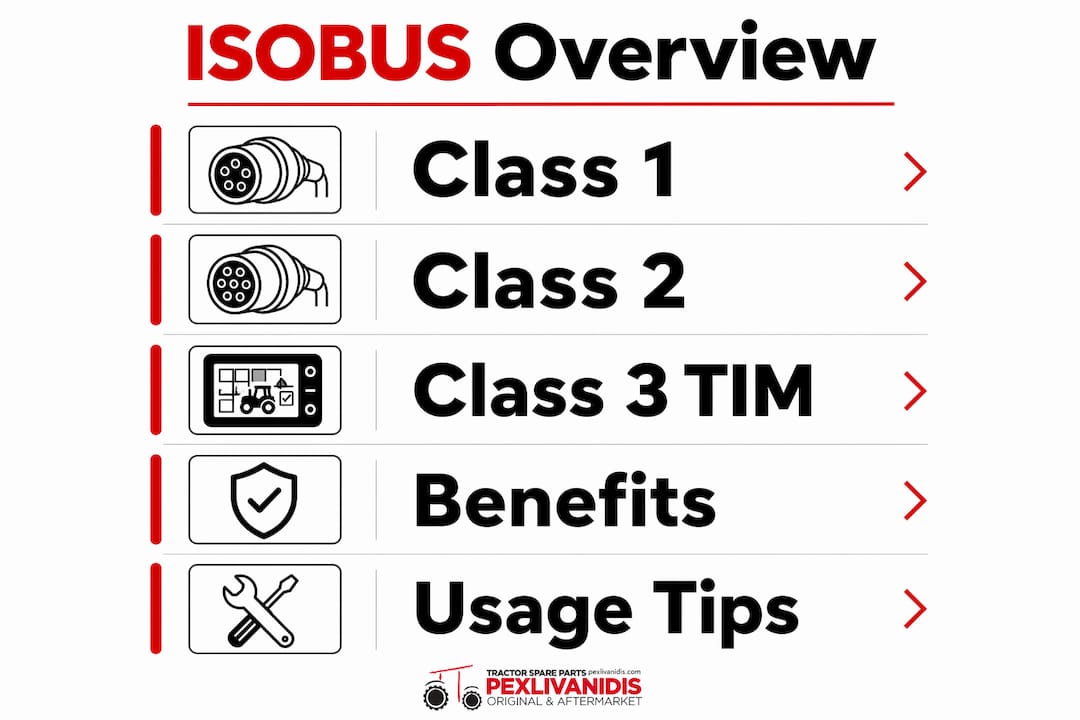
ISOBUS functionality is organized into classes. Class 1 covers basic data exchange. Class 2 adds the Universal Terminal and Task Controller. Class 3 enables full two-way control, meaning the implement can actively command tractor functions rather than just receiving data from them.
That Class 3 capability is the foundation of Tractor Implement Management, known as TIM. TIM allows an implement to regulate tractor ground speed and hydraulic settings automatically, without the operator touching the controls. A baler using TIM, for example, monitors crop density in the pickup and slows the tractor when the feed rate exceeds the baler’s capacity. The operator watches the field, not the monitor.
| ISOBUS class | Direction of control | Key features |
|---|---|---|
| Class 1 | Tractor to implement | Basic data exchange, speed, PTO status |
| Class 2 | Tractor to implement | Universal Terminal, Task Controller, section control |
| Class 3 | Bidirectional | TIM, automated speed and hydraulic control |
TIM facilitates nearly seamless control by letting implements automate tractor functions, which significantly improves operator ease and field precision. Boom sprayers use TIM to maintain constant application pressure by adjusting forward speed automatically. Planters use it to hold consistent seed spacing regardless of terrain changes.
The practical result is that the tractor and implement behave as one machine rather than two separate pieces of equipment that happen to be connected. For operators running long days across large fields, that integration reduces both physical and mental workload considerably.
Pro Tip: Not every ISOBUS-ready tractor supports Class 3 TIM. Check your tractor’s specification sheet for “TIM-ready” or “Class 3 ISOBUS” before purchasing an implement that relies on automated speed control.
Can ISOBUS be retrofitted to older tractors?
Retrofit kits exist and they work, but with real limitations. ISOBUS retrofit solutions bring connectivity to older tractors but often lack the integrated diagnostics and data logging of factory-installed systems. You may need manual interventions to access features that come automatically on a modern machine.
The key conditions for a successful retrofit are:
- Both tractor and implement must be ISO 11783 compliant. A retrofit harness on the tractor does nothing if the implement runs proprietary firmware.
- The retrofit terminal must support the implement’s ECU. Some aftermarket Universal Terminals have limited ECU libraries and will not recognize newer implements.
- Class 3 TIM is rarely available through retrofit. Most retrofit kits reach Class 2 at best, meaning you get Task Controller and section control but not automated speed management.
- Software update paths may be restricted. Factory systems receive manufacturer updates automatically. Retrofit systems often require manual firmware management.
Retrofitting older equipment is possible but generally cannot fully replicate factory-system ease and feature completeness. Knowing your implement’s certified capabilities before you buy the retrofit kit saves time and money. Always verify compatibility with the implement manufacturer before committing to a specific retrofit solution.
For operators managing mixed-brand equipment fleets, understanding which components are interchangeable and which require specific ISOBUS certification is critical to avoiding costly mismatches.
How do farmers use ISOBUS during field operations?
The daily workflow with ISOBUS is straightforward once you understand the sequence. Connecting the implement to the ISOBUS port triggers automatic interface loading to the cabin display, enabling bidirectional data exchange covering tractor speed, PTO data, and implement status.
A typical field operation follows this sequence:
- Connect the implement to the tractor’s ISOBUS port and power up both machines.
- Wait for ECU recognition. The Universal Terminal screen will display the implement’s control interface within seconds if the handshake succeeds.
- Configure implement settings through the Universal Terminal, including application rates, section widths, and GPS field boundaries.
- Activate Task Controller to enable section control and variable rate application if your implement supports it.
- Monitor real-time diagnostics on the UT display, including pressure readings, section status, and fault alerts.
- Review logged data after the pass to check application maps and identify any coverage gaps.
This workflow improves precision, reduces overlap, and enables logging of operational data for record-keeping and agronomic analysis. That data becomes valuable at the end of the season when you are reviewing input costs against yield maps.
Pro Tip: If the implement interface does not appear on the Universal Terminal after connection, cycle the ignition before troubleshooting the harness. Many ECU recognition failures resolve with a clean power cycle.
Understanding the full range of tractor implements that support ISOBUS helps you plan which upgrades deliver the most value for your specific operation.
Key Takeaways
ISOBUS, standardized as ISO 11783, is the universal protocol that connects tractors and implements from any brand through a single CAN-bus network, enabling automated control, precision farming, and simplified cab operation.
| Point | Details |
|---|---|
| ISOBUS definition | ISO 11783 is the international standard enabling brand-agnostic tractor-implement communication over CAN-bus. |
| ECU handshake matters | A successful ECU negotiation unlocks Section Control and Task Controller; a failed one limits all functionality. |
| Class 3 enables TIM | Only Class 3 ISOBUS supports Tractor Implement Management, allowing implements to control tractor speed automatically. |
| Retrofit has real limits | Retrofit kits reach Class 2 at best and rarely replicate the diagnostics of factory-installed ISOBUS systems. |
| One terminal, any brand | The Universal Terminal standardizes the operator interface, cutting training time when switching between implements. |
ISOBUS has changed how I think about equipment buying
I have watched the shift from proprietary monitors to ISOBUS play out across a lot of farm visits, and the change is more significant than most operators realize until they experience it firsthand. The biggest shift is not technical. It is psychological. Farmers who previously felt locked into one brand’s ecosystem because of monitor compatibility now buy equipment on merit.
What I find underappreciated is the training angle. ISOBUS standardizes the interface, but it does not eliminate the learning curve. Every implement still has its own logic, its own parameter structure, and its own quirks inside the Universal Terminal. Operators who assume ISOBUS means zero learning time get caught out during busy periods. The standard reduces the learning curve. It does not eliminate it.
The future I see coming is wireless ISOBUS data transfer and cloud-connected task management. Several manufacturers are already moving in that direction, and the protocol’s architecture supports it. The operators who invest time now in understanding Class 2 and Class 3 functionality will be best positioned when those capabilities become standard.
My caution on retrofitting is firm. If the implement you want to run requires Class 3 TIM and your tractor is a retrofit candidate, buy a newer tractor or a different implement. Partial ISOBUS integration on a Class 3-dependent machine creates frustration, not efficiency.
— George
Parts and support for ISOBUS-ready farm machinery at Pexlivanidis
Running ISOBUS-equipped tractors and implements means keeping the right parts on hand. Pexlivanidis carries an inventory of over 20,000 agricultural machinery parts, covering tractor accessories, connectors, and components relevant to modern precision farming setups. Whether you are maintaining a factory ISOBUS system or upgrading older equipment, the right parts make the difference between a machine that performs and one that sits in the yard. Browse the essential machinery parts catalog for components that support ISOBUS-compatible equipment, or check the machinery maintenance guide to keep your tractor-implement connection running at full capacity.
FAQ
What does ISOBUS stand for?
ISOBUS refers to the ISO 11783 standard, a universal communication protocol for agricultural machinery. The “bus” refers to the CAN-bus network that carries data between the tractor and implement.
Does every tractor have ISOBUS?
Not every tractor includes a factory-installed ISOBUS port. Older models require a retrofit harness and terminal, though retrofit systems typically support only Class 1 or Class 2 functionality.
Can I use any ISOBUS implement with any ISOBUS tractor?
Basic compatibility is guaranteed across ISO 11783-certified equipment, but advanced features like TIM require both tractor and implement to support Class 3. Always verify class compatibility before purchase.
What is the Universal Terminal in ISOBUS?
The Universal Terminal (UT) is the standardized display inside the tractor cab that shows the implement’s control interface. It works with any ISOBUS-certified implement regardless of manufacturer.
Is ISOBUS the same as precision farming?
ISOBUS is the communication protocol that makes precision farming features like variable rate application and section control possible. Precision farming is the broader practice; ISOBUS is the technical standard that enables it.