

Every year, Greek farmers in Thessaloniki and Kavala face unpredictable weather, rising costs, and the challenge of maximizing each harvest. The search for new ways to improve yields and reduce waste is more urgent than ever. Agri-drone technology is reshaping modern agriculture with advanced sensors, intelligent navigation, and real-time insights that help farmers make better decisions for their land. This guide explains how adopting the latest drone solutions can open the door to smarter, more productive farming.
Table of Contents
- What Is Agri-Drone Technology?
- Types Of Agricultural Drones Explained
- How Agricultural Drones Work In The Field
- Key Benefits For Farmers And Crop Health
- Legal And Safety Considerations For Drone Use
Key Takeaways
| Point | Details |
|---|---|
| Agri-drone Technology Enhances Farming | Agricultural drones optimize crop production through precise monitoring, resource management, and early disease detection. |
| Diverse Drone Types for Specific Needs | Multicopter, fixed-wing, and hybrid drones offer unique advantages tailored to various agricultural applications. |
| Significant Benefits for Farmers | Farmers can achieve up to 9.7% increased crop yields and reduce pesticide use, leading to substantial cost savings. |
| Legal Compliance is Essential | Navigating drone regulations and safety protocols is critical for successful implementation and to avoid legal issues. |
What Is Agri-Drone Technology?
Agricultural drone technology represents a revolutionary approach to modern farming, transforming how farmers monitor, manage, and optimize crop production. These advanced unmanned aerial vehicles (UAVs) are sophisticated machines equipped with cutting-edge sensors and navigation systems designed to provide precise agricultural insights.
At its core, agri-drone technology utilizes sophisticated aerial platforms capable of performing complex agricultural tasks. Advanced drone systems integrate multiple technologies including multispectral sensors, artificial intelligence, and Internet of Things (IoT) capabilities to deliver unprecedented agricultural intelligence.
Key capabilities of agricultural drones include:
- Crop health monitoring using high-resolution imaging
- Precision resource management
- Early disease and pest detection
- Targeted irrigation assessment
- Detailed yield estimation techniques
- Automated crop spraying with minimal waste
These sophisticated machines are not simply flying cameras but comprehensive agricultural management tools. Unmanned aerial vehicles incorporate gyroscopes, advanced navigation systems, and intelligent software to provide farmers with real-time, actionable data about their agricultural landscapes.
Pro tip: Start with small-scale drone implementation to understand your specific agricultural ecosystem before investing in comprehensive systems.
Types Of Agricultural Drones Explained
Agricultural drones represent a diverse technological ecosystem with multiple specialized platforms designed to address specific farming challenges. Drone categories in agriculture have evolved to meet the complex demands of modern precision farming, offering farmers unprecedented operational capabilities.
Drone Types in agricultural applications can be broadly categorized into three primary configurations:
- Multicopter Drones:
- Highly maneuverable
- Excellent for small to medium-sized fields
- Superior hover capabilities
- Best for detailed crop inspection
- Fixed-Wing Drones:
- Longer flight range
- More efficient for large agricultural landscapes
- Higher payload capacity
- Better suited for extensive mapping and surveying
- Hybrid Drones:
- Combine multicopter and fixed-wing advantages
- Versatile operational capabilities
- Enhanced flight duration
- Adaptable to diverse terrain conditions
Agricultural drone technologies have dramatically transformed farming by enabling precise resource management, reducing chemical waste, and providing high-resolution data for critical decision-making. These advanced aerial platforms integrate sophisticated sensors, artificial intelligence, and robust navigation systems to deliver actionable agricultural intelligence.
Each drone type offers unique advantages, allowing farmers to select the most appropriate technology based on their specific operational requirements, field characteristics, and agricultural objectives.
Here’s a clear comparison of agricultural drone types and their typical use cases:
| Drone Type | Best For | Flight Duration | Operational Challenges |
|---|---|---|---|
| Multicopter | Small field monitoring | Short (20-40 min) | Limited range, more charging |
| Fixed-Wing | Large-area mapping/surveying | Long (1-2 hours) | Requires open launch space |
| Hybrid | Mixed terrain, versatility | Medium to long | More complex maintenance |
Pro tip: Consult with agricultural technology specialists to match specific drone capabilities with your farm’s unique landscape and crop management needs.
How Agricultural Drones Work In The Field
Agricultural drone systems operate through a sophisticated integration of hardware, software, and advanced sensor technologies that transform traditional farming practices. These aerial platforms are engineered to collect, analyze, and deliver precision agricultural intelligence with remarkable efficiency.
The core operational components of agricultural drones include:
- Hardware Elements:
- High-precision GPS antennas
- Lithium polymer batteries
- Lightweight carbon fiber frames
- Advanced propulsion systems
- Integrated communication modules
- Sensor Technologies:
- Multispectral imaging sensors
- Thermal cameras
- Infrared detection systems
- High-resolution digital cameras
- Vegetation health monitoring equipment
Drone technologies in precision agriculture leverage artificial intelligence and Internet of Things (IoT) integration to transform raw aerial data into actionable insights. These systems communicate with ground control stations, enabling real-time monitoring and decision-making processes that significantly enhance agricultural productivity.
The operational workflow typically involves programmed flight paths, automated data collection, and comprehensive field analysis. Drones systematically navigate predetermined routes, capturing high-resolution imagery and collecting critical environmental data about crop health, soil conditions, and potential stress factors.
Pro tip: Develop a comprehensive drone operation protocol that includes regular calibration, battery management, and data processing workflows to maximize technological effectiveness.
Key Benefits For Farmers And Crop Health
Agricultural drone technologies deliver transformative benefits that revolutionize modern farming practices, offering unprecedented precision and efficiency in crop management. These advanced aerial platforms provide farmers with comprehensive tools to optimize agricultural productivity while minimizing environmental impact.
Key benefits for farmers include:
- Resource Management:
- 30-65% reduction in pesticide usage
- Targeted chemical application
- Precise nutrient distribution
- Significant cost savings
- Minimized environmental contamination
- Crop Health Monitoring:
- Real-time vegetation stress detection
- Early disease identification
- Comprehensive field assessment
- Predictive crop yield analysis
- Rapid intervention capabilities
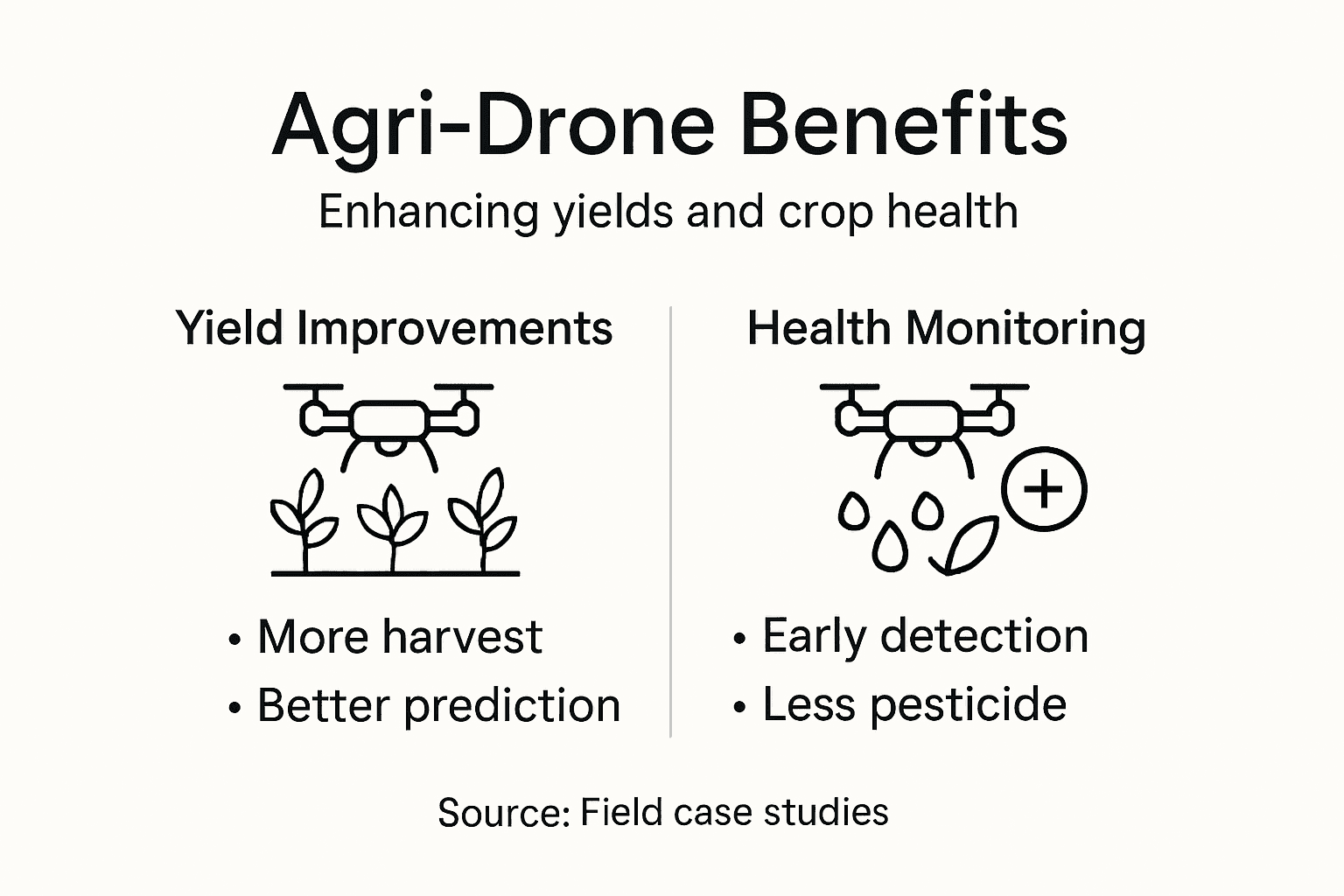
Drone-based agriculture enables farmers to achieve remarkable improvements in crop yields, with potential productivity increases ranging from 3.6% to 9.7%. These technologies provide high-resolution data collection that transforms decision-making processes, allowing for more intelligent and responsive farm management strategies.
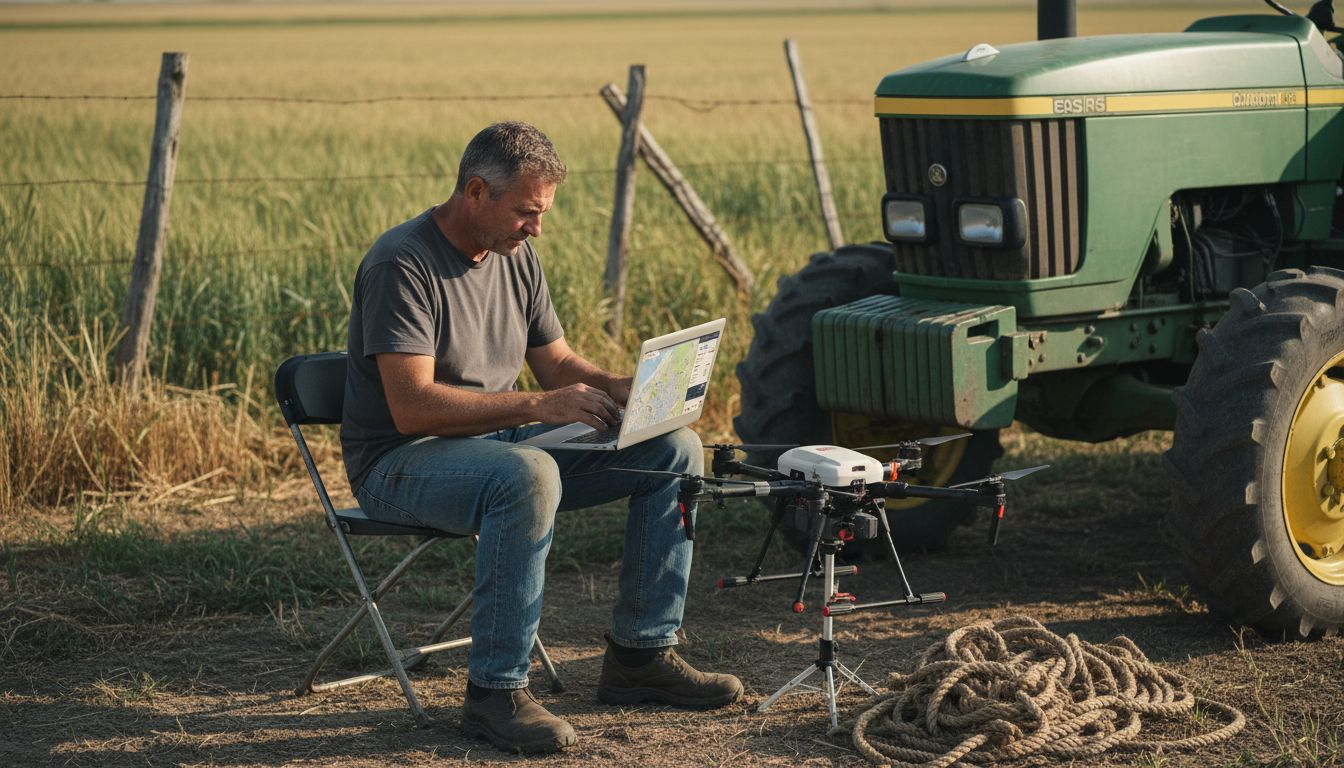
By integrating advanced sensor technologies and artificial intelligence, agricultural drones create a comprehensive ecosystem of monitoring, analysis, and intervention. Farmers gain unprecedented insights into field conditions, enabling them to make data-driven decisions that directly impact crop health and overall farm productivity.
Pro tip: Invest in comprehensive drone operator training to maximize technological potential and ensure accurate data interpretation for optimal farm management.
Below is a summary of key impacts and considerations for drone use in agriculture:
| Impact Area | Potential Benefit | Major Concern | Typical Solution |
|---|---|---|---|
| Crop Yield | 3.6–9.7% increase | Data misinterpretation | Training for accurate analysis |
| Resource Savings | Reduced pesticide waste | Environmental risk | Precise targeting technology |
| Legal Compliance | Safer, documented operations | Regulatory complexity | Professional legal consultation |
Legal And Safety Considerations For Drone Use
Agricultural drone regulations represent a complex landscape of legal requirements designed to ensure responsible and safe technological implementation. Farmers and agricultural professionals must navigate intricate frameworks that balance technological innovation with public safety and environmental protection.
Key legal considerations include:
- Operational Compliance:
- Obtaining necessary drone operation licenses
- Adhering to airspace restriction regulations
- Maintaining proper documentation
- Completing mandatory safety training
- Respecting privacy boundaries
- Safety Protocols:
- Regular equipment maintenance
- Pre-flight safety inspections
- Comprehensive risk assessment
- Emergency response planning
- Insurance coverage for drone operations
Global drone regulations vary significantly across different jurisdictions, requiring agricultural professionals to stay informed about local and national guidelines. Understanding these nuanced legal requirements is crucial for preventing potential legal complications and ensuring smooth drone integration into farming operations.
Ethical considerations extend beyond mere legal compliance, encompassing broader responsibilities such as data protection, environmental stewardship, and responsible technological implementation. Farmers must balance technological potential with social and ecological considerations.
Pro tip: Consult local agricultural extension offices and legal professionals specializing in drone regulations to develop a comprehensive compliance strategy.
Boost Your Farming Efficiency with Precision Parts from Pexlivanidis
Unlock the full potential of agri-drone technology by supporting your farm machinery with reliable, high-quality tractor accessories and spare parts. As the article highlights, integrating drones into modern agriculture demands equipment you can trust for smooth operations and precise resource management. Unexpected machinery failures or outdated components can disrupt your workflow and impact your crop yields.
At Pexlivanidis, we understand the critical role that durable, compatible parts play in keeping your farm running efficiently. With over 20,000 items in stock, including essential tractor parts and accessories, we help you maintain the equipment that works hand in hand with innovative technologies like agricultural drones. Explore our extensive inventory to find exactly what you need. Don’t let equipment issues hold back your progress—visit our site today and take the first step toward superior farm productivity.
Check out our selection and discover how combining advanced drone insights with trusted machinery components can maximize your yield now.
Frequently Asked Questions
What is agri-drone technology?
Agri-drone technology refers to the use of advanced unmanned aerial vehicles (UAVs) equipped with sophisticated sensors and navigation systems to monitor, manage, and optimize crop production.
How do agricultural drones work in the field?
Agricultural drones collect, analyze, and deliver precision agricultural intelligence by integrating hardware elements like GPS antennas and sensors, programmed flight paths for data collection, and real-time monitoring via communication with ground control stations.
What are the benefits of using agricultural drones for farmers?
The key benefits include reduced pesticide usage by 30-65%, targeted chemical application, early disease detection, and significant improvements in crop yields, leading to more efficient resource management and cost savings.
What are the different types of agricultural drones?
There are three main types of agricultural drones: multicopter drones for detailed crop inspection, fixed-wing drones for large area mapping, and hybrid drones that combine the advantages of both, offering versatility and enhanced flight duration.