

Ordering the wrong machinery part online can cost you days of downtime and hundreds of euros in lost productivity. For farmers and agricultural businesses across Greece, a single incorrect order means waiting for returns, reordering, and watching your equipment sit idle during critical seasons. The good news? With a precise, expert-approved process, you can eliminate costly errors and get the exact part you need the first time. This guide walks you through everything: preparation, step-by-step ordering, compatibility verification, and troubleshooting to keep your machinery running without interruption.
Table of Contents
- What you need before you order: Preparation and prerequisites
- Step-by-step guide to ordering machinery parts online
- How to verify compatibility and avoid common mistakes
- Expert tips for fast shipping, troubleshooting, and maximizing uptime
- Reliable online sources for agricultural machinery parts
- Frequently asked questions
Key Takeaways
| Point | Details |
|---|---|
| Preparation avoids errors | Gather model, serial number, photos, and OEM catalogs before you order any parts online. |
| Use a verified step-by-step process | Following key steps—inspection, compatibility check, supplier review—reduces wasted time and money. |
| Double-check fit and specs | Always confirm compatibility to prevent costly downtime from incorrect or ill-fitting parts. |
| Know your support options | Contact your supplier with photos and details for fast help, especially with rare or unclear parts. |
What you need before you order: Preparation and prerequisites
Before you click “add to cart,” gathering the right information saves you from expensive mistakes. Rushing into an online order without proper details is the fastest way to receive the wrong part and lose valuable time.
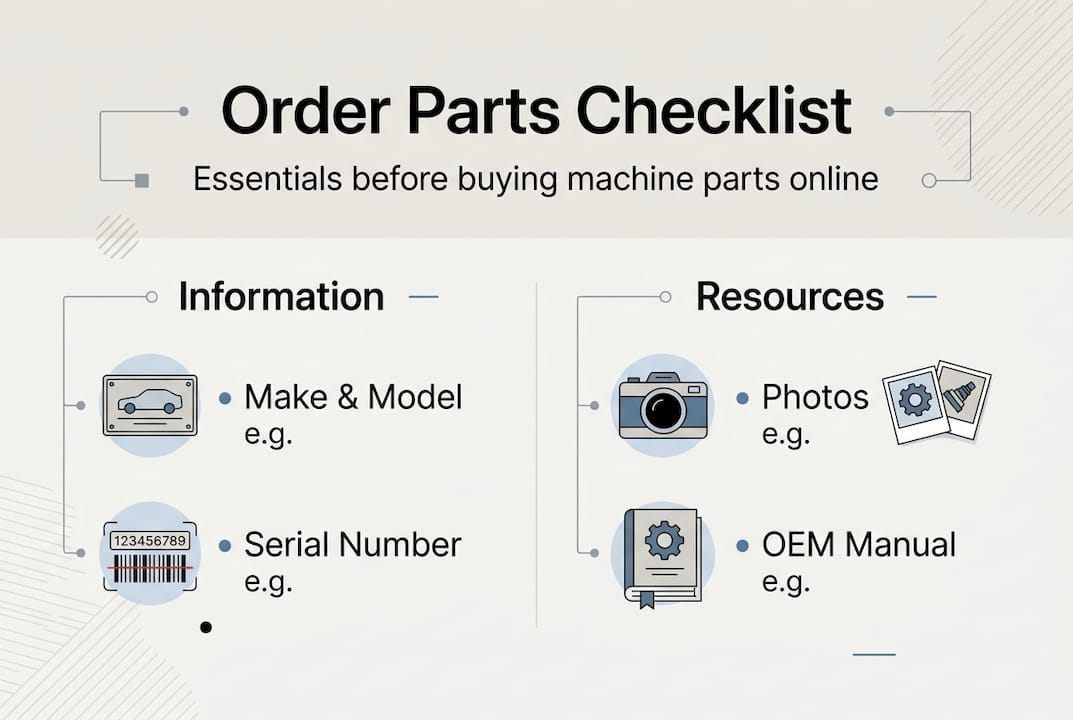
Start with these essentials: your machinery’s exact make and model, the serial or VIN number, clear photos of the old part from multiple angles, and any visible markings or codes on the component itself. These details form the foundation of accurate ordering tractor parts online.
Your machinery manual and OEM (Original Equipment Manufacturer) catalogs are critical resources. OEM catalogs reduce incorrect orders by up to 50%, making them worth the extra effort to consult. These documents contain exploded diagrams, part numbers, and compatibility information that generic online searches simply can’t match.
Pro Tip: Take photos in good lighting with a ruler or coin for scale. Capture every angle, including mounting points, connectors, and any stamped numbers. These images become invaluable when verifying compatibility with suppliers.
| Information Type | Why It Matters | Where to Find It |
|---|---|---|
| Make and Model | Ensures part compatibility | Manufacturer’s plate on equipment |
| Serial/VIN Number | Identifies exact production variant | Metal plate near engine or frame |
| Part Markings | Confirms OEM part number | Stamped on component itself |
| Photos | Visual verification for supplier | Take before removal |
| Manual Diagrams | Shows part relationships | Owner’s manual or online PDF |
Edge cases require extra attention. If your model plate is worn, faded, or missing, don’t guess. Contact your supplier directly with whatever information you have, including the year of purchase and any visible features. Many experienced suppliers can identify parts from photos alone, but they need clear, detailed images to work with.
Keep a checklist handy:
- Equipment make, model, and year
- Complete serial or VIN number
- Old part with all visible codes photographed
- Measurements of mounting points and connections
- Manual or diagram reference page
Skipping this preparation phase is where most ordering errors happen. Farmers who follow tips for buying tractor parts online consistently report fewer returns and faster repairs. The 15 minutes you invest in documentation saves days of downtime later.
Step-by-step guide to ordering machinery parts online
With your information gathered, you’re ready to navigate the actual ordering process. This systematic approach eliminates guesswork and ensures you receive exactly what your machinery needs.
Step 1: Locate and document the manufacturer’s plate. Find the metal identification plate on your equipment, typically near the engine, frame, or operator station. Photograph it clearly, ensuring every character is readable. This plate contains the model number, serial number, and often the production year.
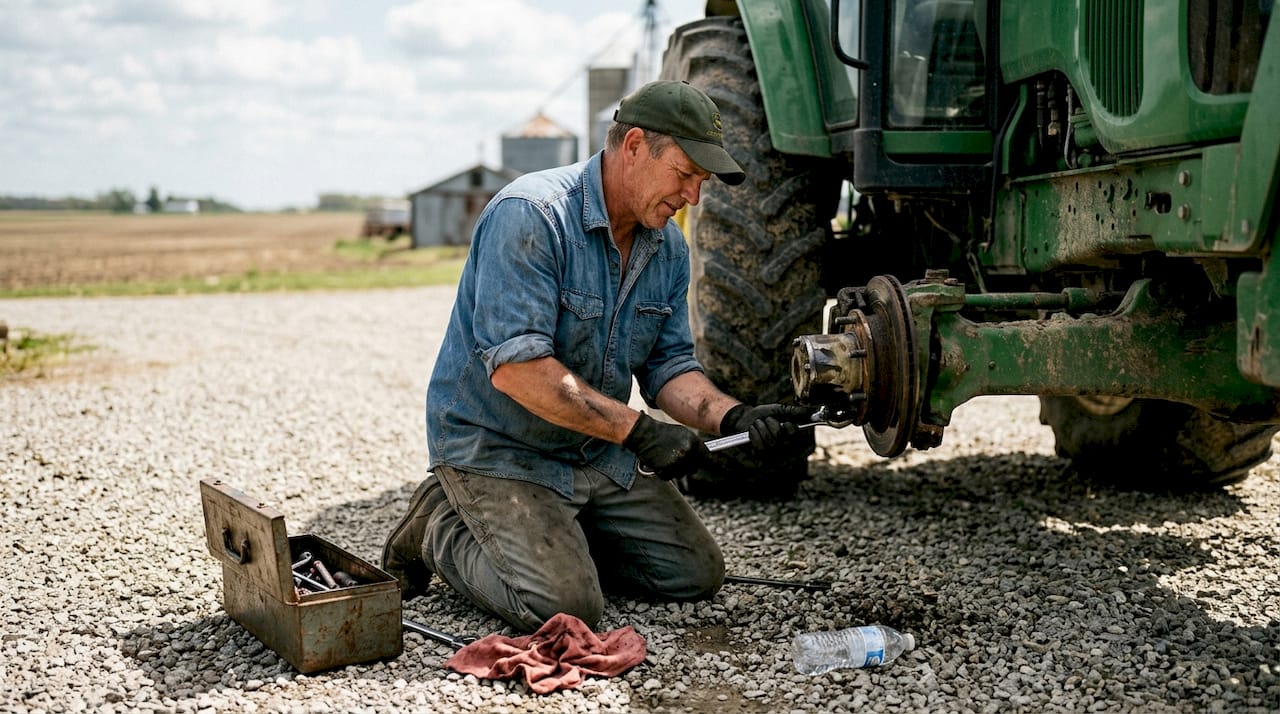
Step 2: Remove and inspect the old part if possible. Before ordering, physically examine the component you’re replacing. Look for part numbers stamped into metal, printed on labels, or molded into plastic. Measure critical dimensions like bolt spacing, shaft diameter, and overall length. Document everything with photos and notes.
Step 3: Cross-reference official diagrams and OEM catalogs. Use your model and serial number to access the correct parts diagram. Official OEM catalogs show exploded views with numbered components and corresponding part numbers. Match your old part to the diagram position to confirm the exact replacement needed.
Step 4: Double-check compatibility thoroughly. Model years matter. A 2024 tractor may use different parts than a 2026 version of the same model. Verify that dimensions match, connections align, and the part number applies to your specific production year. Check mounting hole patterns, electrical connectors, and hydraulic fittings.
Step 5: Choose a reliable online supplier and place your order. Select suppliers with clear return policies, responsive customer support, and verified reviews from agricultural customers. When ordering tractor parts online, prioritize suppliers who specialize in agricultural equipment over general industrial parts vendors.
| Source Type | Advantages | Disadvantages | Best For |
|---|---|---|---|
| OEM Direct | Perfect fit, warranty coverage, longest lifespan | Higher cost, longer shipping | Critical components, new equipment |
| Authorized Dealers | Verified quality, expert support, fast shipping | Moderate to high cost | Time-sensitive repairs |
| Aftermarket Suppliers | Lower cost, wide selection | Variable quality, compatibility risks | Non-critical parts, budget constraints |
| Generic Online Marketplaces | Lowest prices, fast delivery | High error risk, limited support | Accessories, universal items |
Incorrect orders cost farmers days of downtime and hundreds of euros in lost productivity, shipping fees, and restocking charges. The compatibility check in Step 4 is where most people rush and make mistakes. Take your time here.
One common error: assuming all parts for a model series are interchangeable. A John Deere 6000 series tractor, for example, has dozens of variants with different engines, transmissions, and hydraulic systems. The part that fits a 6100 may not work on a 6400, even though they look similar.
When uncertain about any detail, contact the supplier before ordering. Provide your model number, serial number, and photos. Reputable suppliers would rather help you order correctly than process a return. Following this tractor parts replacement guide approach ensures you get it right the first time.
How to verify compatibility and avoid common mistakes
Accurate ordering extends beyond following steps. True success comes from confirming your choice truly fits your specific machinery and operational needs.
Start with specifications. Compare the dimensions, weight, and connection types of the replacement part against your old component. Measure bolt hole spacing precisely. A difference of even 5mm can make a part unusable. Check thread sizes on hydraulic fittings, electrical connector pin counts, and shaft diameters.
Read supplier reviews, but focus on reviews from agricultural customers, not general industrial users. A part that works perfectly on a construction excavator might fail on a tractor due to different vibration patterns, duty cycles, or environmental exposure.
Original OEM parts offer precise fit and longevity because they’re manufactured to the exact specifications your equipment was designed around. Aftermarket parts may be cheaper but require extra verification. Some aftermarket manufacturers produce excellent quality, while others cut corners on materials or tolerances.
Common online ordering errors to avoid:
- Ordering by equipment model alone without checking serial number ranges
- Assuming “universal fit” claims apply to your specific variant
- Ignoring production year differences in part specifications
- Skipping measurement verification for “obvious” replacements
- Trusting marketplace photos over official part diagrams
- Ordering the cheapest option without checking manufacturer reputation
- Failing to verify return policy before purchase
Pro Tip: If you’re uncertain about compatibility, send your part photos, equipment serial number, and the supplier’s part number to their support team. Ask them to confirm fitment before you order. Legitimate suppliers appreciate this diligence and will verify compatibility from their technical database.
Review the supplier’s return policy carefully. Look for policies that accept returns for compatibility issues, not just defective parts. Understand who pays return shipping and whether restocking fees apply. These details matter when you’re ordering parts worth hundreds of euros.
“Ordering the wrong part can cost days of downtime and hundreds of euros.”
This reality makes verification worth every minute invested. The farmers who consistently get parts right the first time share one habit: they verify everything twice before clicking “confirm order.” They check parts compatibility against multiple sources and don’t hesitate to ask questions.
When choosing OEM tractor parts, you’re paying for engineering precision and quality control. For critical components like hydraulic pumps, transmission parts, or engine components, this investment prevents catastrophic failures. For wear items like filters or belts, aftermarket options often provide excellent value if you verify specifications carefully.
Expert tips for fast shipping, troubleshooting, and maximizing uptime
Even with perfect preparation, smart logistics and troubleshooting skills keep your machinery operational and minimize costly delays.
Fast shipping starts with supplier selection. Look for vendors with inventory in Greece or nearby European distribution centers. Parts shipped from Asia or North America can take weeks, while European stock often arrives in 2-3 days. During peak seasons like planting or harvest, those days matter enormously.
Many suppliers offer expedited shipping for urgent repairs. Yes, it costs more, but compare that expense against the revenue lost from idle equipment. A combine sitting unused during harvest loses thousands of euros per day. Paying 50 euros for overnight shipping suddenly seems reasonable.
Track your order actively. Most suppliers provide tracking numbers. Check status daily and note any delays immediately. If a part is stuck in customs or delayed at a distribution center, early awareness lets you explore alternatives before your deadline passes.
Communicate with suppliers proactively. If you need a part by a specific date, tell them when ordering. Ask about current stock levels and realistic delivery timeframes. Suppliers can often prioritize urgent orders or suggest faster alternatives if you explain your situation.
Pro Tip: Maintain a list of 2-3 trusted suppliers for recurring needs. Build relationships with their sales and technical teams. When you become a known customer, you get better service, faster responses, and sometimes priority shipping during busy periods.
Troubleshooting common ordering and shipping issues:
- Part delayed beyond promised date: Contact supplier immediately for updated timeline and alternatives
- Wrong part arrives: Photograph it next to your old part and contact supplier with images before returning
- Part damaged in shipping: Document damage with photos before opening package fully, file claim same day
- Part doesn’t fit despite matching numbers: Verify you have the correct serial number range, contact supplier technical support
- Supplier unresponsive after order: Escalate through payment provider or platform if purchased through marketplace
- Customs delays for international orders: Track customs status, have supplier’s commercial invoice ready
Preventing future errors requires systematic record keeping. Create a simple spreadsheet or notebook with your equipment details, parts ordered, supplier names, and order dates. When you need the same part again, you have a proven source and part number ready.
Use the same supplier for repeat orders when possible. They’ll have your equipment information on file, making reorders faster and more accurate. Many suppliers offer customer accounts that save your machinery details and order history.
Document each order with photos and notes. When a part arrives and fits perfectly, photograph the packaging, part number label, and installed component. This documentation becomes invaluable for future orders or when helping other farmers with similar equipment.
For rare or unclear parts, consult your supplier with model and VIN details. Experienced agricultural parts specialists have seen thousands of equipment variants and can often identify parts from descriptions or photos that would stump general industrial suppliers.
Consider keeping critical spare parts in stock. If you know a component fails regularly or would cause extended downtime, order a spare during the off-season when shipping time doesn’t matter. This strategy works well for buying tractor parts like filters, belts, and common wear items.
Reliable online sources for agricultural machinery parts
With a clear ordering process established, finding a trusted supplier completes your preparation for efficient, error-free parts procurement.
Pexlivanidis.com serves as a specialized online source for agricultural machinery parts, offering over 20,000 items specifically selected for farming equipment. The platform provides detailed product information, compatibility guidance, and responsive customer support to help you identify and order the correct parts. With free shipping within Greece for orders over 100 euros and options for both retail and wholesale B2B purchasing, the site addresses the practical needs of farmers and agricultural businesses.
Beyond ordering, the site offers educational resources to help you maintain and upgrade your machinery effectively. The essential machinery parts guide explains component functions and replacement intervals, while the machinery maintenance guide provides preventive care strategies to extend equipment life and reduce emergency repairs.
When you’re ready to order, having a trusted online supplier with agricultural expertise makes the difference between smooth operations and frustrating delays. The combination of extensive inventory, knowledgeable support, and farmer-focused service helps you get the right parts quickly and keep your equipment running through every season.
Frequently asked questions
What details are essential for ordering machinery parts online?
You need the equipment’s make, model, serial number, and clear photos of the old part to avoid errors. These details ensure suppliers can verify exact compatibility before shipping.
Is it better to buy OEM or aftermarket parts online?
OEM parts offer perfect fit and longer lifespan, while aftermarket may cost less but require careful compatibility checks. Choose based on component criticality and budget constraints.
How can I reduce the chance of ordering the wrong part?
Check numbers, use OEM catalogs, and confirm compatibility with your supplier’s support before ordering. This verification process reduces errors by up to 50%.
What should I do if a part I ordered doesn’t fit?
Contact the supplier promptly with model details and photos to arrange a return or find the correct part. Most reputable suppliers will help resolve compatibility issues quickly.
How long does shipping typically take for machinery parts in Greece?
Domestic suppliers usually deliver within 2-3 business days, while international orders can take 1-3 weeks depending on origin and customs processing. Expedited options are available for urgent repairs.