

{
“@type”: “Article”,
“image”: {
“url”: “https://csuxjmfbwmkxiegfpljm.supabase.co/storage/v1/object/public/blog-images/organization-5233/1783795158395_Technician-ordering-agricultural-machinery-parts-online.jpeg”,
“@type”: “ImageObject”,
“caption”: “Technician ordering agricultural machinery parts online”
},
“author”: {
“url”: “https://pexlivanidis.com”,
“name”: “Pexlivanidis”,
“@type”: “Organization”
},
“@context”: “https://schema.org”,
“headline”: “Your Complete Guide to Ordering Parts Online”,
“publisher”: {
“url”: “https://pexlivanidis.com”,
“name”: “Pexlivanidis”,
“@type”: “Organization”
},
“inLanguage”: “en-US”,
“description”: “Discover the ultimate guide to ordering parts online. Learn to source compatible agricultural machinery parts confidently and save time and money.”,
“datePublished”: “2026-07-11T18:45:32.238Z”
}
{
“@type”: “FAQPage”,
“@context”: “https://schema.org”,
“mainEntity”: [
{
“name”: “What is the FTC’s 30-day rule for online orders?”,
“@type”: “Question”,
“acceptedAnswer”: {
“text”: “The Federal Trade Commission requires sellers to ship within 30 days when no specific delivery date is promised. If a seller cannot meet that deadline, they must notify you and offer a cancellation option.”,
“@type”: “Answer”
}
},
{
“name”: “How do I avoid ordering the wrong agricultural part online?”,
“@type”: “Question”,
“acceptedAnswer”: {
“text”: “Always search using your machine’s 17-digit VIN and the OEM part number from your service manual. Model name searches return too many results and frequently include incompatible parts.”,
“@type”: “Answer”
}
},
{
“name”: “What return policy should I expect from a reputable parts seller?”,
“@type”: “Question”,
“acceptedAnswer”: {
“text”: “Reputable sellers provide return windows of 30–90 days with clear terms and no punitive restocking fees. Policies shorter than 30 days or with excessive exclusions signal higher purchase risk.”,
“@type”: “Answer”
}
},
{
“name”: “Why should I record an unboxing video when parts arrive?”,
“@type”: “Question”,
“acceptedAnswer”: {
“text”: “An unboxing video provides clear, timestamped evidence for damage claims, wrong-item disputes, and chargebacks. Without it, proving the condition of a part at delivery becomes difficult.”,
“@type”: “Answer”
}
},
{
“name”: “How do I spot counterfeit or substandard agricultural parts online?”,
“@type”: “Question”,
“acceptedAnswer”: {
“text”: “Prices significantly below the market average are the clearest warning sign. Request manufacturer certification or batch numbers for any part priced well below comparable listings, and buy only from sellers with verified review histories.”,
“@type”: “Answer”
}
}
]
}
TL;DR:
- Ordering agricultural parts online requires VIN-based searches and verified seller credentials to ensure compatibility and avoid costly mistakes. Reputable sellers offer clear shipping, return, and warranty policies, and documenting the delivery protects against disputes. Prioritizing seller trustworthiness and thorough research reduces risks and delays in procurement.
Ordering agricultural machinery parts online is defined as the process of identifying, sourcing, and purchasing compatible spare parts through digital platforms, using precise vehicle data and verified sellers to avoid costly errors. A solid guide to ordering parts online starts with two non-negotiable facts: the Federal Trade Commission requires sellers to ship within 30 days when no delivery date is promised, and reputable sellers offer return windows of 30–90 days with clear, customer-friendly terms. Pexlivanidis, a specialist in agricultural machinery parts with over 20,000 items in its catalog, applies both standards as baseline expectations. Getting this process right saves you money, downtime, and frustration.
What do you need before ordering parts online?
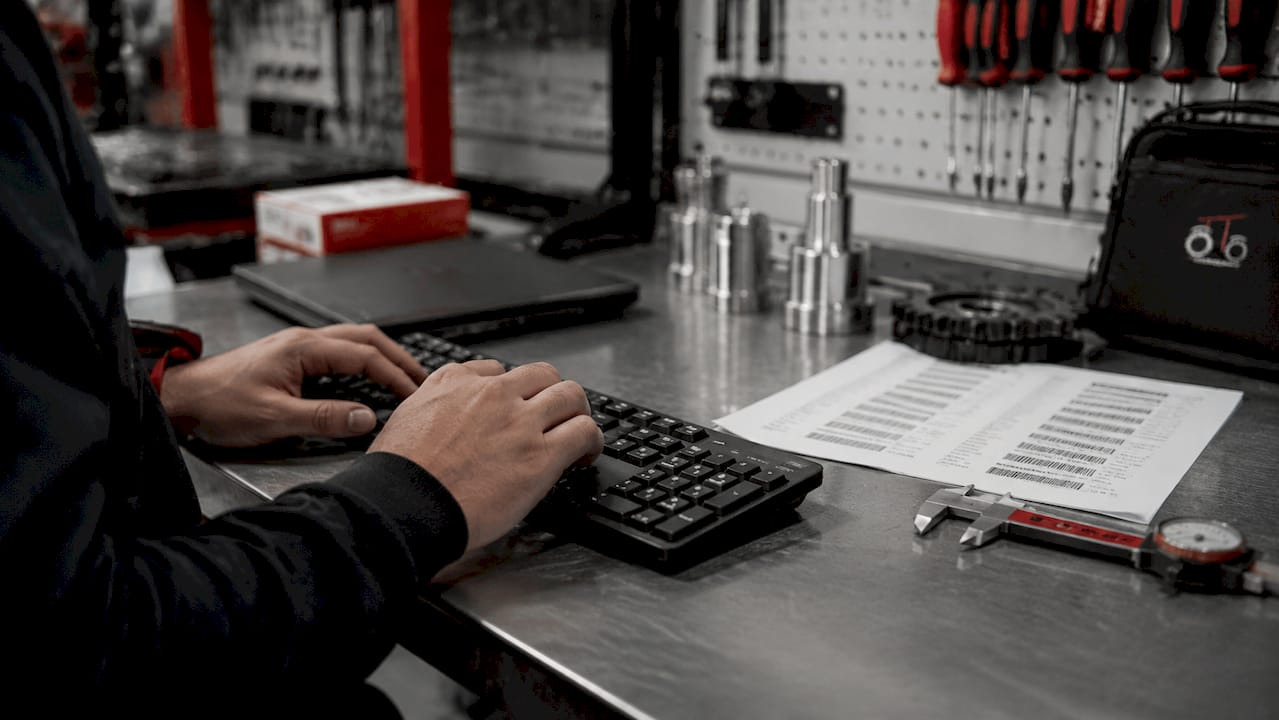
The single biggest cause of wrong-part orders is incomplete vehicle information. Before you search for anything, gather your tractor’s make, model, year, engine size, and 17-digit Vehicle Identification Number (VIN). The VIN is not optional. Searching by VIN filters results to parts matched exactly to your machine’s specifications, eliminating the ambiguity that comes from relying on a model name alone.
You also need to understand the three part categories before you buy.
- OEM (Original Equipment Manufacturer) parts are made by the same manufacturer as your tractor. They carry the highest compatibility guarantee and typically the highest price.
- Aftermarket parts are produced by third-party manufacturers to fit OEM specifications. Quality varies widely, so check certifications and seller reviews before buying.
- Used or refurbished parts can reduce costs significantly, but they require extra scrutiny on seller history and part condition to avoid failures in the field.
Fitment verification tools are your next line of defense. Most reputable online platforms let you enter your VIN or machine specs to filter compatible results. Use this feature every time, even when you are confident about the part number.
Pro Tip: Before placing any order, cross-reference the part number from your machine’s service manual against the listing. A single digit difference can mean an incompatible part and a wasted return shipment.
Prepare this checklist before you search:
- Machine make, model, year, and engine size
- 17-digit VIN or serial number
- OEM part number from your service manual
- Photos of the worn or damaged part
- Your preferred part category (OEM, aftermarket, or used)
Having this information ready cuts your search time in half and eliminates the most common ordering mistakes before they happen.
How to find and order the right agricultural part step by step
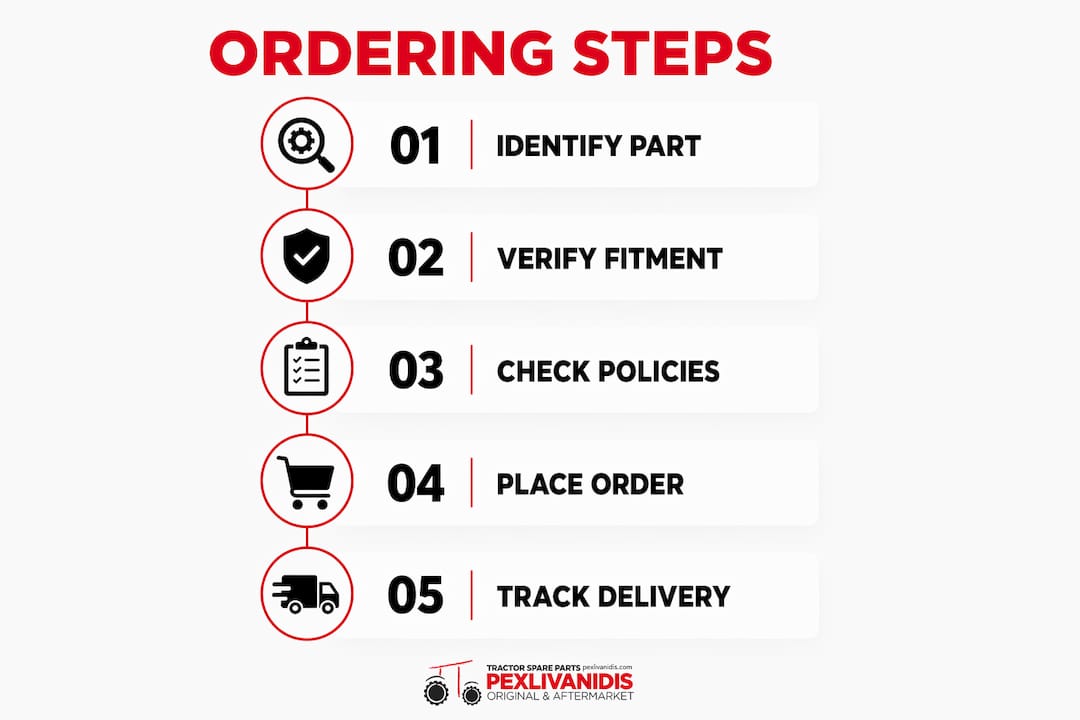
A structured process protects you from fitment errors and unreliable sellers. Follow these steps in order.
- Start with your VIN and OEM part number. Enter both into the platform’s search or fitment tool. Generic model searches return too many results and increase the risk of ordering an incompatible part.
- Evaluate seller credibility. Check the seller’s review score, total number of reviews, and response history. Reputable retailers maintain support response times under 24 hours. A seller who takes days to answer a pre-sale question will take longer to resolve a post-sale problem.
- Examine the product listing in detail. Professional sellers provide real photos of the actual item and detailed descriptions that map to exact part numbers. Stock photos and vague descriptions are warning signs, especially for used or refurbished parts. If you cannot see the actual item, ask for photos before buying.
- Use cross-reference numbers. Many agricultural parts carry multiple part numbers depending on the manufacturer and region. Cross-referencing confirms that the listed part matches your OEM number from a different angle. Platforms that support cross-reference lookups are more reliable for agricultural part identification.
- Contact seller support if any detail is unclear. A quick message asking about fitment or condition reveals a lot about the seller’s knowledge and responsiveness. If they cannot answer a specific technical question, move on.
- Place your order and confirm shipping details. After checkout, verify that you receive an order confirmation with a tracking number. Note the estimated delivery date and compare it against the FTC’s 30-day rule. If the seller promises a specific date, hold them to it.
Pro Tip: Screenshot your order confirmation, the product listing, and the seller’s stated return policy at the time of purchase. Listings can change after a sale, and screenshots protect you in any dispute.
How to evaluate shipping, return, and warranty policies
Policies separate trustworthy sellers from risky ones. Read them before you pay, not after a problem arises.
The FTC’s 30-day shipping rule is the legal baseline. If a seller does not state a delivery timeframe, they must ship within 30 days. That rule matters most for agricultural buyers who face seasonal deadlines. A delayed part during harvest can cost far more than the part itself.
Return windows tell you how much the seller trusts their own product. Industry best practices set the standard at 30–90 days with no punitive restocking fees. Anything shorter than 30 days, or a policy that charges a restocking fee above 15%, signals a seller who expects returns and wants to discourage them.
Watch for these red flags in any return policy:
- Restocking fees above 15% of the purchase price
- Exclusions for “electrical parts” or “special orders” with no clear definition
- Multi-step approval processes that require photos, forms, and manager sign-off before a return is accepted
- No stated return address or contact method for returns
Return policies that hide conditions or exclude major part categories without explanation increase your purchase risk significantly. A seller who makes returns difficult is telling you something important about their confidence in the product they are selling.
Warranty documentation matters just as much as the warranty itself. Get the warranty terms in writing, confirm what is covered and for how long, and keep a copy with your order records. For used parts, ask whether the warranty covers labor costs if the part fails during installation.
Record every delivery. Open packages on camera and film the unboxing from start to finish. An unboxing video provides clear evidence for damage claims, wrong-item disputes, and chargebacks. This takes two minutes and has resolved countless disputes that would otherwise be impossible to prove.
What are the most common mistakes when ordering agricultural parts online?
The most expensive mistake is confusing a generic model name with an exact VIN-based fitment. Two tractors with the same model name can have different engine configurations, transmission types, and part specifications depending on the production year and regional market. Always use the VIN. Always.
Ignoring total cost of ownership is the second most common error. Price alone is misleading when you factor in shipping fees, return shipping costs, and the downtime cost of waiting for a replacement. A part listed at 20% less than the market rate can end up costing more once you add two-way shipping and a week of machine downtime.
Suspiciously low prices often indicate counterfeit or substandard parts. Counterfeit agricultural parts are a persistent problem across online marketplaces. A fake hydraulic seal or a substandard PTO shaft component does not just waste money. It creates a safety risk and can damage other components in the system.
Pro Tip: If a price is more than 30% below the average market rate for that part, treat it as a red flag. Request the manufacturer’s certification or batch number before buying.
Common mistakes to avoid:
- Ordering by model name instead of VIN or OEM part number
- Skipping the seller’s review history and focusing only on price
- Accepting stock photos as proof of actual item condition
- Ignoring shipping and return costs when comparing prices
- Failing to test parts promptly after receipt, which can void return eligibility
When a shipment is delayed beyond the stated date, contact the seller immediately in writing. If the seller cannot provide a tracking update within 48 hours, escalate to the platform’s dispute resolution process. For wrong or damaged parts, your unboxing video is your strongest asset. For buying tractor parts from verified dealers, checking seller credentials upfront prevents most of these problems before they start.
Key Takeaways
Ordering agricultural machinery parts online correctly requires VIN-based searches, verified seller credentials, clear return policies of 30–90 days, and documented delivery records to protect every purchase.
| Point | Details |
|---|---|
| Always search by VIN | VIN-based searches eliminate fitment errors caused by model name ambiguity. |
| Verify seller credibility | Check reviews, response times, and listing quality before placing any order. |
| Understand total cost | Factor in shipping, return fees, and downtime costs, not just the listed price. |
| Know your return rights | Reputable sellers offer 30–90 day return windows with no punitive restocking fees. |
| Document every delivery | Record unboxings on video to support damage claims and wrong-item disputes. |
What experience has taught me about ordering agricultural parts online
After years of working with agricultural machinery buyers, the pattern I see most often is this: buyers do their research on the part itself but skip the research on the seller. They find the right part number, confirm the fitment, and then order from whoever has the lowest price. That is where things go wrong.
The sellers who cause the most problems are not always obvious. Their listings look fine. Their prices are competitive. But their return process is a maze, their support goes quiet after payment, and their “30-day return policy” has six exclusions buried in paragraph four. I have seen buyers lose hundreds of dollars on parts they could not return because they did not read the policy before buying.
My honest recommendation is to treat seller evaluation as seriously as part identification. A seller who answers pre-sale questions quickly, provides real photos on request, and has a clean return record is worth paying a small premium for. The money you save on a cheap part from an unreliable seller rarely covers the cost of the problem it creates.
Record your unboxings. Test parts as soon as they arrive. Do not wait two weeks to install a part and then discover it is defective. Most return windows start from the delivery date, not the installation date. Prompt testing keeps your options open.
Paying more upfront for a part with a strong warranty and a transparent seller is almost always the right call for agricultural machinery. These machines work in demanding conditions. A substandard part does not just fail. It fails at the worst possible time.
— George
Pexlivanidis: a trusted resource for agricultural parts ordering
Pexlivanidis carries over 20,000 agricultural machinery parts, with a catalog built specifically for tractor owners and farm equipment operators across Greece and the surrounding region. The platform supports accurate part identification, provides detailed product listings, and offers wholesale B2B membership for businesses that order at volume. If you are building your parts knowledge before placing an order, the guide to essential agricultural machinery parts covers the key categories and their applications in detail. For businesses managing larger inventories, the wholesale tractor parts guide explains how B2B purchasing works and what terms to expect. Pexlivanidis offers free shipping within Greece on orders over 100€, making it a practical starting point for buyers who want verified parts without the guesswork of unvetted marketplaces.
FAQ
What is the FTC’s 30-day rule for online orders?
The Federal Trade Commission requires sellers to ship within 30 days when no specific delivery date is promised. If a seller cannot meet that deadline, they must notify you and offer a cancellation option.
How do I avoid ordering the wrong agricultural part online?
Always search using your machine’s 17-digit VIN and the OEM part number from your service manual. Model name searches return too many results and frequently include incompatible parts.
What return policy should I expect from a reputable parts seller?
Reputable sellers provide return windows of 30–90 days with clear terms and no punitive restocking fees. Policies shorter than 30 days or with excessive exclusions signal higher purchase risk.
Why should I record an unboxing video when parts arrive?
An unboxing video provides clear, timestamped evidence for damage claims, wrong-item disputes, and chargebacks. Without it, proving the condition of a part at delivery becomes difficult.
How do I spot counterfeit or substandard agricultural parts online?
Prices significantly below the market average are the clearest warning sign. Request manufacturer certification or batch numbers for any part priced well below comparable listings, and buy only from sellers with verified review histories.