

Many farmers across Northern Greece know how quickly new technology can turn daily tractor work from a struggle into a smoother, more productive routine. Equipment upgrades today mean far more than just swapping out old parts. Reliable spare parts and modern systems like GPS guidance, advanced sensors, and improved hydraulics deliver real value by cutting waste and increasing precision with each task. Discover how these smart investments can strengthen efficiency and help your farm stay competitive year after year.
Table of Contents
- What Agricultural Equipment Upgrades Mean Today
- Types of Upgrades for Tractors and Implements
- How Modern Upgrades Improve Farm Operations
- Key Costs and Expected Return on Investment
- Avoiding Common Pitfalls in Upgrade Decisions
Key Takeaways
| Point | Details |
|---|---|
| Technological Investments | Upgrading agricultural equipment leads to significant improvements in operational efficiency and environmental sustainability through advanced technologies. |
| Economic Benefits | Farmers can expect reduced operational costs and enhanced crop productivity from strategic equipment upgrades. |
| Holistic Approach | Successful upgrades require comprehensive planning that includes cost-benefit analyses and consideration of long-term impacts on farm operations. |
| Avoiding Pitfalls | Farmers should be aware of common mistakes in the upgrading process, such as underestimating costs and poor integration with existing systems. |
What Agricultural Equipment Upgrades Mean Today
Agricultural equipment upgrades represent far more than simple machinery replacements – they are strategic investments transforming modern farming practices. Precision agriculture technologies now enable farmers to dramatically enhance operational efficiency, productivity, and environmental sustainability through targeted technological interventions.
Today’s agricultural equipment upgrades encompass several critical technological advancements:
- GPS-enabled machinery for precise field navigation
- Robotic systems for automated task management
- Advanced sensor technologies providing real-time crop and soil monitoring
- Drone-based imaging for comprehensive field assessment
- Automated irrigation and fertilization systems
These sophisticated upgrades go beyond traditional mechanical improvements. Modern agricultural technologies can help farmers optimize resource allocation, reduce waste, and increase overall farm profitability. By integrating advanced sensors and GPS technologies, farmers can apply water, fertilizers, and pesticides with unprecedented precision, minimizing environmental impact while maximizing crop yields.
Here is a summary of how common agricultural equipment upgrades contribute to different aspects of farming success:
| Upgrade Type | Main Benefit | Operational Impact |
|---|---|---|
| GPS-Guided Equipment | Enhanced field accuracy | Reduces overlap in field operations |
| Robotic Systems | Automated repetitive tasks | Frees labor for skilled activities |
| Advanced Sensors | Continuous data collection | Enables predictive farm management |
| Drone Imaging | Broad field assessment | Early detection of crop issues |
| Smart Irrigation | Precise water delivery | Cuts water waste, boosts yield |
The economic implications are significant. Farmers investing in equipment upgrades can expect substantial returns through reduced operational costs, improved crop management, and enhanced production oversight. Robotic systems and precision technologies enable more granular control over farming processes, allowing for data-driven decision-making that was impossible just a decade ago.
Pro tip: Before investing in agricultural equipment upgrades, conduct a comprehensive cost-benefit analysis to ensure the technological investment aligns with your specific farm’s operational requirements and financial capabilities.
Types of Upgrades for Tractors and Implements
Tractor and implement upgrades have evolved dramatically, transforming agricultural machinery from simple mechanical tools to sophisticated technological systems. Advanced hydraulic control systems now represent the cutting edge of agricultural equipment innovation, offering farmers unprecedented opportunities to enhance equipment performance and efficiency.
Key types of tractor and implement upgrades include:
- Hydraulic System Improvements
- Multi-pressure rail technologies
- Enhanced pressure control mechanisms
- Reduced energy consumption systems
- Electronic Control Upgrades
- Precision GPS guidance systems
- Automated task management controllers
- Machine learning-enabled performance optimization
- Efficiency Enhancement Technologies
- Energy-saving onboard controllers
- Advanced sensor integration
- Intelligent resource allocation systems
The most significant technological advancements focus on hydraulic system optimization, with researchers developing innovative solutions that can increase hydraulic efficiency by up to 50%. These upgrades not only improve mechanical performance but also contribute to substantial energy savings and reduced operational costs for farmers.
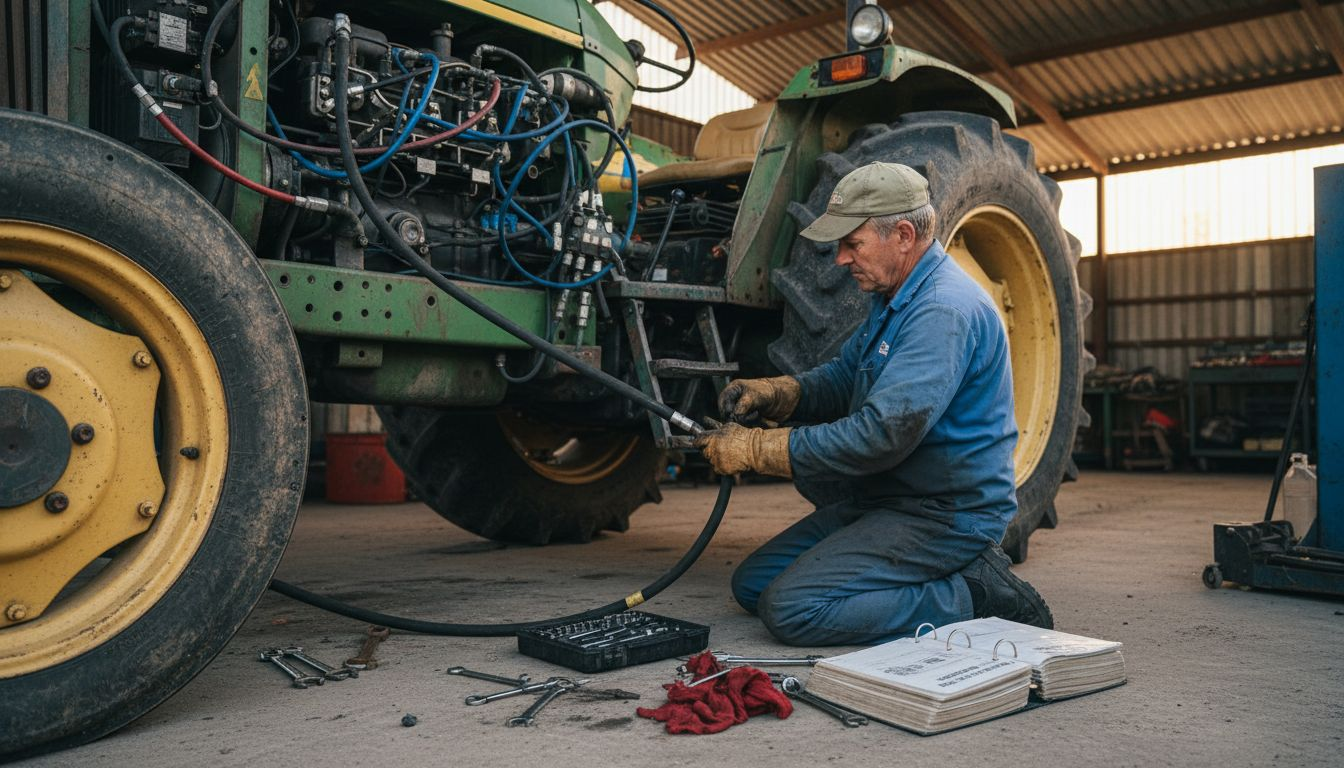
Modern tractor upgrades go beyond simple mechanical improvements, representing a holistic approach to agricultural technology. By integrating sophisticated electronic systems, precision sensors, and intelligent control mechanisms, farmers can achieve unprecedented levels of operational efficiency, resource management, and environmental sustainability.
Pro tip: Prioritize upgrades that offer measurable efficiency gains and have clear, documented return on investment before making significant technological investments in your agricultural equipment.
How Modern Upgrades Improve Farm Operations
Farm operations have undergone a revolutionary transformation with the integration of cutting-edge agricultural technologies. Precision agriculture technologies now enable farmers to manage resources with unprecedented accuracy and efficiency, fundamentally changing how agricultural work is conducted.
Key improvements in farm operations through modern upgrades include:
- Resource Management
- Precise input application
- Reduced waste
- Targeted fertilizer and water usage
- Operational Efficiency
- Real-time crop monitoring
- Automated task execution
- Predictive maintenance systems
- Environmental Sustainability
- Reduced chemical application
- Minimized environmental contamination
- Enhanced ecosystem preservation
These technological advancements provide farmers with sophisticated resource management tools, including remote sensing platforms, in-ground sensors, and automated mechanical systems. Such innovations dramatically improve crop health monitoring, allowing for more responsive and intelligent farming practices that optimize both productivity and environmental stewardship.
Modern agricultural upgrades represent more than simple technological improvements – they are comprehensive systems that integrate data collection, analysis, and automated decision-making. By leveraging sensors, GPS technologies, and intelligent controllers, farmers can now make more informed choices about crop management, reducing operational costs while simultaneously increasing overall farm productivity.
Pro tip: Invest in upgrades that provide quantifiable data and integrate seamlessly with your existing farm management systems to maximize technological benefits.
Key Costs and Expected Return on Investment
Investing in agricultural equipment upgrades requires careful financial analysis and strategic planning. Cost-benefit analyses reveal that not all technological investments yield immediate or equivalent returns, making it crucial for farmers to thoroughly evaluate potential economic impacts before committing resources.
Key financial considerations for agricultural equipment upgrades include:
- Initial Investment Costs
- Hardware and technology purchase
- Installation and integration expenses
- Training and implementation costs
- Potential Financial Returns
- Reduced operational expenses
- Increased crop productivity
- Enhanced resource efficiency
- Long-Term Economic Factors
- Maintenance and upgrade expenses
- Technology depreciation
- Potential tax incentives
Farmers can leverage comprehensive production cost data to make more informed decisions about equipment investments. Understanding commodity-specific cost structures helps predict the potential financial benefits and payback periods for technological upgrades, ensuring more strategic and financially sound investments.
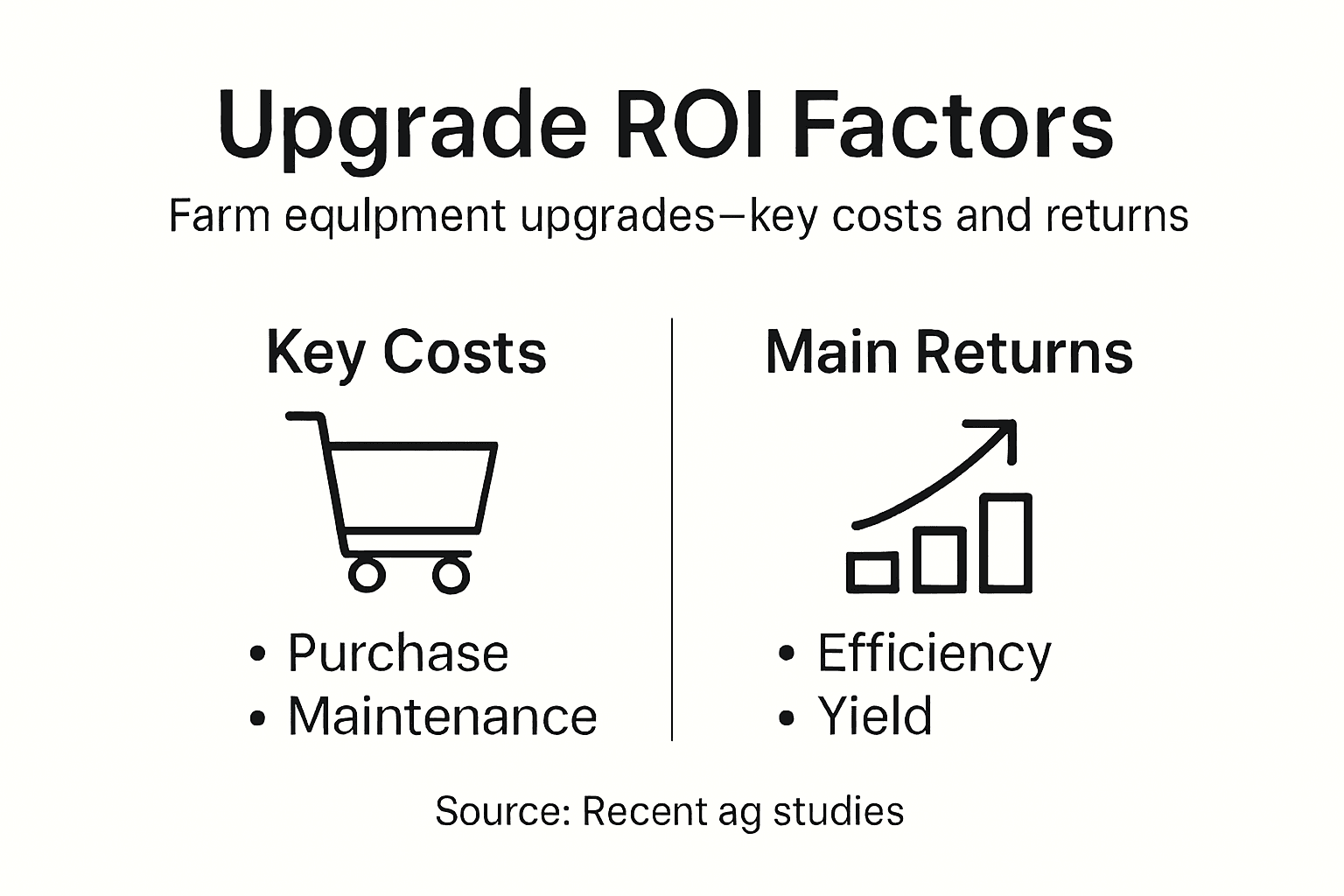
Successful agricultural equipment upgrades require a holistic approach that balances technological innovation with economic pragmatism. By carefully analyzing potential returns, considering long-term efficiency gains, and understanding the nuanced financial landscape of agricultural technology, farmers can make smart investments that enhance both operational capabilities and financial performance.
Consider this comparison of key factors that influence return on investment (ROI) for agricultural upgrades:
| Factor | Positive ROI Influence | Negative ROI Impact |
|---|---|---|
| Upfront Cost | Grants or subsidies available | High equipment prices |
| Integration Complexity | Fits current systems easily | Major modifications required |
| Ongoing Maintenance | Reliable vendor support | High training or repair costs |
| Data Utilization | Insights drive decisions | Data analytics not utilized |
Pro tip: Conduct a detailed financial projection that includes not just upfront costs, but also anticipated efficiency gains, potential productivity increases, and long-term operational savings before finalizing any equipment upgrade investment.
Avoiding Common Pitfalls in Upgrade Decisions
Agricultural equipment upgrades can be complex and fraught with potential mistakes that could undermine technological investments. Precision agriculture technology adoption presents numerous challenges that farmers must carefully navigate to ensure successful implementation and meaningful returns.
Common pitfalls in agricultural equipment upgrades include:
- Financial Miscalculations
- Underestimating total implementation costs
- Neglecting ongoing maintenance expenses
- Failing to assess long-term return potential
- Technical Integration Problems
- Poor compatibility with existing systems
- Inadequate staff training
- Limited technical support infrastructure
- Strategic Selection Errors
- Choosing technology unsuited to farm scale
- Overlooking specific operational requirements
- Ignoring environmental adaptation needs
Agricultural technology strategies emphasize the critical importance of comprehensive planning and strategic selection. Successful upgrades demand a holistic approach that considers not just technological capabilities, but also the specific operational context, staff readiness, and long-term farm management objectives.
Mitigating upgrade risks requires farmers to conduct thorough research, seek expert consultations, and develop a detailed implementation strategy that accounts for potential challenges. This involves comprehensive cost-benefit analyses, staff training programs, and phased technological integration that allows for gradual adaptation and continuous performance evaluation.
Pro tip: Create a detailed technology implementation roadmap that includes pilot testing, staff training schedules, and clear performance benchmarks before making significant equipment upgrade investments.
Upgrade Your Farm Efficiency with Reliable Agricultural Machinery Parts
Modern agricultural equipment upgrades demand precision, reliability, and compatibility to maximize operational efficiency and boost farm productivity. If you are exploring advanced tractor accessories or spare parts to complement GPS-guided systems, robotic enhancements, or hydraulic improvements, having access to a large inventory of trusted components is critical to avoid costly downtime and ensure seamless integration.
At pexlivanidis.com, we understand the importance of efficient farm operations supported by top-quality parts. With over 20,000 items including tractor spare parts and accessories, free shipping in Greece on orders over €100, and tailored solutions for wholesale customers, our platform is designed to help you find the right upgrades that fit your farm’s specific needs. Don’t let technical integration issues or equipment downtime hold you back from realizing the benefits of your agricultural technology investments.
Explore our extensive selection of agricultural machinery parts today and secure the components that can elevate your farm’s productivity and resource management. Visit pexlivanidis.com now and take the next step toward smart, efficient farming with the support you can trust.
Frequently Asked Questions
What are the main benefits of upgrading agricultural equipment?
Upgrading agricultural equipment can enhance operational efficiency, improve crop yields, and promote environmental sustainability through precise resource management and automation.
How do GPS-enabled technologies improve farm operations?
GPS-enabled technologies improve farm operations by providing precise field navigation, reducing overlap in field operations, and ensuring accurate application of resources such as water, fertilizers, and pesticides.
What are the economic implications of investing in agricultural equipment upgrades?
Investing in agricultural equipment upgrades can lead to reduced operational costs, increased efficiency, and enhanced production oversight, contributing to significant returns on investment over time.
What common pitfalls should farmers avoid when upgrading their equipment?
Common pitfalls to avoid include financial miscalculations, technical integration problems, and selecting technology that is not suited to the specific operational requirements of the farm.