

TL;DR:
- Accurate farming parts ordering depends on precise OEM numbers, machine data, and verified stock information. Proper preparation and supplier relationships help prevent costly downtime and ensure quick, correct deliveries. Using detailed identifiers and maintaining digital records improve procurement efficiency and reduce errors.
The agricultural parts ordering process is the workflow of accurately identifying and purchasing the precise machinery spare parts needed to keep farm operations running without interruption. Getting it wrong costs more than the part itself. A wrong fitment means a machine sits idle during harvest, planting, or spraying, and that lost time rarely comes back. The process depends on three pillars: exact part identification using OEM or OE numbers, verified machine data, and a clear understanding of your supplier’s stock and shipping terms. Platforms like Pexlivanidis, which carries over 20,000 items and serves operators across Thessaloniki, Kavala, and surrounding regions, are built around this exact workflow.
What information do you need before ordering agricultural parts?
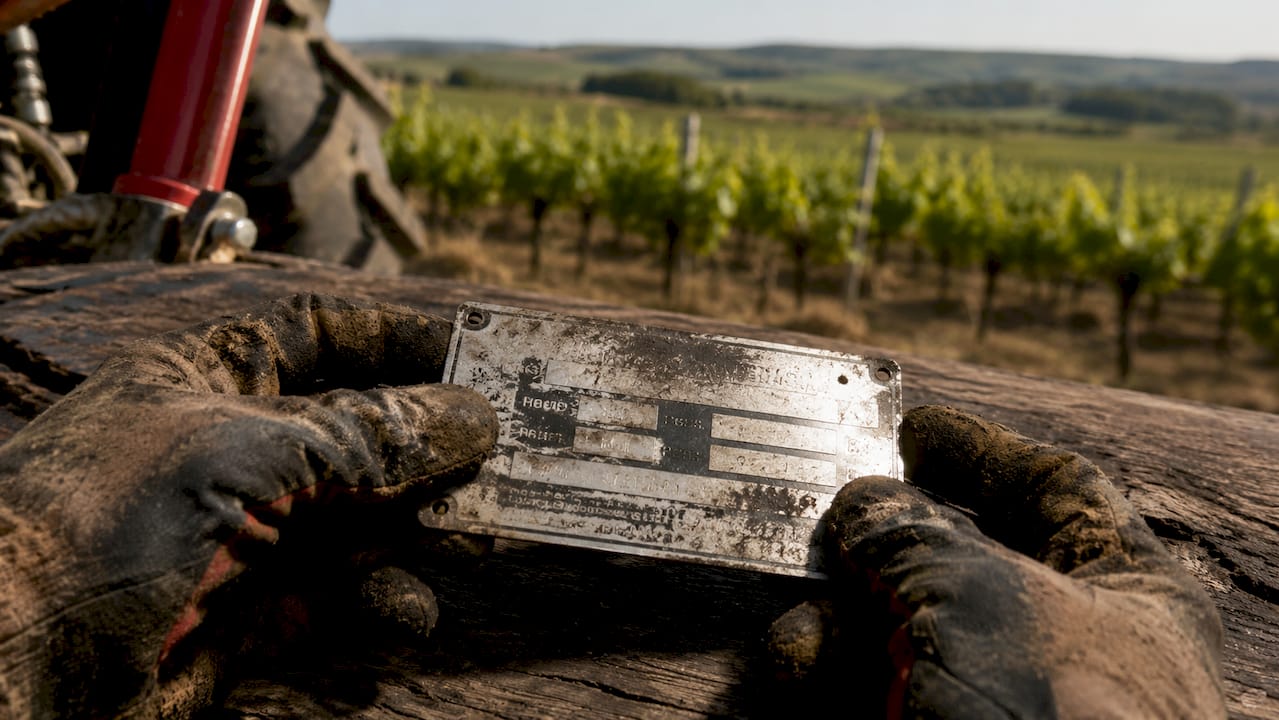
The farm parts purchasing process starts before you ever contact a supplier. You need specific identifiers, not general descriptions. Walking in with “a belt for my tractor” wastes everyone’s time and increases the risk of a wrong order.
The three core identifiers are the OEM or OE part number, the machine model, and the serial number or PIN. For John Deere machines built after 2000, the 13-digit PIN is the authoritative compatibility reference. Other brands use similar serial-based systems. The serial number matters because parts catalogs split machines by production runs, not just model names. Two tractors with the same model designation can require different parts depending on when they were built.
If the OEM number is worn off or missing, you can still source the correct part. Compatible parts can be found using the machine model and serial number, supported by photos of the old part. Quality photos showing labels, fasteners, and dimensions significantly help suppliers confirm compatibility.
Required information checklist
| Information needed | Why it matters |
|---|---|
| OEM or OE part number | Confirms exact part specification |
| Machine model | Narrows down the parts catalog |
| Serial number or PIN | Identifies the correct production run |
| Machine data plate photo | Visual verification of all key identifiers |
| Old part photo | Confirms shape, size, and mounting details |
| Part location notes | Clarifies left/right, front/rear, sub-assembly |
Pro Tip: Photograph the machine data plate and the old part before you remove anything. Once a part is off the machine and sitting on a workbench, context clues like mounting orientation disappear fast.
Understanding agricultural part numbers in detail gives you a significant advantage when cross-referencing parts across brands or finding aftermarket equivalents.
How to order farming parts step by step
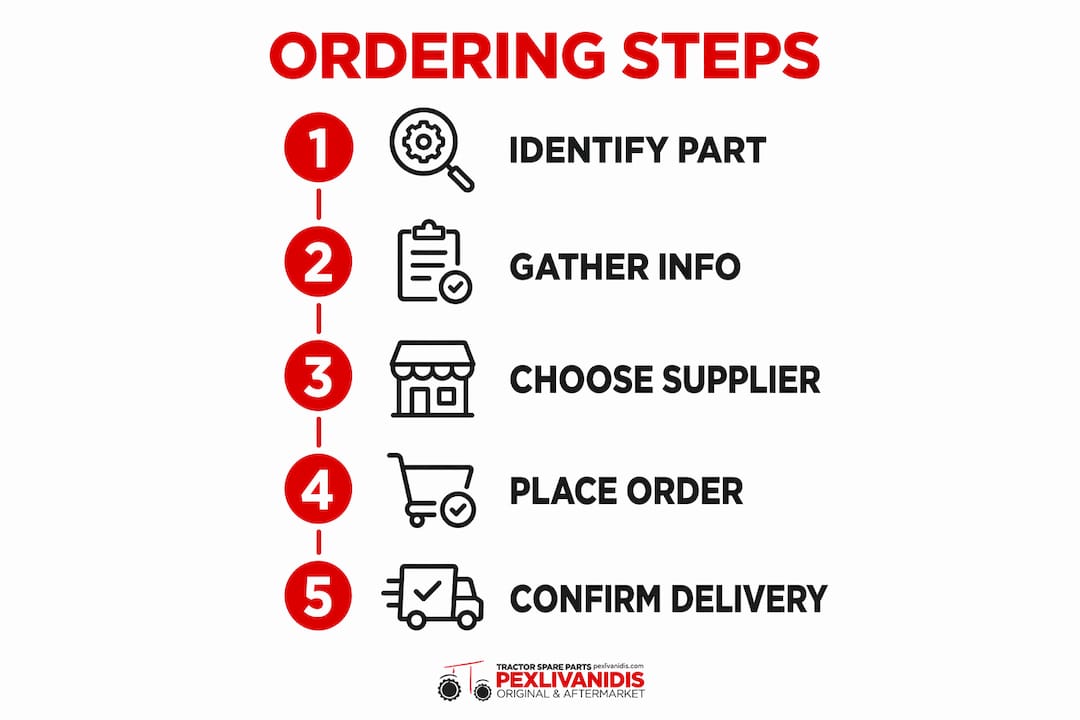
A structured approach to ordering agricultural equipment parts eliminates most fitment errors before they happen. The steps below reflect the workflow that experienced operators and suppliers consistently recommend.
- Locate the OEM or OE part number. Check the old part itself, the machine’s service manual, or the manufacturer’s electronic parts catalog. This number is your single most reliable reference.
- Confirm machine application. Match the part number against your machine model and serial number or PIN. Do not assume a part fits just because the model name matches.
- Note the part’s position on the machine. Left or right, upper or lower, front or rear. Many parts look identical but are mirrored or have different mounting holes depending on position.
- Photograph the machine data plate and the old part. Include multiple angles. Show any visible stamps, casting numbers, or wear patterns that help confirm identity.
- Check stock availability with your supplier. Ask whether the part is in stock, special order, or quote-based. Each category has different lead times and shipping conditions.
- Place the order with your full reference package. Submit the OEM number, machine model, serial or PIN, part photos, and position notes together. Sending this complete package reduces back-and-forth and speeds up correct-fit orders.
- Confirm shipping terms and expected delivery. Get a written confirmation of the part number, quantity, and estimated arrival before you close the order.
Pro Tip: If you are ordering multiple parts at once, list them in a simple table with OEM number, machine, and quantity. Suppliers process structured requests faster and with fewer errors than long email threads.
Choosing reliable spare parts suppliers in Greece matters as much as knowing the right part number. A supplier with a well-organized catalog and clear communication protocols cuts your ordering time significantly.
How do in-stock, special-order, and quote-based parts differ?
Not every part ships the same day you order it. Understanding the three supply categories helps you plan repairs around realistic timelines instead of being caught off guard.
In-stock parts are available in the supplier’s warehouse and can ship the same day if ordered before the cutoff time. A typical policy, as seen with suppliers like US Agro Parts, processes same-day orders before 2 pm on business days, Monday through Friday. Missing that cutoff by an hour means a full extra day of waiting.
Special-order parts are not held in stock but can be sourced from the manufacturer or a regional distributor. Lead times vary widely, from a few days to several weeks, depending on the part’s availability in the supply chain. These parts require more planning and should not be ordered reactively when a machine is already down.
Quote-based parts are rare, high-value, or hard-to-find components that require a price inquiry before purchase. These ship only after payment confirmation, adding another step to the timeline.
Supply type comparison
| Supply type | Typical lead time | Best for |
|---|---|---|
| In-stock | Same day to next day | Common wear parts, filters, belts |
| Special order | 3–14 business days | Less common components, older machines |
| Quote-based | Variable, post-payment | Rare parts, large assemblies, custom items |
For urgent downtime situations, suppliers with inventory networks and escalation protocols can move parts quickly through local to regional to air freight channels. Passive waiting is not a strategy. Ask your supplier directly what options exist for accelerating delivery when a machine is critical to your operation.
What are the most common mistakes in ordering ag parts?
The most frequent error in agricultural supply procurement is ordering by brand and model name alone, without an exact part number. It feels like enough information, but it rarely is. A 2026 guide from Agritec confirms that relying on brand or model guessing causes returns and downtime, while exact numbers, model data, and photos reduce errors significantly.
Other common mistakes include:
- Relying on photos alone without a part number. Photos help, but they cannot replace a verified OEM number. A part can look identical to the correct one and still have different thread pitch, bore size, or material spec.
- Ignoring return and exchange policies before ordering. Reputable suppliers provide clear return protocols that require the order number and serial or PIN verification. Knowing this process before you order saves time if something goes wrong.
- Skipping position details. Left-hand and right-hand parts are a classic trap. Always specify which side of the machine the part comes from.
- Ordering without checking serial or PIN compatibility. Using the most granular machine identifier, rather than a broad model name, reduces fitment errors because compatibility often depends on production runs.
Keeping a digital log of every part you have ordered, including the OEM number, machine serial, supplier, and delivery date, turns a one-time effort into a permanent reference library. The second time you need that part, the research is already done.
Pro Tip: Store part photos and order records in a shared folder organized by machine. When a repair repeats, you already have the exact reference package ready to send.
The value of investing in correct spare parts goes beyond the immediate repair. Accurate ordering builds a parts history that makes every future procurement faster and more reliable.
Key Takeaways
The agricultural parts ordering process succeeds when you lead with exact OEM numbers, verified machine data, and a clear understanding of supplier stock categories before placing any order.
| Point | Details |
|---|---|
| Start with the OEM number | The part number is the single most reliable identifier and eliminates most fitment errors. |
| Use serial or PIN, not just model | Production runs determine compatibility, so granular identifiers outperform broad model names. |
| Know your supply category | In-stock, special-order, and quote-based parts each carry different lead times and planning needs. |
| Send a complete reference package | Photos, part number, machine data, and position notes together reduce supplier back-and-forth. |
| Log every order digitally | A parts history cuts research time on repeat repairs and improves long-term procurement accuracy. |
Why downtime cost should drive your ordering decisions
Most operators focus on part price when they should be focused on time. A tractor sitting idle during the Greek olive harvest or grain season costs far more per day than any individual spare part. That shift in perspective changes how you approach the entire ordering process.
The operators I have seen handle parts procurement best are the ones who treat it like a logistics problem, not a shopping task. They maintain a digital folder for each machine with photos of the data plate, a list of commonly replaced parts with OEM numbers, and notes on past repairs. When something breaks, they are not starting from scratch. They have the reference package ready in minutes.
Supplier relationships matter more than most farmers realize. A supplier who knows your fleet, understands your peak seasons, and has your machine data on file can process an urgent order faster than any online portal. Building that relationship during quiet periods, not during a breakdown, is the move that pays off when it counts.
Proactive stock management during the months before peak season is the other habit that separates low-downtime operations from high-downtime ones. Identify the parts most likely to fail on your highest-use machines. Order them before you need them. The cost of holding a spare filter or belt is trivial compared to a three-day wait during critical fieldwork.
— George
Pexlivanidis resources for parts ordering and machinery maintenance
Pexlivanidis supports farmers and agricultural operators across Greece with a catalog of over 20,000 spare parts, including tractor accessories and machinery components, with free shipping on orders over 100€ within Greece. The platform is built for both retail buyers and wholesale B2B operators, with product inquiry tools and availability forms that fit directly into the ordering workflow described in this guide. For operators who want to understand exactly what they are ordering, the essential agricultural machinery parts guide breaks down the seven key part categories with clear explanations. Pexlivanidis also publishes practical resources on maintaining agricultural machinery to help operators extend part life and reduce the frequency of emergency orders.
FAQ
What is the agricultural parts ordering process?
The agricultural parts ordering process is the structured workflow of identifying the exact part needed, verifying compatibility using OEM numbers and machine data, and placing an order with a supplier under clear shipping and return terms.
Why is the OEM part number more reliable than the machine model?
Parts catalogs are organized by production runs, not just model names. Two machines with the same model designation can require different parts depending on their serial number or PIN, making the OEM number the only fully reliable reference.
What should I do if I cannot find the part number?
If the part number is unreadable, use the machine model and serial number along with clear photos of the old part. Electronic parts catalogs and supplier databases can match compatible parts from this information.
How do I handle a wrong part delivery?
Contact the supplier immediately with your order number and machine serial or PIN. Reputable suppliers have return and exchange protocols that allow you to arrange correct shipment or a refund without significant delay.
When should I order parts before a breakdown occurs?
Order commonly replaced parts, such as filters, belts, and seals, before peak season begins. Proactive stock management eliminates the risk of waiting on special-order lead times when your machines are most needed.