

Using OEM spare parts can reduce agricultural machinery breakdowns by up to 30%, saving crucial time during harvest season. For Greek farmers, every hour of downtime translates to lost productivity and reduced income. This guide explains why OEM parts deliver superior reliability, how they protect your investment through warranty coverage, and where to source authentic components locally. You’ll learn to make informed decisions that improve machinery performance while avoiding costly counterfeit alternatives.
Table of Contents
- Understanding OEM Spare Parts: Definition And Standards
- Key Benefits Of Using OEM Spare Parts In Agriculture
- Comparing OEM And Aftermarket Spare Parts: What Farmers Should Know
- Economic Impact: Long-Term Cost Savings With OEM Parts
- Risks Of Counterfeit And Non-OEM Spare Parts
- Where And How To Source Authentic OEM Spare Parts In Greece
- Common Misconceptions About OEM Spare Parts
- Summary And Practical Recommendations For Greek Farmers
- Discover High-Quality OEM Agricultural Machinery Parts At Pexlivanidis
Key takeaways
| Point | Details |
|---|---|
| Precision fit | OEM parts match exact manufacturer specifications, reducing wear and preventing equipment damage. |
| Warranty protection | Using genuine parts maintains manufacturer coverage and ensures ongoing technical support access. |
| Long-term savings | Higher durability reduces replacement frequency and unexpected repair costs despite initial investment. |
| Safety assurance | Authentic OEM parts eliminate risks from counterfeit components that can cause operational failures. |
| Local sourcing | Certified Greek distributors provide verified parts with regional support and faster delivery times. |
Understanding OEM spare parts: definition and standards
OEM stands for Original Equipment Manufacturer, meaning these parts come directly from the company that built your tractor or harvester. OEM parts conform to exact manufacturer specifications and international quality standards like ISO. They match the precise dimensions, materials, and performance characteristics of the original components installed during factory assembly.
These parts differ fundamentally from aftermarket alternatives in several ways:
- Designed specifically for your machinery’s make, model, and production year
- Manufactured using the same materials and processes as original components
- Tested to meet strict quality control standards before distribution
- Backed by manufacturer warranties and technical documentation
- Certified to comply with international safety and performance regulations
Aftermarket parts, by contrast, are produced by third-party companies attempting to replicate original designs. While some aftermarket manufacturers maintain high standards, quality varies dramatically across suppliers. Many aftermarket components use inferior materials or modified specifications to reduce costs, compromising fit and durability.
The distinction matters because agricultural machinery operates under extreme conditions. Soil, moisture, vibration, and heavy loads place enormous stress on every component. Parts that deviate even slightly from original specifications create wear points that accelerate equipment degradation. Understanding why choose OEM tractor parts helps protect your machinery investment and operational reliability.
Key benefits of using OEM spare parts in agriculture
OEM parts deliver measurable advantages that directly impact your farm’s bottom line. OEM parts reduce downtime and extend equipment lifespan by improving reliability and ensuring precise fit. These benefits compound over time, creating operational efficiencies that offset higher initial costs.
Precise engineering means OEM components fit perfectly without modification or adjustment. This exact fit reduces vibration, prevents premature wear on adjacent parts, and maintains optimal performance under load. Machinery runs smoother, consumes less fuel, and requires fewer emergency repairs during critical farming periods.
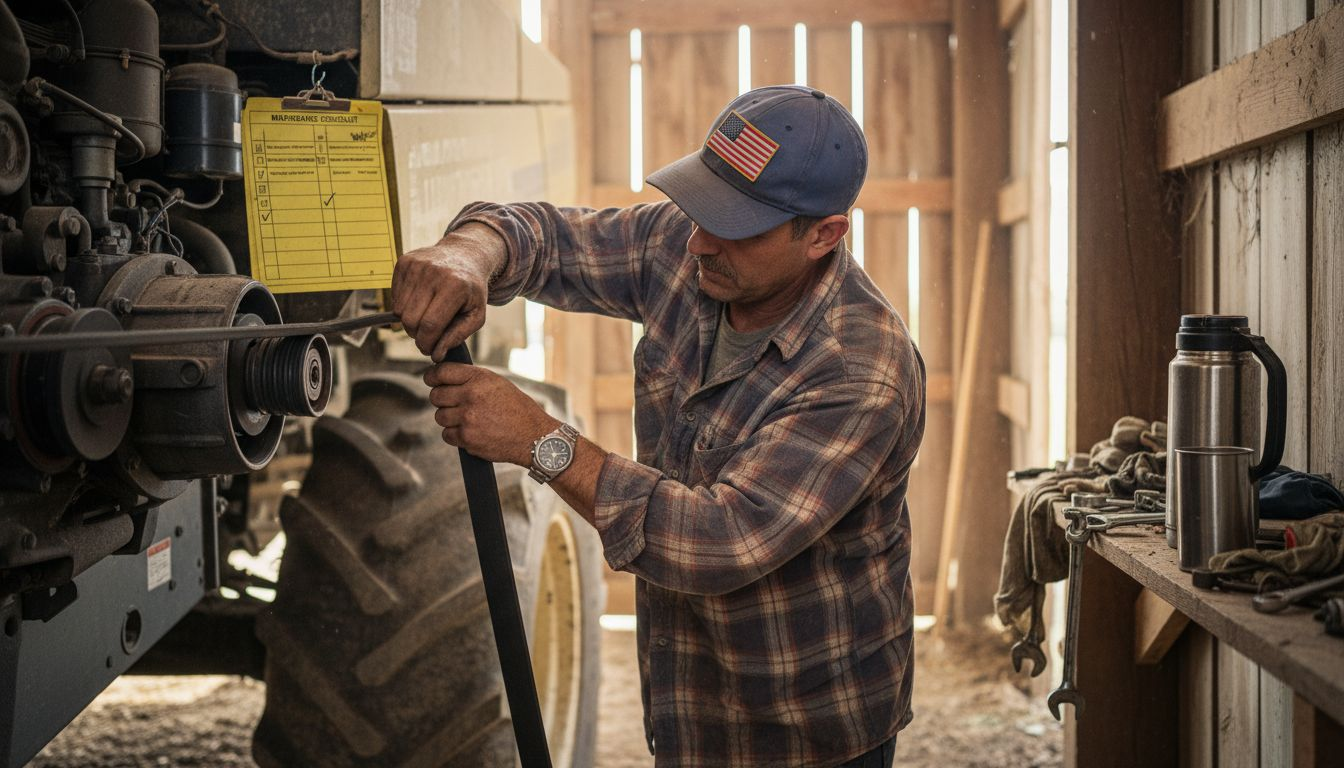
Warranty protection represents another crucial advantage. Installing non-OEM parts typically voids manufacturer coverage, leaving you financially responsible for subsequent failures. Genuine parts maintain full warranty terms, protecting your investment if problems develop. Manufacturers also provide technical support and troubleshooting assistance exclusively for equipment using approved components.
Durability differences become apparent over extended use:
- OEM parts last 40-60% longer than typical aftermarket alternatives
- Replacement intervals extend significantly, reducing maintenance frequency
- Consistent quality eliminates the trial-and-error cycle of testing different suppliers
- Superior materials withstand harsh agricultural conditions without degradation
- Predictable performance allows better maintenance planning and budgeting
Operational reliability matters most during peak farming seasons when equipment must run continuously. OEM parts minimize unexpected breakdowns that can delay planting or harvesting. This reliability protects your harvest schedule and prevents weather-related losses that occur when machinery fails at critical moments.
Pro Tip: Keep a small inventory of critical OEM parts like filters, belts, and seals on hand. Having genuine components available eliminates ordering delays and keeps machinery running during time-sensitive operations.
The benefits of genuine parts extend beyond individual components to overall equipment health and resale value.
Comparing OEM and aftermarket spare parts: what farmers should know
Understanding the practical differences between OEM and aftermarket parts helps you make informed purchasing decisions. Counterfeit or non-OEM parts fail up to 40% faster and can void machine warranties. The comparison reveals trade-offs between upfront costs and long-term performance.
| Factor | OEM Parts | Aftermarket Parts |
|---|---|---|
| Quality consistency | Uniform across all units | Varies widely by manufacturer |
| Fit precision | Exact original specifications | May require modification |
| Material quality | Premium grade materials | Often lower grade substitutes |
| Warranty coverage | Maintains full coverage | Typically voids manufacturer warranty |
| Failure rate | 5-10% over lifecycle | 15-25% over lifecycle |
| Average lifespan | 100% of design life | 60-75% of design life |
| Initial cost | Higher | Lower |
| Total ownership cost | Lower over time | Higher due to replacements |
Aftermarket parts appeal primarily through lower purchase prices. A hydraulic pump might cost 30-40% less than the OEM equivalent. However, this initial savings disappears when the part fails prematurely or damages surrounding components. Inferior metallurgy, looser tolerances, and substandard seals contribute to shorter service life.
Quality control represents another critical difference. OEM manufacturers test parts extensively before release, ensuring they meet performance specifications under various operating conditions. Aftermarket producers often skip rigorous testing to minimize costs. You essentially gamble on quality each time you purchase from an unknown supplier.
Warranty implications create financial risk:
- Manufacturers can deny coverage if non-OEM parts contributed to failure
- Proving an aftermarket part didn’t cause damage becomes your burden
- Repair costs escalate when warranty protection disappears
- Equipment value decreases if maintenance records show non-genuine parts
Compatibility issues also arise more frequently with aftermarket components. Even parts advertised as direct replacements may have subtle differences in mounting points, electrical connections, or operating tolerances. These mismatches create installation challenges and potential safety hazards. Understanding parts compatibility tractor machinery prevents costly mistakes and equipment damage.
Economic impact: long-term cost savings with OEM parts
Total cost of ownership provides the most accurate measure for comparing spare parts options. While OEM parts require larger upfront investments, durability of OEM parts leads to fewer replacements and longer equipment lifespan, reducing unexpected repair expenses. The math consistently favors genuine components over typical equipment lifecycles.
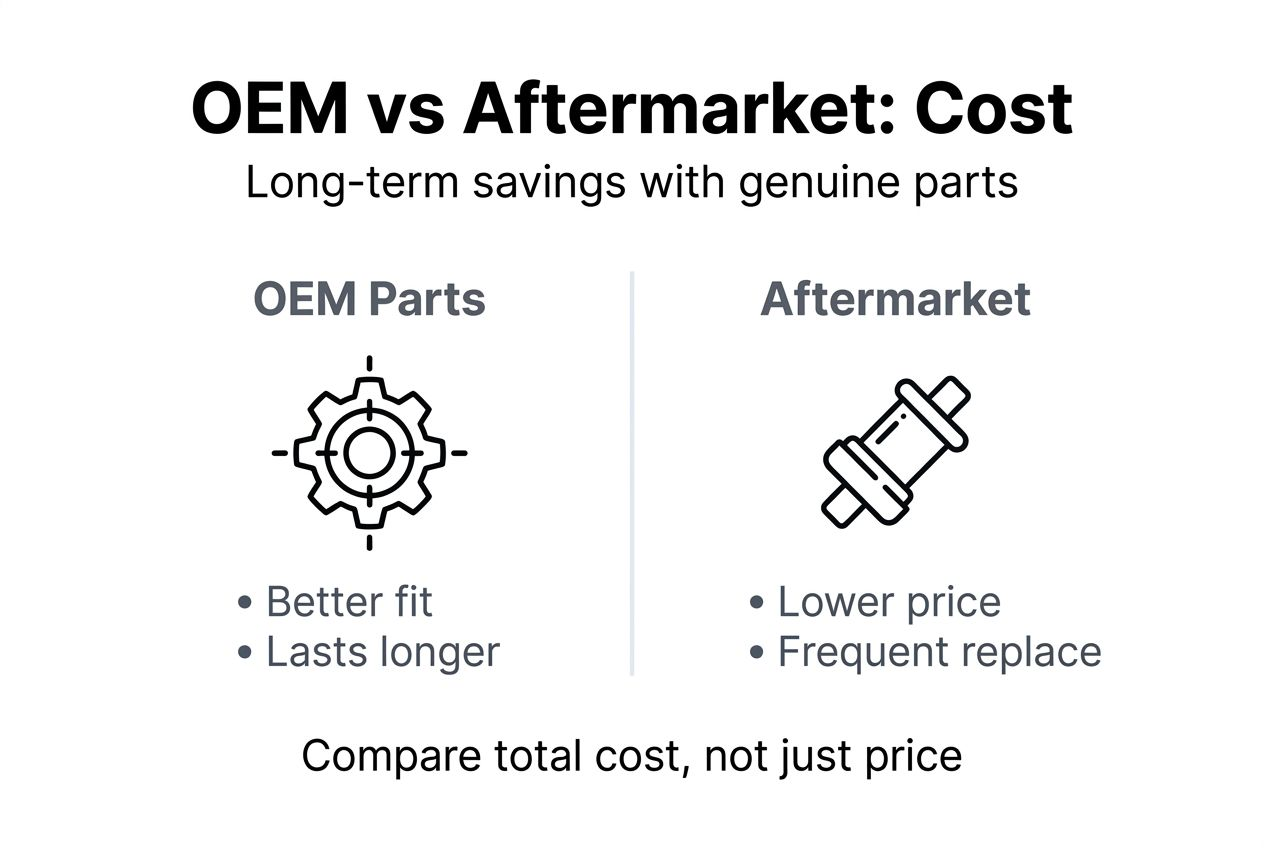
Consider a hydraulic cylinder replacement scenario:
| Cost Factor | OEM Part | Aftermarket Part |
|---|---|---|
| Initial purchase | €450 | €280 |
| Expected lifespan | 5 years | 3 years |
| Replacements needed (10 years) | 2 units | 3.3 units |
| Total parts cost | €900 | €924 |
| Installation labor (per replacement) | €120 | €120 |
| Total labor cost | €240 | €396 |
| Downtime cost (4 hours per replacement) | €200 | €330 |
| Total 10-year cost | €1,340 | €1,650 |
The aftermarket option costs 23% more over a decade despite lower initial pricing. Labor and downtime expenses amplify the difference. Emergency repairs during harvest can cost €100-150 per hour in lost productivity, making reliability worth substantial premiums.
Warranty protection adds another dimension to the economic equation. Manufacturers honor coverage only when genuine parts maintain equipment integrity. A major engine or transmission failure covered under warranty saves €3,000-8,000 in repair costs. Using one €50 aftermarket filter that voids coverage creates catastrophic financial exposure.
Budgeting becomes more predictable with OEM parts:
- Consistent quality eliminates surprise failures and emergency expenses
- Longer replacement intervals reduce maintenance frequency
- Warranty coverage caps maximum repair costs during coverage periods
- Better resale values recover more of your equipment investment
Pro Tip: Track total maintenance costs separately for equipment using OEM versus aftermarket parts. Most farmers discover genuine parts reduce annual expenses by 15-25% while improving operational reliability.
The OEM tractor parts benefits guide provides additional cost analysis and decision frameworks.
Risks of counterfeit and non-OEM spare parts
Counterfeit parts represent a growing threat in agricultural machinery markets. Counterfeit parts increase failure rates, pose safety risks, and invalidate machine warranties. These fake components often look identical to genuine parts but use inferior materials and manufacturing processes that compromise performance and safety.
Safety hazards emerge when counterfeit parts fail under load. A fake steering component can cause loss of control during operation. Fraudulent brake parts extend stopping distances, creating collision risks. Electrical components may short circuit, causing fires that destroy equipment and endanger operators. The consequences extend far beyond financial losses.
Counterfeit parts typically fail through several mechanisms:
- Substandard metallurgy causes premature cracking and fractures
- Inferior seals allow contamination and fluid leaks
- Wrong materials create incompatible thermal expansion rates
- Poor surface finishing accelerates wear and friction
- Inadequate heat treatment reduces strength and durability
Legal and warranty consequences compound the problem. Installing counterfeit parts voids manufacturer warranties even if you purchased them unknowingly. Insurance claims may be denied if equipment failures result from fake components. You bear full financial responsibility for damages, injuries, or losses linked to counterfeit parts.
Protecting yourself requires vigilance when purchasing spare parts:
- Buy exclusively from authorized distributors with verified credentials
- Verify serial numbers and authenticity codes with manufacturers
- Inspect packaging for quality printing, holograms, and official logos
- Compare prices against market rates (70%+ discounts signal counterfeits)
- Request certificates of authenticity and retain documentation
- Report suspected counterfeits to manufacturers and authorities
Suspiciously low prices represent the biggest red flag. Genuine OEM parts have established market values based on materials and manufacturing costs. Deals offering 50-80% discounts almost certainly involve counterfeit or stolen goods. Understanding why choose OEM tractor parts helps you recognize legitimate pricing and avoid dangerous fakes.
Where and how to source authentic OEM spare parts in Greece
Sourcing genuine OEM parts requires identifying reliable distributors and verifying authenticity before purchase. Greek farmers benefit from local suppliers who understand regional needs and provide responsive support. Following systematic sourcing procedures protects against counterfeits while ensuring timely parts availability.
Follow these steps to source authentic OEM components:
- Identify certified distributors: Contact manufacturers directly for lists of authorized dealers in your region. Verify distributor credentials through official channels, not just website claims.
- Evaluate inventory capabilities: Choose suppliers maintaining substantial stock of parts for your specific machinery makes and models. Large inventories reduce wait times during critical periods.
- Verify authenticity procedures: Ask how the distributor validates parts authenticity. Reputable sellers provide certificates, verify serial numbers, and maintain direct manufacturer relationships.
- Assess delivery and logistics: Confirm delivery timeframes, shipping costs, and minimum order requirements. Local distributors often provide same-day or next-day delivery for urgent needs.
- Review warranty and support services: Ensure the distributor stands behind products with clear warranty terms. Technical support access helps with installation questions and compatibility verification.
- Document all purchases: Keep receipts, serial numbers, and authenticity certificates. Documentation proves warranty compliance and helps track maintenance histories.
Regional support advantages matter significantly for agricultural operations. Local distributors understand seasonal demands, maintain relationships with nearby repair shops, and stock parts specific to machinery common in Greek farming. They can expedite orders during harvest season when every hour counts.
Establishing relationships with trusted suppliers creates long-term benefits. Regular customers often receive priority service, advance notice of parts availability issues, and expert recommendations for maintenance planning. Working with parts wholesalers farm machinery supply specialists streamlines procurement and improves reliability.
Common misconceptions about OEM spare parts
Several persistent myths discourage farmers from choosing OEM parts despite their advantages. Correcting these misconceptions helps you make decisions based on facts rather than incomplete information.
Myth 1: Aftermarket parts perform as reliably as OEM components. Reality shows aftermarket quality varies dramatically. While some premium aftermarket brands match OEM standards, most budget options fail faster and cause secondary damage. You cannot assess quality by appearance alone.
Myth 2: OEM parts always cost too much with no real savings. Initial prices run higher, but total ownership costs favor OEM parts over equipment lifecycles. Durability, warranty protection, and reduced downtime create savings that exceed purchase price differences.
Myth 3: Using non-OEM parts doesn’t affect warranties or performance. Manufacturers explicitly void warranties when non-genuine parts contribute to failures. Even if an aftermarket component performs adequately initially, it may degrade faster and damage surrounding systems.
Myth 4: All OEM parts from any source are equally authentic. Counterfeit markets flood distribution channels with fake parts bearing OEM logos and packaging. Only authorized distributors guarantee authenticity through verified supply chains.
Myth 5: Fuel consumption remains unaffected by spare parts choices. Worn or improperly fitted aftermarket parts increase friction, reduce efficiency, and force engines to work harder. Genuine parts maintain optimal clearances and surface finishes that minimize energy losses.
These misconceptions often stem from short-term thinking that prioritizes immediate cost savings over operational reliability. Successful farmers recognize that equipment represents major capital investments requiring protection through proper maintenance and genuine parts. Understanding why choose OEM tractor parts clarifies the true value proposition.
Summary and practical recommendations for Greek farmers
OEM spare parts deliver superior quality, reliability, and warranty protection that justify their premium pricing. Greek farmers who prioritize genuine components experience fewer breakdowns, lower total maintenance costs, and better equipment longevity. Making informed parts decisions requires understanding both benefits and sourcing procedures.
Follow this systematic approach for selecting and purchasing OEM spare parts:
- Identify exact part requirements: Use equipment manuals to determine correct part numbers for your machinery’s make, model, and year. Verify compatibility before ordering.
- Research certified distributors: Contact manufacturers for authorized dealer lists. Evaluate local suppliers based on inventory, delivery capabilities, and customer service reputation.
- Verify authenticity: Request certificates of authenticity, check serial numbers against manufacturer databases, and inspect packaging quality. Avoid suspiciously discounted offers.
- Compare total costs: Calculate long-term expenses including replacement frequency, labor, and downtime. OEM parts typically cost less over equipment lifecycles.
- Document maintenance: Keep detailed records of all parts purchases, installation dates, and service performed. Documentation supports warranty claims and equipment resale value.
- Plan preventive maintenance: Use OEM-recommended service intervals to schedule parts replacement before failures occur. Preventive maintenance costs far less than emergency repairs.
- Build supplier relationships: Establish accounts with trusted distributors who understand your equipment and farming schedule. Regular customers receive better service and priority during peak seasons.
Avoid common pitfalls by rejecting parts from unverified sources, questioning deals that seem too good to be true, and never compromising on critical safety components like brakes, steering, or electrical systems. The risks of counterfeit parts far exceed any potential savings.
Pro Tip: Create a parts inventory system tracking when components were installed and their expected replacement timelines. This planning prevents last-minute scrambles and ensures genuine parts arrive before you need them.
Balancing cost considerations with operational needs requires viewing spare parts as investments rather than expenses. The complete guide to choosing OEM tractor parts provides additional frameworks for making sound decisions that protect your machinery and farming operation.
Discover high-quality OEM agricultural machinery parts at Pexlivanidis
Pexlivanidis offers an extensive selection of genuine OEM parts specifically for Greek farming operations. With over 20,000 items in stock, you’ll find components for all major tractor and harvester brands. Our certified inventory ensures authenticity, and our regional distribution network provides fast delivery across Greece.
Explore comprehensive resources to simplify your parts selection process. Learn about essential agricultural machinery parts types to understand what your equipment needs. Discover practical tips for buying tractor parts online that streamline purchasing. Our ordering tractor parts online guide walks you through the entire process from part identification to delivery.
Local support teams understand Greek farming conditions and seasonal demands. We maintain strong relationships with manufacturers, ensuring parts authenticity and warranty compliance. Free shipping on orders over €100 makes stocking critical components economical. Contact our specialists for expert guidance on maintaining your agricultural machinery with genuine OEM parts.
FAQ
What are the main advantages of OEM spare parts over aftermarket parts?
OEM parts are manufactured to exact original specifications, ensuring perfect fit and superior durability. They maintain equipment warranties while reducing failure risk by up to 40% compared to typical aftermarket alternatives. The precision engineering minimizes wear on adjacent components and delivers consistent performance under demanding agricultural conditions.
How can Greek farmers verify the authenticity of OEM spare parts?
Purchase exclusively from certified local distributors with verified manufacturer relationships. Request certificates of authenticity and verify serial numbers through official manufacturer databases before installation. Avoid sellers offering suspiciously low prices or operating without proper credentials, as these often distribute counterfeit components.
Are OEM spare parts more cost-effective in the long run despite higher initial prices?
OEM parts last 40-60% longer than typical aftermarket alternatives, reducing replacement frequency and total maintenance costs. They protect equipment warranties that can save thousands in repair expenses. Lower downtime and fewer emergency repairs during critical farming periods create operational savings that far exceed initial price differences.
Does using non-OEM parts affect the machinery warranty?
Installing non-OEM parts typically voids manufacturer warranties, leaving you financially responsible for subsequent failures. Manufacturers can deny coverage if aftermarket components contributed to damage, even indirectly. OEM parts maintain full warranty terms and ensure ongoing technical support access throughout the coverage period.