

TL;DR:
- Agrotech involves deploying advanced AI, IoT, robotics, and satellite systems to improve farm productivity and sustainability. Investment in agricultural innovation exceeded $16.2 billion in 2025, supporting tools like autonomous sprayers and satellite monitoring that deliver measurable field results. The most effective farms integrate these technologies with human expertise, emphasizing validation and proper machinery maintenance.
Agrotech is defined as the deployment of advanced technologies, including AI, IoT, robotics, and satellite systems, to improve agricultural productivity, sustainability, and operational efficiency. The industry formally calls this space “agricultural technology” or “agtech,” and both terms are used interchangeably by practitioners. Global investment in agricultural innovation reached $16.2 billion in 2025, driven by AI-driven precision farming, nature-inspired pesticides, and digital supply chain tools. That figure signals a structural shift, not a trend. Platforms like MBS SmartFarm, autonomous spraying systems from Starfarmtech, and satellite-based crop monitoring are no longer experimental. They are production tools delivering measurable results on working farms today.
What are the main agrotech innovations shaping farming right now?
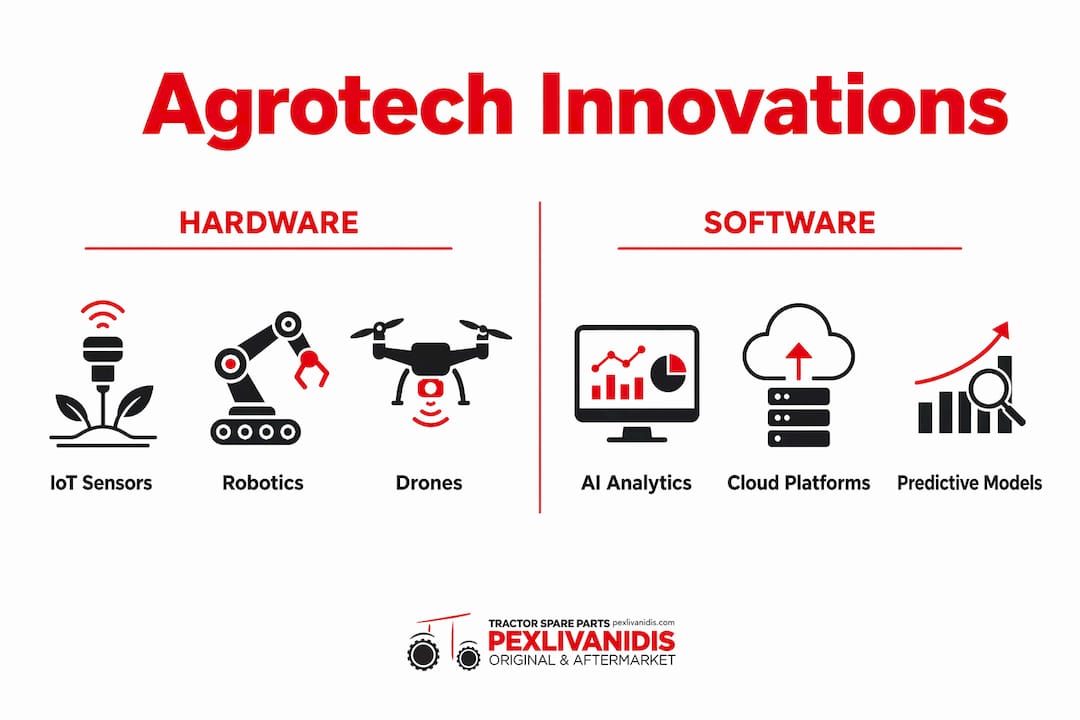
Precision agriculture sits at the core of modern agtech. IoT sensors embedded in soil, crop canopies, and irrigation lines generate continuous data streams that feed AI analytics platforms. Satellite imaging layers in field-level variability that ground sensors alone cannot capture. Together, these tools give farm managers a real-time picture of what is happening across every hectare, not just the fields they walked last week.
Autonomous machines represent the most visible face of agriculture automation. AI-powered spraying robots reduce chemical usage by up to 40% while maintaining or improving coverage, often completing the same area in half the number of passes compared to conventional sprayers. That reduction matters both economically and environmentally. Fewer chemicals mean lower input costs, reduced soil contamination, and smaller regulatory exposure for operations subject to EU or USDA compliance requirements.
The key innovations currently deployed across commercial farms include:
- AI-enhanced spraying drones that identify target plants versus weeds using computer vision and apply herbicide only where needed
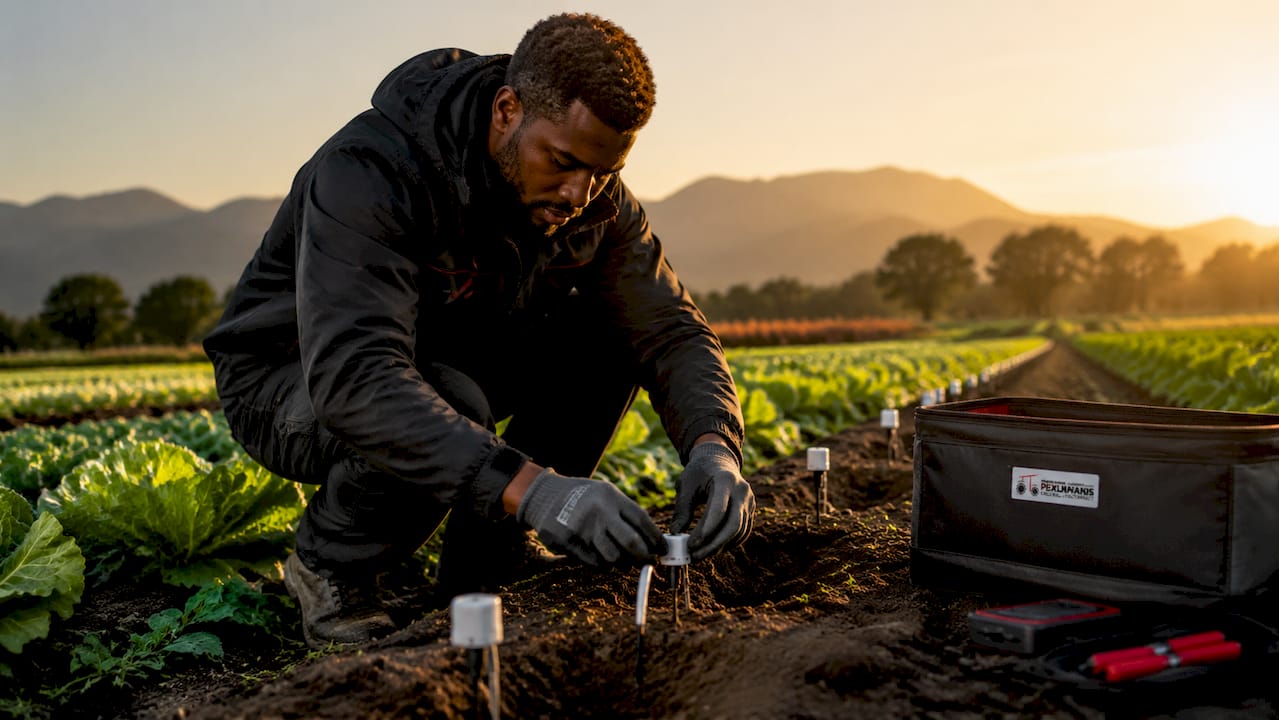
- IoT sensor networks monitoring soil moisture, temperature, pH, and nutrient levels at sub-field resolution
- Satellite and drone imagery platforms detecting crop stress, pest pressure, and irrigation gaps from above
- Farm management software integrating weather forecasts, market data, and field sensor outputs into a single decision interface
- Biodegradable cellulose-based sensors enabling dense, decentralized field mapping without permanent infrastructure
Each of these tools delivers value independently, but the compounding effect of integrating them into a unified system is where the real efficiency gains appear.
Pro Tip: Before purchasing any agtech system, ask the vendor for independent field trial data, not just internal case studies. Performance under controlled lab conditions rarely matches results on a working farm with variable soil types, connectivity gaps, and real weather.
How does agrotech improve farm data management and decision-making?
Data is only as useful as the system that organizes it. Cloud-based farm management platforms now integrate IoT sensor feeds, satellite imagery, weather station data, and equipment telemetry into a single interface. Modern platforms like MBS SmartFarm can manage over 500 IoT devices simultaneously and detect crop stress, disease, or nutrient deficiency seven to fourteen days before visible symptoms appear. That early warning window is the difference between a targeted intervention and a field-wide loss event.
AI-driven predictive analytics take this further by identifying anomalies across thousands of data points that no agronomist could manually review. A sudden divergence in soil moisture readings across adjacent zones, combined with a temperature spike and a satellite-detected spectral shift, can trigger an automated alert for early blight or irrigation failure. The system flags it; the agronomist confirms and acts.
The table below compares platform capabilities across different farm sizes and connectivity conditions:
| Platform type | Best fit | Key capability | Connectivity requirement |
|---|---|---|---|
| Full cloud integration | Large commercial farms | 500+ device management, AI anomaly detection | High-speed broadband |
| Edge computing hybrid | Mid-size farms with patchy connectivity | Local processing with periodic cloud sync | Intermittent connectivity |
| Standalone sensor dashboards | Small farms or single-crop operations | Basic monitoring and alerts | Low bandwidth or cellular |
| Satellite-only platforms | Remote or large-acreage operations | Field mapping without ground infrastructure | No on-farm connectivity needed |
Connectivity remains the most cited barrier to adoption. Edge computing addresses this by processing data locally on the device before syncing to the cloud, reducing dependence on continuous internet access. Data normalization, the process of making sensor outputs from different manufacturers speak the same language, is the second major technical hurdle. Farms running equipment from multiple vendors often find that integrating their data requires custom middleware or a platform with broad API support.
Pro Tip: When evaluating platforms, ask specifically how they handle data from sensors you already own. A platform that only works with its own hardware locks you into a single vendor ecosystem and limits your ability to integrate better tools later.
What are the emerging trends in autonomous AI for agrotech?
The most significant shift in agricultural technology right now is the move from software that recommends actions to systems that take them. Agentic AI frameworks enable closed-loop autonomous operations where sensors perceive field conditions, AI reasons about the optimal response, and actuators execute the decision, all without human input at each step. This is not theoretical. Experimental frameworks are already coordinating drone fleets, irrigation valves, and spraying robots in real time.
The practical implications for sustainable farming practices are significant. Site-specific spraying guided by agentic AI applies pesticide only to affected plants, not entire rows or fields. This precision reduces total chemical load, lowers runoff into waterways, and cuts input costs simultaneously. The environmental and economic incentives align, which is why investment in this area is accelerating.
Key challenges in deploying autonomous AI systems at scale include:
- Energy efficiency: Autonomous robots and drone fleets require substantial power, and off-grid farm locations make battery management a critical design constraint
- Scalability: Systems validated on 50-hectare trial plots often require significant reconfiguration to operate across 500-hectare commercial operations
- Regulatory compliance: Autonomous pesticide application is subject to national and regional regulations that vary significantly across the EU, the US, and other markets
- Data security: Farms generating continuous sensor and imagery data face growing exposure to cybersecurity risks, particularly as systems connect to cloud platforms
Most successful AI agrotech systems use a human-in-the-loop approach for decision support rather than full automation, requiring human confirmation before executing high-stakes actions like pesticide application or irrigation changes. This balance preserves the speed advantage of AI while keeping an experienced agronomist in the decision chain. It also reduces liability exposure when something goes wrong.
How can farmers and agricultural businesses adopt agrotech effectively?
Adoption strategy determines whether agtech investments pay off or stall. The most common failure mode is not technical. It is organizational. A system that works perfectly in a vendor demo fails on a farm because the connectivity is inconsistent, the staff were not trained, or the maintenance requirements were underestimated.
The USDA’s National Proving Grounds Network evaluates agtech under real-world field conditions to provide trusted performance data and reduce adoption risk. Established in 2026, this initiative directly addresses the “pilot purgatory” problem where solutions perform well in controlled trials but fail under actual farm conditions. Farmers prioritize trusted, data-driven validation over marketing claims, and the NPG-Ag initiative exists precisely because that validation gap was costing the industry credibility and adoption momentum.
Follow these steps to structure a sound adoption process:
- Audit your current infrastructure. Map existing machinery, connectivity, and data collection before evaluating new tools. You cannot integrate what you have not inventoried.
- Define the specific problem you are solving. Yield variability, input waste, labor shortages, and disease management each require different technology solutions. Broad “digital transformation” goals produce unfocused spending.
- Require independent validation data. Ask vendors for results from USDA NPG-Ag trials or equivalent third-party evaluations. Reject solutions backed only by internal case studies.
- Start with integration in mind. Integrated systems outperform siloed solutions because compounding intelligence from soil sensors, satellite imagery, and equipment telemetry yields higher ROI than any single tool alone.
- Plan for connectivity and training. Budget for network infrastructure and staff training as line items, not afterthoughts. Both are prerequisites for any system to function as designed.
- Schedule maintenance before deployment. Autonomous systems and sensor networks require regular calibration and hardware maintenance. Establish service intervals before the system goes live, not after the first failure.
You can explore how precision agriculture boosts yields in practical regional contexts to benchmark what realistic performance gains look like before committing to a specific platform.
Key takeaways
Agrotech delivers its highest returns when AI, IoT, and autonomous systems are integrated into a unified platform validated under real field conditions rather than deployed as isolated tools.
| Point | Details |
|---|---|
| Investment signals structural change | Global agtech investment hit $16.2 billion in 2025, confirming this is a permanent industry shift. |
| Autonomous AI reduces chemical use | AI-powered spraying systems cut pesticide application by up to 40% while maintaining coverage quality. |
| Early detection changes outcomes | Cloud platforms detecting crop stress 7 to 14 days before visible symptoms prevent field-wide losses. |
| Integration outperforms single tools | Combining soil sensors, satellite imagery, and telemetry yields higher ROI than any standalone solution. |
| Validation is non-negotiable | Independent field trials, such as USDA NPG-Ag evaluations, separate proven tools from marketing claims. |
Why the human element still defines agrotech success
The conversation around agrotech tends to focus on the technology itself. After years of working closely with agricultural professionals and machinery specialists, I have come to believe the technology is actually the easier part.
The farms that extract the most value from agtech are not the ones with the most sensors or the most sophisticated AI. They are the ones where an experienced agronomist or farm manager understands what the data is telling them and knows when to override the system. Agentic AI is genuinely impressive. A closed-loop system that perceives, reasons, and acts without human input at every step represents a real leap forward. But the farms I have seen struggle most are those that automated decisions before they fully understood the underlying processes those decisions were managing.
The human-in-the-loop model is not a compromise or a temporary workaround until AI gets better. It is the correct architecture for high-stakes agricultural decisions right now. Crop management technology should amplify agronomic expertise, not replace it. The farms that treat AI as a decision support tool rather than a decision-making replacement consistently outperform those chasing full automation.
My practical advice: invest in your team’s ability to interpret data before you invest in systems that generate more of it. The bottleneck on most farms is not data volume. It is the capacity to act on what the data reveals.
— George
Keep your machinery ready for the technology you deploy
Agrotech systems depend on the machinery that carries them. Autonomous spraying robots, sensor-equipped tractors, and drone deployment platforms all require well-maintained mechanical foundations to perform as designed. A GPS-guided sprayer with a worn pump or a misaligned boom delivers inaccurate applications regardless of how sophisticated its AI is. Pexlivanidis stocks over 20,000 agricultural machinery parts, including tractor accessories and spare parts, to keep your equipment operating at the standard your technology investments require. Start with the essential agricultural machinery parts guide to identify what your operation needs, and review the machinery maintenance guide to build a service schedule that protects your agtech ROI.
FAQ
What is agrotech and how does it differ from traditional farming?
Agrotech is the application of AI, IoT, robotics, and data platforms to agricultural operations to improve yield, reduce input waste, and support sustainable farming practices. Traditional farming relies on manual observation and experience; agrotech replaces or supplements those with continuous sensor data and predictive analytics.
How much can agrotech reduce pesticide use?
AI-powered autonomous spraying systems can reduce chemical usage by up to 40% by applying inputs only where needed rather than across entire fields. This precision also reduces the number of passes required, cutting fuel and labor costs simultaneously.
What is the biggest barrier to adopting agrotech on a working farm?
Connectivity and data normalization are the two most cited technical barriers, while inadequate staff training and underestimated maintenance requirements are the leading organizational failures. Addressing infrastructure and training before deployment significantly improves adoption outcomes.
How do I know if an agtech solution actually works in the field?
Require independent validation data from programs like the USDA National Proving Grounds Network, which tests agtech under real farm conditions rather than controlled lab environments. Vendor-supplied case studies alone are not sufficient evidence of field performance.
What is agentic AI and why does it matter for agriculture?
Agentic AI refers to systems that autonomously perceive conditions, reason about the best response, and execute actions without requiring human input at each step. In agriculture, this enables real-time coordination of sensors, drones, and spraying equipment for precise, site-specific crop management.