

Greek farmers face mounting pressure to produce more with less. Precision agriculture can boost crop yields by up to 15% while cutting fertilizer use by a quarter, transforming how you manage your land. This guide explains core technologies, practical benefits, and adoption steps tailored for Greek farms seeking higher efficiency and profitability.
Table of Contents
- Introduction to Precision Agriculture
- How Precision Agriculture Enhances Crop Yields and Resource Efficiency
- Precision Agriculture Technologies Relevant to Greek Farms
- Common Misconceptions and Adoption Barriers
- Comparing Precision Agriculture Tools and Methods
- Implementing Precision Agriculture on Greek Farms
- Explore Precision Farming Solutions at Pexlivanidis
- FAQ
Key Takeaways
| Point | Details |
|---|---|
| Technology Integration | Precision agriculture uses GPS, sensors, and analytics to optimize farming inputs and activities. |
| Yield and Cost Benefits | Farms achieve 10 to 15% higher crop yields while reducing fertilizer use by up to 25%. |
| Accessibility for Greek Farms | Retrofitting existing machinery with affordable technology adapts precision methods to local conditions. |
| Investment Reality | ROI typically occurs within 3 to 5 years, not instantly, with gradual implementation maximizing returns. |
| Adoption Strategy | Assess machinery compatibility and partner with local suppliers for smooth technology integration. |
Introduction to Precision Agriculture
Precision agriculture integrates GPS, sensors, drones, and data analytics to optimize farming operations, moving beyond traditional uniform field treatment. Instead of applying the same amount of water or fertilizer everywhere, you target specific zones based on real-time data. This approach reduces waste and maximizes every input’s impact.
The technology relies on three fundamental layers working together. Data acquisition captures information about soil conditions, crop health, and weather patterns. Data analysis processes this information to identify patterns and needs across your field. Precision application uses that intelligence to deliver inputs exactly where and when crops need them.
Core technologies powering precision agriculture include:
- GPS systems tag locations and guide machinery with centimeter accuracy
- Soil and crop sensors monitor moisture levels, nutrient content, and plant health continuously
- Agri-drone technology provides aerial imagery revealing stress patterns invisible from ground level
- Data analytics platforms convert raw measurements into actionable farming decisions
- Variable rate controllers adjust input delivery automatically based on zone requirements
These components work as a connected system rather than standalone tools. Your GPS maps field zones, sensors identify which areas need attention, drones confirm visual patterns, and analytics recommend precise application rates. Controllers then execute those recommendations during planting, spraying, or fertilizing.
Farm automation developments make these systems increasingly accessible to Greek operations. You no longer need massive corporate scale to benefit from precision methods. Modular technology allows you to start with one component and expand as you see results.
How Precision Agriculture Enhances Crop Yields and Resource Efficiency
Variable rate input application increases yields and reduces fertilizer use by up to 25% by matching resources to actual crop needs. Traditional blanket application wastes money on over-fertilized zones while starving others. Sensors detect nutrient deficiencies and excesses, creating prescription maps that guide variable rate spreaders to deliver precise amounts.
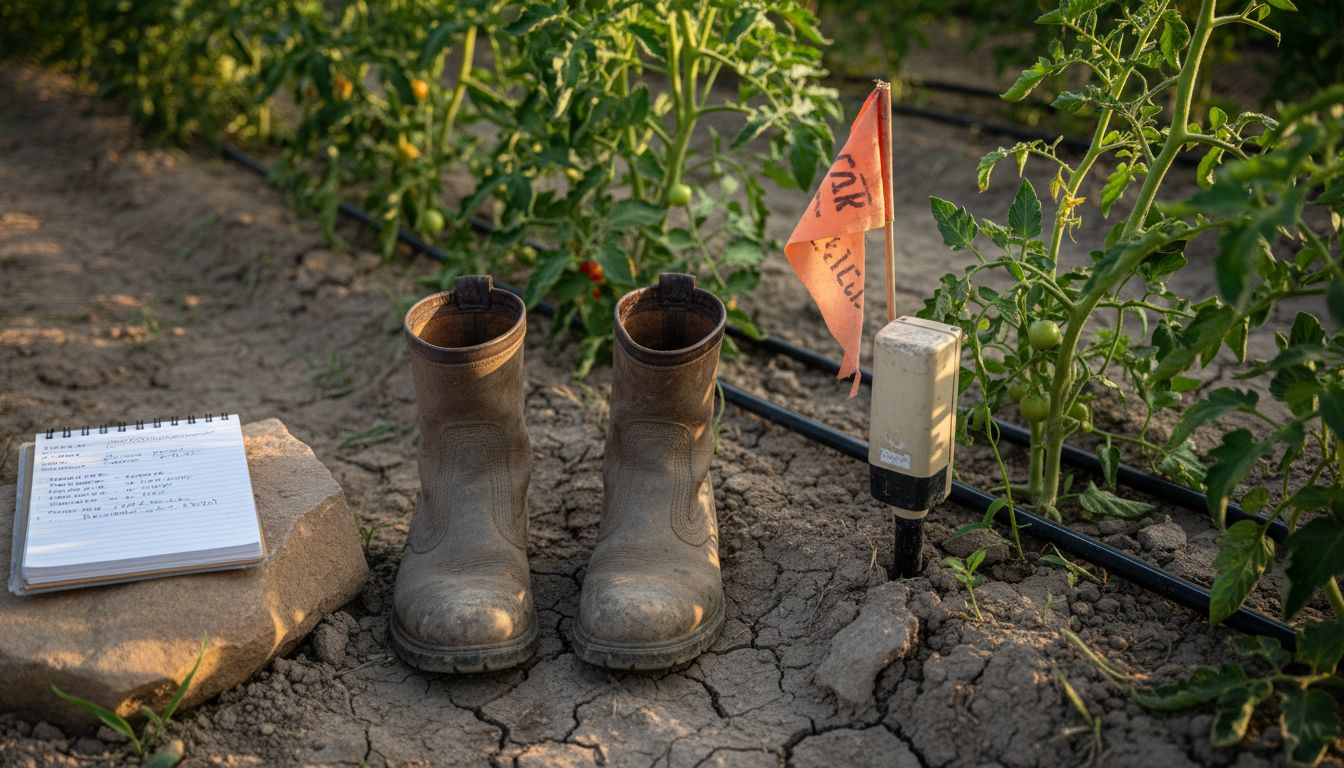
Sensor-based irrigation systems transform water management in Mediterranean conditions. Soil moisture probes placed throughout your field trigger irrigation only when specific zones drop below optimal levels. This prevents overwatering that leaches nutrients and promotes disease while ensuring no area suffers drought stress.
Predictive analytics helps you stay ahead of threats before they damage crops. Weather data combined with disease models alerts you to infection risks days in advance. Early intervention with targeted treatments stops outbreaks while they’re manageable, protecting yield potential that reactive approaches would lose.
Reducing chemical inputs delivers environmental and economic benefits simultaneously. Precision targeting cuts pesticide use by applying only where pest pressure exists. Lower chemical costs directly improve your bottom line while reducing environmental impact and regulatory concerns.
Key efficiency improvements from precision methods:
- Fertilizer savings of 15 to 30% through zone-specific application rates
- Water reduction of 20 to 40% using sensor-triggered irrigation scheduling
- Pesticide cuts of 10 to 25% by treating only affected field areas
- Fuel efficiency gains from optimized field passes and equipment operation
- Labor time reduction through automated monitoring and application systems
Pro Tip: Start with variable rate technology on your most expensive input, typically nitrogen fertilizer, to maximize early financial returns while learning the system.
Equipment upgrades supporting precision methods pay for themselves faster when focused on high-cost inputs first. Master one precision technique before expanding to others. Improving farm productivity requires understanding how each technology affects your specific crops and conditions.
Precision Agriculture Technologies Relevant to Greek Farms
GPS retrofit kits and soil moisture sensors are affordable precision tools compatible with typical Greek machinery, eliminating the need for complete equipment replacement. Retrofit kits add GPS guidance to existing tractors for €2,000 to €5,000, delivering parallel tracking accuracy that prevents overlaps and gaps during field operations.
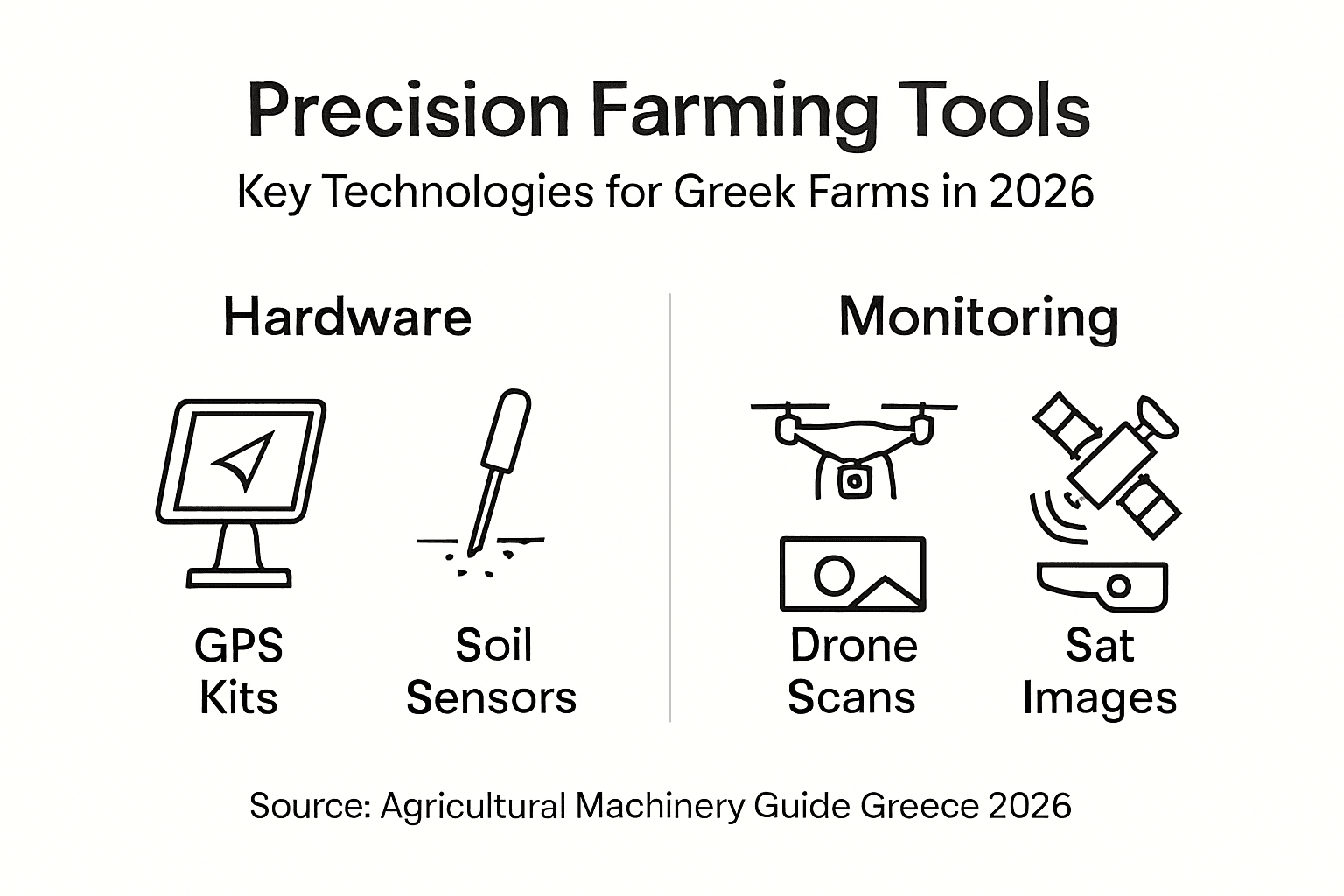
Soil moisture sensors adapted for Mediterranean climates handle the transition between wet winters and dry summers effectively. Wireless networks connect multiple probes across your field, transmitting data to your phone or computer. Installation costs €500 to €1,500 depending on field size and probe density.
Satellite imagery versus drone monitoring presents different trade-offs for Greek operations. Satellites provide frequent coverage at €200 to €500 annually but deliver lower resolution that may miss small problem areas. Drones offer centimeter-level detail revealing individual plant stress but require €3,000 to €8,000 investment plus time for flight operations.
Local suppliers provide critical support for integrating precision technology with Greek farming equipment. Machinery upgrade tips emphasize compatibility verification before purchasing components. Technical assistance ensures proper installation and calibration for Mediterranean growing conditions.
Equipment choices by farm operation:
- Small farms under 50 hectares: GPS guidance kits and basic soil sensors for core efficiency
- Medium farms 50 to 200 hectares: Add variable rate controllers and satellite monitoring subscriptions
- Large operations over 200 hectares: Integrate drones, comprehensive sensor networks, and advanced analytics platforms
- Specialty crops: Prioritize crop-specific sensors and imaging for disease and ripeness detection
- Mixed operations: Focus on technologies serving multiple crop types to maximize utilization
The Greek agricultural machinery guide details which precision components work with common tractor and implement brands used throughout the region. Compatibility matters more than cutting-edge features when choosing technology for your operation.
Common Misconceptions and Adoption Barriers
Many Greek farmers believe precision agriculture requires massive scale, but ROI for precision agriculture investment is typically 3 to 5 years, not instant, and works effectively on farms as small as 20 hectares. Scalable technology options let you start with affordable components and expand as benefits prove themselves.
The myth that you need brand new expensive machinery stops many farmers from exploring precision methods. Retrofit kits and aftermarket sensors transform existing equipment into precision-capable tools for a fraction of new machinery costs. Your current tractor likely supports GPS guidance and variable rate control with proper upgrades.
Expecting instant returns leads to disappointment and premature abandonment. Precision agriculture requires a learning curve as you collect field data, interpret patterns, and refine application strategies. First-year benefits may be modest while you’re still optimizing, with full efficiency gains appearing in years two and three.
Believing precision eliminates all farming risks creates unrealistic expectations. Technology improves decision-making and resource efficiency but cannot control weather, market prices, or every biological variable. View precision agriculture as risk reduction and efficiency improvement, not risk elimination.
Knowledge gaps present the biggest practical barrier for Greek farmers. Understanding sensor data, interpreting imagery, and translating information into field actions requires training most agricultural education programs haven’t provided. Agricultural adoption challenges include finding local expertise and support resources.
Common failure points and solutions:
- Poor data quality from miscalibrated sensors: Verify calibration annually and after equipment changes
- Information overload from excessive monitoring: Start with key metrics for your most valuable crops
- Integration problems with incompatible components: Buy complete systems or verified compatible parts
- Lack of technical support: Partner with suppliers offering Greek-language assistance and local service
- Unrealistic timeline expectations: Plan for gradual implementation over multiple growing seasons
Pro Tip: Allocate time and budget for training on data interpretation and equipment operation before purchasing precision technology to ensure you can use it effectively from day one.
Comparing Precision Agriculture Tools and Methods
Satellite imagery offers wider coverage at lower cost but lower resolution compared to drones, which provide detailed, frequent surveys. Your choice depends on field size, crop value, and monitoring needs.
| Feature | Satellite Imagery | Drone Monitoring |
|---|---|---|
| Resolution | 3 to 10 meters per pixel | 1 to 5 centimeters per pixel |
| Coverage Speed | Entire farm in seconds | 10 to 20 hectares per hour |
| Annual Cost | €200 to €500 subscription | €3,000 to €8,000 equipment plus time |
| Update Frequency | Every 3 to 7 days weather permitting | On-demand anytime |
| Operational Complexity | Simple web interface access | Requires flight planning and piloting skills |
| Detail Level | Field-scale problem areas | Individual plant assessment |
Common sensor types serve different monitoring purposes on farms:
- Soil moisture probes track water availability at root zones for irrigation decisions
- Nutrient sensors measure nitrogen, phosphorus, and potassium levels for fertilization planning
- Weather stations capture localized temperature, humidity, and rainfall data for disease modeling
- Crop health sensors detect chlorophyll and stress indicators before visible symptoms appear
- Yield monitors on harvesters map productivity patterns for future season planning
Compatibility with Greek machinery requires checking mounting options, power requirements, and data connectivity. Most modern tractors support standard sensor connections, but older equipment may need adapter harnesses or wireless alternatives.
Choosing tools based on your operation:
- High-value crops like vegetables justify drone investment for detailed monitoring
- Grain operations benefit more from satellite coverage and yield mapping
- Limited budgets should prioritize soil sensors and GPS guidance first
- Large fields make satellite monitoring cost-effective per hectare
- Smaller intensive operations get better value from drone detail
Drone vs satellite monitoring decisions should align with your crop value and monitoring frequency needs. Precision tool selection tips emphasize starting with one or two technologies that address your biggest efficiency gaps.
Implementing Precision Agriculture on Greek Farms
Assessing machinery compatibility and partnering with local suppliers are key first steps for successful precision agriculture implementation. Follow this proven adoption sequence:
- Assess your existing machinery compatibility by checking GPS mounting options, hydraulic connections for controllers, and electrical systems for sensors.
- Select precision tools suitable for your farm by matching technology to your primary crops, field sizes, and most expensive input costs.
- Partner with local suppliers for parts and technical support who understand Greek farming conditions and provide Greek-language assistance.
- Install equipment and begin data acquisition during the off-season to allow system testing before critical planting or application periods.
- Use analytics platforms to inform input application by reviewing collected data and creating prescription maps for variable rate equipment.
- Apply variable rate fertilization and precision irrigation according to prescription maps, starting with conservative adjustments until you verify results.
Successful implementation requires patience and systematic learning. Your first season focuses on data collection and understanding field variability patterns. Second season applies that knowledge with modest variable rate adjustments. Third season optimizes strategies based on previous results, typically delivering full ROI potential.
Schedule regular training sessions with equipment suppliers or agronomists specializing in precision methods. Technology evolves rapidly, and continuing education helps you maximize your investment’s value. Review data analytics quarterly to identify trends and refine your approach.
Maintain precision equipment according to manufacturer specifications to ensure accuracy. Sensor drift, GPS signal degradation, and controller calibration issues can undermine results if ignored. Budget for annual calibration and inspection services.
Pro Tip: Document your precision agriculture results season by season with yield maps, input cost records, and efficiency metrics to quantify ROI and identify further optimization opportunities.
Precision agriculture implementation steps may seem complex initially, but breaking adoption into manageable phases makes the transition achievable for any Greek farm committed to improving efficiency and profitability.
Explore Precision Farming Solutions at Pexlivanidis
Pexlivanidis provides the agricultural machinery parts and technical guidance Greek farmers need to adopt precision agriculture successfully. Our extensive inventory includes GPS retrofit kits, sensor mounting hardware, and variable rate controller components compatible with equipment throughout Greece. We understand local farming conditions and machinery requirements, ensuring you get parts that work with your existing operation.
Our team helps you navigate machinery upgrade tips specific to precision agriculture implementation. Whether you’re retrofitting a single tractor or upgrading an entire fleet, we provide expert advice on component selection, installation support, and ongoing technical assistance. Our parts sourcing guide simplifies finding exactly what your precision farming upgrade requires.
FAQ
Is precision agriculture suitable for small farms in Greece?
Yes, modern precision agriculture technologies are scalable and affordable for small and medium Greek farms, especially with retrofit options. Farms as small as 20 hectares benefit from GPS guidance and soil sensors that reduce input waste. Implementing key tools effectively improves yields and reduces costs on smaller plots, with ROI timelines similar to larger operations.
How long does it take to see returns on precision agriculture investments?
ROI commonly occurs within 3 to 5 years due to initial setup and optimization phases requiring data collection and learning. Early adopters often see partial returns in year two as they refine variable rate strategies. Gradual adoption and data-based decision making help maximize returns over time, with full efficiency gains materializing once you’ve optimized field prescriptions.
Can existing farm machinery be upgraded for precision agriculture?
Yes, many existing machines can be retrofitted with GPS and sensor kits compatible with Greek farming equipment. Most tractors manufactured after 2005 support precision upgrades through standardized connections and mounting points. Local suppliers like Pexlivanidis provide machinery upgrade tips and compatible parts, reducing the need for costly new purchases while delivering precision capabilities.
What are the key challenges when starting precision agriculture?
Common challenges include knowledge gaps in data interpretation, machinery compatibility verification, upfront investment planning, and learning to act on sensor information effectively. Technical support availability and finding Greek-language training resources also present hurdles. Planning realistic timelines, investing in training, and partnering with experienced suppliers help overcome initial barriers, ensuring successful adoption and optimization.