

Preventive maintenance can extend your tractor’s working life by nearly 30%, a statistic that directly impacts your bottom line in Northern Greece’s demanding agricultural environment. When frequent breakdowns threaten farm productivity and drain repair budgets, understanding effective maintenance becomes essential. This guide explains practical strategies combining scheduled upkeep, quality spare parts, and proper usage to maximize machinery lifespan while reducing costs.
Table of Contents
- Understanding Tractor Lifespan And Common Failure Causes
- The Impact Of Preventive Maintenance On Machinery Durability
- Role Of Quality Spare Parts And Correct Usage In Extending Lifespan
- Common Misconceptions That Harm Machinery Lifespan
- Practical Strategies And Local Case Studies From Northern Greece
- Comparing Maintenance Approaches: Manufacturer Guidelines Vs. Ad-Hoc Repairs
- Maximizing Tractor Lifespan To Reduce Costs And Boost Productivity
- Explore Expert Agricultural Machinery Solutions At Pexlivanidis
Key Takeaways
| Point | Details |
|---|---|
| Scheduled preventive maintenance | Reduces unexpected breakdowns by 20% through consistent care routines. |
| OEM spare parts advantage | Cuts premature component failures by 25% compared to generic alternatives. |
| Oil change misconceptions | Excessive changes increase maintenance costs by 10% and damage seals. |
| Manufacturer guidelines | Following manuals proves more cost effective than reactive ad-hoc repairs. |
| Local adaptation strategies | Northern Greece conditions require tailored maintenance for optimal longevity. |
Understanding Tractor Lifespan and Common Failure Causes
Your tractor’s working life depends heavily on usage intensity and maintenance consistency. Average lifespans vary dramatically based on whether you operate machinery seasonally or year round, with proper care often doubling service years.
Critical failure points concentrate in specific systems:
- Engine components face stress from heat, dust, and continuous operation
- Transmission systems wear from load changes and improper gear selection
- Hydraulic components degrade from contaminated fluid and seal failures
- Tires deteriorate from terrain abuse and incorrect pressure maintenance
Environmental stressors in Northern Greece accelerate wear on tractor components significantly. Dust infiltration damages air filters and engine internals, while rugged terrain strains suspension and drivetrain parts. Understanding these common tractor mechanical issues helps you prioritize maintenance efforts where they matter most.
Recognizing failure patterns specific to your region allows proactive intervention. When you identify vulnerable systems early, you prevent minor issues from cascading into expensive overhauls that sideline equipment during critical farming periods.
The Impact of Preventive Maintenance on Machinery Durability
Scheduled maintenance transforms tractor reliability from unpredictable to manageable. Tractors maintained strictly by manufacturers’ manuals show 20% fewer mechanical issues over 5 years, demonstrating clear long term benefits.
Effective maintenance schedules include:
- Daily checks covering fluid levels, tire pressure, and visual inspections for leaks or damage
- Weekly tasks including filter cleaning, lubrication points, and belt tension verification
- Monthly reviews of battery condition, coolant concentration, and hydraulic system pressure
- Seasonal preparation addressing storage needs, fuel stabilization, and comprehensive system testing
Consistent maintenance increases uptime dramatically while reducing unexpected repair costs that disrupt farm operations. Following proven maintenance steps ensures your machinery stays field ready when you need it most.
Manufacturer guideline adherence proves more reliable than reactive repairs because engineers design service intervals around component wear patterns. When you wait for problems to appear, damage often extends beyond the obvious failure point, multiplying repair complexity and expense.
Pro Tip: Create a local maintenance calendar synced with your farming cycles, marking service tasks alongside planting and harvest dates. This integration ensures maintenance never conflicts with peak operational demands while keeping your tractor in optimal condition.
Implementing tractor maintenance tips tailored to Northern Greece’s conditions requires adjusting standard intervals for dust exposure and terrain challenges. Track completed tasks in a simple log to identify patterns and predict future needs accurately.
Role of Quality Spare Parts and Correct Usage in Extending Lifespan
Part quality directly determines how long repairs last and how often breakdowns occur. Using OEM parts reduces premature tractor failures by 25% compared to generic parts, a substantial difference in reliability.
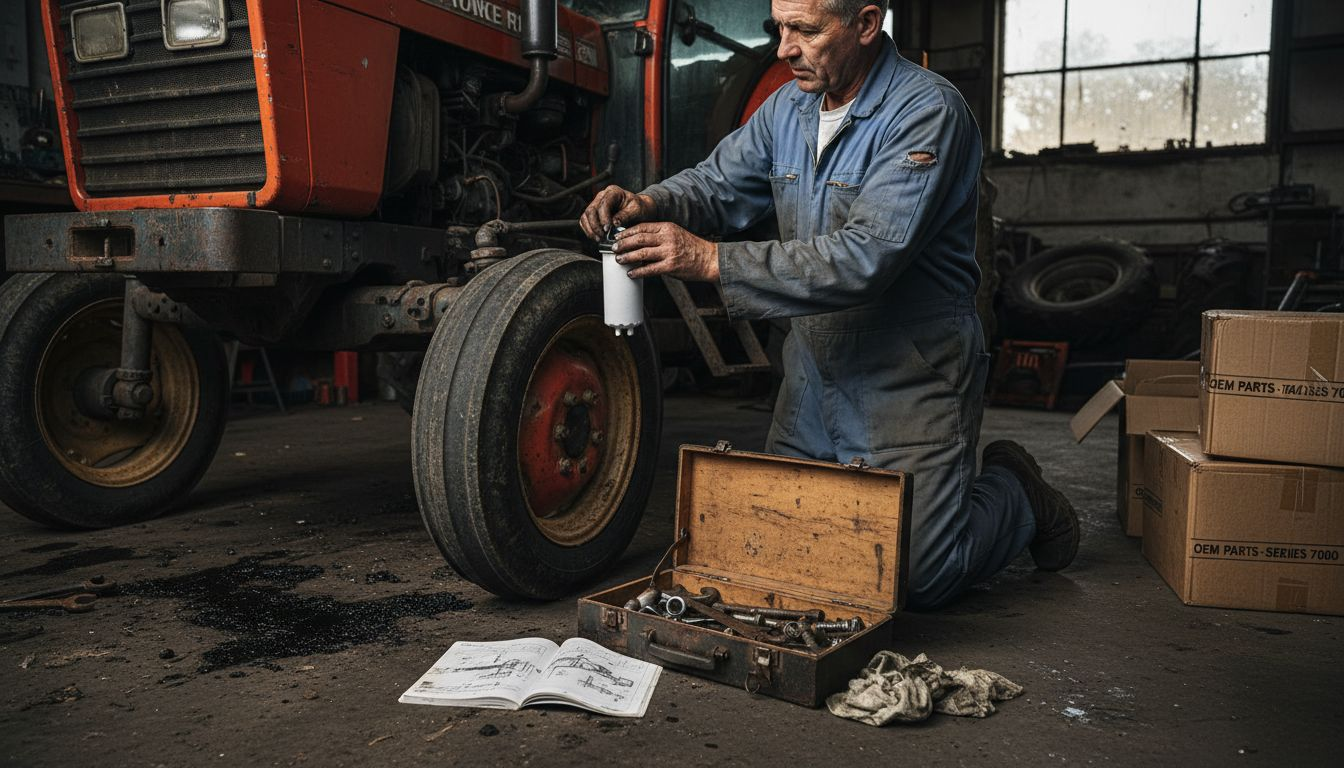
OEM components ensure compatibility and durability because manufacturers design them for specific models and operating conditions. Aftermarket or substandard alternatives may fit physically but often use inferior materials that fail under normal stress, creating repeat repair cycles that drain budgets.
Understanding the importance of quality spare parts changes how you approach maintenance investments:
- Certified parts maintain warranty coverage and factory performance standards
- Genuine components integrate seamlessly with existing systems without adaptation
- Quality materials withstand Northern Greece’s harsh environmental conditions longer
- Reliable suppliers provide accurate fitment information reducing installation errors
Proper tractor usage complements quality parts by preventing avoidable wear. Load management matters tremendously because exceeding rated capacity stresses every system simultaneously, accelerating deterioration across multiple components. Avoiding excessive strain through appropriate implement matching and reasonable speed limits preserves drivetrain integrity.
Optimal operational conditions prevent accelerated wear patterns. Maintaining proper tire pressure distributes weight evenly, reducing soil compaction while protecting tire sidewalls from premature cracking. The benefits of quality tractor parts multiply when combined with operator training emphasizing smooth operation and load awareness.
Sourcing reliable spare parts from trusted distributors ensures authenticity and availability. Establishing relationships with suppliers who stock OEM parts reduces downtime when repairs become necessary, keeping machinery productive during crucial farming windows.
Common Misconceptions That Harm Machinery Lifespan
Several widespread beliefs about tractor maintenance actually increase costs and reduce equipment life. Excessive oil changes can cause 10% higher maintenance costs and sealing issues, contradicting the assumption that more frequent changes always improve performance.
More oil changes are not inherently better because modern lubricants maintain protective properties far longer than older formulations. Changing oil too frequently wastes resources while potentially introducing contaminants during the service process itself. Excess changes can damage seals by exposing them to unnecessary thermal cycling and chemical stress.
Critical misconceptions include:
- Believing any oil works equally well regardless of viscosity specifications
- Assuming skipping scheduled maintenance saves money until problems appear
- Thinking aftermarket parts perform identically to OEM components
- Ignoring environmental factors when setting service intervals
Using the recommended engine oil viscosity lowers engine wear rates by 20%, demonstrating how seemingly minor specification details significantly impact longevity. Wrong viscosity oil fails to protect properly in extreme temperatures, allowing metal to metal contact that grinds away bearing surfaces.
“Farmers who skip scheduled maintenance face 40% more unexpected breakdowns, often during critical harvest periods when downtime costs multiply exponentially.”
Environmental conditions require tailored maintenance frequencies rather than blindly following standard intervals. Northern Greece’s dusty conditions demand more frequent air filter changes, while rugged terrain necessitates closer inspection of suspension components and tire condition.
Avoiding genuine spare parts myths helps you make informed decisions based on actual performance data rather than assumptions. Understanding real costs versus perceived savings guides better investment choices that protect long term machinery value.
Optimizing oil change intervals and using correct engine oil based on manufacturer specifications and oil analysis results provides the best protection without wasteful excess.
Practical Strategies and Local Case Studies From Northern Greece
Adapting maintenance schedules to Northern Greece’s unique environment significantly improves outcomes. Dusty conditions and rugged terrain demand modifications to standard service intervals, particularly for filtration and undercarriage components.
Region specific strategies that work:
- Increase air filter inspection frequency to weekly during dry summer months when dust concentration peaks
- Source OEM or certified parts from trusted local distributors to minimize shipping delays and ensure authenticity
- Schedule major service tasks during seasonal breaks rather than peak operational periods
- Maintain detailed records tracking local weather impacts on component wear patterns
A Thessaloniki area farm reduced repair expenses by 30% over three years by implementing scheduled maintenance combined with exclusive use of quality parts from local spare parts sourcing channels. Their systematic approach eliminated emergency breakdowns during harvest, protecting revenue while building predictable maintenance budgets.
| Strategy | Implementation | Result |
|---|---|---|
| Scheduled maintenance | Weekly inspections, monthly services | 30% cost reduction |
| Quality parts | OEM only policy | Zero repeat failures |
| Operator training | Proper usage techniques | Extended component life |
| Record keeping | Digital maintenance log | Predictive planning |
Local farms reduced repair costs by applying adapted maintenance and sourcing practices suited to regional conditions. Success requires consistency rather than perfection, with small farms benefiting from simplified schedules while larger operations implement comprehensive programs.
Pro Tip: Track maintenance records using simple logs tailored to local farming calendars, noting weather conditions and usage intensity alongside completed tasks. Patterns emerge over seasons, revealing optimal service timing and identifying components requiring closer monitoring in your specific environment.
Following maintenance strategies for Northern Greece means acknowledging regional realities affect machinery differently than factory specifications assume. Adjusting proactively prevents problems rather than reacting to failures after they occur.
Comparing Maintenance Approaches: Manufacturer Guidelines vs. Ad-Hoc Repairs
Two distinct philosophies dominate tractor maintenance decisions. Manufacturer guided maintenance reduces repair frequency and overall costs through systematic prevention, while ad hoc repairs address problems only after they manifest.
Tractors adhering strictly to manufacturer manuals experience 20% fewer mechanical problems than those relying on ad hoc repairs over five year periods. This difference compounds annually, creating substantial cost gaps between approaches.
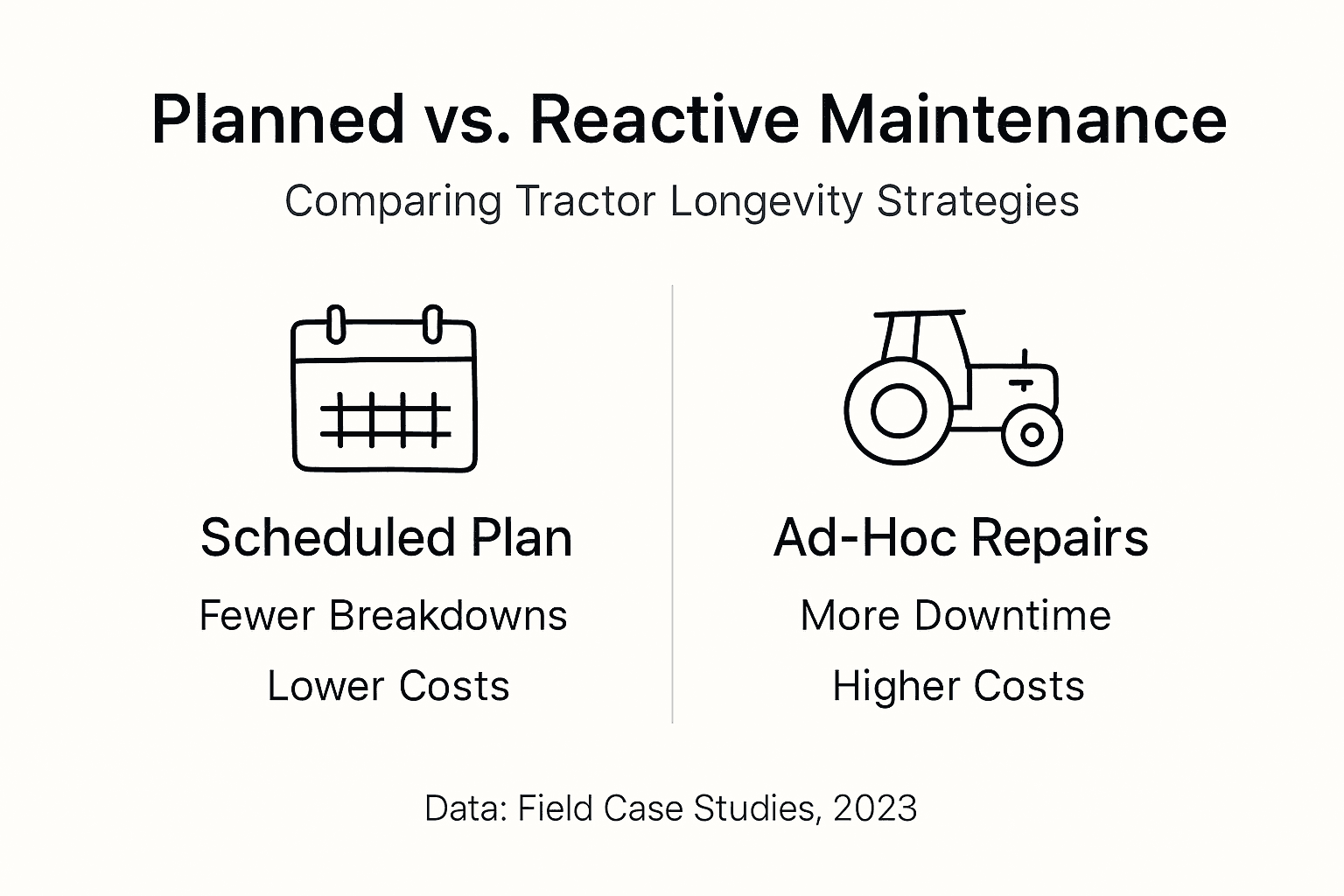
| Approach | Average Annual Issues | Estimated Annual Cost | Uptime Percentage |
|---|---|---|---|
| Manufacturer Guidelines | 2 to 3 issues | €800 to €1,200 | 95% to 98% |
| Ad Hoc Repairs | 5 to 7 issues | €2,000 to €3,500 | 80% to 85% |
Ad hoc repairs create unpredictable downtime because failures happen without warning, often during critical operational periods. Emergency repairs cost more due to rushed parts sourcing, premium labor rates, and lost productivity when machinery sits idle during peak seasons.
Key differences include:
- Planned maintenance allows budget forecasting while reactive repairs surprise financially
- Scheduled service happens during convenient downtime versus emergency breakdowns during harvest
- Preventive tasks catch small issues before cascading damage multiplies repair scope
- Systematic approaches build knowledge of individual machine quirks and wear patterns
Small and large farms both benefit from planned schedules though implementation varies by scale. Small operations simplify manufacturer recommendations into manageable routines, while large farms implement comprehensive tracking systems monitoring multiple machines simultaneously.
Understanding common repair methods helps evaluate which approach fits your operation. Comparing manufacturer guidelines vs ad hoc approaches reveals systematic maintenance consistently outperforms reactive strategies across reliability metrics and total ownership costs.
Maximizing Tractor Lifespan to Reduce Costs and Boost Productivity
Extending tractor lifespan requires integrating multiple strategies rather than relying on single solutions. Success comes from combining maintenance discipline, quality component selection, and proper operational practices into daily farm routines.
Core lessons for Northern Greece farmers:
- Regular preventive maintenance schedules tailored to local conditions extend lifespan significantly beyond factory averages
- Investing in OEM or certified parts reduces premature failures and cumulative repair costs over machinery lifetime
- Avoiding common misconceptions optimizes maintenance efficiency while preventing costly mistakes
- Combining all strategies ensures higher uptime percentages and lower operational costs per working hour
- Proactive care protects farm productivity and financial health more effectively than reactive approaches
Your tractor represents substantial capital investment deserving protection through systematic care. When maintenance becomes routine rather than afterthought, machinery reliability transforms from liability into competitive advantage.
Implementing these strategies starts simply with one improved practice, building momentum as results demonstrate value. Whether scheduling first comprehensive inspection or switching to quality parts exclusively, each step compounds benefits over seasons and years.
Explore Expert Agricultural Machinery Solutions at Pexlivanidis
Access comprehensive guides on agricultural machinery maintenance designed specifically for Northern Greece farming conditions. Find high quality parts and tools through detailed agricultural machinery parts explained resources that clarify component functions and selection criteria. Leverage expert tips and agricultural parts sourcing guide solutions to extend your tractor’s productive life while reducing unexpected repair costs. These resources support informed decisions protecting your machinery investment through proven strategies and reliable supplier connections.
FAQ
How often should I perform preventive maintenance on my tractor?
Follow manufacturer guidelines adjusted for Northern Greece’s dusty conditions, typically requiring daily fluid checks, weekly filter inspections, and seasonal comprehensive services. Increase inspection frequency during intensive use periods or extremely dusty summer months when contamination risks peak.
What are the risks of using non-OEM spare parts for tractors?
Non OEM parts increase premature failure risk by approximately 30%, leading to repeated repairs and extended downtime. Generic components often use inferior materials that cannot withstand normal operating stresses, creating expensive replacement cycles that multiply costs over time.
How can I optimize tractor usage to extend its lifespan?
Manage loads carefully to prevent strain on drivetrain components, maintain proper tire pressure for even weight distribution, and avoid unnecessarily harsh terrain when alternatives exist. Train all operators on optimal usage techniques aligned with maintenance schedules to ensure consistent care across your team.
What maintenance misconceptions could increase my tractor’s repair costs?
Believing more frequent oil changes always improve performance actually wastes money and risks seal damage, while ignoring manufacturer recommended service intervals until problems appear multiplies repair complexity. Using incorrect oil viscosity and assuming all parts perform equally represent costly assumptions contradicted by reliability data.
Where can farmers in Northern Greece find reliable spare parts?
Use trusted local spare parts distributors specializing in OEM and certified components to ensure authenticity and quick availability during repairs. Check supplier credentials, read customer reviews, and establish relationships with distributors maintaining substantial inventory for common tractor models in your region.