

Farmers across Greece watch costly breakdowns spike after storage periods, often discovering too late that their equipment has suffered preventable damage. Corrosion alone can reduce machinery lifespan by up to 40% if not properly managed during storage. Understanding how Greece’s unique climate affects your equipment and implementing targeted storage practices protects your investment and keeps your farm running efficiently.
Table of Contents
- Environmental Factors Affecting Machinery Storage In Greece
- Step-By-Step Preparation Of Machinery For Storage
- Comparison Of Storage Options: Outdoor, Shed, And Indoor
- Maintenance During Storage To Preserve Machinery Functionality
- Common Misconceptions In Machinery Storage And How To Avoid Them
- Conclusion: Applying Best Practices For Longevity And Efficiency
- Explore Expert Agricultural Machinery Maintenance Solutions
Key takeaways
| Point | Details |
|---|---|
| Storage impact | Proper storage techniques reduce corrosion and mechanical wear by up to 40%. |
| Climate challenges | Greece’s Mediterranean environment creates moisture fluctuations and UV exposure that accelerate equipment degradation. |
| Preparation essentials | Cleaning, lubricating, and battery maintenance before storage prevent most common storage-related failures. |
| Storage choices | Options range from low-cost outdoor covers to premium indoor facilities, each with distinct protection levels. |
| Ongoing care | Regular inspections every 4 to 6 weeks during storage prevent mechanical issues and preserve equipment readiness. |
Environmental factors affecting machinery storage in Greece
Greece’s Mediterranean climate presents specific challenges for machinery storage that many farmers underestimate. Hot, dry summers transition abruptly into humid winters, creating rapid moisture shifts that attack metal surfaces and accelerate corrosion. Morning dew regularly coats exposed equipment, leaving moisture on unprotected parts that initiates rust within hours.
Direct sunlight exposure throughout extended summer months delivers intense UV radiation that degrades paint finishes and breaks down plastic components. This exposure weakens protective coatings that shield metal from moisture infiltration. Accumulated dust and agricultural debris settle into moving parts, mixing with residual moisture to form abrasive compounds that promote wear and seizing.
Moisture and temperature fluctuations accelerate corrosion and mechanical degradation, making environmental control a critical factor in preserving machinery function and value.
Coastal regions face additional salt air exposure that intensifies corrosion rates on ferrous metals. Inland areas experience greater temperature swings between day and night, causing condensation cycles that repeatedly wet and dry surfaces. Understanding these environmental stressors helps you design storage solutions that counteract specific threats your equipment faces in your location.
Step-by-step preparation of machinery for storage
Preparing machinery properly before storage prevents most damage and extends equipment life significantly. Follow these essential steps to protect your investment during off-season periods.
- Clean all surfaces thoroughly using pressure washers to remove dirt, crop residue, and chemical deposits that trap moisture against metal.
- Dry equipment completely, paying special attention to crevices where water accumulates and hidden areas prone to corrosion.
- Lubricate all moving parts including bearings, joints, and linkages with appropriate greases to prevent moisture infiltration and seizing.
- Replace engine oil and hydraulic fluids to remove acidic contaminants that cause internal corrosion during storage.
- Drain fuel systems completely or add quality stabilizers to prevent fuel degradation and carburetor damage.
- Disconnect batteries and connect to trickle chargers to maintain charge levels and prevent sulfation damage.
- Inflate tires to recommended pressures to prevent flat spots and sidewall cracking during extended stationary periods.
- Apply protective coatings to exposed metal surfaces and touch up paint chips to seal vulnerable areas.
Proper cleaning removes corrosive materials while thorough drying eliminates moisture that initiates rust. Fresh fluids prevent internal component damage from acidic breakdown products. Fuel system care protects carburetors and injectors from varnish buildup that causes starting problems.
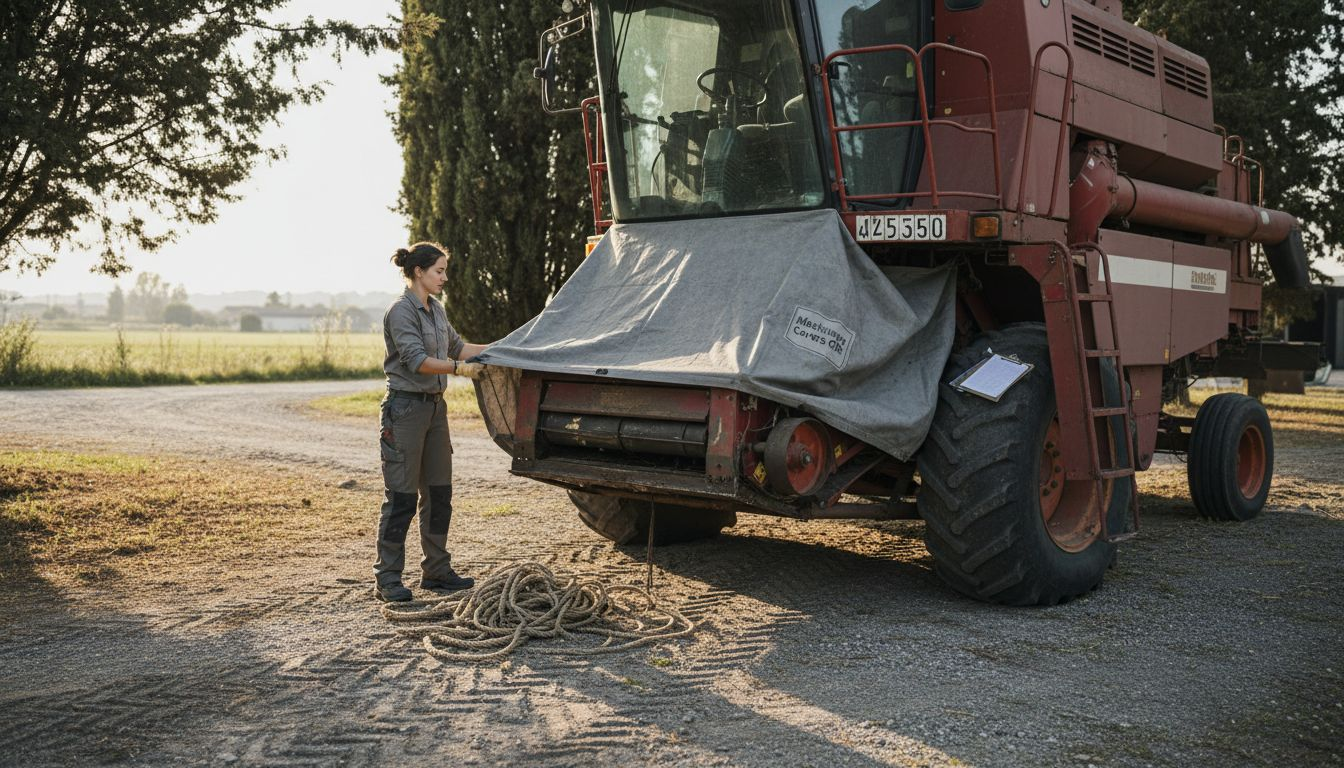
Pro Tip: Use breathable, UV-resistant covers specifically designed for agricultural equipment rather than standard plastic tarps that trap moisture and accelerate corrosion beneath the surface.
Battery maintenance proves particularly important since disconnecting and properly maintaining batteries during storage can extend their life by over a third. Store in a ventilated area that allows air circulation while protecting from direct weather exposure. These preparation steps integrate seamlessly with comprehensive agricultural machinery maintenance programs and align with guidance in our essential agricultural machinery care guide.
Comparison of storage options: outdoor, shed, and indoor
Choosing the right storage environment balances protection levels against investment costs and available resources. Each option offers distinct advantages and limitations for Greek farming conditions.
| Storage Type | Protection Level | Cost | Best For | Key Considerations |
|---|---|---|---|---|
| Outdoor with covers | Basic | Low | Budget-conscious farms, low-value equipment | Requires quality breathable covers, regular inspections, limited weather protection |
| Shed/Carport | Moderate | Medium | Mid-sized operations, versatile solution | Provides shade and rain protection, allows ventilation, moderate investment |
| Indoor facility | High | High | Valuable equipment, optimal preservation | Complete weather protection, controlled environment, significant construction cost |
Outdoor storage with proper covers represents the most accessible option for many farms. This approach requires investing in quality breathable fabric covers that shield from UV radiation and precipitation while allowing moisture vapor to escape. Cheap plastic tarps create sealed environments that trap condensation and dramatically increase corrosion rates.
Shed storage offers excellent value by providing overhead protection from sun and rain while maintaining natural ventilation. Open-sided structures work particularly well in Greece’s climate, protecting from direct weather exposure without creating moisture traps. Sheds prove ideal for mid-sized operations seeking better protection without major facility investments.
Indoor storage in closed buildings delivers maximum protection from all environmental factors. Climate-controlled facilities prevent moisture fluctuations and maintain stable temperatures that eliminate condensation cycles. However, construction and operational costs make this option practical primarily for high-value equipment or large commercial operations.
- Position equipment to maximize airflow regardless of storage type
- Elevate machinery slightly using blocks to prevent ground moisture absorption
- Consider prevailing wind directions when orienting covers or structures
- Ensure adequate drainage around storage areas to prevent standing water
Your choice depends on equipment value, available budget, and local climate severity. Many successful farms use tiered approaches, providing indoor storage for most valuable items while using outdoor or shed storage for more robust equipment.
Maintenance during storage to preserve machinery functionality
Storage doesn’t mean neglect. Regular maintenance during idle periods prevents deterioration and ensures equipment remains ready for immediate use when needed.
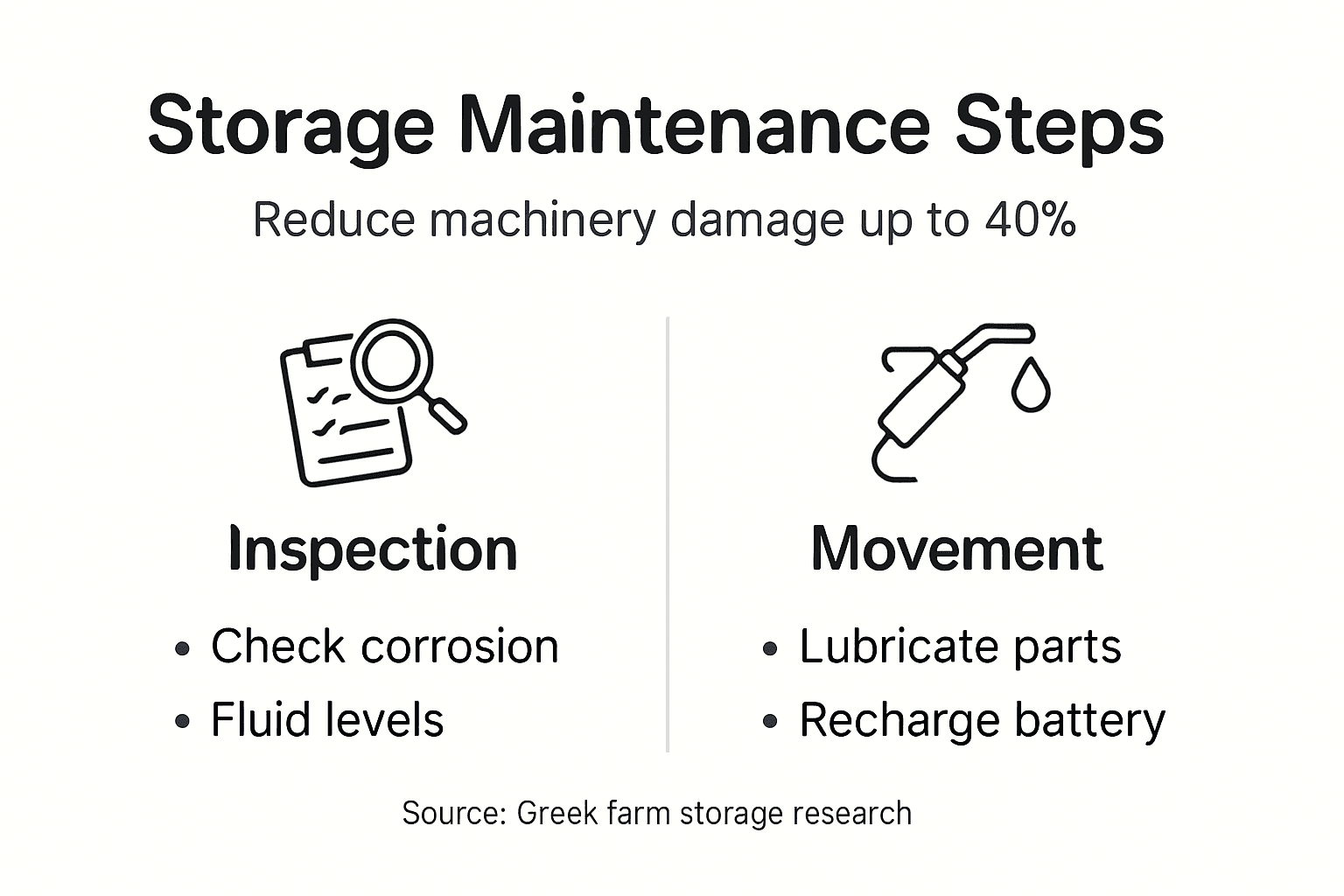
Perform comprehensive inspections every 4 to 6 weeks throughout storage periods. Check for corrosion development on metal surfaces, particularly in areas where protective coatings may have been compromised. Examine fluid systems for leaks that could drain reservoirs or contaminate surrounding components. Look for evidence of pest intrusion or nest building in enclosed spaces and engine compartments.
Battery maintenance requires ongoing attention even during storage. Connect batteries to quality trickle chargers that maintain optimal charge levels without overcharging. Batteries left disconnected without charging gradually self-discharge and develop sulfation damage that permanently reduces capacity and lifespan.
Tire care proves critical since incorrect tire storage and pressure management can cause flat spots and cracking, leading to a 25% reduction in tire lifespan during prolonged storage periods. Check and adjust tire pressures monthly to manufacturer specifications. Rotate equipment position slightly if possible to prevent flat spots from developing at contact points.
- Inspect hydraulic hoses for cracking, bulging, or deterioration from UV exposure
- Check protective covers for tears or displacement that expose equipment to weather
- Verify that lubricants remain evenly distributed and haven’t separated or dried
- Test battery voltage levels and charging system function periodically
- Document inspection findings to track deterioration patterns over time
Pro Tip: Set phone reminders for storage inspection dates to maintain consistent oversight throughout off-season periods, preventing the “out of sight, out of mind” problem that leads to neglect.
Regular movement benefits stored equipment by redistributing lubricants and preventing seals from drying and cracking. Start engines briefly every few weeks to circulate fluids through systems and maintain seal flexibility. Move equipment short distances to prevent tire flat spots and exercise hydraulic systems through their full range of motion.
These maintenance practices integrate with broader equipment care strategies detailed in our comprehensive preventative maintenance guide. Understanding proper tire storage practices extends the life of these expensive components significantly.
Common misconceptions in machinery storage and how to avoid them
Several widespread myths lead farmers to make storage decisions that actually increase equipment damage. Understanding these misconceptions protects your machinery investment.
Myth: Any tarp provides adequate machinery protection
Reality shows that non-breathable plastic tarps trap moisture beneath their surfaces, creating humid microclimates that accelerate corrosion. Studies indicate this approach can increase corrosion rates by up to 15% compared to proper breathable covers. Invest in agricultural-grade breathable fabric covers designed specifically for equipment storage.
Myth: Battery disconnection isn’t necessary for short-term storage
Many farmers skip battery maintenance for storage periods under three months, believing short duration prevents damage. Batteries continue self-discharging even when disconnected, and modern equipment electronics draw parasitic current that drains batteries within weeks. Always disconnect batteries and maintain them on trickle chargers regardless of expected storage duration.
Myth: Machinery doesn’t require maintenance while in storage
The “set it and forget it” approach leads to seized components, degraded fluids, and corroded surfaces. Equipment deteriorates faster when idle due to lubricant settling, seal drying, and moisture infiltration into unprotected areas. Regular inspections and preventive maintenance during storage prevent these problems.
Myth: Cleaning before storage is optional if equipment looks relatively clean
Invisible chemical residues, salt deposits, and fine dust particles initiate corrosion even when machinery appears clean. Agricultural chemicals prove particularly corrosive when left on surfaces during humid storage conditions. Thorough cleaning and drying represent non-negotiable storage preparation steps.
- Replace the misconception that indoor storage alone suffices without preparation; even controlled environments require proper cleaning and fluid maintenance
- Understand that fuel stabilizers work only when added to fresh fuel, not degraded fuel already containing water or contaminants
- Recognize that storage duration doesn’t reduce the need for preparation; even two-week storage benefits from proper procedures
Avoiding these misconceptions and implementing science-based storage practices dramatically reduces equipment damage and extends machinery service life. Small investments in proper covers, maintenance supplies, and time spent on correct preparation procedures return substantial savings through reduced repairs and replacement costs.
Conclusion: applying best practices for longevity and efficiency
Implementing comprehensive storage practices based on these guidelines reduces repair costs and equipment downtime by up to 40% while extending machinery lifespan significantly. Combining environmental protection through appropriate storage locations, thorough mechanical preparation before idle periods, and consistent maintenance during storage creates optimal preservation conditions. Greek farmers who adopt these systematic approaches experience fewer breakdowns, lower operating costs, and improved equipment reliability when returning machinery to service. Your investment in proper storage procedures pays dividends through decades of dependable equipment performance.
Explore expert agricultural machinery maintenance solutions
Taking your machinery care beyond storage basics ensures optimal performance throughout equipment lifecycles. Our comprehensive maintenance guide provides detailed protocols for keeping agricultural equipment running efficiently between storage periods. When repairs or replacements become necessary, explore our extensive selection of agricultural machinery parts backed by over 20,000 inventory items. Access specialized maintenance tips designed specifically for Greek farming conditions, helping you optimize equipment performance while minimizing operating costs. These resources complement proper storage practices to deliver complete machinery care solutions.
Faq
What is the best cover type for outdoor machinery storage in Greece?
Breathable fabric covers specifically designed for agricultural equipment provide optimal protection in Greece’s Mediterranean climate. These covers block UV radiation and precipitation while allowing moisture vapor to escape, preventing the condensation buildup that plastic tarps create. Look for reinforced materials with UV stabilizers rated for extended outdoor exposure.
How often should I inspect machinery during storage periods?
Inspect stored machinery every 4 to 6 weeks to catch developing problems before they cause serious damage. These regular checks allow you to identify corrosion starting, fluid leaks developing, or protective covers becoming displaced. More frequent inspections benefit high-value equipment or machinery stored in particularly challenging environments.
Can I store machinery outside during the wet Greek winter without damage?
Outdoor winter storage in Greece requires excellent protective covers and elevated positioning to prevent moisture damage. While possible with proper preparation including thorough cleaning, complete fluid service, and quality breathable covers, this approach increases corrosion risk compared to covered or indoor storage. Equipment value should guide your decision on acceptable risk levels.
How do I maintain tractor tires during long storage?
Maintain tire pressures at manufacturer-recommended levels and check monthly, since underinflation causes sidewall flexing that leads to cracking. Position equipment on firm, level surfaces and move tractors slightly every few weeks to prevent flat spots from developing at ground contact points. Cover tires to protect from UV exposure that degrades rubber compounds.
Is it necessary to disconnect machinery batteries if I plan to use equipment soon?
Disconnect batteries even for short storage periods of two to four weeks to prevent discharge from parasitic electrical draws in modern equipment. Connected batteries drain steadily and develop sulfation damage that permanently reduces capacity and starting power. Trickle chargers maintain optimal charge levels and extend battery life by over 30% compared to storage without maintenance.