

When your tractor breaks down in the middle of harvest season, every hour of delay translates into lost revenue and mounting stress. Farm machinery downtime costs Northern Greece farmers thousands of euros annually in repairs and missed opportunities. This guide shows you exactly how to establish a maintenance workflow that reduces downtime by 35%, extends equipment life, and keeps your operations running smoothly through every season.
Table of Contents
- Prerequisites: What You Need Before Starting Maintenance
- Core Steps For Maintaining Farm Machinery Workflow
- Common Failures And How To Fix Them
- Safety Warnings And Common Mistakes To Avoid
- Alternative Approaches And Tradeoffs
- Expected Results And Outcomes From Effective Workflow
- Explore Pexlivanidis’ Agricultural Machinery Maintenance Solutions
Key Takeaways
| Point | Details |
|---|---|
| Downtime Reduction | Structured maintenance workflows reduce machine downtime by 35% through preventive care. |
| Inspection Frequency | Performing 5 to 7 scheduled inspections per season prevents most unexpected breakdowns. |
| Quality Parts Impact | Using high-quality spare parts cuts maintenance frequency by 25% compared to generic alternatives. |
| Digital Tools Benefit | Maintenance tracking software increases task adherence by 40% through automated reminders. |
| Safety Improvement | Regular safety checks lower workplace injury risks by over 20% during maintenance operations. |
Prerequisites: What You Need Before Starting Maintenance
Before you begin any maintenance workflow, gathering the right tools and resources sets you up for success. You need basic mechanical tools including metric wrenches, socket sets, grease guns, torque wrenches, and inspection mirrors to reach hidden components. Keep clean rags, quality lubricants, and replacement filters on hand for routine servicing.
Accessing reliable spare parts makes the difference between quick fixes and extended downtime. Northern Greece farmers benefit from local suppliers who understand regional conditions and can provide parts quickly. Research shows that high-quality spare parts reduce maintenance frequency by 25%, making them a smart investment despite higher upfront costs. Building relationships with trusted suppliers means you get parts when you need them, not days later.
You also need foundational knowledge of how your machinery operates. Understand common failure points for tractors, harvesters, and tillage equipment. Learn to recognize warning signs like unusual noises, vibrations, or fluid leaks. Familiarize yourself with safety protocols including lockout procedures, proper lifting techniques, and ventilation requirements when working in enclosed spaces.
Consider implementing scheduling tools to track maintenance tasks. These can be as simple as a wall calendar or as sophisticated as farm management software. Digital tools offer advantages in setting reminders and storing historical records, but manual systems work fine if you maintain discipline.
Pro Tip: Create a dedicated maintenance station in your workshop with clearly labeled storage for tools and commonly replaced parts. This organization saves 15 to 20 minutes per maintenance session by eliminating time spent searching for what you need. Keep your most frequently used items at eye level and within arm’s reach for maximum efficiency.
Core Steps for Maintaining Farm Machinery Workflow
Implementing a systematic approach transforms maintenance from reactive firefighting into predictable routine. Follow these steps to build an effective workflow that prevents costly breakdowns.
- Establish Your Schedule: Create a master calendar marking when each piece of equipment needs attention. Plan inspections around your planting and harvest cycles, scheduling intensive maintenance during slower periods.
- Conduct Thorough Inspections: Walk around each machine checking for wear, damage, and fluid levels. Look at belts, hoses, filters, and moving parts. Preventive maintenance reduces breakdowns by up to 30% when performed consistently.
- Execute Lubrication Routines: Apply grease to all fittings according to manufacturer specifications. Pay special attention to pivot points, bearings, and chains that experience heavy loads or constant motion.
- Document Everything: Record what you checked, what you found, and what you fixed. Note mileage or operating hours, parts replaced, and any concerning observations. This history reveals patterns and helps predict future needs.
- Perform Corrective Repairs: Address issues immediately rather than deferring them. Small problems become expensive failures when ignored. Replace worn components before they fail completely.
- Test Operations: After maintenance, run equipment through basic functions to verify everything works correctly. Check hydraulics, power takeoff, steering, and brakes before returning machinery to service.
- Prepare for Next Session: Restock consumed supplies, update your schedule, and note upcoming needs. Order parts you’ll require soon so they arrive before your next maintenance window.
Implementing routine checks for farm machinery according to this workflow creates consistency. Consistency builds reliability, and reliability keeps your farm productive.
| Season | Inspection Frequency | Key Actions | Critical Focus Areas |
|---|---|---|---|
| Spring | Every 2 weeks | Pre-season prep, fluid changes | Engine, hydraulics, planting attachments |
| Summer | Weekly during harvest | Daily operational checks | Cooling systems, belts, bearings |
| Fall | Every 2 weeks | Post-harvest cleanup | Cleaning, storage prep, fuel systems |
| Winter | Monthly | Deep maintenance, repairs | Complete overhaul, parts replacement |
Pro Tip: Perform lubrication tasks when equipment is slightly warm but not hot. Warm grease penetrates fittings better than cold grease, ensuring complete coverage. This simple timing adjustment prevents 40% of wear-related failures by ensuring proper lubrication reaches critical surfaces.
Common Failures and How to Fix Them
Recognizing typical problems quickly minimizes their impact on your operations. Understanding failure patterns helps you respond effectively when issues arise.
Ignoring scheduled maintenance causes 45% of breakdowns, according to agricultural equipment studies. Most failures fall into predictable categories you can address with proper knowledge and preparation.
Hydraulic System Failures: Leaking seals and contaminated fluid reduce performance and damage pumps. Fix by replacing worn seals immediately and changing hydraulic fluid on schedule. Keep spare O-rings and seal kits in your parts inventory.
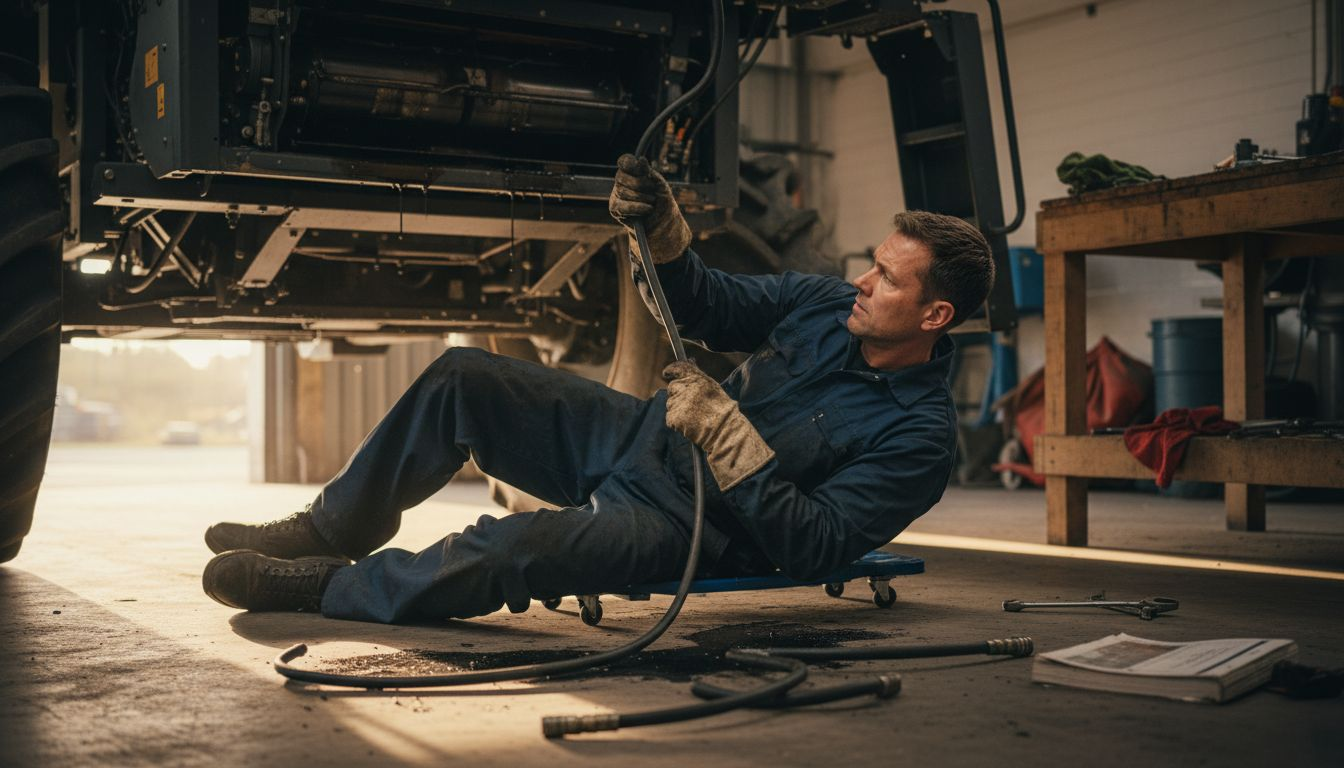
Electrical Issues: Corroded connections and worn wiring cause starting problems and sensor failures. Clean battery terminals monthly, inspect wiring harnesses for damage, and protect connections from moisture with dielectric grease.
Lubrication Failures: Dry bearings and seized fittings create average 10-day downtime per incident. Prevent by maintaining strict greasing schedules and replacing clogged fittings that won’t accept lubricant.
Belt and Chain Wear: Slipping belts reduce power transfer while worn chains cause rough operation. Check tension weekly during heavy use and replace when you see cracking, fraying, or elongation beyond specifications.
Brake Problems: Worn brake components raise accident risk by 15% and compromise safe operation. Test brakes before each use and replace pads, shoes, or fluid when response feels soft or delayed.
For common machinery repairs, keep detailed repair manuals accessible. When problems exceed your expertise, contact professional service rather than risking incorrect repairs. Complex issues with fuel injection, electronic controls, or structural damage require specialized knowledge and equipment.
Develop troubleshooting skills by systematically checking simple causes before assuming complex failures. Often the solution involves tightening a loose connection, replacing a fuse, or adjusting a simple setting rather than expensive component replacement.
Safety Warnings and Common Mistakes to Avoid
Maintenance safety protects you and your workers from preventable injuries. Taking shortcuts or ignoring protocols creates unnecessary risks.
Neglecting safety checks increases injury risk by over 20% during maintenance operations. Many accidents occur because someone assumed equipment was safe when it wasn’t.
Critical Safety Practices:
- Always disconnect battery and remove keys before working on equipment
- Use jack stands, never rely solely on hydraulics to support raised implements
- Wear safety glasses when working with pressurized systems or power tools
- Ensure proper ventilation when running engines indoors or working with solvents
- Keep fire extinguisher readily accessible when working with fuel systems
- Test brakes thoroughly after any brake system maintenance before field use
Common Mistakes to Avoid:
- Skipping pre-operation checks because you’re in a hurry
- Using incorrect fluid types or mixing incompatible lubricants
- Over-tightening bolts, which damages threads and leads to future failures
- Neglecting to clean equipment before maintenance, missing damage hidden by dirt
- Reusing single-use fasteners like lock nuts or crush washers
- Failing to properly torque critical fasteners per manufacturer specifications
Timely brake maintenance significantly reduces accidents. Never delay brake repairs, as compromised stopping ability endangers operators and bystanders. Make brake inspection part of every maintenance session.
“Proper maintenance isn’t just about keeping machines running. It’s about ensuring every person who operates or works near that equipment goes home safely at the end of the day. Safety protocols exist because someone learned a hard lesson we don’t need to repeat.”
Implement agricultural safety practices as non-negotiable standards. Brief workers on hazards before maintenance begins and enforce personal protective equipment requirements consistently.
Alternative Approaches and Tradeoffs
You can manage maintenance workflows through traditional methods or modern digital systems. Each approach offers distinct advantages depending on your farm’s size and resources.
| Approach | Costs | Benefits | Time Required | Best For |
|---|---|---|---|---|
| Manual Calendar System | Minimal (paper, pens) | Simple, no learning curve, works anywhere | 15-20 min daily | Small farms, 1-3 operators, limited equipment |
| Spreadsheet Tracking | Low (computer needed) | Organizes history, calculates intervals | 20-30 min weekly | Medium farms, multiple machines, basic tech skills |
| Digital Maintenance Apps | Moderate ($200-500/year) | Automated reminders, detailed analytics, mobile access | 10-15 min daily | Large operations, multiple operators, tech-savvy teams |
| Professional Service Plans | High ($2000-5000/season) | Expert execution, guaranteed quality, liability coverage | Minimal owner time | High-value equipment, limited technical knowledge |
Digital scheduling tools increase maintenance adherence by 40% through automatic reminders and historical tracking. These systems send notifications before tasks become overdue and compile data showing which machines require most attention.
Traditional manual systems work perfectly well if you maintain discipline. The key is consistency, not technology. A simple wall calendar with clear markings prevents forgotten maintenance just as effectively as expensive software, provided you check it religiously.
When to Choose Each Method:
- Use manual systems when your operation involves fewer than five major machines
- Implement spreadsheets when you need to track parts inventory alongside maintenance
- Adopt digital apps when multiple people share maintenance responsibilities
- Contract professional services for specialized equipment or complex systems beyond your expertise
Consider hybrid approaches combining methods. Many successful farmers use digital reminders for scheduling while maintaining paper checklists for actual inspection tasks. This combines technology’s reliability with paper’s convenience in dirty workshop environments.
Cost considerations matter. Free or low-cost solutions often suffice for small operations, while larger farms justify software investments through improved efficiency. Calculate whether time saved and downtime prevented exceeds the system’s cost.
Expected Results and Outcomes from Effective Workflow
Implementing systematic maintenance delivers measurable improvements across your operation. These benefits compound over time as you refine your workflow.
Key Benefits You’ll Experience:
- Reduce unexpected downtime by 35%, keeping equipment available during critical periods
- Improve overall farm productivity by 15% to 18% through reliable equipment performance
- Extend machinery lifespan by 20% to 30% compared to reactive maintenance approaches
- Decrease emergency repair costs by catching problems early when fixes remain simple
- Lower insurance premiums through documented maintenance proving proper equipment care
- Increase resale values as buyers pay premium prices for well-maintained machines
Equipment maintained through systematic workflows experiences 35% less downtime than reactively serviced machinery, translating to thousands of euros in preserved productivity annually.
These improvements don’t appear overnight. Expect three to four months before patterns become clear. Initial investment in establishing workflows pays dividends throughout subsequent seasons.
The most significant gain comes from predictability. When you maintain agricultural machinery systematically, you know equipment will perform when needed. This reliability lets you plan operations confidently rather than gambling on whether machines will cooperate.
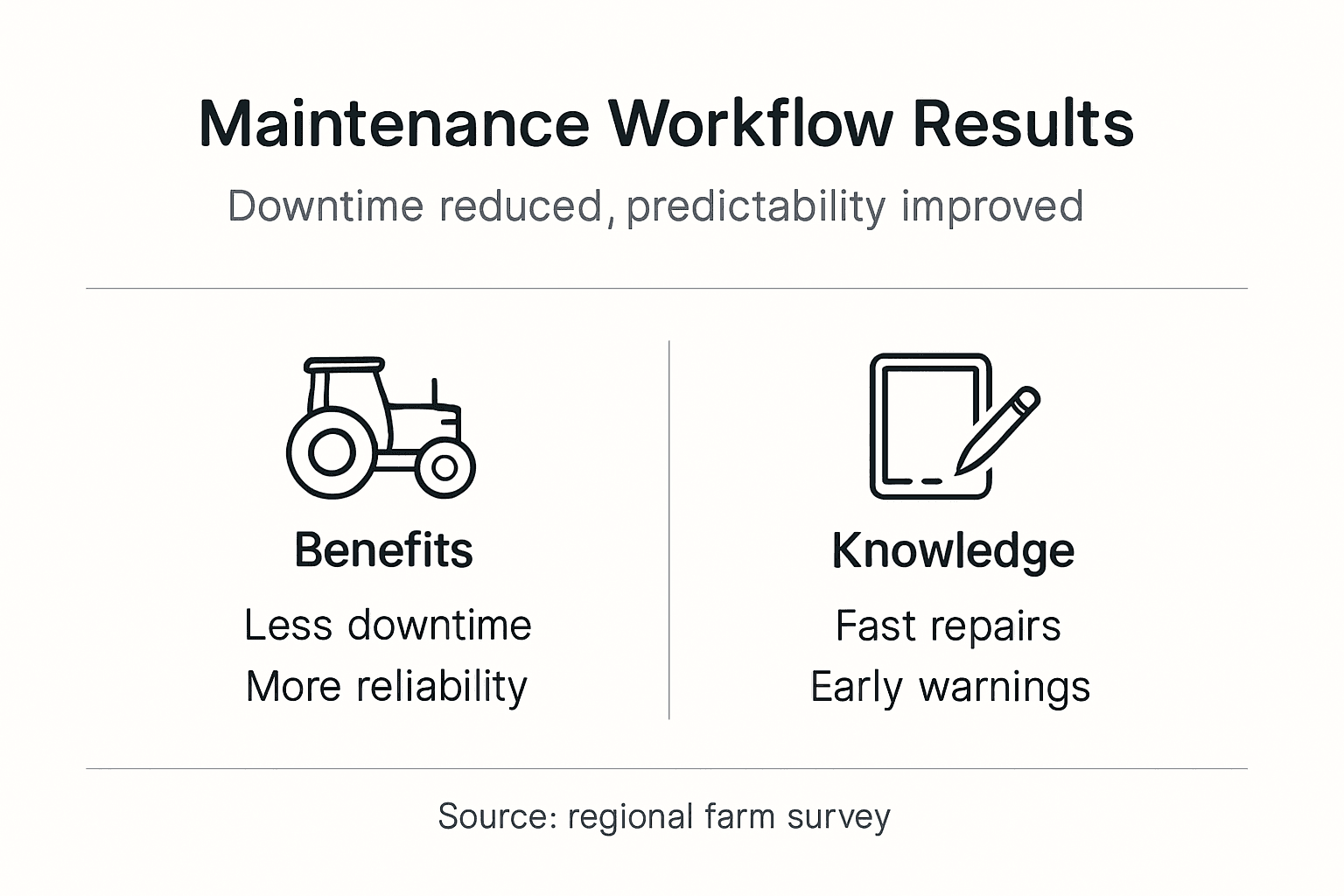
Consistent maintenance also builds valuable knowledge. You learn each machine’s quirks and characteristics. You recognize subtle changes indicating developing problems. This expertise makes you more effective at preventing failures before they disrupt operations.
Commit to your maintenance workflow even when time pressures tempt shortcuts. The busiest seasons are when maintenance matters most. Dedicating time to systematic care prevents the catastrophic failures that create far worse delays than scheduled maintenance ever could.
Explore Pexlivanidis’ Agricultural Machinery Maintenance Solutions
Implementing these maintenance workflows becomes easier with the right support and resources. Pexlivanidis provides Northern Greece farmers with comprehensive parts inventory and expert guidance to keep your equipment operating reliably. Our detailed maintenance guide complements this article with specific procedures for various machinery types. Explore our selection of essential machinery parts to stock your workshop with quality components. Our maintenance tips guide offers additional strategies for maximizing equipment performance and reliability throughout every season.
FAQ
How often should I schedule inspections for my farm machinery?
Perform 5 to 7 scheduled inspections per farming season to catch developing issues before they cause breakdowns. During peak use periods like planting and harvest, increase inspection frequency to weekly checks focused on high-stress components.
What safety gear is essential during machinery maintenance?
Always wear heavy-duty gloves, safety glasses, steel-toed boots, and fitted clothing without loose ends. Keep hearing protection available for noisy environments and use respirators when working with solvents or in dusty conditions.
Can digital tools really improve maintenance adherence?
Yes, digital scheduling tools increase adherence by up to 40% by eliminating forgotten tasks through automated reminders. They require initial setup time and some learning, but most farmers master basic functions within a week. The investment pays off through more consistent maintenance execution and better historical record keeping.
What are common signs that my machinery needs immediate repair?
Watch for unusual noises like grinding or knocking, visible fluid leaks, decreased power or performance, warning lights, and brake softness or delay. Any of these symptoms indicates problems requiring prompt attention to prevent complete failure and extended downtime.