

TL;DR:
- The clutch assembly connects and disconnects engine power from the transmission, enabling gear changes.
- Regular inspection and proper operation extend clutch lifespan and prevent costly breakdowns.
- Early signs of clutch wear include slipping, gear difficulty, unusual noises, and engagement vibrations.
The clutch assembly is one of those tractor parts that nobody talks about until something goes wrong. Greek farmers running John Deere, Massey Ferguson, or Deutz tractors across rocky hillsides, olive groves, and grain fields put enormous stress on this system every single day. Yet most operators focus on engine oil, tires, and filters while the clutch quietly wears down. This guide breaks down exactly what clutch assemblies do, how they work, what warning signs to watch for, and how to keep them running longer. Whether you manage one tractor or a full fleet, understanding this part will save you time, money, and a lot of frustration in the field.
Table of Contents
- What is a clutch assembly and why does it matter?
- How does a clutch assembly work in your tractor?
- Signs your tractor’s clutch assembly needs attention
- Maintaining clutch assemblies for longer tractor life
- Why clutch assemblies are the hidden heroes of tractor reliability
- Find the right clutch assemblies and maintenance resources
- Frequently asked questions
Key Takeaways
| Point | Details |
|---|---|
| Vital power control | Clutch assemblies are the key component that enable smooth and reliable power transfer in your tractor. |
| Early warning signs | Identifying clutch problems early prevents costly breakdowns and field delays. |
| Brand compatibility | Clutch assemblies differ between brands, so always check for the right part for your tractor model. |
| Local sourcing matters | Buying from local, trusted suppliers like Pexlivanidis ensures quality and support. |
| Proactive maintenance | Regular clutch care increases tractor lifespan and maximizes farm productivity. |
What is a clutch assembly and why does it matter?
A clutch assembly is the mechanical system that connects and disconnects the engine’s power from the transmission. Without it, you could not change gears, stop the tractor while the engine runs, or engage implements smoothly. It sits between the engine flywheel and the gearbox, and it works every single time you press the clutch pedal.
The main components of a clutch assembly include:
- Clutch disc (friction plate): The part that physically contacts the flywheel and pressure plate to transmit torque.
- Pressure plate: Clamps the clutch disc against the flywheel using spring force.
- Flywheel: The rotating mass attached to the engine crankshaft that the clutch disc presses against.
- Release bearing (throw-out bearing): Engages the pressure plate fingers when you press the pedal.
- Clutch fork and linkage: The mechanical connection between the pedal and the release bearing.
In Greek farming conditions, this system works especially hard. Plowing clay-heavy soils in Macedonia, towing heavy loads up terraced vineyards in the Peloponnese, or repeatedly engaging a front loader in a tight farmyard all put sustained stress on clutch components. A worn clutch disc means power slips instead of transferring to the wheels, which costs you fuel, time, and traction exactly when you need it most.
Understanding mechanical transmission in farm machinery helps you see how the clutch fits into the bigger picture of your drivetrain. The clutch is the first link in that chain. If it fails, nothing downstream works correctly, no matter how good your gearbox or axles are.
For Greek operators, clutch plates are essential in the transmission system, and reliable local suppliers stock them for all major brands. Knowing the essential tractor transmission parts helps you plan replacements before failure, not after.
Pro Tip: Always source clutch components from a supplier that stocks brand-specific parts. A generic disc that is slightly off in diameter or friction rating will wear faster and may damage your flywheel.
How does a clutch assembly work in your tractor?
Understanding what a clutch assembly is, let’s see how it operates in the real world inside your tractor.
Here is the step-by-step process of clutch engagement and disengagement:
- Pedal released (clutch engaged): The pressure plate spring force clamps the clutch disc firmly against the flywheel. Engine torque flows directly into the gearbox input shaft. The tractor moves.
- Pedal pressed (clutch disengaged): The release bearing pushes against the pressure plate fingers, pulling the pressure plate away from the clutch disc. The disc stops receiving torque. You can now shift gears safely.
- Pedal slowly released (re-engagement): The pressure plate gradually clamps back down. Friction builds between the disc and flywheel, smoothly transferring torque. This is where most clutch wear happens.
- Full engagement: The disc is fully clamped. No slipping. Full torque transfer. The tractor pulls at full capacity.
The timing of step three is critical. Releasing the pedal too fast causes shock loads on the drivetrain. Riding the pedal (keeping it half-pressed) generates heat and accelerates wear dramatically. Greek operators working on slopes often ride the clutch to control speed, which shortens disc life significantly.
Here is a comparison of clutch types commonly found in tractors used in Greece:
| Clutch type | Common brands | Best for | Wear rate |
|---|---|---|---|
| Single dry disc | Massey Ferguson, Deutz | General field work | Moderate |
| Dual disc (split torque) | John Deere, Fendt | Heavy draft and PTO work | Lower |
| Wet clutch (oil-bath) | Kubota, some Deutz | Frequent starts/stops | Very low |
| Diaphragm spring | Massey Ferguson 300/600 series | Lighter utility work | Moderate |
For example, Massey Ferguson transmission types used widely across Greek farms often feature single dry disc clutches, which are reliable but sensitive to heat and improper pedal technique. Understanding your tractor transmission helps you match your operating habits to your clutch type. Local clutch parts availability means you can get the right disc quickly when it counts.
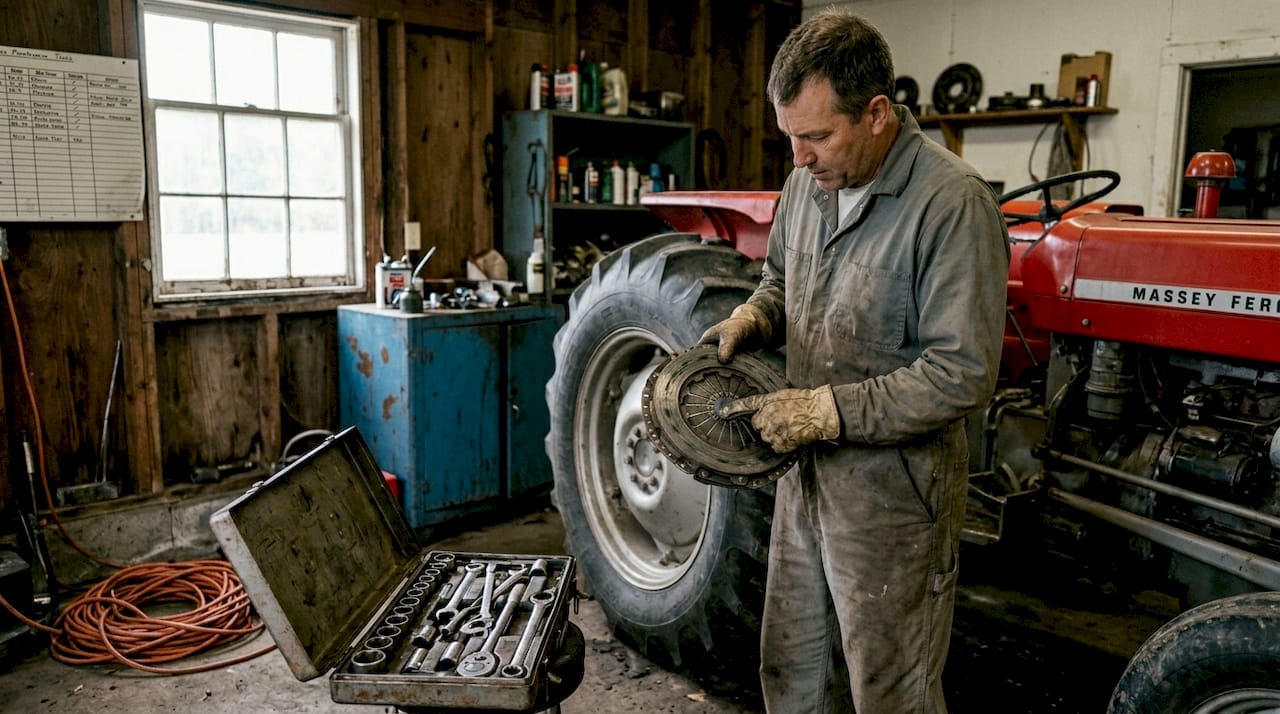
Signs your tractor’s clutch assembly needs attention
Knowing how the clutch works, you can also spot early warning signs to prevent bigger problems.
Greek farm operators often push through early symptoms, assuming the tractor will hold out until the end of harvest. That is a costly mistake. Here are the warning signs you should never ignore:
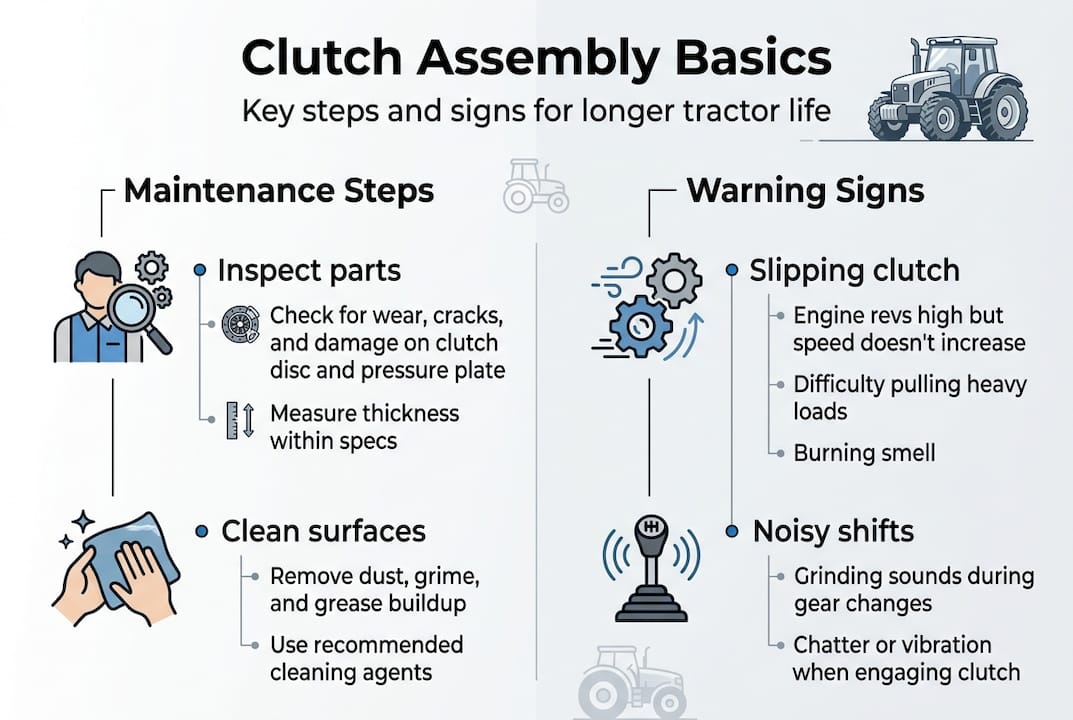
- Clutch slipping: Engine revs rise but tractor speed does not increase. You feel the disconnect between throttle and movement. This is the most common sign of a worn friction disc.
- Difficulty shifting gears: If gears grind or resist even with the pedal fully pressed, the clutch is not fully disengaging. This often points to a worn release bearing or a warped pressure plate.
- Unusual noises: A squealing or rattling sound when pressing the pedal usually means a failing release bearing. A grinding noise when engaging points to a damaged disc or flywheel surface.
- Vibration on engagement: If the tractor shudders when you slowly release the pedal, the disc surface may be glazed, contaminated with oil, or unevenly worn.
- Soft or spongy pedal feel: This can indicate problems with the hydraulic clutch actuation system, not just the disc itself.
Most major clutch failures result from ignoring minor wear signs over many operating hours. Catching the problem early means replacing just the disc. Waiting until failure often means replacing the flywheel and pressure plate too, which triples the repair cost.
Pro Tip: When replacing your clutch disc, always inspect the parts replaced together at the same time. The release bearing and pilot bearing are inexpensive but often fail shortly after a disc replacement if left in place.
For a deeper look at how these systems interact, the guide on tractor clutches explained covers the full mechanical picture in plain language.
Maintaining clutch assemblies for longer tractor life
With signs of wear covered, let’s look at practical ways to maximize the performance and life of your clutch assemblies.
Here is a practical maintenance checklist every Greek tractor operator should follow:
- Check pedal free play every 50 hours: Correct free play (typically 20 to 30mm at the pedal) ensures the clutch fully disengages and fully engages. Adjust the linkage or hydraulic cylinder as needed.
- Inspect the clutch disc at 500-hour intervals: If you have access during a transmission service, check disc thickness and surface condition.
- Listen for bearing noise at every startup: A dry release bearing will squeal briefly when you press the pedal. Catch it early.
- Avoid riding the pedal: Train yourself and any operators on your farm to use the clutch decisively. Half-pressed pedal is the number one cause of premature wear.
- Plan full replacement at 3,000 to 4,000 hours: This is a general guideline. Heavy draft work or hilly terrain in Greece may require earlier replacement.
When it comes to choosing parts, here is how OEM and aftermarket options compare:
| Factor | OEM parts | Quality aftermarket |
|---|---|---|
| Fit and compatibility | Exact match | Good, if brand-specific |
| Price | Higher | 20 to 40% lower |
| Availability in Greece | Limited dealers | Wider through local suppliers |
| Warranty | Manufacturer backed | Supplier backed |
| Long-term reliability | Proven | Varies by brand |
“Even the most robust clutch assembly will wear faster than expected under Greek summer conditions. Dust, heat, and heavy draft loads demand more frequent inspection, not less.”
For mechanical transmission maintenance, the clutch is your starting point. Suppliers stocking Massey Ferguson clutch parts and other major brands allow Greek operators to plan maintenance without long waits. Local parts availability is a real advantage when harvest windows are tight.
Why clutch assemblies are the hidden heroes of tractor reliability
Here is something most maintenance guides will not tell you: the clutch assembly is the single component most likely to cause a full work stoppage, yet it gets the least attention in routine service schedules. Operators obsess over engine oil intervals and fuel filters, which is correct, but a failed clutch disc stops the tractor just as completely as a seized engine.
We have seen Greek operators lose entire harvest days because a clutch that showed warning signs for weeks finally gave out in the middle of a field. The repair cost was three times higher than it would have been with early intervention. The real lesson is not just technical. It is about how we think about maintenance. Spending money on a clutch inspection feels like an expense. Losing two days of harvest plus paying for emergency parts and labor feels like a disaster.
Proactive clutch care is not an expense. It is an investment with a measurable return. Transmission maintenance insights consistently show that operators who follow structured inspection schedules spend less on total repairs over a machine’s life. The clutch is where that discipline pays off most visibly.
Find the right clutch assemblies and maintenance resources
To help you act on everything discussed, here’s where you can find the best parts, guides, and expert support for your clutch assemblies and tractor maintenance.
At Pexlivanidis, we stock clutch assemblies and transmission components for all major tractor brands used in Greece, including John Deere, Massey Ferguson, and Deutz. With over 20,000 parts in inventory and free shipping on orders over 100€ within Greece, getting the right part quickly is straightforward. Browse our full range of essential tractor and machinery parts or follow our peak machinery maintenance guide to build a service schedule that works for your operation. For ongoing support, our maintenance tips for agricultural machinery cover everything from clutch care to full drivetrain service.
Frequently asked questions
How often should I replace my tractor’s clutch assembly?
Inspect clutch assemblies annually and plan replacement around every 3,000 to 4,000 operating hours, though heavy draft work or hilly Greek terrain may require earlier action. Always cross-check with your tractor manual and local supplier recommendations.
What are the warning signs a clutch assembly is failing?
Key warning signs include engine revving without matching speed increases, grinding or squealing noises when pressing the pedal, difficulty shifting gears, and shuddering on engagement. Catching these early prevents costly secondary damage to the flywheel and pressure plate.
Are there differences in clutch assemblies for John Deere, Massey Ferguson, and Deutz tractors?
Yes, while the core function is the same across brands, each manufacturer uses specific disc dimensions, friction materials, and pressure plate designs. Always match parts to your exact model to ensure proper fit and performance.
Where can I find genuine clutch assemblies in Greece?
Reputable suppliers like Pexlivanidis stock genuine clutch assemblies for all major tractor brands operating in Greece, with fast local shipping and both retail and wholesale options available.