

TL;DR:
- Greek agri-businesses must follow ongoing compliance laws for machinery, safety, and documentation.
- Regular maintenance, proper staff training, and accurate records are essential for legal and operational safety.
- Using digital tools and building a strong compliance culture can prevent penalties and improve long-term sustainability.
Running an agricultural business in Greece without a firm grip on compliance is one of the fastest ways to face unexpected fines, forced shutdowns, or costly legal disputes. Many Greek agri-business owners assume that keeping equipment running and harvests moving is enough, but regulators see it differently. From machinery registration to staff training records, the compliance landscape is wider than most people realize. Non-compliance can result in financial penalties and restricted business activity that can halt an entire season’s work. This guide breaks down exactly what compliance means for your operation, what the law requires, and how to build systems that protect your business every day.
Table of Contents
- Understanding agri-business compliance and its importance
- Core legal requirements for agri-businesses in Greece
- Practical aspects: Machinery, maintenance, and safety compliance
- Common pitfalls and how to stay compliant
- Tools and strategies for ongoing compliance and efficiency
- A smarter approach to compliance: Lessons from the field
- Empowering your agri-business with the right support
- Frequently asked questions
Key Takeaways
| Point | Details |
|---|---|
| Compliance protects your business | Meeting legal requirements helps you avoid fines and keep operations running smoothly. |
| Proper documentation is essential | Up-to-date paperwork on machinery and training is vital for Greek regulatory compliance. |
| Consistent maintenance is key | Routine checks and care for your equipment reduce risk and boost efficiency. |
| Use digital solutions | Compliance is easier to maintain with specialized apps and management tools. |
| Continuous staff training matters | Regular education fosters a compliance-focused culture on your farm. |
Understanding agri-business compliance and its importance
Compliance, in the agricultural business context, means operating your farm or agri-business according to all applicable laws, safety standards, and regulatory requirements. This covers everything from how your tractors are registered to whether your workers have received proper safety training. It is not a one-time checkbox. It is an ongoing operational responsibility.
Why does it matter so much? First, compliance directly protects worker safety. Agricultural machinery is among the most dangerous equipment in any industry. A poorly maintained tractor or an unqualified operator is not just a liability risk, it is a life risk. Second, compliance protects machinery longevity. Following manufacturer-recommended maintenance schedules and using certified parts keeps equipment running longer and reduces costly breakdowns during critical harvest periods.
Third, and most immediately felt, is the legal dimension. Greek authorities and EU regulatory bodies actively inspect agricultural operations. Businesses that fall short face a range of consequences:
- Financial penalties, which can range from minor fines to substantial sanctions depending on the violation
- Operational restrictions, including temporary or permanent suspension of business activity
- Reputational damage, which affects relationships with buyers, suppliers, and financial institutions
- Insurance complications, where non-compliance can void coverage during incidents
Reviewing your equipment safety checklist regularly is one of the simplest ways to stay ahead of these risks.
“Compliance is not just about avoiding penalties. It is about building a business that can operate reliably, attract partners, and scale sustainably.”
Key compliance areas every Greek agri-business must address include: national and EU machinery regulations, equipment safety standards, operational documentation, and staff certification and training records.
Core legal requirements for agri-businesses in Greece
Greece operates within the broader EU agricultural regulatory framework, which means Greek agri-businesses must satisfy both national laws and EU directives. The two most relevant areas are machinery safety (governed by EU Machinery Directive 2006/42/EC) and workplace safety (Greek Law 3850/2010 on occupational health and safety). These set the baseline for how equipment must be used, inspected, and documented.
Licensing and registration are non-negotiable starting points. All farm vehicles and machinery used commercially must be registered with the relevant authorities. Tractors, in particular, require valid registration documents, proof of insurance, and operator licensing where applicable. Failing to maintain current registration is one of the most common and easily avoidable violations.
Accurate documentation is a legal requirement for all machinery and operations. This means keeping organized records that are available for inspection at any time.
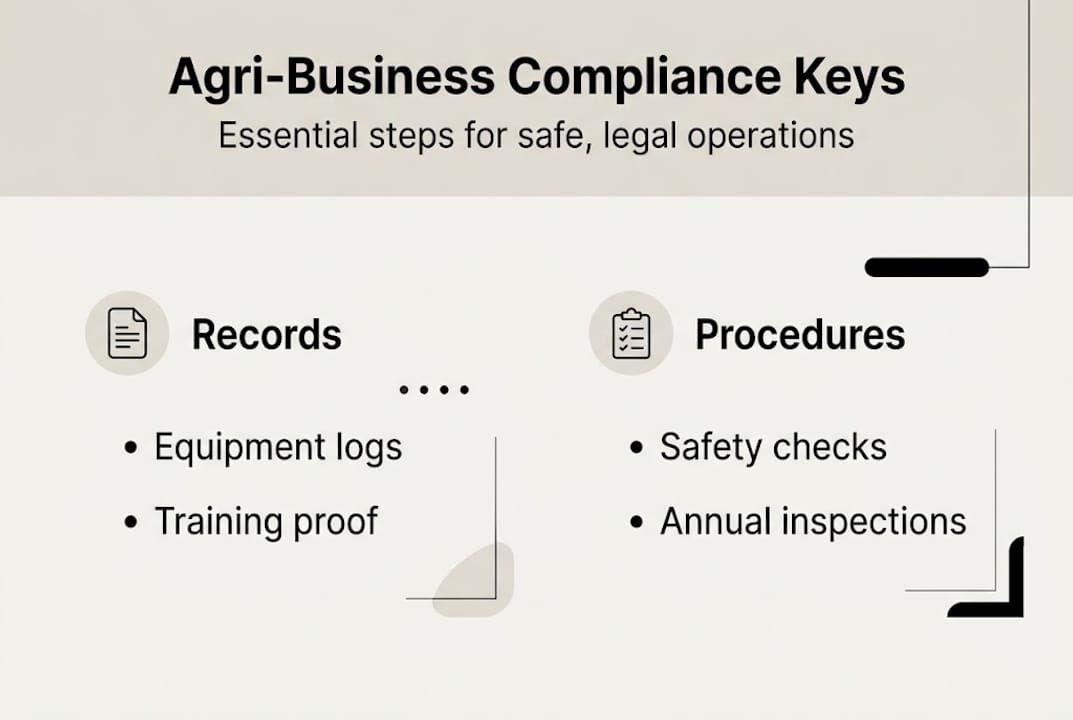
Here is a summary of core compliance documents every Greek agri-business should maintain:
| Document | Purpose | Renewal frequency |
|---|---|---|
| Machinery registration certificate | Legal authorization to operate | As required by law |
| Maintenance log | Proof of upkeep and servicing | Ongoing, per service |
| Inspection certificate | Confirms safety standards met | Annually or per regulation |
| Operator training record | Verifies staff qualifications | Per training cycle |
| Insurance documentation | Covers liability and damage | Annually |
Staff training is equally critical. Greek law requires that workers operating heavy machinery receive documented safety training. This is not optional, and inspectors will ask for records. Training should cover safe operation, emergency procedures, and basic maintenance awareness. Businesses that invest in regular training cycles see fewer incidents and fewer compliance gaps.
A useful statistic: studies across EU agricultural sectors show that farms with structured compliance programs report up to 40% fewer workplace incidents compared to those without formal systems in place. Investing in tractor documentation and training is not overhead. It is protection.
Practical aspects: Machinery, maintenance, and safety compliance
Knowing the law is one thing. Applying it every day on a working farm is another challenge entirely. The good news is that practical compliance does not have to be complicated if you build it into your regular routines.
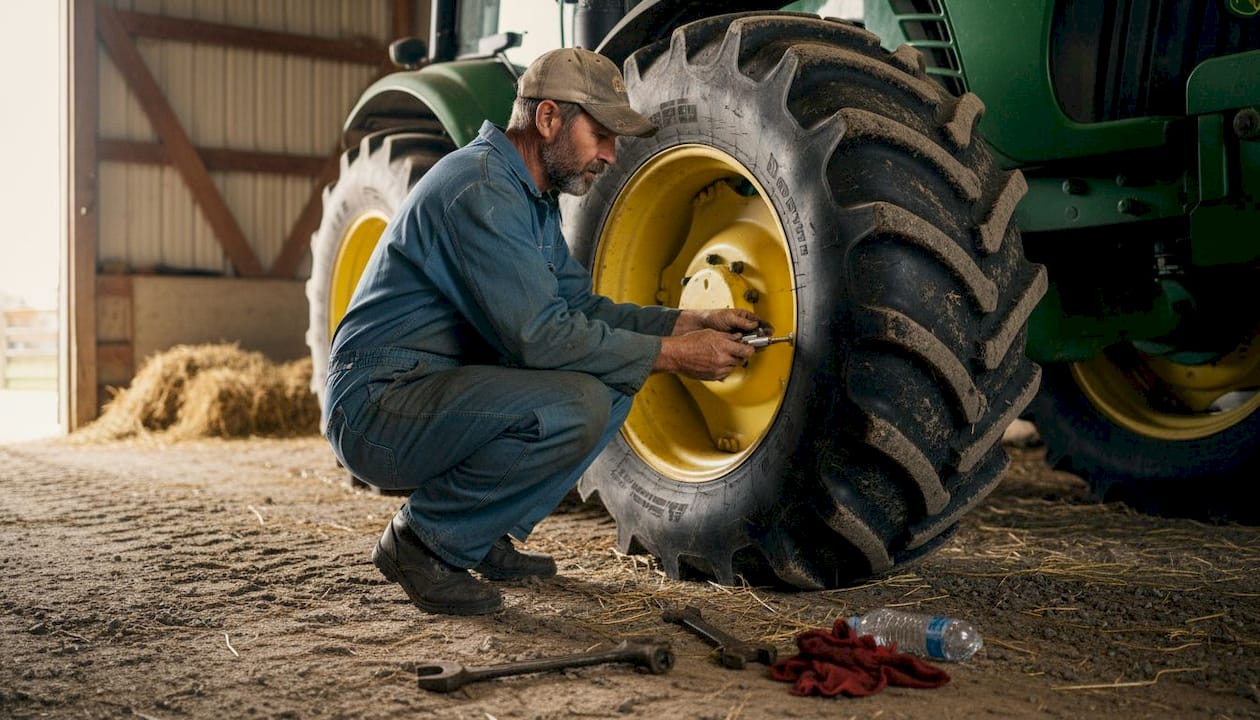
Regular maintenance and documentation help prevent accidents and legal issues, and they also extend the working life of your equipment significantly. A tractor that receives consistent servicing will outperform and outlast one that is only fixed when something breaks.
Here is a numbered process for daily and seasonal safety compliance:
- Pre-operation check: Inspect fluid levels, tire condition, brake function, and lights before starting any machinery each day.
- Weekly review: Check for unusual wear, leaks, or mechanical sounds. Log any findings immediately.
- Monthly service: Follow the manufacturer’s maintenance schedule for filter changes, lubrication, and belt inspections.
- Seasonal overhaul: Before and after peak seasons, conduct a full equipment review and update all maintenance logs.
- Annual certification check: Confirm all machinery certifications and operator records are current before each calendar year.
Operator responsibility is a key part of this system. Operators are not just drivers. They are the first line of defense in identifying problems before they become violations or accidents. Management must create an environment where reporting issues is encouraged, not ignored. Following safety tips for injury prevention and structuring your farm fleet management around clear accountability makes this much easier to sustain.
Pro Tip: Create a laminated daily checklist for each piece of equipment and attach it directly to the machine. Operators complete it before use and sign off. This simple habit creates a paper trail that satisfies inspectors and builds operator accountability at the same time.
Common pitfalls and how to stay compliant
Even well-intentioned agri-businesses make compliance mistakes. Understanding the most frequent ones is the first step to avoiding them.
Common compliance mistakes include:
- Letting registration lapse because renewal deadlines were missed in a busy season
- Incomplete maintenance logs where entries are skipped or recorded inconsistently
- Untrained staff operating machinery because turnover was high and training was delayed
- Outdated safety equipment on machinery that no longer meets current standards
- Missing inspection certificates because annual checks were postponed and never rescheduled
Many non-compliance issues stem from inconsistent record-keeping and lack of employee training. These are structural problems, not one-off oversights.
Here is a comparison of the business impact when compliance is treated as optional versus when it is embedded into operations:
| Area | Non-compliant operation | Compliant operation |
|---|---|---|
| Financial exposure | High risk of fines and legal costs | Predictable, manageable costs |
| Equipment reliability | Frequent breakdowns, costly repairs | Longer lifespan, fewer surprises |
| Staff safety | Higher incident rate | Lower incident rate, better morale |
| Market credibility | Reduced trust from buyers and banks | Stronger relationships and access to credit |
| Operational continuity | Risk of shutdown during inspections | Smooth, uninterrupted operations |
Building a culture of compliance starts at the top. When leadership treats documentation and safety checks as priorities rather than paperwork burdens, staff follow. Assign a compliance coordinator, even on smaller farms. Review your compliance program at least twice a year. Use resources focused on improving farm productivity to find areas where compliance and efficiency overlap.
Tools and strategies for ongoing compliance and efficiency
Staying compliant is much easier when you use the right tools. The good news is that affordable, practical options exist for Greek agri-businesses of every size.
Digital maintenance platforms allow you to log every service, track upcoming inspections, and store documents in one place. Apps designed for farm management can send automatic reminders when certifications are due. Some platforms integrate with GPS tracking for fleet vehicles, which adds an extra layer of accountability for machinery use and location.
Leveraging management tools and digital checklists can boost compliance and reduce errors across your entire operation. The shift from paper-based to digital record-keeping alone can cut administrative time by a significant margin while improving accuracy.
Steps to embed compliance into daily operations:
- Assign clear ownership for each compliance task (who logs maintenance, who tracks certifications)
- Use digital or printed checklists for every machinery operation
- Schedule compliance reviews on your business calendar, not just when inspections are announced
- Subscribe to updates from Greek agricultural authorities and EU regulatory bodies
- Explore agricultural e-commerce platforms for sourcing certified parts that meet regulatory standards
Pro Tip: Build a compliance calendar at the start of each year. Map out every registration renewal, inspection deadline, training cycle, and seasonal maintenance window. Treat these dates with the same urgency as harvest schedules. Missing a compliance deadline costs far more than the time it takes to plan for it.
Resources for staying current include the Greek Ministry of Rural Development and Food, the EU’s official agricultural regulatory portal, and industry associations that publish compliance updates relevant to Greek farming operations.
A smarter approach to compliance: Lessons from the field
Here is something most compliance guides will not tell you: treating compliance as a minimum threshold is actually more expensive than building it into your business strategy from the start.
Farms that only do the bare minimum to pass inspections spend more in the long run. They fix problems reactively, pay emergency repair costs, and scramble to update paperwork when an inspection is announced. The stress alone is a hidden cost.
Contrast that with a Greek olive farm we are aware of that restructured its entire maintenance and documentation system after a costly inspection violation. Within two seasons, their equipment downtime dropped, their insurance premiums decreased, and they qualified for an EU agricultural subsidy that required verified compliance records. Compliance became a competitive advantage.
Buying smart machinery and maintaining it properly is not just about following rules. It is about running a business that lasts. The farms that thrive long-term are the ones that see compliance as an investment in operational credibility, not a cost to minimize.
Empowering your agri-business with the right support
Compliance is easier when you have access to the right parts, guides, and expertise. At Pexlivanidis, we support Greek agri-businesses with over 20,000 machinery parts and a growing library of practical resources designed to help you operate safely and efficiently. Whether you need to source certified components or deepen your understanding of maintenance requirements, we have what you need.
Explore our guide on essential machinery parts to make sure your equipment meets current standards, and use our machinery maintenance guide to build a service routine that keeps you compliant year-round. Free shipping within Greece applies to orders over 100€.
Frequently asked questions
What are the main compliance documents required for agricultural machinery in Greece?
You need machinery registration, maintenance logs, inspection certificates, and operator training records. Accurate documentation is a legal requirement for all machinery and operations under Greek law.
How often should agricultural equipment be inspected for compliance?
Equipment should be checked before each use, serviced per manufacturer schedules, and formally inspected at least annually. Regular maintenance and documentation help prevent accidents and keep you legally protected.
What is the penalty for non-compliance with agri-business regulations in Greece?
Penalties range from financial fines to suspension of business operations or legal action. Non-compliance can result in financial penalties and restricted business activity that can disrupt an entire season.
Are digital tools available to help manage agri-business compliance?
Yes, digital checklists, record-keeping apps, and farm management platforms are available and practical for Greek operations. Management tools and digital checklists can boost compliance and reduce costly errors.
How can I train staff on compliance requirements?
Schedule regular safety and documentation training sessions and use signed checklists to track completion. Non-compliance issues often stem from inconsistent record-keeping and gaps in employee training that structured programs can close.