

TL;DR:
- Greek farms are successfully adopting digital tools to reduce water, pesticide, and input use.
- Starting with affordable IoT sensors and telematics provides quick cost savings and measurable benefits.
- Incremental, locally tailored digital upgrades with proper training are key to successful adoption.
Greek farms are already proving that digital transformation is not a distant experiment reserved for large corporations or wealthy international operations. A winery in Greece, Smyrnakis, achieved measurable reductions in water and pesticide use through targeted digital tools, and similar pilots are spreading across the country. The idea that smart technology is too expensive, too complex, or simply not suited to local conditions is a misconception that real data is quickly dismantling. This guide walks you through what digital transformation actually means for your farm, which tools deliver real returns, what Greek pilots have proven, and how to start without overhauling everything at once.
Table of Contents
- What does digital transformation mean in agriculture?
- Key technologies driving agricultural efficiency
- Greek case studies: From pilots to proven results
- Overcoming real-world challenges and common misconceptions
- Our take: The truth about digital adoption in Greek agriculture
- Enhance your farm’s efficiency with the right upgrades
- Frequently asked questions
Key Takeaways
| Point | Details |
|---|---|
| Digital tools raise efficiency | Smart tech like IoT, AI, and telematics help Greek farms use inputs better and boost machinery performance. |
| Real-world gains in Greece | Local pilots have cut water and pesticide use while raising yields and profits for early adopters. |
| Start small for impact | You don’t need full automation; integrating affordable modules and prioritizing training brings results fast. |
| Barriers can be overcome | Targeted support and modular solutions help address cost, skills, and machinery age challenges. |
What does digital transformation mean in agriculture?
Digital transformation in agriculture is not about replacing farmers with robots. It means using connected tools and data to make better decisions, reduce waste, and get more from your existing equipment and land. At its core, digital transformation integrates IoT sensors, artificial intelligence, precision machinery, ERP systems, and data analytics into everyday farm operations.
Let’s break down the key terms:
- IoT (Internet of Things): Physical sensors placed in fields, on machines, or in storage that collect and transmit data in real time.
- AI and analytics: Software that processes that data and surfaces actionable recommendations, like when to irrigate or which field zones need more fertilizer.
- Precision agriculture: Using location data and variable-rate technology (VRT) to apply inputs only where and when needed.
- ERP systems: Enterprise resource planning platforms that connect your supply chain, inventory, and finances in one place.
- Telematics: GPS-based systems that track machinery location, fuel use, and operating hours.
- Auto-steer and section control: GPS-guided steering that reduces overlaps and cuts input waste.
- Decision support systems (DSS): Software tools that help farmers choose the right action based on field data and forecasts.
These tools do not work in isolation. A farm automation overview shows how combining sensors, machinery data, and analytics creates a feedback loop that continuously improves operations. When your tractor’s telematics data feeds into a DSS that also reads soil moisture sensors, you get a complete picture instead of disconnected guesses.
The numbers back this up. Precision agriculture delivers 8 to 15% higher crop output, 15 to 25% fuel savings, and 20 to 30% reductions in water and fertilizer use. For a mid-sized Greek farm, those percentages translate directly into lower costs and higher margins.
| Technology | Primary benefit | Typical gain |
|---|---|---|
| VRT (variable-rate technology) | Reduces input waste | 20-30% fertilizer savings |
| GPS auto-steer | Minimizes field overlaps | 10-15% fuel reduction |
| Telematics | Machinery tracking and diagnostics | 15-25% fuel savings |
| IoT soil sensors | Precision irrigation | 20-30% water reduction |
| ERP systems | Supply chain visibility | Fewer errors, faster decisions |
As agricultural automation explained on our platform, even partial adoption of these tools produces compounding benefits over time. You do not need to implement everything at once to see results.
“Digital transformation is not a single event. It is a process of layering smarter tools onto your existing operation, one step at a time.”
Key technologies driving agricultural efficiency
With the foundation laid, let’s look closer at the main tools powering digital transformation, what they actually do, why they matter, and which you can realistically adopt.
Precision agriculture methodologies include VRT, GPS-guided auto-steer, section control, and telematics, each targeting a specific source of waste or inefficiency. Here is how the top tools compare:
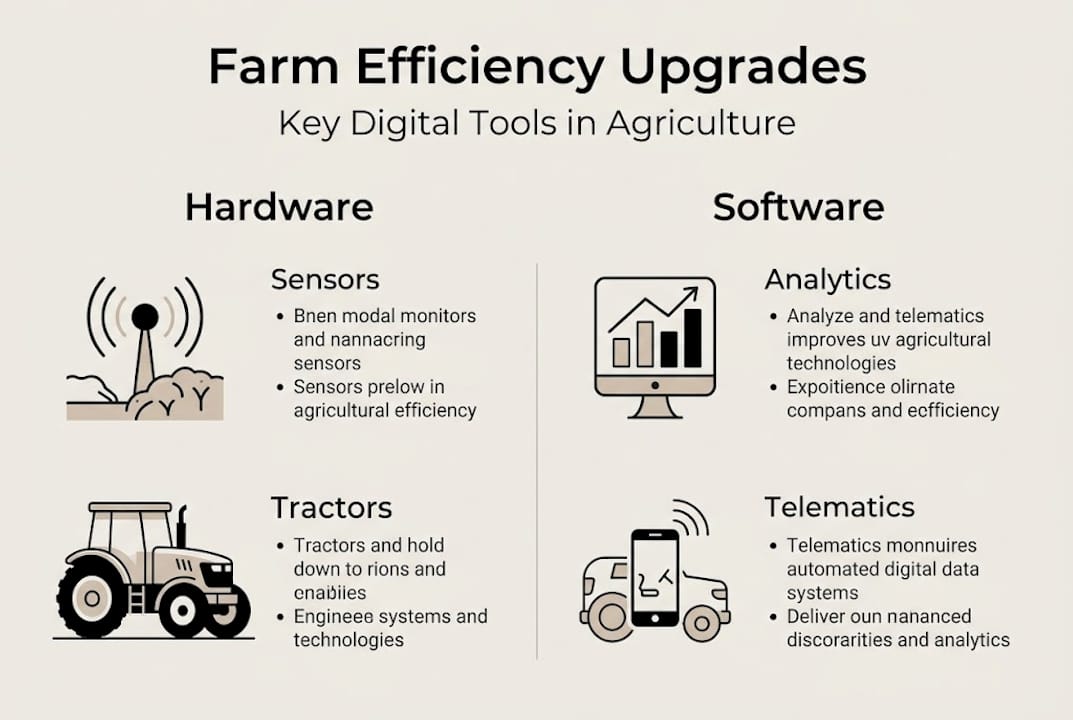
| Tool | What it does | Best use case |
|---|---|---|
| VRT | Varies input rates by zone | Fertilizer and pesticide application |
| GPS auto-steer | Guides machinery along precise paths | Row crops, large fields |
| Telematics | Tracks machine location and performance | Fleet management, fuel monitoring |
| AI analytics | Interprets sensor data for decisions | Yield prediction, disease alerts |
| Crop sensors | Measures canopy health in real time | Nitrogen management |
Auto-steer minimizes overlaps, section control reduces input waste, and VRT matches application rates to actual soil needs. Together, these three alone can pay for themselves within a single growing season on a well-managed operation.
For farmers with older tractors, telematics is often the most accessible starting point. Here is a simple path to get started:
- Assess your current machinery. Identify which tractors or implements run the most hours and consume the most fuel.
- Choose a retrofittable telematics module. Many modern units plug into the OBD port or connect via CAN bus without requiring a new machine.
- Install and connect to a management platform. Most telematics providers offer a web dashboard or mobile app for real-time monitoring.
- Review data weekly. Look for idle time, unusual fuel spikes, or route inefficiencies.
- Act on insights. Adjust routes, schedule preventive maintenance, and compare operator performance across your fleet.
For a deeper look at how sensors complement telematics data, crop sensors in agriculture offer a practical extension of this approach. And if you want a full breakdown of telematics specifically, what is telematics in farming covers the 2026 landscape in detail.
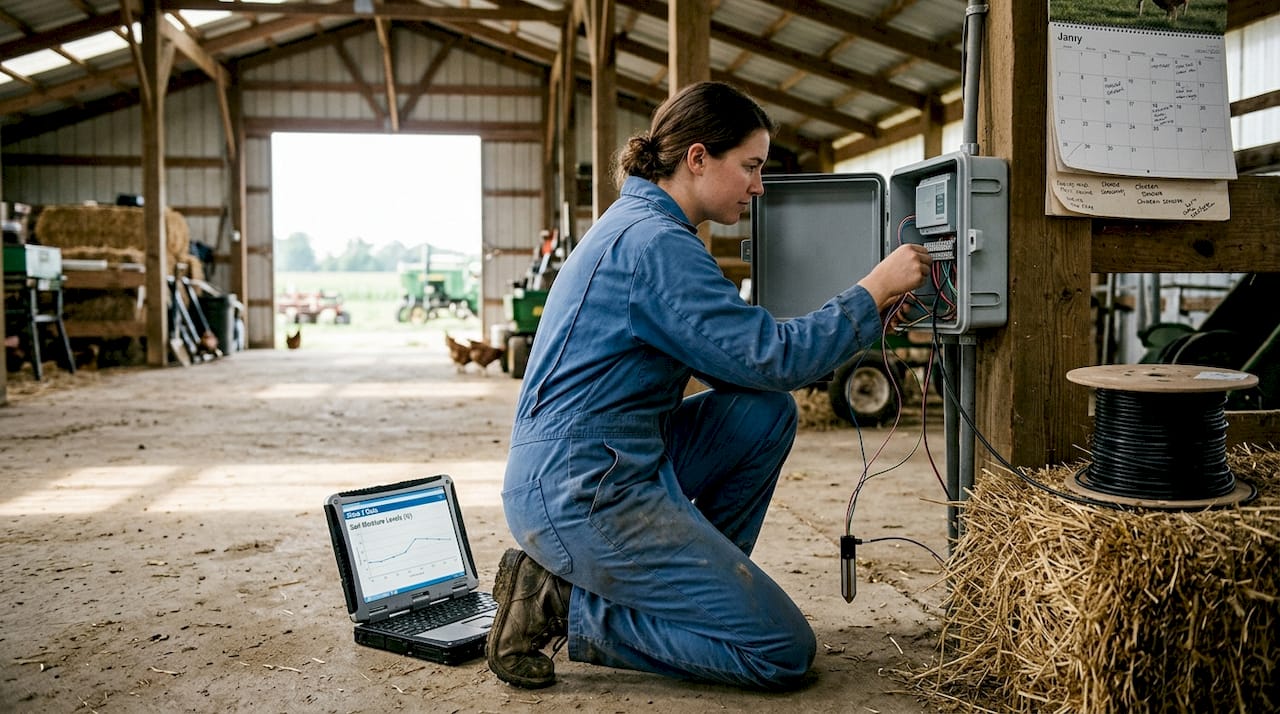
Pro Tip: Before investing in a full precision ag system, add a basic telematics module to your highest-use tractor. The fuel and maintenance savings alone often cover the cost within 6 to 12 months, giving you confidence and capital to expand further.
Greek case studies: From pilots to proven results
Knowing the tools is only part of the story. Let’s see how Greek farms are already succeeding with digital transformation and what the numbers show.
Several pilots across Greece have moved beyond theory into measurable outcomes. FARM5.0, NutriSense, and Smyrnakis pilots report reduced water and pesticide use alongside increased yields. These are not isolated experiments. They represent a growing pattern of adoption across different farm types and regions.
- Smyrnakis winery: Used IoT sensors and edge AI to cut water use and reduce pesticide applications without sacrificing grape quality.
- NutriSense: A smart fertilization tool that uses soil data and AI recommendations to optimize nitrogen application, reducing overuse and runoff.
- FARM5.0 kiwi farms: Deployed LoRaWAN networks and edge computing to monitor field conditions across large plots with minimal infrastructure cost.
- PINDOS: Their ERP-based digital transformation now handles 30 million transactions annually, giving real-time supply chain visibility across their entire operation.
| Pilot | Technology used | Key result |
|---|---|---|
| Smyrnakis winery | IoT, edge AI | Water and pesticide reduction |
| NutriSense | AI, soil sensors | Optimized nitrogen, less runoff |
| FARM5.0 kiwi | LoRaWAN, edge computing | Scalable monitoring, lower cost |
| PINDOS | ERP platform | 30M transactions, real-time supply chain |
These results matter because they come from Greek conditions: fragmented land, seasonal labor constraints, variable connectivity, and farms that range from a few hectares to large cooperatives. For more on how precision agriculture in Greece is evolving, the local context is critical.
Key takeaway: Water savings of 20 to 30%, pesticide reductions, and yield gains are achievable even on small and medium Greek farms when the right tools are matched to the right problems. For a broader view, smart farming in Greece and a precision farming guide offer structured entry points.
Overcoming real-world challenges and common misconceptions
Despite strong results, the road to digital transformation is not smooth. Here is what stands in the way of widespread adoption in Greece and how to move forward step by step.
Greece currently sits at just 5% precision ag adoption, well below the EU average. The barriers are real, but they are not insurmountable.
Common pitfalls Greek farmers face:
- Lack of technical training and digital literacy among farm operators
- High upfront costs for sensors, software licenses, and installation
- Legacy machinery that lacks connectivity ports or modern interfaces
- Rural internet gaps that limit real-time data transmission
- Fragmented land parcels that complicate uniform technology deployment
The good news is that training, modular upgrades, and phased robotics work far better for adoption in Greece than jumping straight to full autonomy. You do not need a fully connected, AI-driven farm from day one.
Practical steps to move forward:
- Start with low-cost IoT sensors for irrigation or fertilization monitoring.
- Apply for CAP subsidies and national digital agriculture funding to offset equipment costs.
- Prioritize staff training before purchasing new technology.
- Use modular add-ons that work with existing tractors rather than replacing them.
- Partner with local agronomists or cooperatives for shared technology access.
Pro Tip: Telematics for Greek farmers is one of the fastest ways to see a return without a major capital outlay. A retrofittable telematics unit on an older tractor gives you data that pays for itself quickly, building the business case for your next upgrade.
“The question is not whether digital tools work. The question is which tools match your farm’s current stage and budget.”
Our take: The truth about digital adoption in Greek agriculture
Here is something the mainstream narrative often gets wrong: copying high-tech global models does not guarantee success in Greece. A large-scale precision ag system designed for 10,000-hectare American wheat farms does not map cleanly onto a 50-hectare Greek olive grove with fragmented plots and seasonal workers.
What actually works is incremental, locally adapted progress. Telematics on your existing fleet, a soil sensor network in your highest-value fields, a DSS that speaks to your crop calendar. These give you a safer return on investment than chasing the most advanced feature set available.
The uncomfortable truth is that skills development and ongoing support matter more than the technology itself. A sophisticated system operated by an undertrained team delivers worse results than a simple telematics setup used consistently and intelligently. We have seen this play out repeatedly.
Local expertise, adaptability, and a willingness to start small beat trend-chasing every time. A deep dive on farm automation reinforces this: the farms that succeed are the ones that match tools to real problems, not the ones that buy the most impressive equipment.
Enhance your farm’s efficiency with the right upgrades
If this guide has shown you anything, it is that digital transformation starts with practical, well-matched upgrades rather than wholesale reinvention. At pexlivanidis.com, we stock over 20,000 agricultural machinery parts and accessories, with free shipping across Greece on orders over 100€. Whether you are looking to retrofit an older tractor with telematics-compatible components or need reliable spare parts to keep your precision ag equipment running, our catalog has you covered. Explore our agricultural machinery parts guide and our machinery upgrade tips to find the right starting point for your operation.
Frequently asked questions
What is the first step for Greek farmers starting with digital transformation?
Begin with affordable IoT sensors for irrigation or fertilization, and explore telematics modules that fit your existing machinery. NutriSense and FARM5.0 show that starting small with proven DSS tools delivers measurable results quickly.
How much can digital tools boost farm efficiency?
Empirical evidence shows 8 to 15% higher yields, 15 to 25% fuel savings, and up to 30% less water or fertilizer use when precision agriculture methods are applied consistently.
What are the biggest obstacles for digital adoption in Greek agriculture?
The main barriers are high startup costs, limited tech training, outdated machinery, and rural internet gaps. Greece currently sits at just 5% adoption of precision agriculture tools, well below the EU average.
What funding or support exists for digital upgrades in Greece?
CAP funds and national subsidies support both farmer training and digital technology adoption. These funding programs are specifically designed to bridge the skills and cost gap for small and medium farms.