

Many Greek farmers still view sensor technology as expensive, complex, and suited only for large industrial operations. The truth is far more practical. Modern sensors deliver real-time data on soil moisture, nutrient levels, and crop health at price points accessible to small and medium farms. This article reveals how you can leverage sensors to reduce water waste, optimize fertilizer application, detect diseases early, and ultimately increase yields without overhauling your entire operation. You’ll learn which sensor types suit Greek crops like olives and citrus, how to integrate data with existing equipment, and practical steps to start small and scale confidently.
Table of Contents
- Key takeaways
- Understanding sensor types and their functions in agriculture
- Integrating sensors with IoT and AI technologies for precision management
- Case studies and benefits of sensor adoption on Greek farms
- Challenges and practical advice for implementing sensors in Greek agriculture
- Explore agricultural machinery and parts to enhance your sensor-based systems
- Frequently asked questions
Key Takeaways
| Point | Details |
|---|---|
| Sensor types by crop | Different sensor types fit olives citrus and vegetables, providing soil moisture, pH and nutrient data and crop health indicators to guide management. |
| IoT and AI integration | IoT networks collect sensor data and AI analytics translate it into actionable irrigation and fertilizer decisions. |
| Early disease detection | Optical and soil sensors enable early disease stress detection in crops like citrus and olives. |
| Start small trials | Begin with affordable sensors and run field trials to prove value before scaling. |
Understanding sensor types and their functions in agriculture
Greek farmers working with olives, citrus, and vegetables have access to several sensor categories designed for precision farming. Resistive and capacitive sensors measure soil moisture by detecting electrical resistance or dielectric changes in the soil. Electrochemical sensors track pH levels and specific nutrients like nitrogen, phosphorus, and potassium, giving you precise fertilization guidance. Optical sensors, including NDVI and hyperspectral models, assess crop health by analyzing light reflection patterns that reveal stress, disease, or nutrient deficiencies before visible symptoms appear.
Thermal sensors detect temperature variations across fields, helping you identify irrigation problems or heat stress zones. LiDAR sensors map terrain and canopy structure, useful for variable rate applications in hilly Greek landscapes. For olive growers in regions like Kalamata or Crete, soil moisture sensors prevent over-irrigation during dry summers, preserving water and maintaining oil quality. Citrus farmers benefit from optical sensors that detect diseases like Citrus Tristeza Virus early, allowing targeted treatment before the infection spreads.
Real-time data from these sensors enables you to intervene precisely when crops need attention, not on fixed schedules. Instead of applying water or fertilizer uniformly, you adjust inputs based on actual field conditions. This approach aligns with precision agriculture practices that boost yields while cutting waste. Choosing the right sensor depends on your crop type, soil characteristics, and specific management goals.
Common sensor types and applications:
- Soil moisture sensors guide irrigation timing and volume for water-sensitive crops
- pH and nutrient sensors optimize fertilizer blends and application rates
- NDVI and hyperspectral sensors identify crop stress and disease early
- Thermal sensors detect temperature extremes affecting plant health
- LiDAR sensors support terrain mapping for variable rate technology
Integrating sensors with IoT and AI technologies for precision management
Collecting sensor data is only the first step. You need systems that turn raw measurements into actionable decisions. IoT sensor networks connect multiple devices across your fields, transmitting data wirelessly to central platforms where you can monitor conditions remotely via smartphone or computer. This setup eliminates manual checks and provides continuous updates on soil moisture, temperature, and nutrient status.
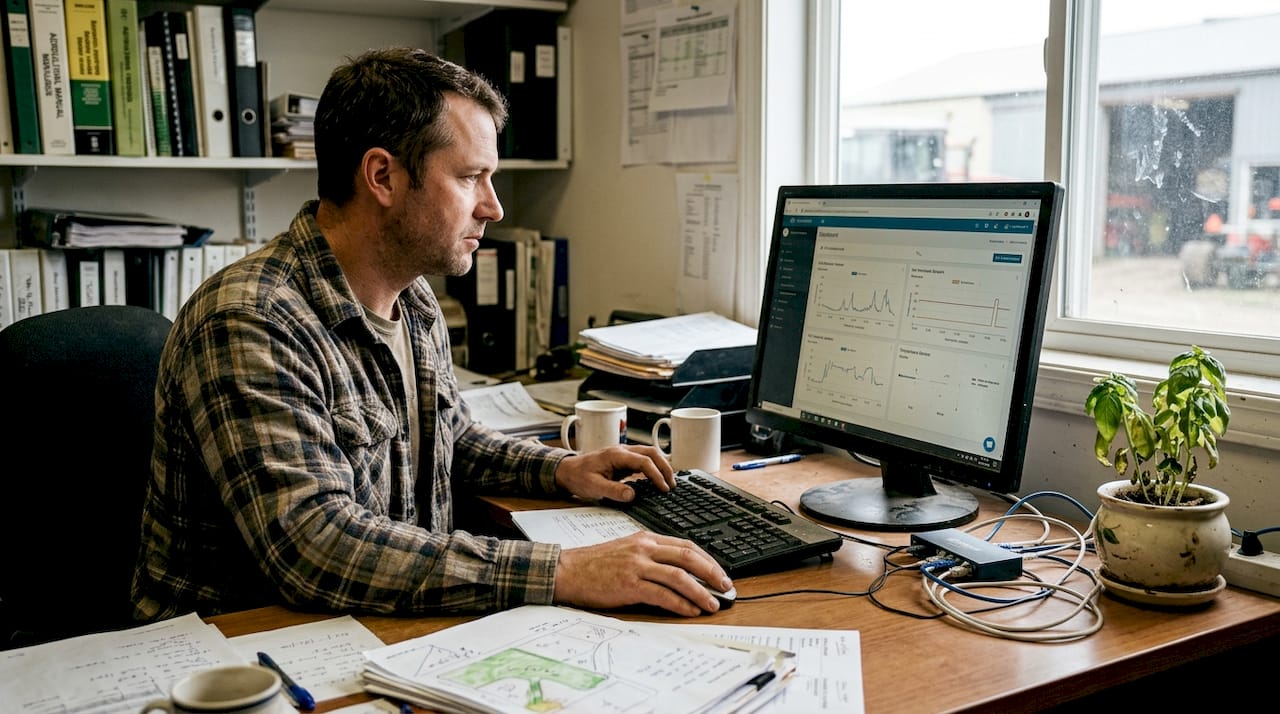
AI and machine learning analytics process this data to predict crop needs and recommend optimal fertilizer rates. These methodologies combine IoT integration, AI analysis, edge computing, and VRA to create responsive management systems. Edge computing processes data locally on farm devices, enabling real-time decisions even when internet connectivity is unreliable. This matters in rural Greek areas where network coverage can be inconsistent.
Variable rate application technology uses sensor insights to adjust nitrogen, water, or pesticide amounts dynamically as equipment moves through different field zones. Instead of blanket applications, VRA targets inputs precisely where needed, reducing costs and environmental impact. For example, areas with higher organic matter receive less nitrogen, while depleted zones get more. This level of control was impossible with traditional methods.
Implementing these technologies doesn’t require a complete overhaul. You can start by connecting moisture sensors to your existing irrigation system, automating watering based on real soil conditions rather than timers. Once you see results, expand to nutrient sensors and integrate them with fertilizer spreaders. Many agricultural automation systems offer modular designs that let you add capabilities gradually.
Steps to integrate sensor data into farm management:
- Install basic sensors in representative field zones to establish baseline data
- Connect sensors to an IoT platform that aggregates and visualizes measurements
- Use AI analytics tools to identify patterns and generate management recommendations
- Implement edge computing devices for local data processing in areas with weak connectivity
- Integrate sensor outputs with VRA equipment to automate precision applications
Pro Tip: Start small by connecting moisture sensors to irrigation controls. This single integration builds your confidence with sensor technology and delivers immediate water savings before you invest in more complex systems.
Case studies and benefits of sensor adoption on Greek farms
Greek agriculture has documented successful sensor implementations that demonstrate real productivity gains. In Chania, Crete, citrus growers use optical sensors and remote sensing to detect Citrus Tristeza Virus and delineate management zones in orchards. Early disease detection allows targeted removal of infected trees, preventing widespread losses. Soil sensors in Western Greece olive farms identify zones with different nutrient requirements, enabling precise fertilization that improves oil yield and quality.
Field trials show that sensor-based VRA increases nitrogen efficiency by 15% and reduces fertilizer application by up to 40 kg per hectare without yield loss. These savings add up quickly across large operations. Beyond cost reduction, precision fertilization minimizes nutrient runoff into water systems, supporting environmental sustainability goals increasingly important for EU agricultural compliance.
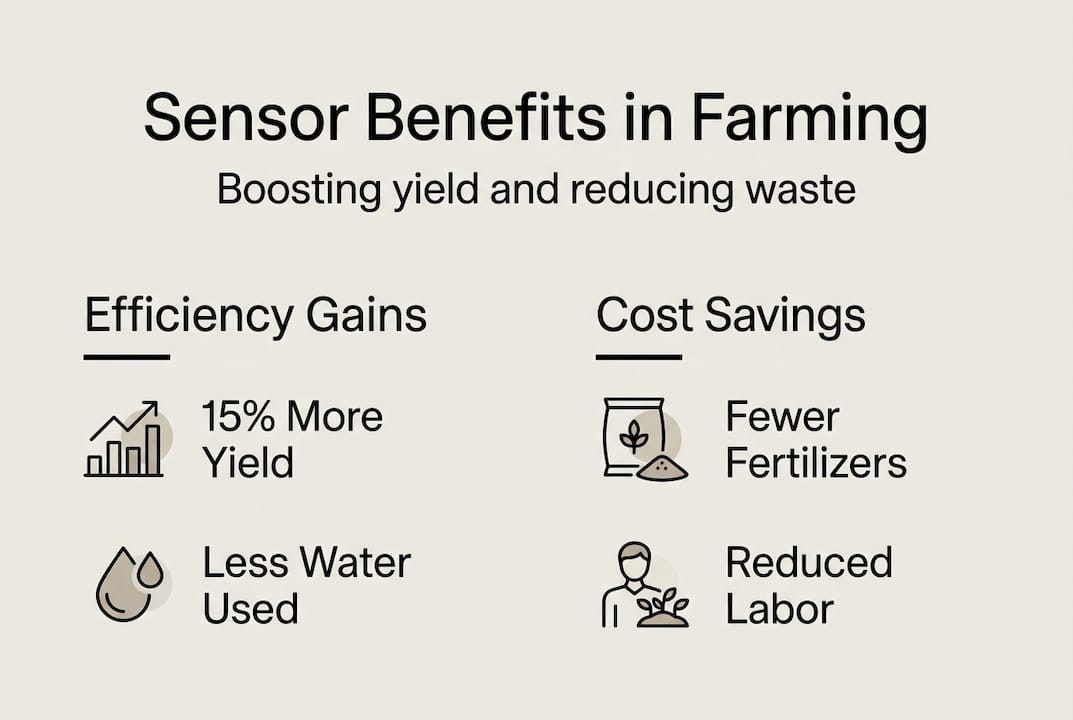
Productivity benefits extend to labor efficiency. Automated sensor systems reduce the time spent manually checking soil conditions or scouting for disease symptoms. You can monitor multiple fields simultaneously from a central location, redirecting labor to higher value tasks. Water savings are particularly significant in drought-prone regions, where moisture sensors prevent over-irrigation and extend limited water supplies.
| Management approach | Nitrogen application rate (kg/ha) | Efficiency gain (%) | Yield impact |
|---|---|---|---|
| Traditional uniform | 180 | Baseline | Baseline |
| Sensor-based VRA | 140 | +15 | No loss |
| Savings per hectare | 40 | – | Maintained |
These results come from controlled trials, but real farm conditions vary. Soil texture, crop variety, and local climate all influence outcomes. That’s why validating sensor benefits on your own land matters before committing to large-scale adoption.
Pro Tip: Conduct small-scale trials on a single field or zone before investing across your entire farm. Document baseline conditions, apply sensor-guided management, and compare results to traditional methods. This evidence-based approach reduces risk and builds confidence in the technology.
Challenges and practical advice for implementing sensors in Greek agriculture
Despite clear benefits, sensor adoption faces obstacles. High initial costs deter small farms operating on tight margins. Quality soil moisture sensors range from 200 to 500 euros each, and you need multiple units for accurate field coverage. Optical and hyperspectral systems cost significantly more. Training requirements add another barrier, as interpreting sensor data and adjusting management practices demands new skills many farmers lack.
Connectivity and power supply issues plague rural installations. Sensor accuracy suffers from soil variability, and devices require regular calibration to maintain reliability. Small Greek farms show adoption rates below 40% for GPS and VRA technologies, reflecting these practical challenges. Farmers hesitate to invest in systems they don’t fully understand or that require ongoing technical support.
Overcoming these hurdles requires realistic planning. Start with affordable, proven sensor types like basic moisture probes rather than expensive hyperspectral systems. Leverage hybrid edge-cloud computing that processes data locally and syncs when connectivity allows, reducing dependence on constant internet access. Seek EU subsidies and regional training programs that offset costs and build technical capacity. Greek agricultural extension services increasingly offer sensor technology workshops and demonstration projects.
Monitor site-specific factors carefully. Sandy soils require different sensor calibration than clay-heavy soils. Calibrate sensors for your specific soil type to improve accuracy. Choose rugged, weather-resistant models designed for Mediterranean conditions with high summer heat and winter moisture. Durability matters more than advanced features if devices fail frequently.
Balance high-tech aspirations with practical constraints. You don’t need every sensor type or the most sophisticated AI platform. Focus on technologies that address your biggest management challenges, whether that’s water scarcity, disease pressure, or fertilizer costs. Compatible machinery and telematics can enhance sensor value by automating responses to data insights.
Actionable steps to overcome sensor implementation barriers:
- Begin with one or two affordable sensor types addressing your primary challenge
- Attend regional training sessions to build technical skills and network with experienced users
- Apply for EU and national subsidies that reduce upfront investment costs
- Use hybrid edge-cloud systems to manage connectivity limitations in remote areas
- Calibrate sensors specifically for your soil type and recalibrate regularly
- Partner with agricultural cooperatives to share equipment costs and expertise
Explore agricultural machinery and parts to enhance your sensor-based systems
Sensor technology delivers maximum value when integrated with well-maintained, compatible equipment. Variable rate applicators, precision irrigation systems, and modern tractors require quality parts that ensure reliable operation. Upgrading your machinery to support sensor inputs doesn’t mean replacing everything. Often, retrofitting existing equipment with compatible controllers and actuators provides a cost-effective path to precision farming.
Pexlivanidis offers resources to help you optimize your equipment for sensor integration. Our extensive inventory includes parts for tractors and application equipment that support precision agriculture. Whether you need components for irrigation automation or variable rate fertilizer spreaders, quality parts prevent downtime and maintain the accuracy sensor systems demand.
Related resources available:
- Essential machinery parts that support precision farming equipment
- Equipment upgrade checklists for integrating sensor technology
- Maintenance guides to keep precision systems operating reliably
Well-maintained equipment maximizes sensor technology benefits and farm productivity. Investing in quality parts and regular maintenance protects your precision farming investment and ensures consistent performance season after season.
Frequently asked questions
How do soil moisture sensors benefit Greek olive farmers?
Soil moisture sensors provide precise irrigation data that helps you reduce water use while maintaining crop health and oil quality. Improved water management boosts olive yield in water-scarce regions and prevents over-irrigation that can harm root systems. Real-time monitoring lets you irrigate only when soil moisture drops below optimal levels, saving water and energy costs.
What are the main challenges in adopting sensor technology on small farms?
High initial costs and lack of technical training hinder adoption among small Greek farms. Connectivity and power supply issues in rural areas reduce sensor reliability and complicate data transmission. Limited access to subsidies and technical support further slows implementation, though regional programs are expanding to address these gaps.
Can sensor-based variable rate application reduce fertilizer costs?
Yes, VRA can reduce nitrogen application by up to 40 kg per hectare without yield loss. This improves nutrient use efficiency and lowers input costs while supporting sustainable farming practices. Precision application also minimizes environmental impact by reducing nutrient runoff into water systems.
How can Greek farmers overcome connectivity issues with sensors in remote areas?
Use hybrid edge-cloud computing systems that process sensor data locally and sync with central platforms when connectivity allows. Choose durable, low-maintenance sensors designed for rural conditions with limited network access. Solar-powered sensors eliminate dependence on electrical infrastructure and ensure continuous operation in remote fields.