

Most farmers think technical support means calling someone when a tractor breaks down. That narrow view costs thousands in preventable downtime every season. True technical support in agriculture encompasses maintenance planning, spare parts management, expert diagnostics, and proactive guidance that keeps your equipment running when you need it most. This guide clarifies what technical support actually includes, how it protects your investment in machinery, and practical steps to access these services effectively across Greek farming operations.
Table of Contents
- What Is Technical Support In Agriculture?
- How Technical Support Improves Agricultural Machinery Performance
- Key Components Of Agricultural Technical Support Services
- How To Access And Utilize Technical Support Effectively On Your Farm
- Why Choose Pexlivanidis For Your Agricultural Technical Support Needs?
Key takeaways
| Point | Details |
|---|---|
| Technical support scope | Extends beyond emergency repairs to include scheduled maintenance, diagnostics, parts sourcing, and expert consultation for optimal equipment performance. |
| Machinery lifespan impact | Proactive support and genuine spare parts significantly extend equipment life while reducing unexpected breakdowns during critical farming periods. |
| Downtime reduction | Professional technical assistance minimizes costly operational delays through rapid problem resolution and preventive maintenance strategies. |
| Farm productivity connection | Proper machinery care directly influences crop yields, operational efficiency, and overall farm profitability through reliable equipment performance. |
What is technical support in agriculture?
Technical support in agriculture represents a comprehensive system of services designed to keep your farming equipment operational and efficient. Unlike basic customer service that handles orders and general questions, technical support dives deep into the mechanical, electrical, and operational aspects of your machinery.
The scope includes several critical functions. Maintenance scheduling ensures your equipment receives attention before problems develop. Diagnostic services identify issues quickly when they arise. Spare parts supply connects you with genuine components that match your machinery specifications. Expert consultation helps you optimize equipment settings for specific field conditions and crops.
Think of technical support as your machinery’s healthcare system. Just as preventive medicine keeps people healthier than emergency room visits alone, proactive technical support maintains equipment better than reactive repairs. This farming context matters because agricultural machinery faces unique stresses. Dust, moisture, heavy loads, and seasonal intensity create conditions that demand specialized knowledge.
Professional technical support differs fundamentally from DIY troubleshooting or generic repair shops. Agricultural technicians understand crop cycles, recognize seasonal wear patterns, and know which parts fail under specific farming conditions. They speak your language and grasp the urgency when planting or harvest windows narrow.
Key components farmers should expect include:
- Scheduled servicing aligned with your operational calendar
- Remote and on-site diagnostics for complex issues
- Access to genuine spare parts with proper specifications
- Technical training on new equipment features
- Emergency support during peak farming periods
- Documentation and maintenance history tracking
This comprehensive approach transforms technical support from a cost center into a productivity partner. When you understand what real technical support delivers, you can evaluate providers effectively and build relationships that protect your equipment investment year after year.
How technical support improves agricultural machinery performance
Effective technical support creates measurable improvements in how your equipment functions daily. Regular maintenance and expert support directly impact your bottom line through reduced breakdowns, optimized fuel consumption, and extended machinery life.
Scheduled servicing catches small problems before they become expensive failures. A loose belt identified during routine inspection costs minimal time and money. That same belt breaking during harvest creates cascading delays, potential crop losses, and emergency repair expenses. Technical support builds prevention into your operational rhythm.
Professional advice helps you configure machinery correctly for varying conditions. Soil types, crop varieties, and field topography all influence optimal equipment settings. Technicians who understand both machinery and agriculture guide adjustments that improve work quality while reducing unnecessary wear. Your planter operates more efficiently, your harvester wastes less grain, and your tillage equipment conserves fuel.
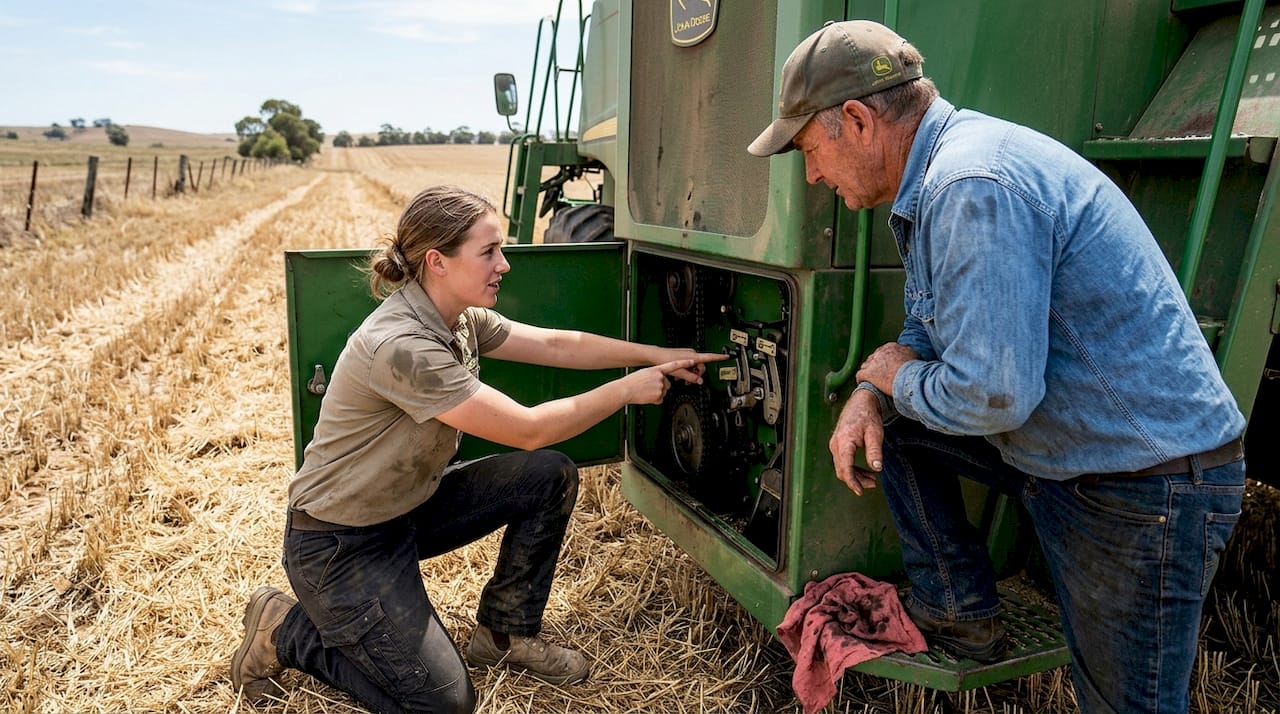
Prompt spare parts availability eliminates the productivity killer of waiting. When a component fails, having immediate access to the correct replacement keeps downtime measured in hours rather than days or weeks. Technical support networks maintain inventory specifically for agricultural equipment, understanding which parts farmers need urgently.
Follow this sequence to maximize performance benefits:
- Establish baseline performance metrics for each machine
- Schedule maintenance during off-peak periods
- Document all service activities and observations
- Review performance data with technical advisors quarterly
- Adjust maintenance intervals based on actual usage patterns
- Invest in recommended upgrades that improve efficiency
Pro Tip: Track fuel consumption per hectare for each major piece of equipment. Increases often signal developing mechanical issues before obvious symptoms appear, allowing proactive intervention.
The performance improvements compound over time. Well-maintained machinery holds resale value better. Operators work more confidently with reliable equipment. Seasonal stress decreases when you trust your fleet. These factors create operational stability that lets you focus on agronomic decisions rather than constant equipment crises.
Yield impacts prove particularly significant. Research consistently shows that timely field operations directly influence crop productivity. Planting delays reduce yields. Harvest timing affects grain quality. When technical support keeps your machinery ready for optimal windows, you capture the full genetic potential of your crops.
Key components of agricultural technical support services
Understanding the building blocks of comprehensive technical support helps you evaluate providers and prioritize services that deliver maximum value to your operation.
Routine maintenance forms the foundation. This includes oil changes, filter replacements, lubrication, belt inspections, and calibration checks performed on regular schedules. Preventive maintenance follows manufacturer specifications while adapting to your specific usage intensity and environmental conditions.
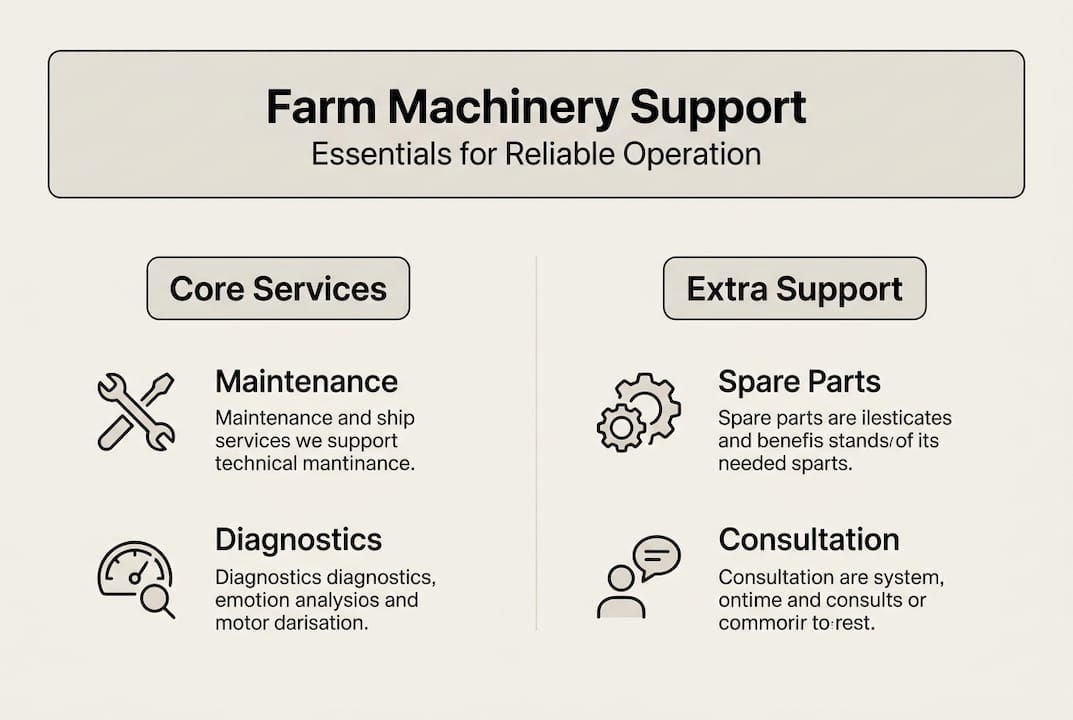
Fault diagnosis requires specialized equipment and expertise. Modern agricultural machinery incorporates complex electronics, hydraulics, and mechanical systems. Professional diagnostics use computerized tools to read error codes, test component function, and identify root causes rather than symptoms. This precision prevents unnecessary part replacements and speeds repairs.
Spare parts supply connects you with genuine components manufactured to original specifications. Aftermarket parts may seem economical initially but often fail prematurely or cause secondary damage. Quality technical support maintains relationships with authorized parts suppliers, ensuring authenticity and proper fitment.
On-site repairs bring expertise to your location when moving equipment proves impractical. Mobile service units equipped with tools, diagnostic equipment, and common parts minimize disruption to your operation. This service becomes invaluable during planting and harvest when every hour counts.
Comparing approaches clarifies value:
| Approach | Initial Cost | Long-term Reliability | Downtime Risk | Expertise Level |
|---|---|---|---|---|
| DIY repairs | Low | Variable | High | Limited |
| Generic mechanic | Medium | Moderate | Medium | General |
| Agricultural technical support | Higher | High | Low | Specialized |
| Manufacturer service | Highest | Highest | Lowest | Expert |
Technical consultation prevents future problems through knowledge transfer. Experienced technicians observe how you operate equipment, identify practices that accelerate wear, and recommend adjustments. This educational component builds your team’s capability over time.
Ordering genuine spare parts requires understanding part numbers, compatibility, and specifications. Quality technical support simplifies this process through accurate equipment records, cross-reference systems, and verification before ordering. You avoid the frustration of receiving incorrect parts that delay repairs further.
Pro Tip: Photograph your equipment serial number plates and store images digitally. This simple step speeds parts identification and ensures accuracy when ordering components remotely.
Emergency support availability distinguishes excellent technical support from basic service. Agriculture operates on nature’s schedule, not business hours. Providers who offer after-hours contact and prioritize urgent repairs during critical periods demonstrate true partnership with farming operations.
Key services to prioritize include:
- Pre-season equipment inspections before planting and harvest
- Warranty administration and claim processing
- Technical bulletins on known issues and solutions
- Parts inventory management for commonly needed components
- Operator training on new equipment features
- Performance optimization consultations
These components work together as an integrated system. Maintenance identifies wear. Diagnostics pinpoint problems. Parts supply enables repairs. Consultation prevents recurrence. Each element supports the others in keeping your machinery productive.
How to access and utilize technical support effectively on your farm
Maximizing value from technical support requires strategic engagement beyond simply calling when problems arise. Proactive farmers build relationships and systems that leverage expertise fully.
Identifying trusted service providers starts with research and recommendations. Seek providers specializing in agricultural equipment rather than general mechanics. Check credentials, manufacturer certifications, and references from other farmers. Local presence matters because proximity enables faster response during emergencies.
Preparing accurate information accelerates problem resolution dramatically. Before contacting support, gather equipment model numbers, serial numbers, hour meter readings, and specific symptom descriptions. Note when the problem occurs, under what conditions, and any recent changes to operation or maintenance. This preparation helps technicians diagnose issues efficiently, sometimes resolving problems remotely.
Scheduling regular check-ups aligns technical support with your farming calendar. Book pre-season inspections months in advance, securing service slots before peak demand. Plan major maintenance during weather delays or off-season periods when equipment sits idle anyway. This timing minimizes productivity impact while ensuring readiness for critical operations.
Maintaining detailed records creates valuable reference material for both you and technical support. Document all maintenance activities, repairs, parts replacements, and observations about equipment performance. Digital tools or simple spreadsheets work equally well. These records reveal patterns, justify warranty claims, and inform future maintenance decisions.
Follow this systematic approach:
- Establish relationships with technical support providers before emergencies
- Create equipment files with specifications, manuals, and service history
- Schedule annual comprehensive inspections for major machinery
- Maintain a prioritized spare parts inventory for critical components
- Train operators to recognize and report early warning signs
- Review maintenance costs quarterly to identify problematic equipment
- Participate in technical training opportunities offered by providers
Utilizing online resources extends technical support beyond phone calls. Many providers maintain parts catalogs, troubleshooting guides, and instructional videos accessible anytime. Bookmark these resources and familiarize yourself with navigation before you need urgent information. Online parts ordering systems let you check availability and place orders outside business hours.
Communicating effectively with technical support requires clarity and specificity. Describe problems using precise terms rather than vague complaints. “The hydraulic lift drops slowly over 30 minutes” provides more useful information than “the hydraulics don’t work right.” Share what you’ve already checked or attempted, preventing duplicated effort.
Building partnership rather than transactional relationships yields better service. Providers who understand your operation, equipment fleet, and farming practices can offer more relevant advice. Share your seasonal schedule, discuss upcoming equipment needs, and seek input on maintenance strategies. This collaboration creates mutual investment in your success.
Leveraging warranty coverage requires understanding terms and documentation requirements. Keep purchase receipts, maintain service records, and follow manufacturer maintenance schedules precisely. Technical support providers familiar with warranty processes can guide claim preparation and advocate on your behalf when disputes arise.
Key actions to implement immediately:
- Create a contact list with technical support phone numbers, email addresses, and emergency contacts
- Photograph all equipment identification plates for quick reference
- Establish a filing system for manuals, warranties, and service records
- Schedule next season’s pre-operational inspections now
- Identify which spare parts to stock based on historical needs
- Set calendar reminders for routine maintenance intervals
Proactive engagement transforms technical support from a reactive expense into a strategic advantage. You gain priority service, better pricing through relationship loyalty, and access to expertise that prevents problems rather than just fixing them.
Why choose Pexlivanidis for your agricultural technical support needs?
Navigating agricultural machinery maintenance and parts sourcing requires a partner who understands Greek farming conditions and equipment demands. Pexlivanidis combines extensive inventory, technical expertise, and local presence to support your operational success.
With over 20,000 agricultural machinery parts available, you access genuine components for tractors and equipment from major manufacturers. This inventory depth means faster repairs and less downtime waiting for parts to arrive. Free shipping within Greece on orders exceeding 100 euros adds practical value to already competitive pricing.
Comprehensive guides on maintaining agricultural machinery and machinery maintenance tips provide educational resources that build your team’s capability. These materials complement professional support services, creating a complete solution for equipment care. Locations in Thessaloniki and Kavala ensure regional accessibility for Greek farmers seeking reliable technical partnership.
FAQ
What is the difference between technical support and customer service in agriculture?
Technical support focuses on solving mechanical, electrical, and operational equipment problems through specialized expertise. Customer service handles general inquiries, order processing, and transaction support without requiring deep technical knowledge. Technical support requires understanding machinery systems, diagnostic procedures, and agricultural applications, while customer service emphasizes communication and administrative efficiency.
How often should I schedule maintenance with technical support?
Maintenance frequency depends on equipment type, usage intensity, and manufacturer recommendations, typically measured in operating hours rather than calendar time. Most agricultural machinery requires comprehensive servicing every 250 to 500 hours of operation, with daily checks and minor maintenance between major services. Seasonal pre-operational inspections before planting and harvest provide additional protection during critical periods when equipment reliability matters most.
Where can I find genuine spare parts for my agricultural machinery in Greece?
Authorized dealers and specialized agricultural parts suppliers offer genuine components manufactured to original specifications. Pexlivanidis maintains extensive inventory of essential agricultural machinery parts for tractors and equipment, with locations serving Thessaloniki, Kavala, and surrounding regions. Verify part authenticity through serial numbers, packaging, and supplier credentials to avoid counterfeit components that compromise reliability.
What should I do if my machinery breaks down during the planting season?
Contact your technical support provider immediately with specific equipment information and symptom descriptions to enable rapid diagnosis. Many providers offer emergency service prioritization during critical farming periods, deploying mobile repair units to minimize downtime. Maintain backup plans such as rental equipment arrangements, neighbor cooperation agreements, or alternative workflow strategies that let you continue operations while repairs proceed, protecting your planting window and crop potential.