

Traditional farming methods struggle to meet rising productivity demands while maintaining environmental sustainability. Greek farmers face increasing pressure to optimize yields, reduce resource waste, and adapt to climate challenges. Smart farming offers a technology-driven solution that transforms agricultural operations through digital tools, automation, and data analytics. This guide explains what smart farming is, how it works, and why Greek agricultural professionals are adopting these innovations to enhance their operations and secure long-term farm viability.
Table of Contents
- Understanding Smart Farming: Definition And Core Technologies
- Key Benefits Of Smart Farming For Greek Agriculture
- Popular Smart Farming Technologies And How They Work
- Implementing Smart Farming On Your Farm: Steps And Considerations
- Explore Top Agricultural Machinery Solutions With Pexlivanidis
- Frequently Asked Questions
Key takeaways
| Point | Details |
|---|---|
| Smart farming definition | Digital technologies optimize farm efficiency and sustainability through data-driven decisions |
| Core technologies | IoT sensors, GPS machinery, drones, and analytics monitor crops, soil, and equipment in real time |
| Productivity gains | Precision agriculture can boost yields by 15% while reducing input waste and costs |
| Phased adoption | Starting small with key tools allows gradual investment and learning without overwhelming operations |
| Integration benefits | Smart systems work with existing machinery to modernize traditional farming practices |
Understanding smart farming: definition and core technologies
Smart farming represents a digital transformation in agricultural management. It combines sensors, connectivity, and data analysis to make farming decisions more precise and efficient. Rather than applying uniform treatments across entire fields, farm automation enables targeted interventions based on real-time conditions.
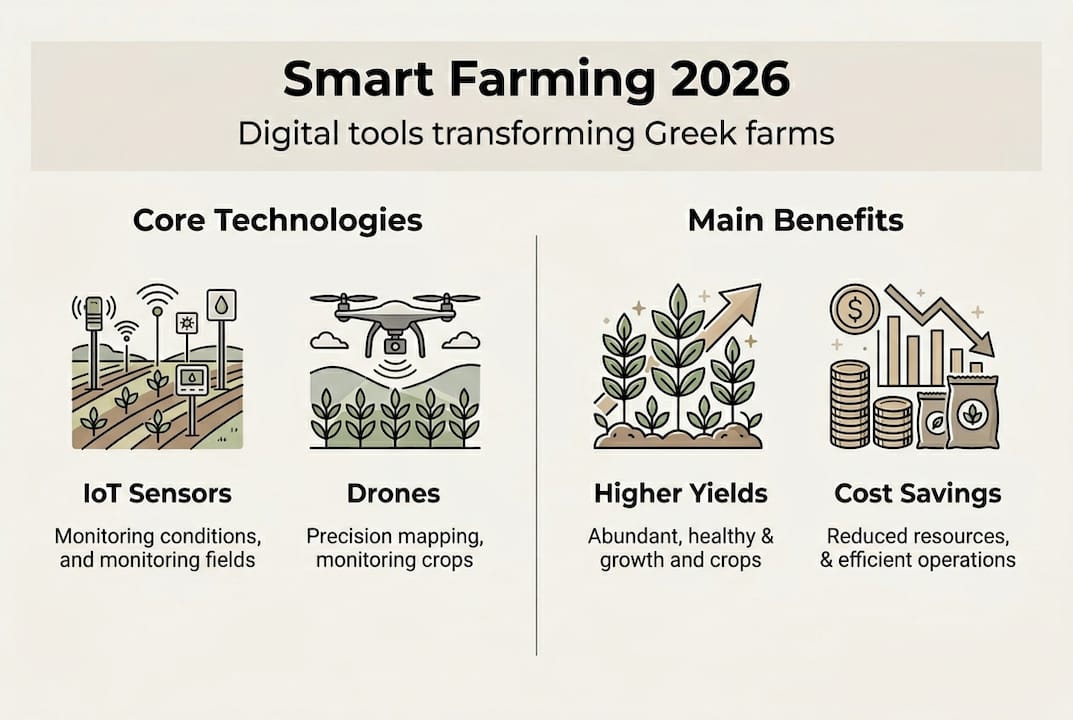
The foundation rests on several interconnected technologies working together. IoT sensors embedded in fields measure soil moisture, nutrient levels, and temperature continuously. GPS-guided machinery follows optimized paths to reduce overlap and fuel consumption. Drones capture aerial imagery revealing crop health patterns invisible from ground level. Data analytics platforms process this information into actionable insights farmers can implement immediately.
Connectivity ties everything together. Wireless networks transmit sensor readings to central systems where algorithms identify problems and recommend solutions. A farmer can monitor multiple fields simultaneously from a smartphone, receiving alerts when irrigation is needed or pests appear. This constant information flow replaces guesswork with evidence-based management.
The technologies enable precision at every stage. Planting equipment adjusts seed depth and spacing based on soil conditions in each zone. Variable rate applicators deliver fertilizer only where needed, avoiding waste. Harvesting machines optimize settings for crop moisture content. Every action becomes calibrated to specific conditions rather than broad averages.
Key smart farming technologies include:
- IoT sensors for continuous environmental monitoring
- GPS-guided tractors and implements for precision operations
- Agricultural drones for crop surveillance and targeted spraying
- Data analytics platforms for decision support
- Automated irrigation systems responding to real-time soil moisture
- Telematics tracking machinery performance and maintenance needs
These tools work together to create a responsive farming system. When sensors detect dry soil in one field section, automated irrigation activates only for that zone. Drone imagery showing disease in a corner triggers targeted fungicide application rather than blanket spraying. The result is farming that adapts continuously to changing conditions rather than following rigid schedules.
Key benefits of smart farming for Greek agriculture
Greek farmers adopting smart farming see measurable improvements across multiple dimensions. Precision agriculture can boost yields by 15% through optimized input application and better crop management. When fertilizer reaches plants at ideal times and quantities, growth accelerates without excess that washes away or burns roots. Targeted pest control stops problems before they spread, preserving more of the harvest.
Resource efficiency delivers immediate cost savings. Smart irrigation systems reduce water consumption by 30% or more by watering only when and where needed. Fertilizer expenses drop when application matches actual plant requirements rather than estimated averages. Fuel costs decrease as GPS guidance eliminates overlapping passes and optimizes routes. These savings compound over seasons, improving farm profitability substantially.
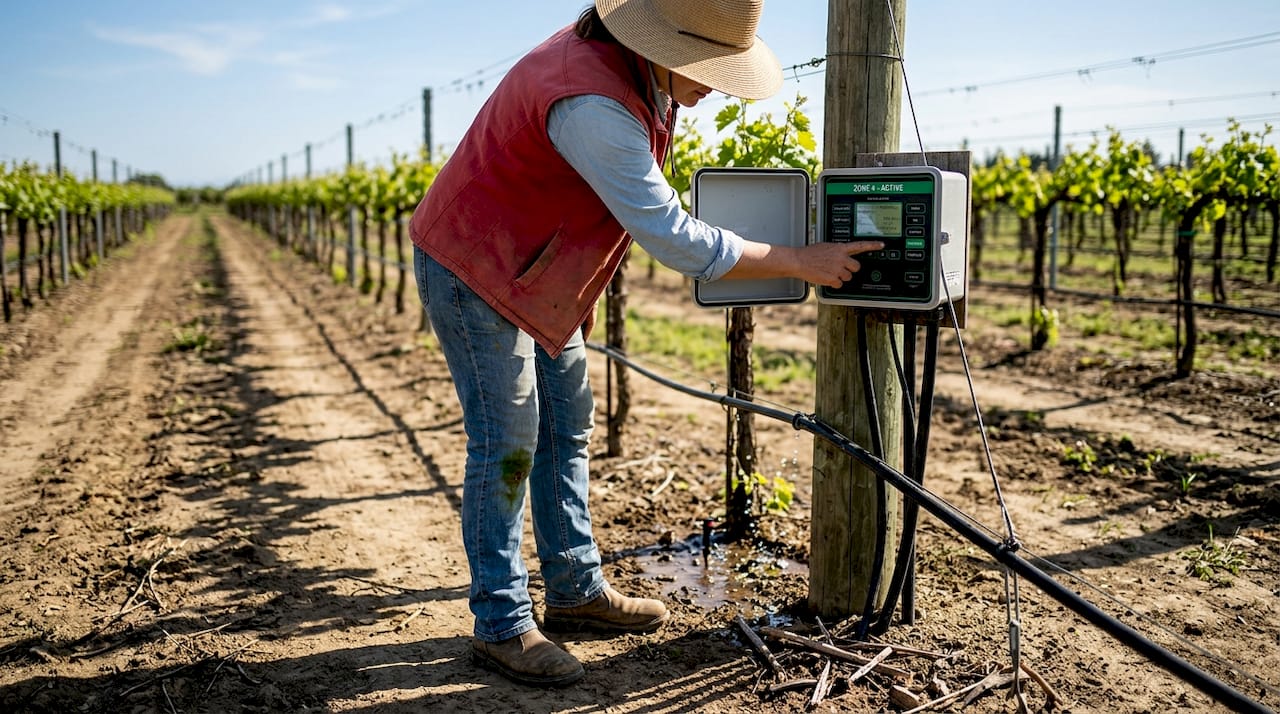
Environmental benefits align with Greek sustainability goals and regulatory requirements. Reduced chemical runoff protects waterways and soil health. Lower fuel consumption cuts carbon emissions from farm operations. Precision application minimizes pesticide impact on beneficial insects and surrounding ecosystems. Farmers meet environmental standards while maintaining productive operations.
Labor efficiency addresses workforce challenges many Greek farms face. Automated systems handle routine monitoring and adjustments, freeing workers for tasks requiring human judgment. One operator can manage larger areas effectively when technology handles repetitive activities. This becomes crucial as rural labor availability tightens and operational complexity increases.
Key advantages for Greek farms:
- Higher crop yields through optimized growing conditions
- Reduced input costs from precise resource application
- Environmental compliance supporting sustainability certifications
- Labor productivity gains from automation and monitoring
- Better decision making through data-driven insights
- Equipment longevity from optimized usage and maintenance tracking
Pro Tip: Start your smart farming journey with one technology that addresses your biggest challenge, whether that’s water management, pest control, or equipment efficiency. Master that system before adding others to avoid overwhelming yourself and your team with too many changes simultaneously.
The cumulative effect transforms farm economics. Lower costs combined with higher yields improve margins significantly. Better environmental performance opens access to premium markets and certifications. Enhanced efficiency allows expansion without proportional increases in labor or equipment. Smart farming creates competitive advantages that compound over time.
Popular smart farming technologies and how they work
Several technologies form the core of most smart farming implementations. Understanding how each works helps you select the right combination for your operation. Agricultural drones provide data for crop health and precise spraying, reducing input use while improving coverage. They fly programmed routes capturing multispectral imagery that reveals plant stress, disease, and nutrient deficiencies before visible symptoms appear. This early detection enables intervention when problems are small and treatment is most effective.
| Technology | Primary Function | Key Benefits | Typical Use Cases |
| — | — | — |
| Agricultural Drones | Aerial monitoring and targeted application | Early problem detection, reduced chemical use | Crop health assessment, pest mapping, precision spraying |
| IoT Sensors | Real-time environmental monitoring | Continuous data, automated responses | Soil moisture tracking, weather monitoring, equipment status |
| GPS-Guided Tractors | Precision navigation and application | Reduced overlap, fuel savings | Planting, fertilizing, harvesting with optimal paths |
| Telematics Systems | Machinery performance tracking | Maintenance optimization, usage insights | Fleet management, preventive maintenance, efficiency analysis |
Drones revolutionize field scouting by covering large areas quickly and consistently. Traditional walking inspections miss problems in remote sections and provide limited data. Drones capture complete field views in minutes, creating detailed maps showing exactly where issues exist. Farmers prioritize attention on problem zones rather than checking entire fields manually.
IoT sensors create a nervous system for your farm. Soil moisture probes report conditions every few minutes, triggering irrigation when thresholds are reached. Weather stations track local conditions more accurately than regional forecasts. Equipment sensors monitor engine performance, alerting you to maintenance needs before breakdowns occur. This constant stream of information replaces periodic checks with continuous awareness.
GPS-guided machinery eliminates human error in field operations. Tractors follow optimal paths with centimeter accuracy, ensuring complete coverage without gaps or overlaps. Variable rate controllers adjust seed, fertilizer, and chemical application based on prescription maps created from field data. The machinery becomes an extension of your management decisions, executing plans with precision impossible manually.
Telematics in agriculture transforms equipment management. Systems track operating hours, fuel consumption, and performance metrics for every machine. You see which implements work most efficiently and where operators need additional training. Maintenance schedules become predictive rather than reactive, reducing downtime and extending equipment life.
Pro Tip: Combining multiple technologies creates synergy greater than individual tools alone. Drone imagery identifies problem areas, IoT sensors provide detailed ground data for those zones, and GPS-guided equipment delivers precise treatments. This integrated approach maximizes the value of each technology investment.
The technologies share data through common platforms, creating unified farm management systems. Information flows between tools automatically, reducing manual data entry and enabling coordinated responses. When sensors detect dry conditions and drones confirm crop stress, irrigation systems activate automatically for affected zones. This integration transforms separate tools into a cohesive smart farming ecosystem.
Implementing smart farming on your farm: steps and considerations
Successful smart farming adoption follows a structured approach rather than random technology purchases. Greek farmers benefit most by phased adoption and ongoing equipment maintenance that ensures systems perform reliably over time. Planning your implementation carefully maximizes return on investment while minimizing disruption to current operations.
Follow these steps to implement smart farming effectively:
- Assess your current situation and identify specific challenges you want to address
- Research technologies that directly solve your priority problems
- Start with one or two systems that deliver immediate measurable benefits
- Train yourself and staff thoroughly on new equipment and software
- Collect data for at least one season to establish baselines and refine practices
- Expand gradually to additional technologies as you master initial systems
- Integrate new tools with existing equipment to maximize investment value
Technology selection depends on farm size, crop types, and specific operational challenges. Small farms might prioritize soil sensors and automated irrigation for immediate resource savings. Larger operations could benefit more from GPS-guided machinery and drone monitoring to manage extensive acreage efficiently. Match technology capabilities to your actual needs rather than adopting tools because they seem advanced.
Phased implementation manages both cost and complexity. Purchasing everything simultaneously overwhelms budgets and learning capacity. Starting with core technologies that address major pain points delivers quick wins and builds confidence. As you master initial systems and see results, expanding to complementary tools becomes natural and less risky.
Staff training determines whether technology delivers promised benefits. Equipment and software only work well when operators understand proper use. Invest time in comprehensive training from vendors and follow up with hands-on practice. Create simple reference guides for common tasks. Encourage questions and problem-solving as your team adapts to new workflows.
Integrating smart systems with existing machinery extends the value of current equipment. Many older tractors accept GPS guidance retrofits. Telematics modules attach to various implements. Sensor networks complement traditional irrigation systems. You modernize operations without replacing everything, reducing costs while gaining smart farming benefits.
| Technology Category | Initial Investment | Annual Operating Cost | Typical Payback Period | Primary Benefit |
|---|---|---|---|---|
| Soil Sensors | Low to Medium | Low | 1 to 2 years | Water and fertilizer savings |
| GPS Guidance | Medium | Low | 2 to 3 years | Reduced input overlap and fuel |
| Agricultural Drones | Medium to High | Medium | 2 to 4 years | Early problem detection |
| Automated Irrigation | Medium to High | Low | 2 to 3 years | Water conservation |
| Telematics Systems | Low to Medium | Medium | 1 to 2 years | Maintenance cost reduction |
Consider connectivity requirements when planning implementation. Smart farming depends on reliable data transmission between field sensors, machinery, and management platforms. Assess cellular coverage across your property or investigate alternative connectivity solutions like farm-wide wireless networks. Poor connectivity undermines even the best technology.
Key implementation considerations:
- Budget for ongoing software subscriptions and data services beyond initial hardware costs
- Plan for regular system maintenance and calibration to ensure accuracy
- Establish data management practices for storing and analyzing information
- Consider compatibility between different technology brands and platforms
- Factor in time needed for learning curves before expecting full benefits
Staying current with agricultural machinery trends helps you plan future expansions and avoid obsolete technology. The smart farming landscape evolves rapidly with new capabilities and better integration. Building a flexible system that accommodates additions and upgrades protects your investment over time.
Explore top agricultural machinery solutions with Pexlivanidis
Successful smart farming requires reliable equipment and expert maintenance support. Pexlivanidis provides Greek farmers with comprehensive agricultural machinery parts and guidance to keep your operations running smoothly. Our extensive inventory of over 20,000 items ensures you find the components needed to maintain and upgrade equipment as you adopt smart farming technologies.
Keeping machinery in peak condition maximizes your smart farming investment. Our detailed agricultural machinery maintenance guide helps you develop preventive maintenance schedules that reduce downtime and extend equipment life. When you integrate new smart systems with existing tractors and implements, proper maintenance becomes even more critical to ensure all components work together reliably.
Explore our agricultural machinery upgrade tips to learn how modernizing existing equipment can deliver smart farming benefits without complete replacement. Visit pexlivanidis.com to discover the parts, expertise, and support that help Greek farmers succeed with technology-enhanced agriculture.
Frequently asked questions
What exactly is smart farming and how does it differ from traditional agriculture?
Smart farming uses digital technologies like sensors, GPS, drones, and data analytics to optimize agricultural operations. Unlike traditional farming that relies on experience and observation, smart farming makes decisions based on real-time data about soil, crops, weather, and equipment. This precision approach reduces waste, increases yields, and improves sustainability compared to conventional methods that apply uniform treatments across entire fields.
What are the main benefits of adopting smart farming for Greek farmers?
Greek farmers gain higher crop yields, reduced input costs, and better environmental compliance through smart farming. Precision agriculture can boost yields by 15% while cutting water use by 30% or more. Labor efficiency improves as automated systems handle routine monitoring and adjustments. These benefits combine to increase profitability while meeting sustainability requirements and protecting natural resources for future seasons.
How much does it cost to start smart farming and is it affordable for small farms?
Initial costs vary widely depending on technologies chosen and farm size. Soil sensors and basic telematics start at a few thousand euros, while comprehensive drone systems cost more. Small farms should begin with one or two technologies addressing their biggest challenges, with payback periods typically ranging from one to four years. Phased adoption spreads costs over time while delivering incremental benefits that fund further expansion.
Do I need special training to use smart farming technology?
Most smart farming systems are designed for farmers without technical backgrounds, though some learning is required. Vendors typically provide training on equipment operation and software use. You should plan several weeks to become comfortable with new systems and expect a full season to master them completely. Starting with simpler technologies builds confidence before moving to more complex integrated systems.
Can smart farming technology work with my existing tractors and equipment?
Many smart farming technologies integrate with older equipment through retrofits and attachments. GPS guidance systems install on most tractors manufactured in recent decades. Telematics modules attach to various implements. Sensor networks and drones work independently of existing machinery. This compatibility allows you to modernize operations gradually without replacing everything, making smart farming accessible even with older equipment fleets.