

Many Greek farmers wait until machinery breaks before servicing it, which triggers expensive emergency repairs and lost productivity during critical planting or harvest windows. Preventive maintenance flips this approach by scheduling regular inspections, lubrication, and part replacements before failures occur. This guide reveals how proactive maintenance reduces repair costs, extends equipment life, and keeps your farm running smoothly year-round.
Table of Contents
- Introduction To Preventive Maintenance In Agriculture
- Quantified Benefits Of Preventive Maintenance
- Key Maintenance Practices For Agricultural Equipment
- Maintenance Scheduling Strategies
- Common Misconceptions And Mistakes In Preventive Maintenance
- Operational And Cost Efficiency Improvements
- Discover Essential Parts And Maintenance Guides For Farm Machinery
- FAQ
Key takeaways
| Point | Details |
|---|---|
| Cost reduction | Preventive maintenance reduces repair costs by up to 30% and minimizes unplanned downtime by 25%. |
| Extended lifespan | Routine care can double or triple equipment lifespan by maintaining engine health and reducing wear. |
| Smart scheduling | Usage-based schedules tied to operating hours optimize timing and cost efficiency better than fixed calendar dates. |
| Record keeping | Systematic maintenance logs support timely servicing and help identify recurring issues before they escalate. |
Introduction to preventive maintenance in agriculture
Preventive maintenance means performing scheduled inspections, lubrication, filter replacements, and fluid checks before your machinery shows signs of trouble. Instead of reacting to breakdowns, you anticipate wear and address it early. For Greek farmers managing tight planting and harvest schedules, this proactive approach prevents costly downtime when equipment failure would be most damaging.
Agricultural machinery maintenance directly impacts your farm’s profitability. When tractors, harvesters, or irrigation pumps fail mid-season, you face repair bills, lost productivity, and potentially missed market windows. Preventive maintenance extends farm equipment lifespan by improving engine health, reducing wear, and ensuring fuel efficiency. This approach gives you predictable costs and reliable operation.
Core preventive maintenance activities include:
- Lubricating moving parts, bearings, and joints to reduce friction and wear
- Inspecting hydraulic systems for leaks and maintaining proper fluid levels
- Checking tire pressure and track condition to ensure safety and traction
- Replacing engine oil, air filters, and fuel filters according to manufacturer intervals
- Testing electrical systems and battery health before peak seasons
- Cleaning debris from radiators, air intakes, and cooling systems
By integrating these tasks into your farm routine, you shift from expensive reactive repairs to affordable, planned upkeep. This protects your equipment investment and keeps your operation running during the critical weeks that determine your annual harvest success.
Quantified benefits of preventive maintenance
Data consistently shows that scheduled maintenance delivers measurable financial and operational gains. Using a usage-based approach tied to machine hours can reduce repair costs by up to 30% compared to time-based schedules. This difference stems from servicing equipment when it actually needs attention, not just because a calendar month passed.
Lifespan extension represents the most dramatic benefit. Routine preventive maintenance can double or triple the operational lifespan of farm machinery. A tractor that might last 5,000 hours with minimal care can reach 10,000 to 15,000 hours with consistent preventive servicing. This multiplies your return on equipment investment and delays costly replacement purchases.
Here’s how preventive maintenance compares to reactive approaches:
| Maintenance approach | Average repair cost per year | Equipment lifespan | Downtime incidents |
|---|---|---|---|
| Reactive only | High baseline | Standard lifespan | Frequent unplanned |
| Calendar-based preventive | 15-20% lower | 1.5-2x standard | Reduced |
| Usage-based preventive | 25-30% lower | 2-3x standard | Minimal |
These improvements compound over time. A farm running five tractors could save thousands of euros annually while avoiding the disruption of mid-season breakdowns. Understanding the machinery lifecycle helps you plan investments around predictable replacement timelines instead of emergency purchases.
“Preventive maintenance programs that track operating hours and usage patterns deliver the highest return on investment, reducing total maintenance costs by nearly one-third while dramatically extending equipment service life.”
For Greek farmers operating in competitive markets, these savings directly improve your bottom line. The upfront time investment in regular servicing pays dividends through lower repair bills, fewer emergency calls, and equipment that performs reliably when you need it most.
Key maintenance practices for agricultural equipment
Implementing effective preventive maintenance requires focusing on the systems most prone to failure and wear. Proper lubrication and hydraulic system maintenance prevent mechanical failures and extend equipment operability. These practices should become non-negotiable parts of your farm routine.
Lubrication stands as your primary defense against premature wear. Greasing pivot points, bearings, and moving joints reduces friction that causes metal surfaces to degrade. During harvest season, when equipment runs long hours daily, lubrication becomes even more critical. Carry a grease gun and inspection checklist to your field equipment, and make daily lubrication a habit before starting work.
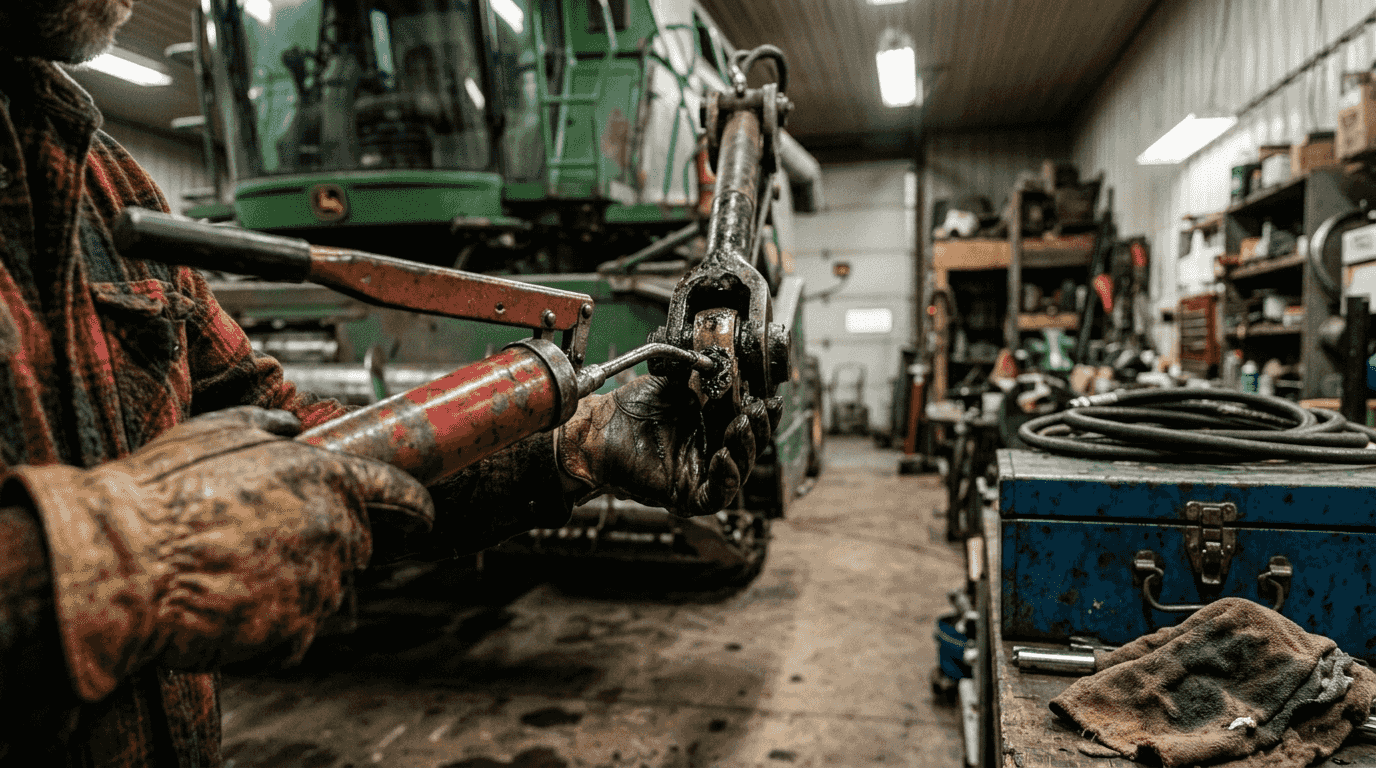
Hydraulic systems power essential functions like lifting implements, steering, and operating attachments. Check hydraulic fluid levels weekly and inspect hoses for cracks, bulges, or leaks. Low fluid or contaminated hydraulic oil causes sluggish operation and can damage expensive pumps and cylinders. Replace filters according to your manufacturer’s schedule, typically every 500 to 1,000 operating hours.
Tires and tracks require regular attention to maintain traction and prevent premature replacement:
- Check tire pressure weekly using an accurate gauge, adjusting for load and field conditions
- Inspect treads for cuts, embedded debris, or uneven wear patterns indicating alignment issues
- Examine track tension and guide wheels on tracked equipment to prevent derailment
- Rotate tires when possible to equalize wear across all positions
Engine maintenance protects your most valuable equipment component. Follow oil change intervals based on operating hours, not calendar months. Diesel engines working in dusty Greek field conditions need fresh air and fuel filters more frequently than manufacturer minimum recommendations suggest. Quality spare parts make a measurable difference in engine longevity and performance.
Pro Tip: During peak planting and harvest seasons, perform hydraulic checks and lubrication tasks at the start of each day, not the end. Morning maintenance catches potential issues before they cause mid-day breakdowns when repair shops are busy and delays cost you the most.
Comprehensive tractor maintenance includes checking cooling system hoses, testing battery voltage, and inspecting drive belts for cracks or glazing. Understanding essential tractor maintenance steps and following performance-focused maintenance tips keeps your primary power source reliable through demanding work cycles.
Maintenance scheduling strategies
Creating an effective maintenance schedule requires aligning tasks with your equipment’s actual usage and your farm’s operational rhythm. A preventive maintenance schedule with daily, weekly, and seasonal tasks effectively reduces the risk of expensive repairs and unplanned downtime. This structured approach ensures nothing gets overlooked during busy periods.
Usage-based scheduling outperforms fixed calendar approaches because it accounts for actual wear. A tractor operating eight hours daily during harvest experiences far more stress than one used two hours weekly for light tasks. Using a usage-based approach tied to machine hours can reduce repair costs by up to 30% compared to time-based schedules by matching maintenance intervals to real operating conditions.
Follow these steps to build your maintenance schedule:
- Install hour meters on all major equipment if not already present to track actual operating time accurately.
- Obtain manufacturer maintenance schedules and convert time intervals to operating hours where possible.
- Create daily checklists for quick inspections covering fluid levels, tire pressure, and visual damage checks.
- Schedule weekly tasks like lubrication, hydraulic checks, and filter inspections for consistent execution.
- Plan seasonal deep maintenance before planting and after harvest when equipment sits idle.
- Document all completed tasks with dates, hours, and any issues discovered for future reference.
Compare the effectiveness of different scheduling approaches:
| Schedule type | Maintenance timing | Cost efficiency | Downtime prevention |
|---|---|---|---|
| Calendar-based | Fixed dates regardless of use | Moderate | Good |
| Usage-based | Tied to operating hours | High | Excellent |
| Hybrid | Combines both methods | Highest | Excellent |
Most farms benefit from a hybrid approach that uses operating hours as the primary guide while also scheduling seasonal inspections before critical periods. Understanding the machinery lifecycle helps you anticipate when equipment approaches replacement age versus when preventive care remains cost-effective.
Pro Tip: Keep a simple maintenance logbook in each tractor cab with columns for date, operating hours, tasks completed, and observations. This habit takes two minutes per session but creates invaluable records for identifying patterns and optimizing future schedules. Digital apps work well, but paper logs survive harsh field conditions.
Consult your tractor maintenance schedule guide to establish baseline intervals, then adjust based on your specific operating conditions. Dusty environments, heavy loads, and extended daily operation all justify more frequent servicing than manufacturer minimums suggest.
Common misconceptions and mistakes in preventive maintenance
Many farmers undermine their maintenance efforts through persistent misconceptions about when and how to service equipment. The most damaging belief is that maintenance only matters after something breaks. This reactive mindset transforms affordable routine care into expensive emergency repairs and creates downtime during your busiest seasons.
Ignoring lubrication and manufacturer guidelines is a common costly mistake that leads to major repairs and delays. Manufacturer recommendations exist because engineers know which components fail first under normal use. Dismissing these guidelines because “my old tractor never needed that” ignores improvements in modern equipment that require specific care.
Calendar-based scheduling alone fails to account for usage variations. A combine sitting idle for eight months doesn’t need the same service interval as one running daily. Yet many farmers service equipment in January simply because the calendar changed, wasting money on unnecessary maintenance while missing actual wear-driven needs.
Avoid these common mistakes that increase repair risks:
- Waiting until equipment fails before scheduling maintenance checks
- Skipping lubrication tasks during busy periods when equipment needs it most
- Using incorrect or cheap fluids and filters to save money short-term
- Ignoring small issues like minor leaks or unusual noises until they become major failures
- Failing to clean equipment thoroughly, allowing debris to accelerate wear
- Performing maintenance without consulting manufacturer specifications
- Keeping no records of completed tasks or discovered issues
Another misconception treats all maintenance tasks as equally important. In reality, certain activities deliver disproportionate benefits. Lubrication and hydraulic checks prevent most common failures, while cosmetic cleaning matters less for mechanical longevity. Focus your limited time on high-impact tasks during peak seasons.
Some farmers believe that quality spare parts represent unnecessary expense compared to cheaper alternatives. This thinking ignores how inferior filters, belts, or fluids accelerate wear on expensive components like engines and hydraulic pumps. The small savings on parts become large losses when premature failures occur.
Successful preventive maintenance requires consistent execution of the right tasks at the right intervals. Identify which beliefs or habits might be undermining your efforts, then commit to evidence-based practices that deliver measurable results.
Operational and cost efficiency improvements
Preventive maintenance delivers benefits extending beyond avoiding breakdowns. Well-maintained equipment operates more efficiently, consuming less fuel and completing tasks faster. These improvements compound throughout the season, generating savings that exceed the cost of maintenance itself.
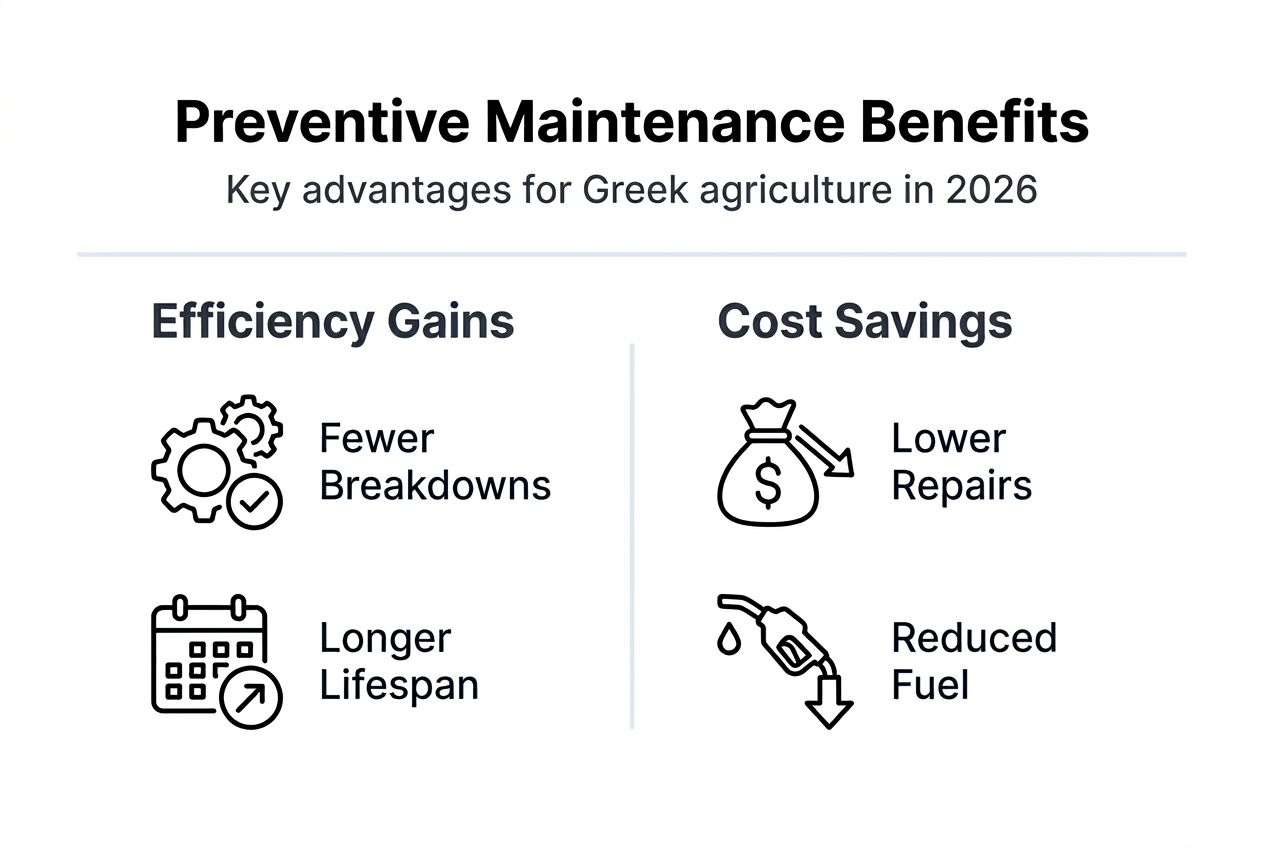
Preventive maintenance improves fuel efficiency by keeping machines tuned and filters clean, reducing operational costs. A clogged air filter forces your engine to work harder, burning more diesel for the same power output. Clean filters, fresh oil, and properly adjusted systems optimize combustion and reduce waste.
Uptime represents another critical advantage. During planting and harvest windows, every hour of equipment operation matters. Unplanned breakdowns during these periods don’t just cost repair bills but lost productivity when weather conditions and crop readiness demand immediate action. Preventive maintenance minimizes surprise failures that sideline equipment during your most valuable working days.
Key operational improvements from consistent preventive maintenance include:
- Reduced fuel consumption through optimal engine performance and clean filtration
- Increased equipment availability during critical planting and harvest windows
- Lower total ownership costs from fewer major repairs and extended equipment life
- Improved operator safety through reliable brakes, steering, and control systems
- Better resale value when equipment shows documented maintenance history
- Reduced stress and uncertainty about equipment reliability during busy seasons
Long-term cost savings emerge from avoiding the cascading failures that occur when one neglected component damages others. A seized bearing from inadequate lubrication can destroy an entire shaft assembly, turning a simple maintenance task into a complex repair. Understanding machinery lifecycle economics reveals how preventive care protects your capital investment throughout ownership.
“Farms implementing structured preventive maintenance programs report fuel savings of 8-12% annually while achieving 95% equipment uptime during critical operational periods, compared to 75-80% uptime for reactive maintenance approaches.”
For Greek farmers competing in European and global markets, these efficiency gains translate directly to better margins. The hours you invest in scheduled maintenance return multiples in fuel savings, avoided repairs, and reliable performance when your farm needs it most. This reliability also reduces the stress of wondering whether equipment will fail at the worst possible moment.
Discover essential parts and maintenance guides for farm machinery
Implementing effective preventive maintenance requires access to quality parts and expert guidance tailored to agricultural equipment. Pexlivanidis offers comprehensive resources to support Greek farmers in maintaining peak machinery performance. Our agricultural machinery parts guide explains component functions and replacement criteria to help you make informed decisions.
Explore detailed agricultural machinery maintenance guides that translate technical specifications into practical action steps. Our maintenance tips guide provides season-specific recommendations aligned with Greek farming cycles. With over 20,000 quality parts in stock and free shipping on orders exceeding 100€, we support your preventive maintenance efforts with reliable components and expert knowledge.
FAQ
What are the primary tasks included in preventive maintenance for farm machinery?
Preventive maintenance covers daily inspections of fluid levels and tire pressure, regular lubrication of bearings and joints, hydraulic system checks, and scheduled replacement of engine oil and filters. Seasonal deep maintenance before planting and after harvest addresses components requiring less frequent attention.
How often should farmers perform preventive maintenance on their agricultural machines?
Maintenance frequency should align with operating hours rather than calendar dates. Daily quick checks take five minutes, weekly lubrication and inspections require 30-60 minutes, and seasonal deep maintenance occurs before planting and after harvest when equipment sits idle.
What common mistakes should be avoided to maximize preventive maintenance benefits?
Avoid performing maintenance only after failures occur, which transforms affordable prevention into expensive emergency repairs. Never skip lubrication during busy periods when equipment needs it most. Don’t ignore manufacturer guidelines or rely solely on calendar dates instead of tracking actual operating hours and usage patterns.
Can preventive maintenance really extend the lifespan of agricultural equipment?
Yes, routine preventive maintenance can double or triple equipment operational lifespan compared to reactive approaches. Regular care improves engine health, reduces component wear, prevents cascading failures, and maintains efficiency that would otherwise decline over time. Documented maintenance also increases resale value when replacement time arrives.