
TL;DR:
- Selecting reliable supplier types is crucial for minimizing downtime and repair costs.
- Using a mix of authorized dealers, wholesalers, and online platforms optimizes cost and availability.
- Verifying membership in trusted associations ensures sourcing from reputable, quality-assured suppliers.
Choosing the wrong spare parts supplier is one of the most expensive mistakes a Greek farmer can make. A three-day wait for a critical hydraulic fitting during harvest isn’t just frustrating, it directly costs you yield, revenue, and time you’ll never recover. With dozens of supplier types available, from authorized dealers to online marketplaces and association networks, knowing which one to trust and when makes the difference between a machine that runs and one that sits idle. This guide breaks down every major supplier category, lays out clear selection criteria, and shows you exactly how to match supplier type to your specific farming needs.
Table of Contents
- Key criteria for selecting a spare parts supplier
- Authorized dealers and manufacturer-affiliated suppliers
- Independent wholesalers and distributors
- Online suppliers, e-commerce, and association networks
- Comparing supplier types: When to choose each model
- Our take: Don’t rely on one supplier type
- Find reliable spare parts suppliers today
- Frequently asked questions
Key Takeaways
| Point | Details |
|---|---|
| Evaluate supplier types | Understanding different supplier models helps you select the most reliable, cost-effective source for each part. |
| Leverage association networks | EKAGEM and similar organizations connect farmers with reputable, vetted spare parts suppliers across Greece. |
| Mix supplier approaches | Combining dealers, wholesalers, and online sources reduces downtime and ensures access to the right parts. |
| Prioritize fit and support | Choose suppliers who offer authentic parts and responsive after-sales support to keep your machinery productive. |
Key criteria for selecting a spare parts supplier
Every purchasing decision should start with a clear framework. Before you even browse a catalog or call a dealer, you need to know what to evaluate. Not all suppliers are created equal, and in Greek agriculture, where the variety of machinery ranges from vintage olive harvesters to modern GPS-equipped tractors, the stakes are especially high.
Here are the core criteria that should drive every supplier evaluation:
- Inventory depth and supply reliability: Can the supplier consistently fulfill orders for the parts you need? A supplier with 20,000+ items on hand is far more useful than one that constantly back-orders common wear parts.
- Parts authenticity and quality assurance: Are the components genuine OEM (original equipment manufacturer) parts or certified aftermarket alternatives? Non-authentic parts can damage other components and void warranties.
- Technical expertise and after-sales support: Can the supplier help you identify the correct part number, advise on compatibility, or troubleshoot a specification mismatch? This matters more than most people realize.
- Pricing transparency and shipping terms: Are prices clearly listed? What are the shipping costs and delivery timelines? For Greek farmers outside Thessaloniki or Kavala, free shipping thresholds and delivery speed are critical.
- Product range coverage: Does the supplier cover both common wear parts (filters, belts, tires) and specialized or harder-to-find accessories? You don’t want to maintain five different supplier relationships if two will do.
- Association affiliation and reputation: Is the supplier a recognized member of trade bodies? Organizations like EKAGEM list verified members such as ASTRAS P.C. and N. CHRISTIDIS & CO, who supply fittings, axles, and hydraulic cylinders. Membership signals accountability.
Understanding why investing in spare parts proactively is smarter than reactive purchasing will sharpen how you apply these criteria. The goal isn’t just finding a cheap part today. It’s building relationships with suppliers that deliver consistently over many seasons.
Pro Tip: Before committing to any supplier, request a sample order for a standard consumable part like a fuel filter or PTO seal. How fast they deliver, how well it’s packaged, and whether the spec matches your expectations tells you everything about how they’ll perform under pressure.
A solid parts sourcing guide can also help you develop a repeatable sourcing process rather than scrambling each time equipment breaks down.
Authorized dealers and manufacturer-affiliated suppliers
Authorized dealers represent the gold standard for parts authenticity and warranty protection. When you buy through an official channel, you know exactly what you’re getting: a component manufactured or approved by the brand that built your tractor, backed by a traceable supply chain.
Here’s what makes this supplier type stand out:
- Guaranteed part compatibility: Manufacturer-approved components are engineered and tested for your specific model. No guesswork about fit or tolerance.
- Warranty protection: Many new tractors and machinery come with warranty clauses that require OEM parts for maintenance. Using non-authorized components can void that coverage.
- Up-to-date components: Manufacturers regularly update part designs to correct faults or improve durability. Authorized dealers carry revised components that independent suppliers may not have sourced yet.
- Direct technical support: Dealer staff often receive manufacturer training, meaning they can cross-reference part numbers, check service bulletins, and recommend upgraded replacements with confidence.
- Traceability: Every part comes with documentation you can use for insurance claims, resale, or regulatory compliance.
The role of spare parts in maintaining overall machinery reliability is significant, and authorized dealers reinforce that reliability at every transaction. When a critical drivetrain component or hydraulic pump fails on a 200-horsepower tractor, you want a part you can trust completely.
That said, authorized dealers do come with real limitations. Prices tend to run 20 to 40 percent higher than independent alternatives for equivalent parts. The product range is typically limited to the brands the dealer officially represents, which creates problems if you operate mixed-brand fleets. For older machinery models, parts availability can be patchy or discontinued entirely.
Pro Tip: If you’re running machinery less than five years old or still under warranty, always start your parts search with an authorized dealer. The price premium is insurance against bigger repair bills caused by incompatible components.
Organizations like EKAGEM list verified members including manufacturers such as ASTRAS P.C. and N. CHRISTIDIS & CO that supply certified fittings, axles, and hydraulic cylinders across Greece. Cross-referencing these lists gives you a quick filter for legitimate, manufacturer-affiliated sources.
For a deeper breakdown of what to prioritize when buying, review the guide to essential machinery parts and the components most likely to need replacement over a machine’s life cycle.
Independent wholesalers and distributors
Independent wholesalers operate a very different model, and for many Greek farmers running older equipment or mixed-brand fleets, they are the most practical day-to-day option. These suppliers purchase parts in bulk from multiple manufacturers and brands, then distribute them across their customer network at competitive prices.
Key advantages of the wholesale and distribution model include:
- Broad brand coverage: One wholesaler might stock parts for John Deere, Massey Ferguson, New Holland, and a dozen Italian specialty machinery brands simultaneously. That’s a major advantage for mixed-fleet operations.
- Lower prices on common parts: Bulk purchasing power translates to better per-unit pricing, especially for high-turnover items like V-belts, bearings, clutch discs, and filters.
- Faster local availability: Regional distributors often maintain large local warehouse stocks, meaning you can get parts within 24 hours rather than waiting for a dealer to order them from a central depot.
- Support for older machines: Independent wholesalers are often the only reliable source for components on machinery that manufacturers no longer actively support. They source from secondary manufacturers, pattern part producers, and EU-certified aftermarket suppliers.
- Support for cooperatives and repair shops: Local agricultural cooperatives and independent repair workshops depend heavily on wholesale distributors for cost-effective stock management.
The agri spare parts distributors landscape in Greece is diverse, ranging from small regional operations to large national distributors with warehouses in Thessaloniki and other agricultural hubs.
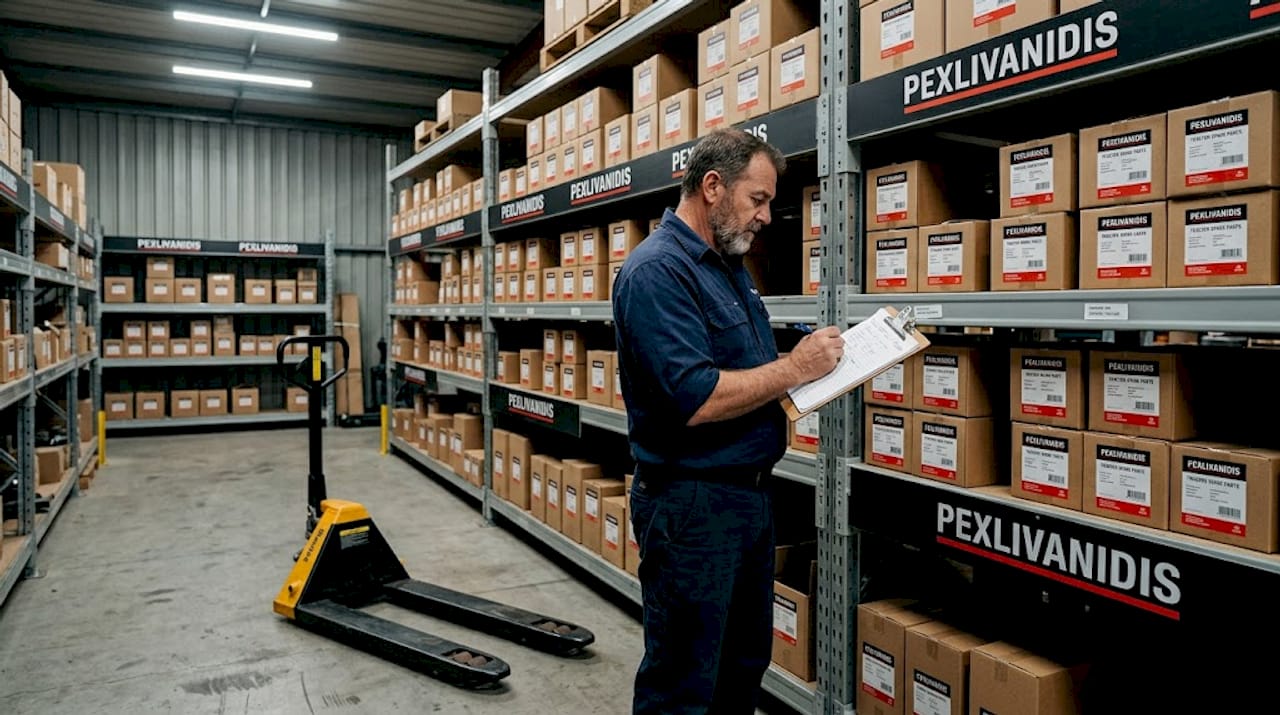
The risks with this model are real, however. Quality varies significantly between distributors. Some wholesalers mix certified aftermarket parts with uncertified copies, and without proper labeling, distinguishing them isn’t always straightforward. It’s essential to ask distributors directly about their sourcing standards. Are the parts EU-certified? Do they come with documentation?
Verified industry networks like EKAGEM’s member directory include established distributors such as ASTRAS P.C. and N. CHRISTIDIS & CO, who supply fittings, axles, and hydraulic cylinders to the Greek agricultural sector. Starting your distributor search within verified networks like this dramatically reduces the quality risk.
Pro Tip: When evaluating a new wholesaler, ask for their product documentation on a hydraulic or steering component. Certified distributors should easily provide spec sheets, country of origin, and compliance documentation. If they hesitate, that’s a red flag.
Online suppliers, e-commerce, and association networks
Digital platforms have genuinely changed how Greek farmers source spare parts. What once required a two-hour drive to a dealer or distributor can now happen from a smartphone in a field.
The growth of agricultural e-commerce across Europe includes Greece, where platform adoption among farmers has accelerated sharply over the past few years. Here’s what makes online and association-driven sourcing increasingly valuable:
- Instant price comparison: You can check pricing across multiple verified suppliers in minutes, something impossible with traditional sourcing.
- Broader geographic access: Farmers in rural Macedonia or Thrace who live hours from major dealers can access urban-level supplier options with free shipping above certain order thresholds.
- Delivery tracking and order transparency: E-commerce platforms provide confirmation, tracking numbers, and receipt documentation that phone-based orders often lack.
- Association directories as quality filters: Networks like EKAGEM list verified members including ASTRAS P.C. and N. CHRISTIDIS & CO for fittings, axles, and hydraulic cylinders, giving you a ready-made shortlist of accountable suppliers.
- Review systems and community feedback: User reviews on reputable platforms flag recurring issues with fit, quality, or delivery before you waste money.
The comparison table below summarizes how these channels stack up:
| Supplier channel | Price level | Parts range | Delivery speed | Quality assurance | After-sales support |
|---|---|---|---|---|---|
| Brick-and-mortar dealer | High | Narrow (brand-specific) | Same day | Very high | Excellent |
| Independent wholesaler | Medium | Wide | 1 to 3 days | Variable | Moderate |
| Online only (unverified) | Low | Very wide | 2 to 7 days | Low to medium | Weak |
| Online with association tie | Medium | Wide | 2 to 4 days | High | Good |
| Association directory member | Medium-high | Moderate | Varies | High | Good |
The risks in online sourcing are concentrated at the unverified end of the market. Counterfeit parts, misrepresented specifications, and absent customer support are real problems on unvetted marketplaces. The fix is straightforward: stick to platforms or sellers that are either association-listed, clearly licensed, or have substantial verified review histories.
For a practical approach, combine your own research with the parts sourcing online resources available to build a shortlist of vetted digital suppliers for your region and machinery types.
Pro Tip: Before placing a large online order with a new supplier, test them with a low-risk, low-cost item first. A clutch adjustment bolt costs little. A hydraulic pump costs a lot. Verify the supplier on cheap parts before trusting them with expensive ones.
Comparing supplier types: When to choose each model
Now that you’ve seen each category in detail, the practical question is this: which one do you use, and when?
| Scenario | Best supplier type | Why |
|---|---|---|
| Warranty-covered tractor repair | Authorized dealer | Maintains warranty, guaranteed fit |
| Urgent harvest breakdown | Local wholesaler or dealer with stock | Speed is the priority |
| Older machine, discontinued part | Independent wholesaler | Best chance of sourcing legacy parts |
| Budget-driven routine maintenance | Independent wholesaler | Bulk pricing on filters, belts, seals |
| Hard-to-find specialty fitting | Association network or online | Broader access across multiple suppliers |
| Mixed-brand fleet management | Wholesaler or multi-brand online platform | One relationship for many brands |
| Remote location in Greece | Online platform with free shipping | Removes geographic barrier |
Understanding your farming scale also matters. A small family farm with one or two tractors can often rely on a single trusted local dealer or wholesaler for most needs. Commercial operations running six or more machines across multiple brands almost certainly need at least two supplier relationships: one authorized dealer for critical or warranty-related purchases and one wholesale or online source for cost management.
The key insight that EKAGEM’s member network reinforces is that accountability matters regardless of supplier type. Members like ASTRAS P.C. and N. CHRISTIDIS & CO represent the kind of verified, established suppliers that perform consistently across multiple criteria.
Think about downtime cost in concrete terms. A medium-sized farm losing one peak harvest day due to a broken gearbox might lose 800 to 1,500 euros in output. If a 40-euro part from a verified supplier versus a 28-euro part from an unknown source is the difference, the cheaper option is not actually cheaper.
For ongoing supply planning, revisiting your framework around investing in spare parts helps you think beyond the transaction to the full cost of equipment reliability.
Our take: Don’t rely on one supplier type
Here is the counterintuitive reality that most parts sourcing advice skips over: supplier loyalty is overrated. Farmers are often told to build one strong supplier relationship and stick to it. In practice, this leads to overpaying for routine parts, being stuck when your single supplier can’t fulfill an urgent order, and missing access to hard-to-find components that only niche distributors carry.
Experienced machinery operators across northern Greece consistently use a blended approach. They maintain an authorized dealer relationship for anything warranty-sensitive or safety-critical. They use a verified regional wholesaler for cost-effective consumables and routine maintenance parts. And they keep a shortlist of online and association-backed sources for specialty or obsolete components.
Following spare parts distributor tips from experienced operators confirms this pattern repeatedly. The farmers who experience the least downtime are not the ones with the cheapest supplier or the most prestigious dealer. They’re the ones with the most flexible, well-organized sourcing strategy.
Build your supplier mix deliberately, review it annually, and never let cost alone drive the decision.
Find reliable spare parts suppliers today
Ready to put these supplier insights into action? At Pexlivanidis, we’ve built a platform designed to remove the friction from agricultural parts sourcing, with over 20,000 items available for both retail and wholesale B2B customers. Whether you’re looking for a breakdown of the parts types explained to sharpen your ordering accuracy, or you need to connect with parts wholesalers who serve the Greek agricultural market, we have the resources to match. For businesses managing fleet-level purchasing, our wholesale tractor parts guide covers the full scope of bulk sourcing strategy. Free shipping across Greece on orders over 100 euros, direct support from Thessaloniki, and a catalog built for serious farm operators.
Frequently asked questions
What is the main advantage of using authorized dealers for tractor spare parts?
Authorized dealers provide genuine parts with full warranty and manufacturer support, ensuring perfect fit and long-term reliability. This makes them the safest choice for warranty-covered machinery or safety-critical components, as confirmed by EKAGEM’s member suppliers such as ASTRAS P.C. and N. CHRISTIDIS & CO.
How can I verify if a supplier is part of a trusted association?
Check the association’s official directory, such as the EKAGEM member list, to confirm membership and see which categories the supplier covers, from fittings and axles to hydraulic cylinders.
Are online suppliers safe for sourcing tractor parts in Greece?
Yes, if you select e-commerce platforms or association-listed networks featuring established suppliers with clear contact details and verified reviews. Unvetted marketplaces carry higher counterfeit risk, so always prioritize sellers with documented sourcing standards.
Which supplier type offers the lowest prices?
Independent wholesalers and distributors typically offer the most competitive pricing due to bulk purchasing across multiple brands. Confirmed industry members like those listed in EKAGEM’s directory combine competitive pricing with verified quality standards, giving you the best of both factors.