

Facing the constant demands of farming in Northern Greece, many operators in Thessaloniki and Kavala understand that unexpected breakdowns can bring everything to a halt. Whether working with tractors or harvesters, the reality is that modern agricultural machinery requires consistent care to keep productivity up and repair costs down. This article lays out how regular servicing, including routine inspections and proactive maintenance, helps protect your investment and keeps your operations running smoothly, even through the busiest seasons.
Table of Contents
- Defining Regular Servicing For Agricultural Machinery
- Key Types Of Maintenance And Intervals
- How Servicing Extends Equipment Lifespan
- Reducing Downtime And Unexpected Breakdowns
- Cost Implications And Safety Considerations
Key Takeaways
| Point | Details |
|---|---|
| Regular Servicing is Essential | Systematic maintenance practices enhance performance and extend the lifespan of agricultural machinery. |
| Types of Maintenance | Understand preventive, predictive, and corrective maintenance to improve operational efficiency and reduce costs. |
| Reducing Downtime | Implementing scheduling and monitoring strategies can minimize unexpected breakdowns by up to 65%. |
| Cost and Safety Benefits | Regular servicing reduces repair costs and enhances workplace safety by preventing accidents and equipment failures. |
Defining Regular Servicing for Agricultural Machinery
Regular servicing for agricultural machinery represents a strategic approach to maintaining complex farm equipment through systematic preventive maintenance practices. Unlike random repairs, this process involves deliberate, planned interventions designed to optimize machinery performance and extend operational lifespan. Modern agricultural production relies on sophisticated machinery that demands consistent, professional care.
The core components of regular servicing encompass several critical elements that ensure machinery remains in peak condition:
- Routine Inspections: Comprehensive visual and diagnostic checks to identify potential issues
- Lubrication Management: Systematic application of appropriate lubricants to reduce friction and wear
- Performance Diagnostics: Detailed assessments of engine performance, hydraulic systems, and mechanical components
- Preventative Maintenance: Scheduled replacements of wear-prone parts before critical failures occur
Professional servicing goes beyond basic maintenance by integrating organizational practices, qualified technical expertise, and specialized diagnostic tools. Maintenance practices are designed to enhance productivity by reducing unexpected operational downtime and preventing costly emergency repairs.
Regular servicing transforms equipment maintenance from a reactive to a proactive strategy, protecting your agricultural investment.
Farm machinery servicing requires a holistic approach that considers the unique operational demands of agricultural environments. Each piece of equipment experiences distinct stress factors based on terrain, crop types, and seasonal work intensity. Understanding these variables allows for more targeted and effective maintenance protocols.
Pro tip: Maintain a detailed service log for each piece of machinery, documenting inspection dates, performed maintenance, and observed performance changes to track equipment health comprehensively.
Key Types of Maintenance and Intervals
Agricultural machinery maintenance encompasses three primary strategies that farmers and agricultural professionals must understand to ensure optimal equipment performance. Agricultural machinery maintenance is categorized into distinct types that address different operational needs and potential mechanical challenges.
The three main maintenance approaches include:
- Preventive Maintenance: Scheduled routine tasks designed to prevent potential equipment failures
- Predictive Maintenance: Technology-driven approach using data analysis to anticipate potential mechanical issues
- Corrective Maintenance: Reactive repairs performed after equipment breakdown or failure
Each maintenance type serves a unique purpose in the broader equipment management strategy. Preventive maintenance includes time-based and condition-based subcategories that help farmers plan systematic inspections and interventions. Preventive strategies typically involve regular oil changes, lubrication checks, filter replacements, and comprehensive system evaluations.
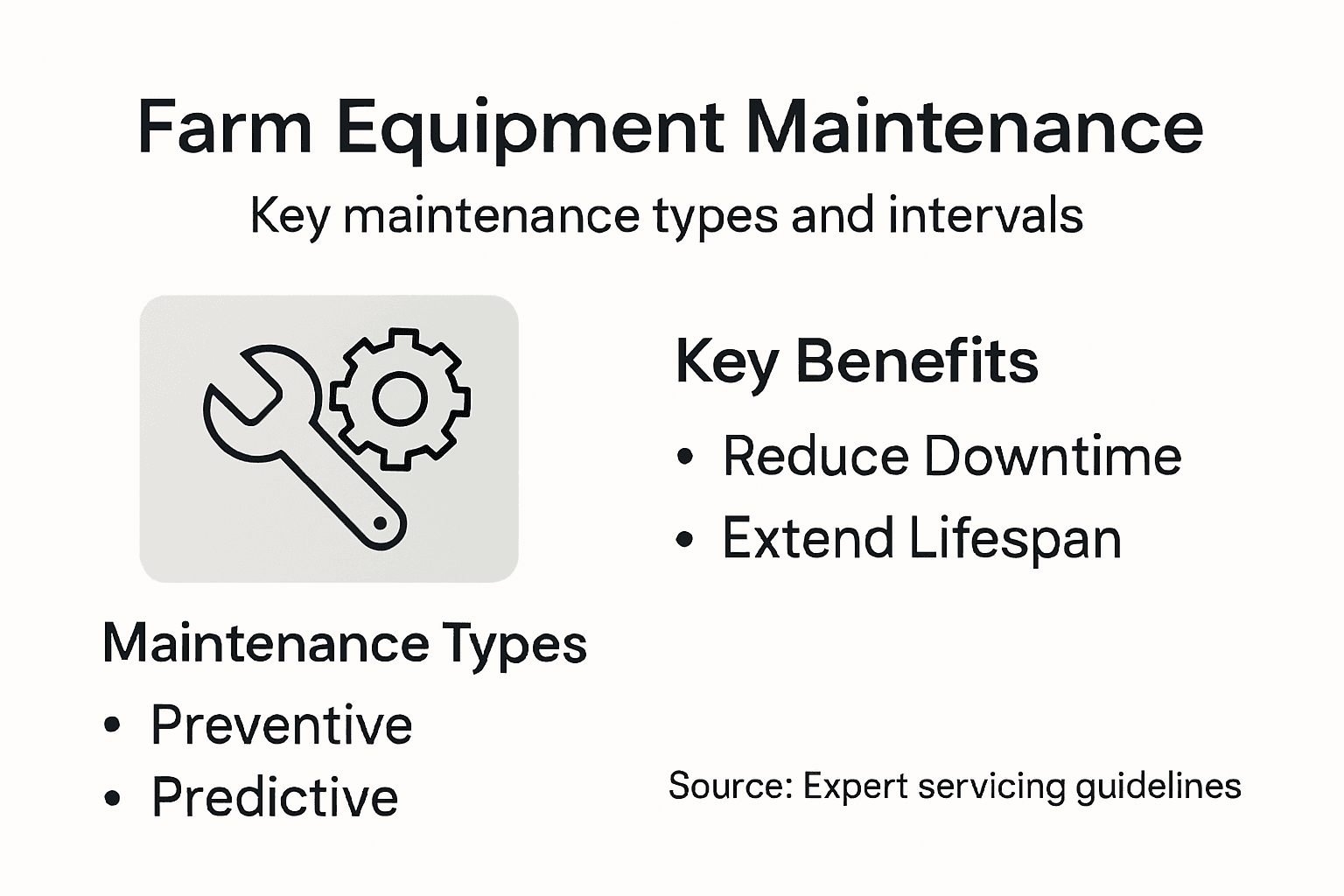
Here’s a summary of the three main types of agricultural machinery maintenance:
| Maintenance Type | Approach | Key Benefit | Typical Tools Used |
|---|---|---|---|
| Preventive | Scheduled tasks | Avoids failures | Checklists, manuals |
| Predictive | Data-driven | Anticipates problems | Sensors, analytics |
| Corrective | After failure | Restores functionality | Repair kits, diagnostics |
Strategic maintenance planning can reduce operational costs by up to 40% and extend machinery lifespan significantly.
Predictive maintenance represents the most technologically advanced approach, utilizing sensors, diagnostic tools, and data analysis to monitor equipment performance in real-time. This method allows farmers to identify potential mechanical issues before they escalate into costly breakdowns, enabling more precise and targeted maintenance interventions.
Corrective maintenance, while necessary, should be minimized through proactive strategies. This approach involves addressing mechanical failures after they occur, which can be substantially more expensive and disruptive to agricultural operations compared to preventive techniques.
Pro tip: Develop a comprehensive maintenance calendar that integrates preventive, predictive, and corrective strategies, tailoring the approach to each specific piece of agricultural machinery and its unique operational demands.
How Servicing Extends Equipment Lifespan
Regular servicing significantly extends equipment operational life by implementing strategic maintenance practices that prevent mechanical deterioration and optimize performance. Farm equipment represents a substantial financial investment, making proactive maintenance crucial for preserving machinery value and ensuring consistent productivity across agricultural operations.
The key mechanisms through which servicing extends equipment lifespan include:
- Friction Reduction: Regular lubrication minimizes mechanical wear and prevents premature component breakdown
- Early Problem Detection: Systematic inspections identify potential issues before they escalate into major failures
- Performance Optimization: Calibration and adjustment maintain machinery at peak operational efficiency
- Corrosion Prevention: Protective maintenance techniques shield critical components from environmental damage
Mechanical components experience continuous stress during agricultural operations, subjecting them to extreme conditions like dust, temperature variations, and intense physical strain. Consistent servicing acts as a protective shield, addressing wear and tear before it compromises entire mechanical systems. This approach transforms equipment maintenance from a reactive emergency response to a proactive preservation strategy.
Preventative maintenance can extend agricultural machinery lifespan by up to 50%, representing a critical investment in operational sustainability.
The financial implications of regular servicing extend far beyond immediate repair costs. By implementing comprehensive maintenance protocols, farmers can significantly reduce unexpected downtime, minimize replacement expenses, and maintain consistent agricultural productivity. Modern servicing techniques incorporate advanced diagnostic technologies that provide real-time insights into equipment health, enabling more precise and targeted maintenance interventions.
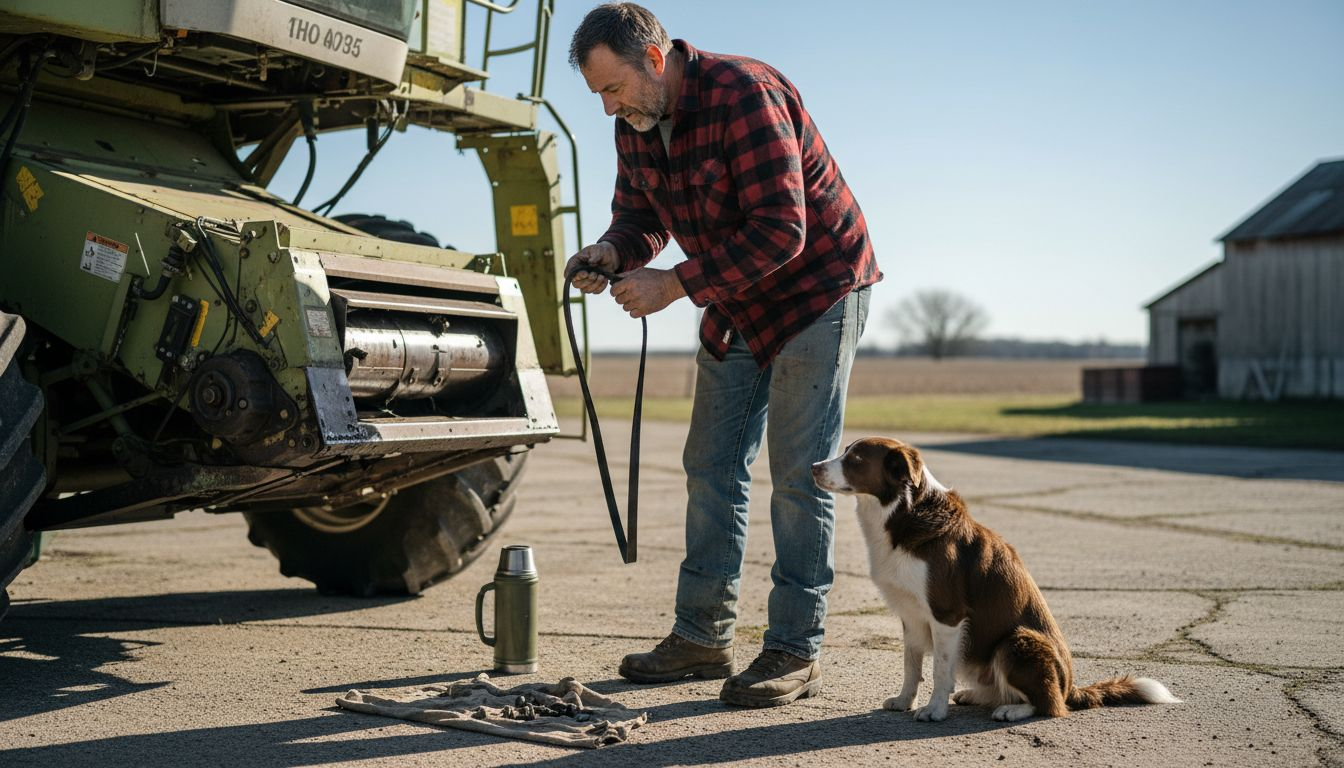
Pro tip: Create a detailed maintenance log for each piece of equipment, tracking service dates, performed interventions, and observed performance changes to develop a comprehensive understanding of your machinery’s unique maintenance requirements.
Reducing Downtime and Unexpected Breakdowns
Preventive and predictive maintenance practices are essential for minimizing unexpected equipment failures in agricultural operations. By implementing strategic monitoring and intervention techniques, farmers can significantly reduce the risk of sudden machinery breakdowns that disrupt critical farming schedules and compromise overall productivity.
Key strategies for minimizing downtime include:
- Sensor-Based Monitoring: Utilizing advanced diagnostic technologies to track real-time equipment performance
- Predictive Diagnostics: Identifying potential mechanical issues before they escalate into complete system failures
- Scheduled Maintenance Windows: Creating strategic maintenance intervals that prevent unexpected interruptions
- Component Replacement Planning: Proactively replacing wear-prone parts before they compromise machinery functionality
Modern agricultural machinery operates under extreme conditions, experiencing continuous stress from demanding environmental factors. Dust, temperature fluctuations, mechanical strain, and intensive operational requirements create complex challenges that can rapidly deteriorate equipment performance. Systematic maintenance approaches transform these potential vulnerabilities into manageable, predictable maintenance scenarios.
Effective maintenance strategies can reduce unexpected machinery downtime by up to 65%, preserving agricultural productivity and operational efficiency.
The economic implications of reducing downtime extend far beyond immediate repair considerations. Unexpected breakdowns during critical farming periods can result in substantial financial losses, missed planting or harvesting windows, and compromised crop management. By investing in comprehensive maintenance protocols, farmers can create a more resilient and reliable operational infrastructure that minimizes economic risks and maximizes equipment performance.
Pro tip: Develop a digital maintenance tracking system that logs equipment performance, schedules predictive interventions, and provides real-time alerts for potential mechanical issues.
Cost Implications and Safety Considerations
Maintaining agricultural machinery involves critical cost and safety considerations that extend far beyond routine mechanical upkeep. The financial and operational risks associated with neglecting equipment maintenance can create substantial long-term consequences for agricultural businesses, making strategic servicing an essential investment in both economic stability and workplace safety.
Key financial and safety considerations include:
- Direct Repair Costs: Preventing major breakdowns reduces expensive emergency repair expenditures
- Equipment Longevity: Regular maintenance extends machinery operational life, delaying costly replacements
- Accident Prevention: Properly maintained equipment minimizes workplace injury risks
- Regulatory Compliance: Ensuring machinery meets current safety and operational standards
The economic landscape of agricultural machinery maintenance is complex, with preventive strategies offering significant financial advantages. Preventive maintenance lowers repair costs by addressing potential mechanical issues before they escalate into major systemic failures. This proactive approach transforms maintenance from a reactive expense into a strategic investment.
The table below highlights the financial and safety advantages of regular equipment servicing:
| Aspect | Short-Term Effect | Long-Term Effect | Risk if Neglected |
|---|---|---|---|
| Repair Costs | Lower emergency spend | Major savings over years | High unexpected expenses |
| Equipment Safety | Fewer minor incidents | Minimal workplace injury | Increased accident likelihood |
| Machine Longevity | Immediate reliability | Delayed replacement need | Frequent, early breakdowns |
A single unaddressed mechanical failure can cost up to 10 times more than consistent, planned maintenance interventions.
Safety represents an equally critical dimension of equipment maintenance. Modern agricultural machinery involves sophisticated mechanical systems that can pose significant risks if not properly monitored and serviced. Comprehensive maintenance protocols ensure that critical safety mechanisms like brake systems, hydraulic controls, and emergency shutdown features remain fully functional and reliable.
Pro tip: Develop a comprehensive risk assessment matrix that quantifies potential maintenance-related expenses and safety risks, helping prioritize maintenance interventions strategically.
Protect Your Farm Equipment Investment With Reliable Spare Parts
The article highlights the critical need for regular servicing to prevent costly breakdowns and extend the lifespan of your agricultural machinery. Key challenges like minimizing downtime, reducing emergency repairs, and maintaining safety require not only a solid maintenance strategy but also access to high-quality, reliable parts. Without the right tractor accessories and spare parts, even the best servicing plan can fall short.
At Pexlivanidis, we understand your goal to keep equipment running efficiently and safely. With over 20,000 parts available for immediate shipment, including essential components for tractors and other farm machinery, we support your preventive and predictive maintenance efforts. Benefit from free shipping on orders over 100€ within Greece and exclusive B2B membership advantages if you operate at scale.
Don’t let unexpected breakdowns disrupt your farming schedule. Take control today by exploring our extensive inventory and securing the parts you need to follow a robust servicing routine. Visit Pexlivanidis online now and keep your farm equipment performing at its best with dependable parts designed for durability and safety.
Frequently Asked Questions
What is regular servicing for farm equipment?
Regular servicing for farm equipment is a systematic approach to maintaining machinery through scheduled inspections, lubrication management, performance diagnostics, and preventative maintenance to optimize performance and extend the lifespan of equipment.
How does regular servicing extend the lifespan of agricultural machinery?
Regular servicing extends equipment lifespan by minimizing mechanical wear through friction reduction, detecting early problems during systematic inspections, optimizing performance through calibration, and preventing corrosion with protective maintenance techniques.
What are the different types of maintenance for agricultural machinery?
The three main types of maintenance for agricultural machinery are preventive maintenance, which involves scheduled tasks to avoid failures; predictive maintenance, which uses data analysis to anticipate potential issues; and corrective maintenance, which addresses repairs after breakdowns occur.
How can regular servicing reduce downtime for agricultural equipment?
Regular servicing reduces downtime by implementing predictive diagnostics and sensor-based monitoring that identify potential mechanical issues before they escalate, allowing for timely interventions and scheduled maintenance windows to prevent unexpected interruptions during critical farming periods.