

TL;DR:
- Buying agricultural machinery parts in 2025 requires verifying serial numbers, understanding source tiers, and inspecting counterfeit risks. It is essential to cross-check OEM part numbers, consider total ownership costs, and build relationships with trusted suppliers for reliability. Using detailed documentation and proper inspection ensures safe, compatible, and cost-effective replacements.
Buying the right agricultural machinery parts in 2025 is harder than it used to be. Counterfeit components are flooding the market, equipment technology keeps evolving, and one wrong part can shut your operation down during planting or harvest. These parts buying tips 2025 are built specifically for farmers and agricultural operators who need to make confident purchasing decisions without wasting money or time. You’ll get a practical parts purchasing guide 2025 covering how to evaluate parts, where to find affordable parts, how to spot fakes, and how to budget smarter.
Table of Contents
- Key Takeaways
- 1. Establish clear criteria before you buy anything
- 2. Understand the four source tiers for machinery parts
- 3. Match part selection to your equipment’s technology level
- 4. Cross-check part numbers and compatibility before ordering
- 5. Spot and avoid counterfeit parts before they reach your machine
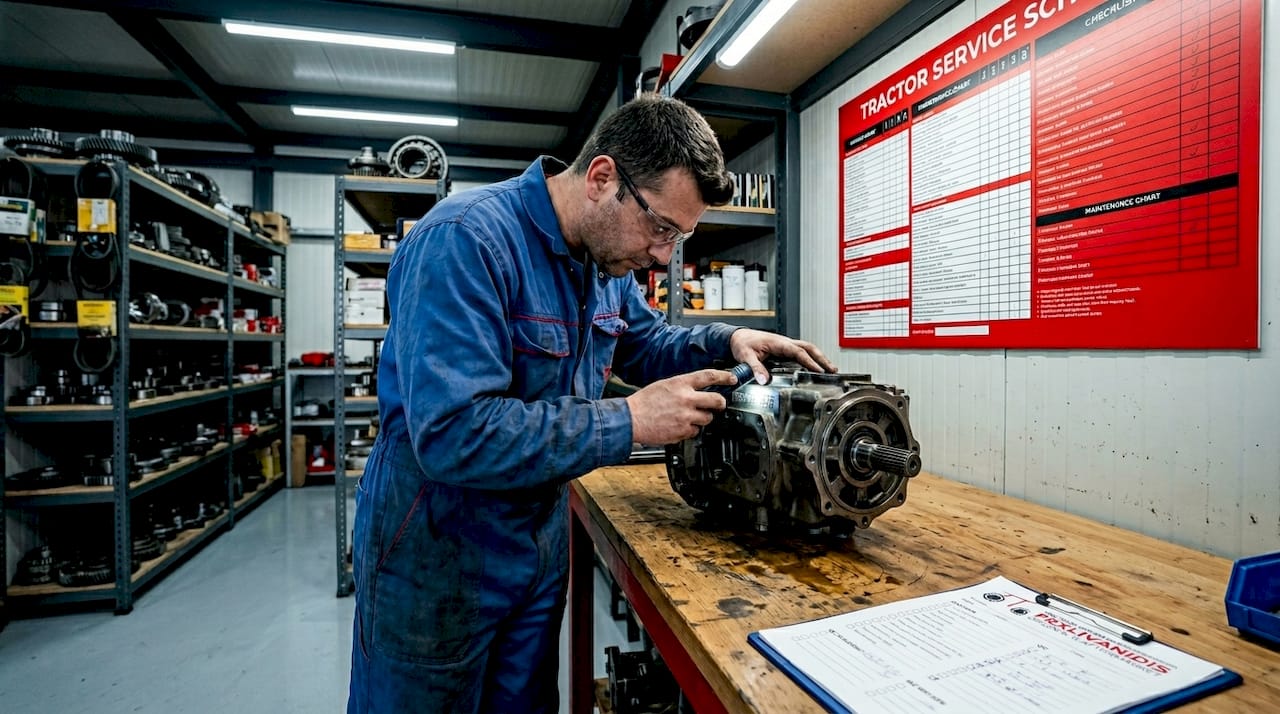
- 6. Inspect every part physically on receipt
- 7. Budget for total cost of ownership, not just price
- 8. Use traceability documentation as a buying standard
- My honest take on what farmers get wrong
- Find the right parts with Pexlivanidis
- FAQ
Key Takeaways
| Point | Details |
|---|---|
| Serial numbers matter | Always record your equipment’s exact serial number before ordering any replacement part. |
| Know your source tiers | OEM, remanufactured, and aftermarket parts carry very different warranty and quality standards. |
| Verify on receipt | Inspect packaging, markings, and traceability documents the moment parts arrive. |
| Layer your counterfeit defenses | Combine documentation checks with physical inspection to catch fake parts before installation. |
| Total cost beats sticker price | Factor in downtime risk and warranty value, not just the upfront cost of a part. |
1. Establish clear criteria before you buy anything
This is the starting point for every best parts buying strategy 2025. Before you place an order, you need precise information about your equipment, not a rough guess.
Every Massey Ferguson tractor carries a unique 12 to 17 character serial number, and the prefix tells you the build year and factory. That level of specificity matters because two tractors with the same model name can require completely different parts depending on production date. Write down your serial number, model designation, and hours of use before you search for anything.
Beyond the serial number, you need to match the exact OEM part number including any revision letters. Partial number matches on hydraulic or transmission components have caused costly system failures. The revision letter at the end of a part number is not decoration. It indicates a design change, and skipping it is a gamble with expensive hardware.
A few other criteria to lock down before ordering:
- Supplier traceability and return policies
- Warranty terms, including hours coverage and conditions
- Whether the supplier has access to official manufacturer catalogs
- Availability of post-sale technical support
Pro Tip: Use your equipment manufacturer’s official parts lookup tool or e-parts catalog first. Third-party listing sites often have outdated cross-references that pull up the wrong part number for your specific production year.
2. Understand the four source tiers for machinery parts
Not all parts are created equal, and understanding the difference between source tiers is central to how to buy replacement parts the smart way. Here is how the main categories break down.
| Source Tier | Reliability | Warranty | Typical Use Case |
|---|---|---|---|
| OEM New | Highest | Up to 24 months, unlimited hours | Critical systems, new equipment |
| AGCO Genuine / Authorized | High | Similar to OEM | Authorized dealer replacement |
| Certified Remanufactured | Good | Typically 12 months | Cost-saving on major components |
| Aftermarket | Variable | Often under 12 months | Non-critical wear items only |
Massey Ferguson parts fall into four tiers: OEM, AGCO Genuine, Licensed Remanufactured, and Aftermarket, each with different reliability profiles and warranty coverage. OEM parts carry 24-month unlimited hours coverage. Aftermarket options frequently offer less than 12 months with quality that varies significantly between manufacturers.
Certified remanufactured parts sit in a solid middle ground. They are rebuilt to OEM specifications with new wear components and represent real savings on items like alternators, hydraulic pumps, and fuel injection systems. Just verify the remanufacturer’s certification before buying.
Aftermarket parts work fine for low-criticality consumables like filters, belts, and lighting. Putting them on your transmission, steering, or braking system is a different risk calculation entirely.
3. Match part selection to your equipment’s technology level
Modern agricultural machinery has changed the rules for how to buy replacement parts. Telediagnostics and GPS-ready features in 2025 machinery influence parts selection in ways that did not exist a decade ago. A sensor, controller, or actuator that is not designed for your equipment’s telematics architecture can trigger false alerts or disable automated functions.
Before ordering electronic or sensor-based components, confirm compatibility with your machine’s control system version. Ask your supplier directly whether the part has been validated for use with telematics-equipped variants of your model. This is especially relevant if your equipment received software updates that changed sensor communication protocols.
4. Cross-check part numbers and compatibility before ordering
Use your manufacturer’s official serial number lookup tool to generate a parts list specific to your machine’s build date. Do not rely on a parts seller’s catalog as your only source of truth. Cross-reference at least two sources before confirming the order.
The verification process should follow these steps:
- Enter your full serial number, including prefix, into the official lookup tool.
- Confirm the OEM part number including revision letters.
- Check the manufacturer’s technical service bulletins for any superseded part numbers or known issues.
- Ask the supplier for the lot date and batch number of the part they intend to ship.
- Verify that the supplier can provide a certificate of conformity if requested.
Technical service bulletins specifically recommend against non-OEM filters on certain Ford models to prevent hydraulic damage. These bulletins are publicly available and free to access. Making time to read them before ordering costs you nothing.
Pro Tip: If you have access to modern diagnostic software for your equipment, run a pre-order diagnostic to confirm which component is actually failing. Misdiagnosis is one of the most common and expensive causes of ordering the wrong part.
5. Spot and avoid counterfeit parts before they reach your machine
Counterfeit automotive parts pose safety risks that go well beyond packaging. They can cause accidents and system failures, and the problem has reached agricultural machinery supply chains in force. A fake hydraulic seal or counterfeit fuel injector does not just waste money. It can destroy a major assembly or endanger the operator.
Here is what to check when parts arrive:
- Packaging quality: official parts from authorized suppliers have consistent print quality, correct logos, and part numbers that match your order
- Surface markings: authentication embedded in part surfaces using spray codes, laser marking, or masterbatch in plastics is now standard for genuine OEM parts
- Weight and finish: counterfeit metal components often feel lighter or show inconsistent machining
- Documentation: request certificates of conformity and lot traceability records for any critical component
“Counterfeit prevention is most effective when combining documentation mandates with frontline physical inspections of packaging and parts.” Counterfeit components clause
Preventing counterfeits requires layered processes including contracts that mandate traceability documentation and physical inspections on receipt. Relying on paperwork alone is not enough. You have to put hands on the part.
Avoid sellers offering prices that are significantly below market rate. Genuine OEM or certified remanufactured parts have a cost floor. When a price looks too good, that is usually because the part is not what it claims to be. Source from authorized dealers whenever you can.
6. Inspect every part physically on receipt
Do not wait until installation to discover a problem. The moment parts arrive, inspect them before signing off on delivery. This is buying parts online advice that applies to every order, regardless of supplier reputation.
Check the part number on the component itself against your order. Look at the packaging for damage, tampering, or re-sealing signs. Verify that any included documentation matches the lot and batch information you were quoted. If anything looks off, contact the supplier immediately rather than attempting installation.
Buying used or refurbished parts requires additional diligence: confirm the part’s condition, full history, and warranty terms before payment. A used part without documented history is an unknown risk, not a savings opportunity.
7. Budget for total cost of ownership, not just price
The upfront cost of a part is not the whole story. This is one of the most overlooked areas in any parts purchasing guide 2025. Budgeting for parts must account for total cost of ownership, including the downtime risk that comes with using inferior components.
A $40 aftermarket seal that fails during harvest can cost hundreds in labor and days of lost productivity. An OEM seal at $90 that lasts two seasons is the better economic choice. Run the math on criticality before defaulting to the cheapest option.
Smart budgeting tips for agricultural parts purchasing:
- Keep a prioritized replacement schedule aligned with your equipment’s service intervals
- Negotiate volume pricing with your dealer for high-turnover consumables
- Ask about financing options, especially for major components like transmissions or hydraulic pumps
- In the U.S., Section 179 tax deductions may apply to equipment and parts purchases, reducing effective cost
- Time purchases strategically: pre-season orders often come with better pricing than emergency buys
Pro Tip: Build a running parts budget at the start of each season based on your equipment’s age and expected service needs. Farmers who plan parts spend in advance almost always pay less than those who order reactively.
Tracking your machinery maintenance history also helps you predict part replacement cycles more accurately, which feeds directly into smarter seasonal budgeting.
8. Use traceability documentation as a buying standard
OEM high-criticality parts now require full traceability including batch-matched mill certifications and physical marking verification under emerging 2026 standards. Digital product passports are becoming more common as a fraud prevention tool, and demanding them from suppliers positions you ahead of the curve.
When buying critical components, ask your supplier for full chain-of-custody documentation from manufacturer to distributor to you. If they cannot provide it, that tells you something important about the product’s authenticity. This practice is not bureaucratic excess. It is the fastest way to screen out substandard stock before it reaches your equipment.
My honest take on what farmers get wrong
I’ve seen farmers lose entire harvests to a single bad bearing. Not because they were careless, but because they were in a hurry and skipped the verification step. The pressure to keep equipment running during planting or harvest is real, and I understand why people cut corners on parts procurement when the clock is ticking. But in my experience, the farms that run most reliably are the ones with disciplined purchasing habits, not the ones that wing it under pressure.
What I’ve learned over years of working in this sector is that supplier relationships are more valuable than most farmers realize. When you consistently order from a supplier who knows your equipment profile, they catch compatibility issues before the part ships. That is not something you get from a one-off bargain buy at an unknown online retailer.
I’ve also noticed that technology is outpacing most buyers’ awareness. When a tractor gets a telematics update, the parts compatibility picture changes. The farmers who stay ahead of that ask questions proactively rather than discovering the problem during installation. My take: build relationships with people who know your equipment, not just with platforms that sell parts at volume.
— George
Find the right parts with Pexlivanidis
If these tips have shifted how you think about parts purchasing, the next step is finding a supplier who takes quality as seriously as you do. Pexlivanidis carries over 20,000 agricultural machinery parts with a focus on tractor accessories and spare parts, serving farmers and operators across Greece with B2B wholesale options available. Their catalog covers the essential agricultural machinery parts you depend on most, from drivetrain components to hydraulic and filtration parts. For buyers who want to go deeper, their agricultural machinery buying tips resource is worth bookmarking before your next purchase decision.
FAQ
How do I verify if a tractor part is genuine?
Check the physical markings on the part against the OEM part number, inspect packaging quality, and request a certificate of conformity and lot traceability documentation from the supplier.
What is the safest source tier for critical tractor components?
OEM new parts offer the highest reliability and the strongest warranty coverage, typically 24 months with unlimited hours, making them the preferred choice for critical systems like hydraulics, transmissions, and brakes.
How can I avoid counterfeit agricultural parts?
Source from authorized dealers, demand traceability documentation, inspect packaging and surface markings on receipt, and treat suspiciously low prices as a warning sign rather than a deal.
Does the serial number really matter when ordering parts?
Yes. Even tractors with the same model name can require different parts depending on production year and factory. Your serial number is the only reliable key to finding the correct replacement component.
Should I always choose OEM parts over aftermarket?
Not always. OEM parts are the right choice for critical components like hydraulics, transmissions, and electronics. For low-criticality wear items like certain filters or bulbs, quality aftermarket options can reduce cost without meaningful risk.