

TL;DR:
- Perkins marine engines play a vital role in Greek agriculture, powering irrigation and support machinery. Proper proactive maintenance and reliable sourcing of genuine parts are essential to prevent costly breakdowns and ensure consistent productivity. Building strong relationships with knowledgeable suppliers and adhering to structured service routines extend engine lifespan and protect farm investments.
Perkins marine engines power far more than fishing boats along the Greek coastline. On farms across Macedonia, Thessaly, and the Peloponnese, these robust engines drive irrigation pumps, generator sets, and field support machinery that keep crops alive through the driest summer months. Yet many agricultural professionals treat marine engine maintenance as an afterthought, ordering parts only after a breakdown has already stopped production. That reactive approach costs far more than the parts themselves. This guide walks you through the essential Perkins marine engine parts, how to identify what your operation needs, where to source them reliably in Greece, and how to build routines that protect your investment season after season.
Table of Contents
- Why Perkins marine engines matter for Greek agriculture
- Identifying essential Perkins marine engine parts and accessories
- How to source quality Perkins marine parts in Greece
- Maintenance routines to extend Perkins marine engine life
- What most farmers overlook about Perkins marine engines
- Find the right Perkins marine parts and support for your operation
- Frequently asked questions
Key Takeaways
| Point | Details |
|---|---|
| Perkins engines’ importance | Perkins marine engines are critical for both marine and farm equipment use in Greece. |
| Key replacement parts | Focus on high-turnover components like filters, injectors, and gaskets when planning maintenance. |
| Reliable supplier sourcing | Seek out authorized dealers or trusted online stores to guarantee genuine Perkins parts and fast delivery. |
| Routine engine checks | Consistent maintenance routines prevent unexpected breakdowns and extend engine lifespan. |
| Genuine parts save money | Investing in original Perkins parts pays off with lower repair costs and greater equipment reliability. |
Why Perkins marine engines matter for Greek agriculture
Perkins has built a reputation over decades for producing diesel engines that are tough, fuel efficient, and repairable in demanding environments. In Greece, their marine variants have found a second life on land, driving irrigation systems that keep olive groves, vineyards, and vegetable fields productive throughout the summer. This is not a niche application. Dozens of farm operations across northern Greece rely on Perkins powered pumps to move water from canals, wells, and reservoirs to their fields every single day.
The reason these marine engines translate so well to agricultural use is straightforward. Marine environments demand extreme reliability because breakdowns at sea carry serious safety risks. That engineering discipline carries over directly to agricultural applications where a pump failure during a heatwave can wipe out months of crop investment within 48 hours.
Proper maintenance is not optional when the stakes are that high. Consider what an unplanned engine shutdown can cost:
- Lost irrigation days during peak heat, potentially destroying an entire crop cycle
- Emergency repair fees, which can run two to three times standard service rates
- Delays in harvest if the engine powers threshing or transport equipment
- Spoilage of perishable produce waiting on non-functional cold chain systems
“A well-maintained Perkins engine is not just a piece of machinery. It is the circulatory system of a productive farm. When it stops, everything stops.”
Fortunately, the support infrastructure available in Greece for Perkins engines has improved significantly. Resources for using a Perkins engine parts list now outline available parts, support structures, and dealer networks specifically suited to agricultural use, making it easier than ever to stay ahead of wear and plan replacements before failures occur.
Identifying essential Perkins marine engine parts and accessories
Knowing which parts to prioritize separates farmers who maintain engines proactively from those who are always scrambling after a breakdown. The good news is that Perkins engines follow predictable wear cycles, which means you can build a reliable replacement schedule if you know what to track.
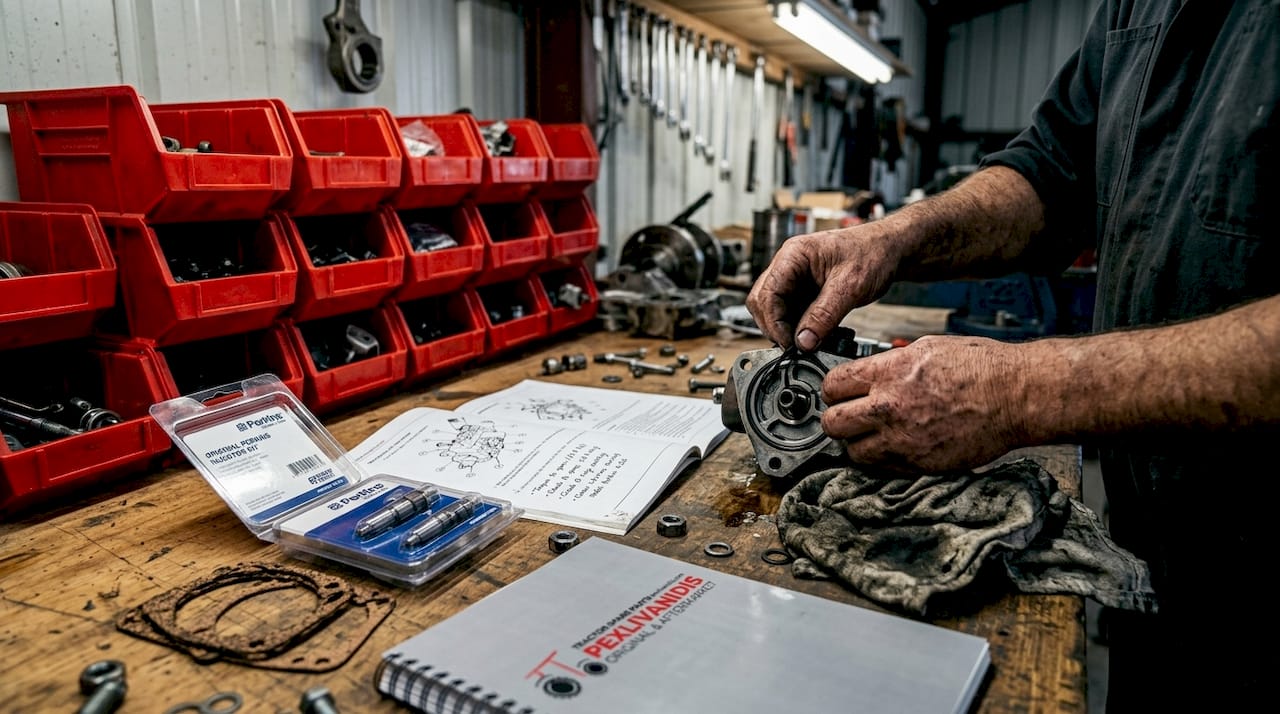
Here are the most critical key Perkins engine parts that belong on every maintenance checklist:
- Fuel filters replace on schedule, not by feel. Contaminated fuel is the single most common cause of injector failure in agricultural environments.
- Oil filters and engine oil should be changed at every 250 engine hours or at minimum once per season, whichever comes first.
- Fuel injectors are high-precision components. Even minor fouling causes incomplete combustion, power loss, and increased fuel consumption.
- Cylinder head gaskets are the first line of defense against coolant leaks and combustion gas escape. Inspect them at every major service.
- Water pump seals and impellers are especially important in marine-derived engines because the cooling system is central to the design. A failing seal can overheat an engine in under an hour.
- Air filters trap the fine dust and chaff that are constant companions in any agricultural environment. Replace them more frequently than the manual suggests if your operation involves harvesting or tillage nearby.
- Belts and tensioners are easy to overlook but cause catastrophic failures when they snap mid-operation.
Building a maintenance checklist around these seven categories covers roughly 80% of the failure points you will encounter in the field. For a broader look at how similar components fit into agricultural machinery parts systems, the same logic applies across tractor and combine applications.
One of the most common decisions farmers face is choosing between genuine OEM (original equipment manufacturer) Perkins parts and aftermarket alternatives. Here is how they compare:
| Factor | Genuine Perkins OEM parts | Quality aftermarket parts |
|---|---|---|
| Fit accuracy | Exact, guaranteed | Usually good, varies by brand |
| Warranty support | Full manufacturer warranty | Limited, brand dependent |
| Availability | Through authorized dealers | Wide availability online and locally |
| Price | Higher upfront cost | Lower upfront cost |
| Long-term reliability | Proven performance data | Variable, some brands excel |
| Resale value impact | Maintains engine value | Can affect resale if undocumented |
The honest answer is that genuine parts are worth the premium for high-stress components like injectors, gaskets, and water pump assemblies. For lower-stress items like air filters and belts, high-quality aftermarket parts from reputable brands are often a sensible choice.
How to source quality Perkins marine parts in Greece
Once you know which parts your engine needs, the next challenge is finding a supplier who can actually deliver them quickly, correctly, and with proper support. In Greece, you have several practical options.
Authorized Perkins dealers offer the highest level of authenticity assurance and technical support. They can confirm compatibility, provide OEM documentation, and sometimes offer on-site support. The tradeoff is that dealer networks are concentrated in larger cities, and rural operators in regions like Imathia or Evros may face longer delivery windows.
Specialized online agricultural parts stores have transformed the sourcing landscape for Greek farmers. Operations with large inventories allow you to search by engine model, cross-reference part numbers, and place orders that arrive within a business day or two. Free shipping thresholds, typically around 100 euros, make these platforms economically attractive for combining multiple items in a single order.
Agricultural cooperatives and local suppliers remain valuable for urgent needs or for operators who prefer in-person verification of parts before purchase. The relationship-based nature of cooperative purchasing also creates leverage for negotiating on larger orders.
Understanding how sourcing decisions ripple across your entire operation, from combine harvester parts explained to marine engine components, helps you consolidate purchasing and reduce overall logistics complexity.
Here is a practical comparison of supplier types for Greek agricultural operators:
| Supplier type | Delivery time | Warranty support | Part authenticity | Best for |
|---|---|---|---|---|
| Authorized dealer | 2 to 5 days | Full OEM | Guaranteed | Critical engine components |
| Specialized online store | 1 to 3 days | Varies | Verified if reputable | Routine parts and filters |
| Local agricultural supplier | Same day | Limited | Variable | Urgent replacements |
| Agricultural cooperative | 2 to 7 days | Group negotiated | Variable | Bulk orders |
Key factors to evaluate before committing to any supplier:
- Part number verification: Insist that the supplier confirms the exact Perkins part number, not just a generic cross-reference.
- Return policy: A supplier who stands behind their parts will offer a clear return or exchange process. Avoid anyone who makes returns complicated.
- Response time: How quickly does the supplier respond to an inquiry? Slow communication before the sale predicts slow support after it.
- Track record with Perkins specifically: Not every agricultural supplier stocks marine-grade Perkins components. Confirm they have genuine experience with these engines.
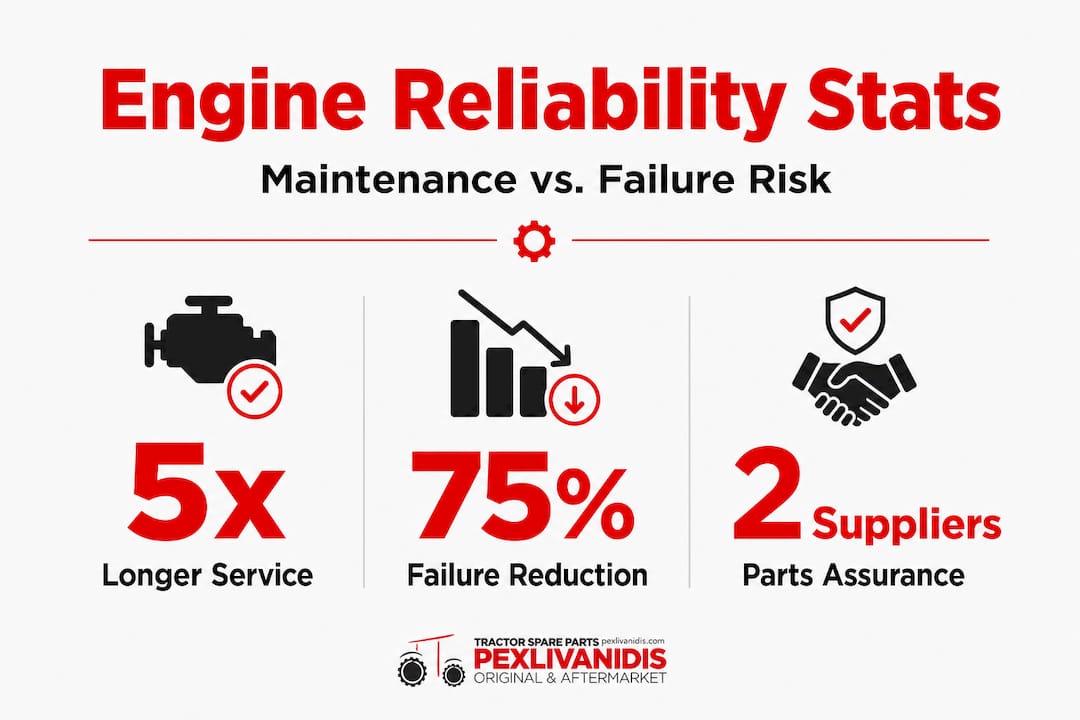
Pro Tip: Build a parts relationship with two suppliers, not one. Your primary supplier handles routine orders, and your backup gets you through emergencies. Having a second contact already vetted saves hours when something breaks at the worst possible moment.
Maintenance routines to extend Perkins marine engine life
Owning quality parts is only half the equation. The other half is executing maintenance at the right intervals with the right attention to detail. Perkins marine engines used in agricultural applications often run in harsher dust and debris conditions than their marine counterparts, which means standard marine service intervals may not be aggressive enough.
Follow this structured maintenance routine to protect your engine investment:
- Daily pre-start checks: Inspect engine oil level, coolant level, and belt tension. Check for visible leaks under the engine and around hose connections. This takes less than five minutes and catches the majority of developing problems before they become failures.
- Every 50 hours of operation: Clean or replace the air filter if operating in dusty conditions. Check fuel filter condition and inspect all hose clamps for tightness. Look for corrosion on electrical connections.
- Every 250 hours or seasonally: Change engine oil and oil filter. Replace the fuel filter regardless of apparent condition. Inspect injectors for signs of fouling or leakage. Check the cooling system thermostat and test coolant concentration.
- Every 500 hours or annually: Full inspection of cylinder head gasket condition, water pump seals, and belts. Check injector spray pattern if you have the equipment or take the engine to a qualified technician. Flush and replace coolant.
- Track engine hours meticulously: Use an hour meter if the engine does not already have one fitted. Maintenance intervals based on calendar time alone miss the reality that some seasons demand far more engine hours than others. For consistent guidance, routine farm machinery checks provide structured protocols specifically designed for agricultural environments.
- Plan part orders proactively: When the service record shows an injector approaching the end of its expected service life, order the replacement before it fails. This simple habit eliminates the most common cause of unplanned downtime.
The cost difference between proactive and reactive maintenance is not subtle. A planned oil and filter change costs perhaps 60 to 90 euros in parts and one hour of your time. A seized engine from oil breakdown can cost 2,000 to 8,000 euros in parts and rebuilding labor, plus days or weeks of lost operation. Preventative tractor maintenance follows the same economic logic, and most Greek agricultural professionals who have made the shift to proactive routines never look back.
Pro Tip: Keep a simple logbook in a weatherproof bag attached to the engine housing. Record the date, engine hours, and every service action taken. When something goes wrong, that log is your fastest diagnostic tool and your best argument for a warranty claim.
What most farmers overlook about Perkins marine engines
Here is the uncomfortable truth that most guides will not say directly. The biggest risk to your Perkins marine engine is not a bad part or a harsh environment. It is the human habit of assuming things are fine until they obviously are not.
We have seen this pattern repeatedly. A professional operator runs an engine for three seasons without a single serious problem and naturally concludes the engine is tough enough to keep going. Maintenance intervals stretch. Parts orders happen reactively. Then one critical component fails at the exact moment the crop needs water most, and the cost is catastrophic, both financially and in terms of the harvest.
The uncomfortable lesson is that reliability is not evidence that nothing is wrong. It is evidence that the maintenance is working. Stop the maintenance, and the reliability disappears faster than you expect.
There is also a financial psychology issue at play. Spending 150 euros on a new genuine Perkins injector seal kit feels optional when the engine is running. After an engine failure that costs 4,000 euros to fix, that 150 euros looks like the bargain of the decade. The investment in authentic components pays returns that dwarf the upfront savings of cheaper alternatives.
Building a real relationship with a knowledgeable supplier changes the game. When your supplier knows your engine model, your operation’s demands, and your maintenance history, they can flag upcoming part shortages, suggest service improvements, and sometimes hold inventory for your next scheduled service. That kind of support is worth far more than a marginally lower price per part from an unfamiliar source. Resources that build Perkins engine parts expertise are a strong starting point for operators who want to move from reactive to genuinely proactive management.
The farmers who keep their Perkins engines running for 10,000 hours or more share one common trait. They treat the engine as a partner in the operation, not a piece of equipment that should handle whatever comes its way without attention or investment.
Find the right Perkins marine parts and support for your operation
Managing your Perkins marine engine well means having a supplier who understands both the technical specifics and the urgency that agricultural operations demand. At Pexlivanidis, we stock over 20,000 parts across the full range of agricultural machinery, including a strong selection of Perkins marine engine components. Whether you are building a seasonal maintenance kit or sourcing a specific part urgently, our catalog covers the components that keep your operation running. Browse our agricultural parts guide to understand how parts categories connect across your equipment, shop Perkins marine parts directly with free shipping on orders over 100 euros within Greece, or review our maintenance guide to structure your next service schedule with confidence.
Frequently asked questions
What are the most common Perkins marine engine parts that need replacement?
Filters, injectors, pumps, and gaskets are typically the most frequently replaced components due to regular operational wear, as confirmed by key Perkins engine parts data from agricultural applications.
How do I verify if a Perkins marine part is genuine?
Always purchase from authorized dealers and request OEM certification or product documentation. Resources for verifying part authenticity through established dealer networks are the most reliable approach.
Can Perkins marine engine parts be used in non-marine agricultural applications?
Yes, many Perkins marine engine components are fully suitable for irrigation pumps and agricultural machinery, as explained in detail for combine and farm equipment applications where these engines are increasingly common.
What maintenance routine keeps Perkins marine engines running longer?
Perform regular oil changes, replace filters at correct intervals, and inspect cooling and fuel systems consistently. Following structured routine farm machinery protocols is the most effective approach to extending engine life.