

Farmers across Greece lose money every season when tractor parts corrode faster than they should. Parts stored on the ground show 30% higher corrosion and degradation rates, turning expensive components into scrap. This guide walks you through what you need to prepare, how to clean and store parts properly, and mistakes that silently drain your budget.
Table of Contents
- Prerequisites: What You Need Before Storing Tractor Parts
- Cleaning and Preparation of Tractor Parts
- Environmental Control for Optimal Storage Conditions
- Protective Packaging and Labeling Strategies
- Common Mistakes and How to Avoid Them
- Maintenance and Inspection During Storage
- Safety Considerations in Storing Tractor Parts
- Expected Results and Cost Considerations
- Improve Your Farm’s Efficiency with Expert Agricultural Parts Solutions
- How to Store Tractor Parts: Common Questions Answered
Key Takeaways
| Point | Details |
|---|---|
| Cleaning prevents rust | Remove oils and dirt before storage to stop accelerated degradation. |
| Control humidity below 50% | Higher moisture levels dramatically increase corrosion risk. |
| Elevate and label everything | Keeping parts off the ground and clearly marked extends lifespan and speeds retrieval. |
| Inspect every 6 months | Regular checks catch corrosion early before parts become unusable. |
| Avoid overstacking | Limit layers to three to prevent damage and maintain safety. |
Prerequisites: What You Need Before Storing Tractor Parts
You cannot store tractor parts safely without the right foundation. Start with basic cleaning supplies: industrial degreasers, lint free drying cloths, and stiff brushes for removing stubborn grime. Your storage location matters just as much as what you put in it. The space needs proper ventilation, protection from direct weather exposure, and humidity control below 50%.
Proper cleaning supplies, packaging materials, and climate control tools are necessary to prevent corrosion. Invest in rust inhibitor sprays, moisture absorbing packets, and airtight plastic containers for sensitive components. Plastic pallets or metal shelving units keep parts elevated off concrete floors where moisture accumulates.
Organization tools prevent chaos. You need waterproof labels, permanent markers, and basic inventory sheets. Whether you manage these on paper or digitally, tracking what you store and where saves hours during busy seasons.
Pro Tip: Small farms can start with repurposed wooden pallets and basic dehumidifiers before investing in premium climate control systems.
| Farm Scale | Low Cost Setup | Premium Setup |
|---|---|---|
| Small (1 to 2 tractors) | Wooden pallets, basic dehumidifier, plastic bins | Metal shelving, electric dehumidifier, sealed containers |
| Medium (3 to 5 tractors) | Plastic pallets, fan ventilation, rust spray | Climate controlled room, rack systems, inventory software |
| Large (6+ tractors) | Basic shelving, moisture monitors | Full warehouse setup, HVAC control, automated tracking |
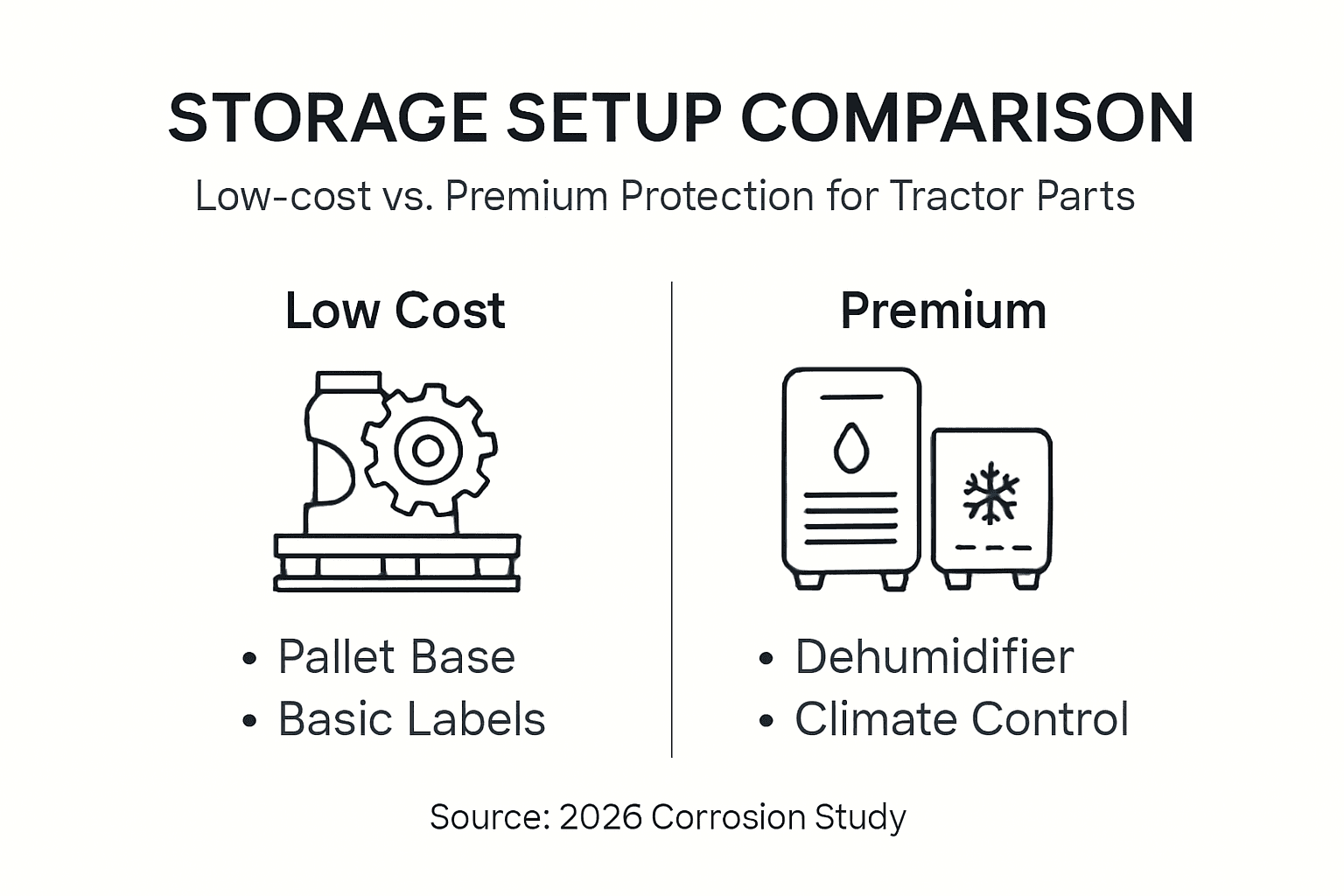
The difference between setups is not just cost. Premium systems reduce labor time and catch problems faster, but even basic preparation cuts corrosion significantly compared to throwing parts in a corner.
Cleaning and Preparation of Tractor Parts
Dirt and oil residue act like magnets for moisture during storage. Cleaning removes oils and dirt that accelerate degradation during storage, making this step non negotiable. Skip it and you will watch rust bloom across expensive components within months.
- Spray degreaser liberally on all surfaces and let it sit for five minutes to break down oils.
- Scrub thoroughly with stiff brushes, paying attention to threads, joints, and recessed areas.
- Rinse with clean water if the degreaser requires it, or wipe down with cloths.
- Dry every surface completely using lint free cloths and compressed air for crevices.
- Inspect each part under good lighting for existing rust, cracks, or wear that needs addressing now.
Moisture hides in places you cannot see. Bolt holes, spring coils, and bearing surfaces trap water that slowly destroys metal. Use compressed air to blast out these spots or stuff them temporarily with absorbent material while drying.
Pro Tip: Check behind labels and stickers where moisture collects unnoticed and starts hidden corrosion.
Inspection during cleaning saves money. Finding a cracked hydraulic fitting now means you replace it during the off season when you have time, not during planting when every hour costs you. For a complete approach to keeping your equipment in top shape, follow this detailed tractor cleaning guide.

Environmental Control for Optimal Storage Conditions
The air around your parts determines how long they last. Humidity above 60% increases rust by 70%, turning storage areas into corrosion factories. Your goal is maintaining humidity below 50% year round, which sounds simple but requires active management in Greece’s variable climate.
Ventilation moves moist air out before condensation forms on cold metal surfaces. Natural airflow works if you position parts away from walls and ensure windows or vents stay clear. Mechanical fans improve results in enclosed spaces. Never seal a storage area completely without dehumidification, as trapped moisture concentrates.
Elevation stops ground moisture from wicking into parts. Concrete floors sweat, especially in coastal areas. Plastic pallets create an air gap that breaks the moisture connection. Metal shelving works even better for smaller components.
- Install a basic hygrometer to monitor humidity levels daily
- Run a dehumidifier during wet months when natural ventilation fails
- Position storage away from exterior walls where temperature swings cause condensation
- Keep parts at least 15 cm off the floor using pallets or racks
- Create air circulation pathways between stored items
| Storage Condition | Corrosion Rate | Part Lifespan | Maintenance Frequency |
|---|---|---|---|
| Uncontrolled (60%+ humidity, ground storage) | High (baseline) | 2 to 3 years | Every 3 months |
| Basic Control (50% humidity, elevated storage) | 40% lower | 4 to 5 years | Every 6 months |
| Premium Control (40% humidity, climate controlled) | 70% lower | 7+ years | Annual |
The investment in environmental control pays back through reduced replacement costs. One corroded hydraulic pump costs more than a year of running a quality dehumidifier.
Protective Packaging and Labeling Strategies
Physical barriers give parts another layer of defense after environmental controls. Rust inhibitor sprays create a protective film that repels moisture for months. Apply them to clean, dry surfaces and let them cure fully before packaging. Different formulations work better for specific metals, so match the product to your parts.
Moisture absorbing packets inside sealed containers handle any humidity that sneaks past your environmental controls. These silica gel packs are cheap insurance, especially for precision components like bearings or electronic sensors. Replace them every six months or when they change color to indicate saturation.
Airtight containers make the biggest difference for vulnerable parts. Plastic bins with rubber gasket lids keep out dust and moisture. For oversized items, heavy duty plastic wrap creates an effective seal when applied properly.
- Use rust inhibitor spray rated for agricultural equipment on all metal surfaces
- Add moisture absorbing packets to every sealed container
- Wrap irregular shaped parts in plastic before boxing
- Store small fasteners and fittings in labeled compartment boxes
- Keep rubber and plastic components away from petroleum based rust inhibitors
Pro Tip: Maintain a master inventory sheet that mirrors your labels, letting you find parts without opening every container.
Labeling eliminates guesswork during retrieval. Write the part name, number, date stored, and any condition notes directly on containers with permanent marker. For a systematic approach to tracking inventory, explore these tractor spare parts labeling tips. Your future self during a repair emergency will thank you for clear labels that save searching time.
Common Mistakes and How to Avoid Them
Ground storage destroys parts faster than any other mistake. Concrete floors collect moisture that wicks into metal through direct contact. The fix is simple: elevate everything on pallets, shelving, or even scrap lumber if budget is tight.
Overstacking crushes components and blocks inspection access. Heavy parts pressing down on lighter ones bend housings, crack castings, and deform gaskets. Stack no more than three layers high and put the heaviest items on bottom.
Neglecting regular inspections lets small problems become big failures. Catching rust in its early surface stage costs you some cleaning time. Missing it until corrosion penetrates deep means replacement.
- Never place parts directly on concrete, soil, or damp surfaces
- Limit vertical stacking to three layers maximum
- Separate incompatible materials like rubber touching petroleum products
- Schedule inspection reminders rather than relying on memory
- Avoid storing near heat sources that accelerate material degradation
Forget these rules and watch your storage investment backfire. Parts you paid to preserve become junk, forcing emergency purchases during peak season when prices spike and availability drops.
Maintenance and Inspection During Storage
Static storage is a myth. Parts sitting untouched still face environmental threats that demand regular monitoring. Schedule inspections every six months minimum, more frequently in high humidity coastal zones.
Your inspection routine catches problems early. Look for surface rust, moisture inside containers, compromised packaging, and any physical damage from shifting or pests. Document what you find to track which storage methods work best for different component types.
- Check all containers for intact seals and dry interiors.
- Examine metal surfaces for rust spots or discoloration.
- Verify moisture absorbing packets have not saturated.
- Test that labels remain legible and attached.
- Repackage any parts showing moisture exposure or packaging failure.
- Update your inventory sheet with inspection dates and findings.
Repackaging saves parts before damage becomes permanent. If you spot condensation inside a container, clean and dry the part immediately, apply fresh rust inhibitor, add new moisture packets, and reseal. This ten minute intervention prevents throwing away a component worth hundreds of euros.
Consistent inspection creates knowledge about your specific storage conditions. You learn which areas stay driest, which containers seal best, and which parts need extra protection. That experience lets you refine your system continuously.
Safety Considerations in Storing Tractor Parts
Heavy machinery components can injure you if stored carelessly. Hydraulic cylinders, engine blocks, and transmission assemblies weigh enough to crush feet or pin limbs. Secure racking systems rated for the load prevent collapses that damage parts and people.
Unstable stacking creates falling hazards. Even lighter parts become dangerous projectiles when stacks topple. Use stable bases, interlock items when possible, and never stack so high that you need a ladder for access.
Access pathways matter for both efficiency and emergency response. Leave clear walking routes through storage areas so you can retrieve parts quickly and evacuate safely if needed.
- Install heavy duty shelving rated 50% above your maximum expected load
- Use safety straps or railings on open rack edges
- Keep walkways at least 90 cm wide for safe movement
- Store the heaviest components at waist height to avoid lifting injuries
- Mark floor load limits in areas with weak foundations
Safety Warning: Improper stacking and inadequate racking cause preventable injuries every year on farms. Taking shortcuts with storage setup risks your health and your workers’ wellbeing.
Safety equipment should be obvious and accessible. Fire extinguishers, first aid kits, and spill cleanup materials need clear placement near storage areas. Training everyone who accesses storage on proper lifting techniques and hazard awareness reduces accidents.
Expected Results and Cost Considerations
Proper storage delivers measurable benefits that justify the time and money invested. Expect to see 60% reduction in corrosion related failures, 40% faster retrieval during repairs, and 25% fewer emergency part replacements. These improvements compound over seasons into substantial cost savings.
Your starting point determines investment needs. Small farms often achieve excellent results using existing barn space with basic humidity control and shelving. Large operations benefit from dedicated climate controlled storage that protects higher inventory values.
| Setup Type | Initial Investment | Annual Operating Cost | Expected ROI Timeline |
|---|---|---|---|
| Small Scale Low Cost | 200 to 500 euros | 50 to 100 euros | 12 to 18 months |
| Medium Scale Balanced | 1000 to 2000 euros | 200 to 400 euros | 18 to 24 months |
| Large Scale Premium | 5000+ euros | 800 to 1500 euros | 24 to 36 months |
Financial benefits extend beyond prevented corrosion. Organized storage cuts repair downtime when you can locate parts instantly instead of searching through piles. Fewer emergency purchases at premium prices during peak season improve cash flow. Better inventory visibility prevents duplicate buying.
- Reduced corrosion saves replacement costs averaging 30% of annual parts budget
- Faster retrieval recovers 2 to 4 hours per major repair
- Lower emergency purchases improve seasonal cash flow management
- Extended part lifespan increases resale value of used equipment
- Better organization reduces inventory carrying costs
Operation benefits matter as much as money. Knowing your parts are protected and organized reduces stress during the frantic pace of planting and harvest. Your crew works more efficiently when they can find what they need without hunting.
Improve Your Farm’s Efficiency with Expert Agricultural Parts Solutions
Applying these storage practices protects your investment in quality components. Pexlivanidis offers comprehensive resources to help Greek farmers maximize machinery performance and longevity. Our essential agricultural machinery parts guide explains component selection and compatibility. Pair proper storage with systematic care using our agricultural machinery maintenance guide. For ongoing operational excellence, explore practical maintenance tips for agricultural machinery that complement smart storage practices. We support your success with over 20,000 quality parts and expert guidance tailored to farming conditions across Greece.
How to Store Tractor Parts: Common Questions Answered
What’s the best way to prevent rust on stored parts?
Apply rust inhibitor spray to clean, dry surfaces before sealing parts in airtight containers with moisture absorbing packets. Keep storage humidity below 50% and elevate everything off the ground to block moisture contact.
How often should I inspect stored tractor parts?
Inspect every six months minimum, checking for rust, moisture buildup, and packaging integrity. Coastal areas with higher humidity need quarterly inspections to catch corrosion before it penetrates deeply.
Can I use regular indoor space without humidity control?
Only if natural humidity stays consistently below 50%, which is rare in most Greek regions. Without active dehumidification or excellent natural ventilation, indoor spaces still accumulate enough moisture to corrode parts over time.
What materials are safest for packaging tractor parts?
Plastic containers with rubber gasket seals work best for most components. Avoid cardboard that absorbs moisture and metal containers that conduct temperature changes causing condensation inside.
How should heavy parts be stored for safety?
Use rated industrial shelving or reinforced pallets on level ground. Store heavy items at waist height when possible and never stack more than three layers. Secure top heavy items with straps to prevent toppling.