
TL;DR:
- Tractors are versatile tools that support every stage of crop production, not just plowing. Proper matching of implements, PTO speeds, and tractor size increases efficiency, reduces costs, and boosts yields. Focusing on task-specific equipment and maintenance yields better results than simply prioritizing horsepower upgrades.
Most farmers know tractors as the workhorses of the field, dragging a plow through heavy soil in early spring. But here’s the counterintuitive reality: plowing and tilling represent only a fraction of the total hours a tractor logs across a full farming year. On well-managed Greek farms, tractors serve as the central power hub for everything from seedbed preparation to harvest transport, spraying, and even pumping water. Understanding the full range of what your tractor can do is not just an academic exercise. It directly translates into better scheduling, lower costs, and higher yields from the same machine you already own.
Table of Contents
- Core tasks tractors perform on the farm
- How tractors power implements: PTO and hitch systems explained
- Energy efficiency, emissions, and productivity: Making tractor use smarter
- Tips for matching tractors and implements to your farm’s needs
- Our perspective: Why smart tractor use is about more than just horsepower
- Take the next step: Smarter tractor and implement choices
- Frequently asked questions
Key Takeaways
| Point | Details |
|---|---|
| Tractors are multi-taskers | They handle a wide range of jobs from soil prep to crop transport, well beyond just plowing. |
| PTO and hitch systems matter | Understanding PTO power and hydraulics is crucial for safe and effective implement use. |
| Efficiency impacts profit | Optimizing tractor work and energy use can lower costs and reduce emissions on your farm. |
| Smart matching beats power | Choosing tractors and implements that fit your actual needs yields better results than simply choosing the biggest machine. |
Core tasks tractors perform on the farm
Tractors are multipurpose agricultural power sources used across every stage of the crop production cycle, including land preparation such as plowing, tilling, and seedbed prep, as well as planting, sowing, spraying fertilizers and pesticides, supporting harvest, and transporting materials and equipment within the farm. This wide range of functions means your tractor is not a seasonal tool. It is a year-round asset.
Understanding tractor uses for productivity starts by mapping out the annual workflow of a typical Greek operation, whether you are growing cotton in Thessaly, olives in the Peloponnese, or vegetables in Macedonia. Each crop cycle presents a distinct set of tractor-dependent tasks.
Here is an overview of the major operations tractors support throughout the year:
| Farm operation | Season | Implement used | Tractor role |
|---|---|---|---|
| Plowing and subsoiling | Fall/Spring | Moldboard/chisel plow | Draft power and depth control |
| Seedbed preparation | Spring | Rotary tiller, disc harrow | PTO power and soil leveling |
| Planting and sowing | Spring | Seeder, transplanter | Precise forward speed and row guidance |
| Fertilizer application | Spring/Fall | Spreader, injector | PTO operation and field coverage |
| Spraying | Spring/Summer | Boom sprayer, orchard sprayer | PTO and hydraulic pressure |
| Irrigation support | Summer | Water pump | PTO shaft power transfer |
| Harvesting support | Summer/Fall | Baler, forager, transport trailer | PTO, towing, and hydraulics |
| Post-harvest transport | Fall | Front loader, flatbed trailer | Lifting and hauling capacity |
This variety is exactly why investing in the right primary agricultural implements matters as much as the tractor itself. A strong tractor paired with the wrong implements leaves significant productivity on the table.
Some key advantages tractors provide across these operations include:
- Versatility: One tractor body can serve dozens of tasks by switching implements
- Power consistency: Engine power stays consistent across variable soil conditions
- Logistical support: Moving harvested crops, inputs, and equipment quickly around the farm
- Precision: Modern linkage controls enable highly accurate depth and coverage
Understanding which of these essential agricultural machines best fit your needs sets the foundation for smarter investment decisions.
Pro Tip: Create a seasonal implement attachment schedule at the start of each year. Assign specific weeks or months to each implement and service period. This prevents last-minute scrambles during planting or harvest windows and helps you identify any parts or maintenance needs well in advance.
How tractors power implements: PTO and hitch systems explained
Once you know what jobs need doing, the next challenge is how tractors physically deliver the power and control needed for those jobs. Two systems make most of this possible: the Power Take-Off (PTO) and the three-point hitch with hydraulics.
The PTO is one of the most important and often underappreciated features on any tractor. Understanding tractor PTO basics helps you match the right implements to the right setup. The Power Take-Off transfers engine power directly to implements like mowers, tillers, balers, and water pumps at standardized rotational speeds. The two most common speeds in use today are 540 rpm and 1000 rpm. Smaller implements like rotary mowers typically run at 540 rpm, while larger, high-demand machines like big balers or high-capacity pumps use 1000 rpm.
Knowing which speed your implement requires is not optional. Running a 540 rpm implement at 1000 rpm can destroy the gearbox within minutes. This is why our guide to tractor PTOs covers speed matching as a first step before connecting anything.
The three-point hitch works alongside the PTO to give you physical control over implement position. As explained in foundational tractor operations training, hydraulic hitch systems lift, lower/03%3A_Tractor_Drive_Control_and_Auxiliary_Systems/3.13%3A_Drawbars_and_Hitch_Systems-_The_Tractor’s_Connection_to_the_Field), and fine-tune implement working depth and angle, ensuring consistent contact with the soil even as field conditions change. This is critical for operations like plowing in fields with variable soil hardness or for maintaining consistent spray height across uneven terrain.
Here is a comparison of PTO-powered versus non-powered implement categories:
| Category | Examples | Power source | Best use cases |
|---|---|---|---|
| PTO-powered | Rotary tiller, baler, mower, pump | Engine via PTO shaft | Soil work, cutting, baling, irrigation |
| Hydraulic-controlled | Front loader, scraper blade | Tractor hydraulics | Lifting, leveling, material movement |
| Towed/drawbar | Trailer, disc harrow, roller | Tractor traction | Transport, passive tillage, rolling |
| Combination | Boom sprayer | PTO and hydraulics | Spraying with boom control |
Safe PTO operation is non-negotiable. Here are the steps every operator should follow:
- Confirm the implement’s required PTO speed matches your tractor’s output setting
- Engage the PTO only when the implement is lowered to the working position
- Always install and inspect PTO shaft guard shields before operation
- Never step over or near a spinning PTO shaft, even briefly
- Disengage the PTO completely before leaving the tractor seat
Tractor PTO injuries are among the most severe in agriculture, with entanglement accidents often happening in seconds. Proper shielding and a strict habit of disengaging before dismounting saves lives. Review tractor PTO safety guidelines before the start of every season. And when fitting new implements, implement selection advice from a trusted supplier is a smart first call.
Pro Tip: After connecting any PTO-driven implement, rotate the shaft slowly by hand before engaging engine power. This confirms the connection is secure, the shield is in place, and nothing is tangled or misaligned.
Energy efficiency, emissions, and productivity: Making tractor use smarter
Beyond basic operation, efficiency and sustainability have become central to smart tractor and farm management. Fuel is typically the largest variable operating cost for Greek farmers who run tractors regularly, and reducing that cost without losing output is one of the most impactful steps you can take.
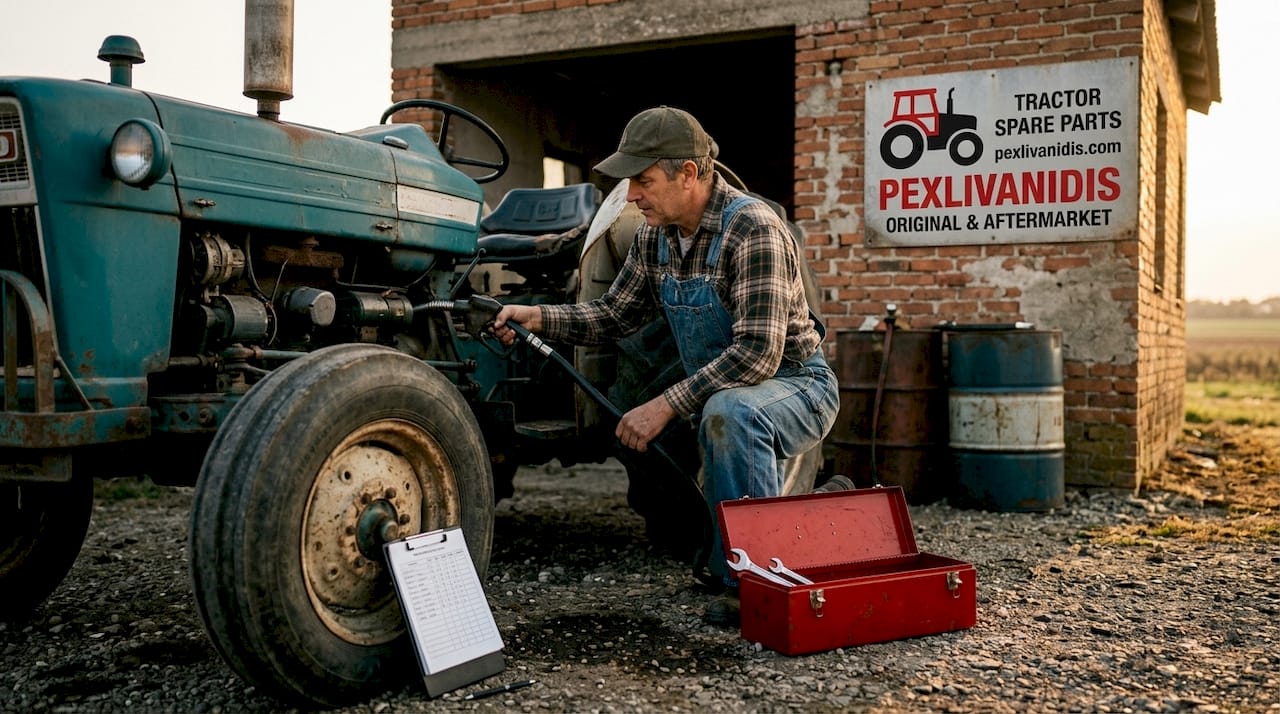
Research modeling work published in peer-reviewed energy journals shows that tractor energy and CO2 outcomes depend heavily on the specific implement task mix, the powertrain configuration, and the operating mode used during each field task. In plain terms, how you operate your tractor and what you attach to it shapes your fuel bill as much as your engine size does.
Independent testing by organizations like DLG provides reliable benchmarks. The DLG PowerMix method measures fuel consumption under standardized field and transport conditions, giving farmers a consistent reference point when comparing tractor models or evaluating their own machines against published data.
Here is a practical overview of typical fuel consumption and emission profiles for common farm operations:
| Operation | Fuel consumption range (L/ha) | Emissions impact | Notes |
|---|---|---|---|
| Deep plowing | 18 to 35 | High | Heavy draft load, full engine effort |
| Rotary tillage | 12 to 22 | Moderate to high | PTO-intensive, speed matters |
| Spraying | 3 to 7 | Low | Low draft but regular coverage passes |
| Baling (hay/straw) | 8 to 15 | Moderate | PTO-heavy, dependent on crop density |
| Transport/logistics | 5 to 10 | Low to moderate | Depends on load weight and distance |
These ranges vary based on tractor model, field conditions, and implement calibration. The key insight is that operations like spraying and light transport are far more fuel-efficient per hectare than deep tillage. This is why improving tractor productivity often comes down to scheduling and load management, not just buying a newer machine.
Practical steps to reduce fuel costs and emissions in daily tractor operations:
- Operate at the correct throttle setting: Many farmers over-rev. Use the minimum engine speed that maintains PTO or draft performance
- Check tire pressure weekly: Under-inflated tires increase rolling resistance and can add 10 to 15% to fuel consumption
- Use draft control on the three-point hitch: Letting the hitch automatically adjust to draft resistance prevents the engine from working harder than needed
- Service air and fuel filters on schedule: A clogged air filter can reduce combustion efficiency noticeably
- Reduce field overlap during spraying and fertilizing: Even 5% overlap reduction across a full season adds up to meaningful fuel savings
- Avoid unnecessary transport at full load: Partially loaded trailer runs between fields or to storage are a common inefficiency
Tips for matching tractors and implements to your farm’s needs
To make the most of what tractors offer, let’s close with some actionable tips for matching machines and implements to your farm’s actual needs. This is where most productivity gains are actually made, not in upgrading to a bigger engine, but in getting the right fit between your tractor, your implements, and your fields.

The key factors to evaluate when choosing a tractor or expanding your implement lineup include horsepower and PTO power output (which are not the same number), hydraulic flow rate, hitch category (Category I, II, or III), four-wheel drive capability for Greek soils that can get very wet in winter, and compatibility with the specific implements you already own or plan to purchase.
As research on hitch systems confirms, a hydraulic three-point hitch/03%3A_Tractor_Drive_Control_and_Auxiliary_Systems/3.13%3A_Drawbars_and_Hitch_Systems-_The_Tractor’s_Connection_to_the_Field) with proper depth and attitude control is what lets you maintain consistent implement performance across variable draft resistance conditions. This is especially relevant on fields with patches of heavier soil or irregular slopes, which are common in many Greek growing regions.
Follow these steps to assess whether your current or planned tractor-implement combination is the right fit:
- List every task you need your tractor to perform, from soil prep to spraying to transport, in order of frequency
- Calculate the PTO horsepower each implement requires and total the peak demand for your most power-intensive simultaneous operations
- Check hitch category compatibility between your tractor and each implement you use or plan to use
- Assess your field size and shape: Smaller, irregular plots often favor a more maneuverable mid-range tractor over a large one with a wider turning radius
- Review your maintenance history: Existing parts availability and service access for your tractor brand matters in rural areas
- Consult with a parts and equipment specialist who understands local Greek farming conditions before making significant changes
A smart resource here is the detailed guide on choosing tractor implements, which walks through compatibility considerations for common Greek farm setups.
Pro Tip: Before the busy spring or fall season begins, connect each implement to your tractor and run through a short test cycle in an open area. Check hydraulic response, hitch depth adjustments, and PTO engagement under light load. Catching a worn coupling or a misadjusted draft lever before you need the machine at full capacity saves both time and money.
Our perspective: Why smart tractor use is about more than just horsepower
There is a persistent idea in Greek agriculture, and honestly in farming broadly, that bigger horsepower solves most problems. Farmers eyeing a new machine often focus on the engine spec before anything else. We understand the appeal. More power feels like more capability. But after years of working with farmers across northern Greece, from the flatlands of Thessaloniki to the mixed terrain around Kavala, we have seen a different pattern emerge.
The farms that consistently outperform their neighbors are not always the ones with the largest tractors. They are the ones where the machine fits the task. A 120 hp tractor running a sprayer designed for 80 hp is not delivering any extra value from those additional horsepower. It is just burning more fuel and wearing out faster under light load. Conversely, an underpowered tractor laboring through heavy soil destroys efficiency in the other direction.
The real gains come from real productivity decisions rooted in outcome thinking: what does this task actually need, and does my equipment match that need exactly? A well-matched mid-range tractor with properly selected and maintained implements will consistently outperform an oversized machine running mismatched equipment.
We also see farmers overlook implement condition in favor of tractor condition. A new tractor pulling a worn-out plow with dull points is still pulling a worn-out plow. The tractor does not fix what the implement cannot do. This is why parts quality, maintenance schedules, and implement replacement decisions matter just as much as the machine making the power.
Our advice: start with your tasks, not with a tractor catalog. Map out what you need the machine to do, when, and at what scale. Then find the tractor and implement combination that fits that picture. You will almost always find that strategic selection delivers more improvement than a horsepower upgrade.
Take the next step: Smarter tractor and implement choices
Ready to put new knowledge to work? At pexlivanidis.com, we stock over 20,000 agricultural machinery parts and accessories designed to help you maintain and upgrade the equipment you already rely on. Whether you need to replace a worn PTO component, source a hitch part, or upgrade a spray system, the right part makes a measurable difference in field performance. Start by reviewing the guide to essential machinery parts to understand what your tractor system actually needs. Then check the step-by-step machinery maintenance guide for a structured approach to keeping your equipment in peak condition through every season. Orders over 100€ ship free within Greece, and our team in Thessaloniki is available to help you find exactly what your operation needs.
Frequently asked questions
Why are tractors considered essential for modern Greek farms?
Tractors enable efficient land preparation, planting, crop management, and transport, helping farmers save labor and maximize yields across the full production cycle rather than relying on slower, manual methods.
What is a tractor’s PTO and why is it important?
The Power Take-Off (PTO) transfers engine power directly to implements like mowers, pumps, and balers. Without it, tractors could not power the wide range of machines that make modern multi-task farming possible.
How can energy use and emissions be reduced with tractor operations?
Choosing correctly matched equipment, operating at recommended throttle settings, and scheduling tasks by efficiency profile all reduce fuel use. Published energy and emissions modeling confirms that task mix and operating mode are as influential as powertrain type.
Is a bigger tractor always better for all farm sizes?
No. Matching tractor size and hitch capability to your actual field and implement needs delivers better results than oversizing. A properly calibrated three-point hitch/03%3A_Tractor_Drive_Control_and_Auxiliary_Systems/3.13%3A_Drawbars_and_Hitch_Systems-_The_Tractor’s_Connection_to_the_Field) on a correctly sized tractor will outperform an oversized machine in most Greek farm conditions.
What tasks can tractors support beyond plowing?
Tractors also support planting, spraying, harvesting, irrigation pumping, and transporting materials or produce throughout the farm, making them productive assets in every season of the year.