

Many farmers mistakenly view combine harvesters as just another tractor, but these machines represent far more sophisticated technology. A combine harvester integrates multiple harvesting operations into one seamless process, dramatically transforming how you harvest grain crops. This guide breaks down exactly how combine harvesters work, from their critical components like the threshing cylinder to practical maintenance strategies. Understanding these machines helps you maximize efficiency, reduce crop loss, and make smarter equipment decisions for your farming operation. Whether you’re considering your first combine purchase or optimizing current equipment, this comprehensive breakdown delivers the knowledge you need.
Table of Contents
- How Combine Harvesters Revolutionize Grain Farming
- Key Components Of A Combine Harvester And Their Functions
- Comparing Combine Harvesters With Traditional Harvesting Methods
- Maintaining Your Combine Harvester For Peak Performance
- Discover Essential Agricultural Machinery Expertise At Pexlivanidis
Key takeaways
| Point | Details |
|---|---|
| Multi-function operation | Combine harvesters combine reaping, threshing, and winnowing into one continuous process, eliminating the need for separate equipment. |
| Threshing cylinder importance | The threshing cylinder uses a spinning roller with bumps to separate grain kernels from stalks efficiently. |
| Efficiency gains | Modern combines dramatically reduce labor requirements while increasing harvesting speed and grain quality. |
| Maintenance impact | Regular inspection and proper care of key components extends machine lifespan and prevents costly mid-season breakdowns. |
How combine harvesters revolutionize grain farming
The combine harvester stands as one of the most transformative innovations in agricultural history. Before its widespread adoption, farmers relied on separate machines or manual labor for each harvesting stage, creating bottlenecks that limited productivity and increased crop loss. Today’s combines integrate three essential processes into one efficient machine, fundamentally changing how grain farming operates.
At its core, a combine harvester performs reaping, threshing, and winnowing simultaneously as it moves through your fields. Reaping cuts the crop stalks at ground level. Threshing separates the grain kernels from the stalks and chaff. Winnowing removes the lighter chaff from the heavier grain through airflow. This integration means you can harvest an entire field in a fraction of the time traditional methods required, with significantly less manpower.
For Greek farmers working with wheat, barley, corn, and other grain crops, this efficiency translates directly to profitability. You can harvest at optimal ripeness without waiting for additional equipment or labor. Weather windows become less stressful when you can complete harvesting quickly. Crop quality improves because grain spends less time exposed to field conditions after reaching peak maturity.
The historical impact cannot be overstated. Early 20th century farms required dozens of workers during harvest season. Modern combines allow small teams to manage hundreds of acres efficiently. This labor reduction freed agricultural workers for other economic activities while making farming viable for smaller operations. The technology democratized grain farming in ways that shaped rural economies worldwide.
Choosing the right combine for your operation requires understanding your specific needs. Consider these factors:
- Crop types you grow most frequently
- Average field size and terrain characteristics
- Header width appropriate for your acreage
- Engine power matching your throughput requirements
- Grain tank capacity for your hauling logistics
Pro Tip: Greek farmers working in hilly regions should prioritize combines with hillside leveling systems and strong traction control, as standard models can struggle with grain separation on slopes exceeding 15 degrees.
The combine harvester didn’t just improve farming efficiency. It fundamentally restructured rural labor markets and made large scale grain production economically viable for operations of all sizes.
Modern essential agricultural machines like combines represent significant capital investments, but their return on investment typically justifies the cost within a few seasons. Understanding how they work helps you maximize that investment through proper operation and maintenance.
Key components of a combine harvester and their functions
A combine harvester contains numerous specialized components working in precise coordination. Understanding these parts helps you operate the machine effectively and identify maintenance needs before they become costly problems. Each component serves a specific purpose in the grain harvesting process.
| Component | Primary Function | Maintenance Priority |
|---|---|---|
| Header | Cuts and gathers crop stalks | Daily inspection during harvest |
| Feeder house | Conveys cut crop to threshing area | Weekly lubrication |
| Threshing cylinder | Separates grain from stalks | Pre-season calibration |
| Concave | Works with cylinder for separation | Adjust for crop conditions |
| Cleaning shoe | Removes chaff and debris | Clean after each field |
| Grain tank | Stores clean grain temporarily | Check for leaks regularly |
The threshing cylinder represents the mechanical heart of any combine. This component consists of a large rotating drum fitted with rasp bars or teeth that aggressively tumble the crop material. As cut stalks enter from the feeder house, the cylinder’s rotation and the strategically placed bumps create impact forces that knock grain kernels free from their attachment points on the stalk.
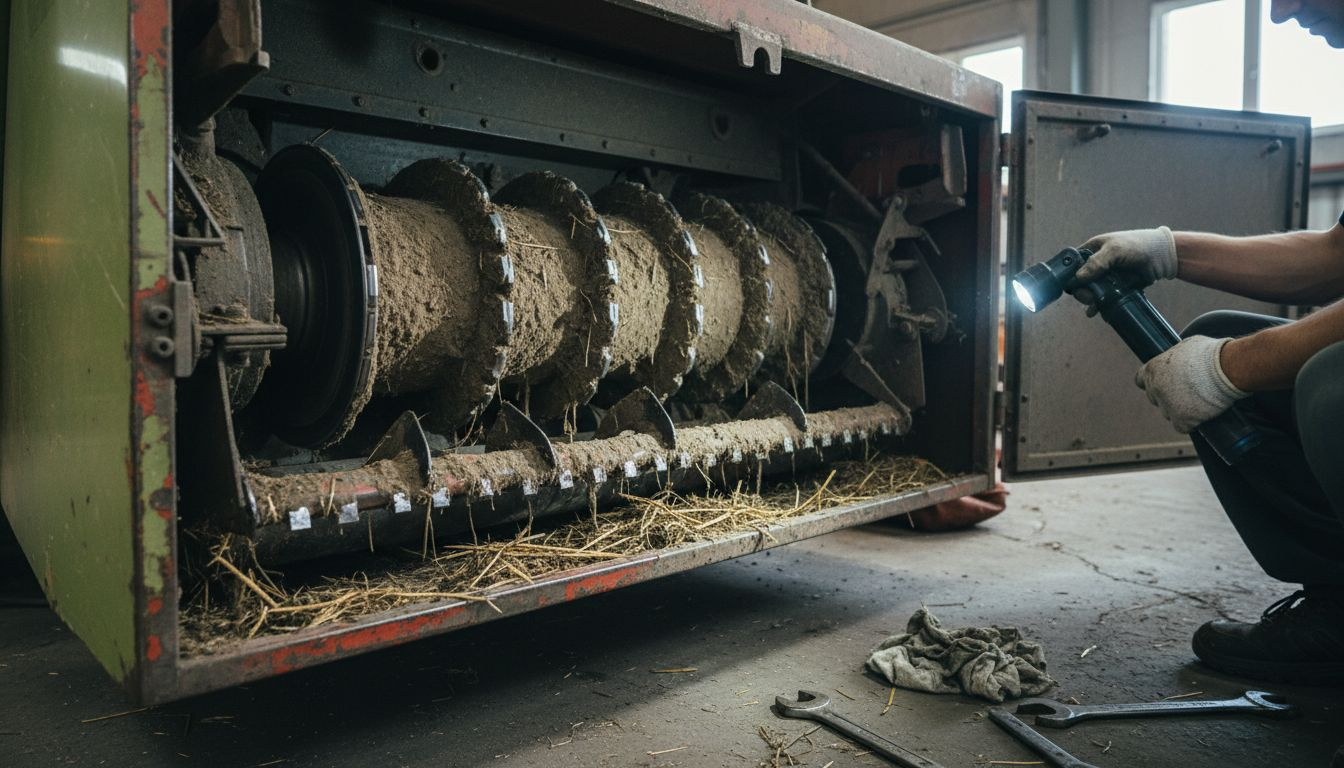
The concave sits directly beneath the threshing cylinder, forming a curved grate that allows separated grain to fall through while retaining larger stalk pieces. The gap between cylinder and concave requires precise adjustment based on crop type, moisture content, and kernel size. Too wide, and you’ll leave grain attached to stalks. Too narrow, and you risk cracking kernels or creating excessive fine material that clogs the cleaning system.
After initial separation, the straw walkers or rotary separator continues extracting any remaining grain from the straw. These components use a combination of agitation and gravity to shake loose kernels that survived the threshing cylinder. The separated straw then exits the rear of the machine, either spreading across the field or collecting in a baler attachment.
The cleaning shoe performs the final refinement. This system uses a combination of sieves and forced air to separate grain from chaff, broken stalk pieces, and other debris. Heavier grain kernels fall through the sieves into the clean grain auger, while lighter chaff blows out the back. Fan speed and sieve opening adjustments allow you to balance cleaning thoroughness with acceptable grain loss.
Key operational sequences:
- Header cuts crop and feeds it into the feeder house conveyor
- Feeder house delivers material to the threshing cylinder at controlled rates
- Cylinder and concave perform primary grain separation
- Straw walkers or rotary separator extract remaining grain
- Cleaning shoe removes chaff and debris from grain
- Clean grain auger moves finished product to the grain tank
Pro Tip: Before each harvest season, inspect your threshing cylinder rasp bars for wear patterns. Uneven wear indicates misalignment or balance issues that will worsen rapidly under load, potentially causing expensive mid-season failures.
Understanding combine harvester parts explained in detail helps you communicate effectively with mechanics and parts suppliers. You’ll make better decisions about when to repair versus replace components, and you’ll recognize warning signs of impending failures.
Comparing combine harvesters with traditional harvesting methods
The efficiency gap between combine harvesters and older harvesting methods reveals why modern grain farming depends on this technology. Traditional approaches required multiple machines or extensive manual labor, creating bottlenecks that limited farm size and profitability. Understanding these differences helps you appreciate the combine’s value proposition.
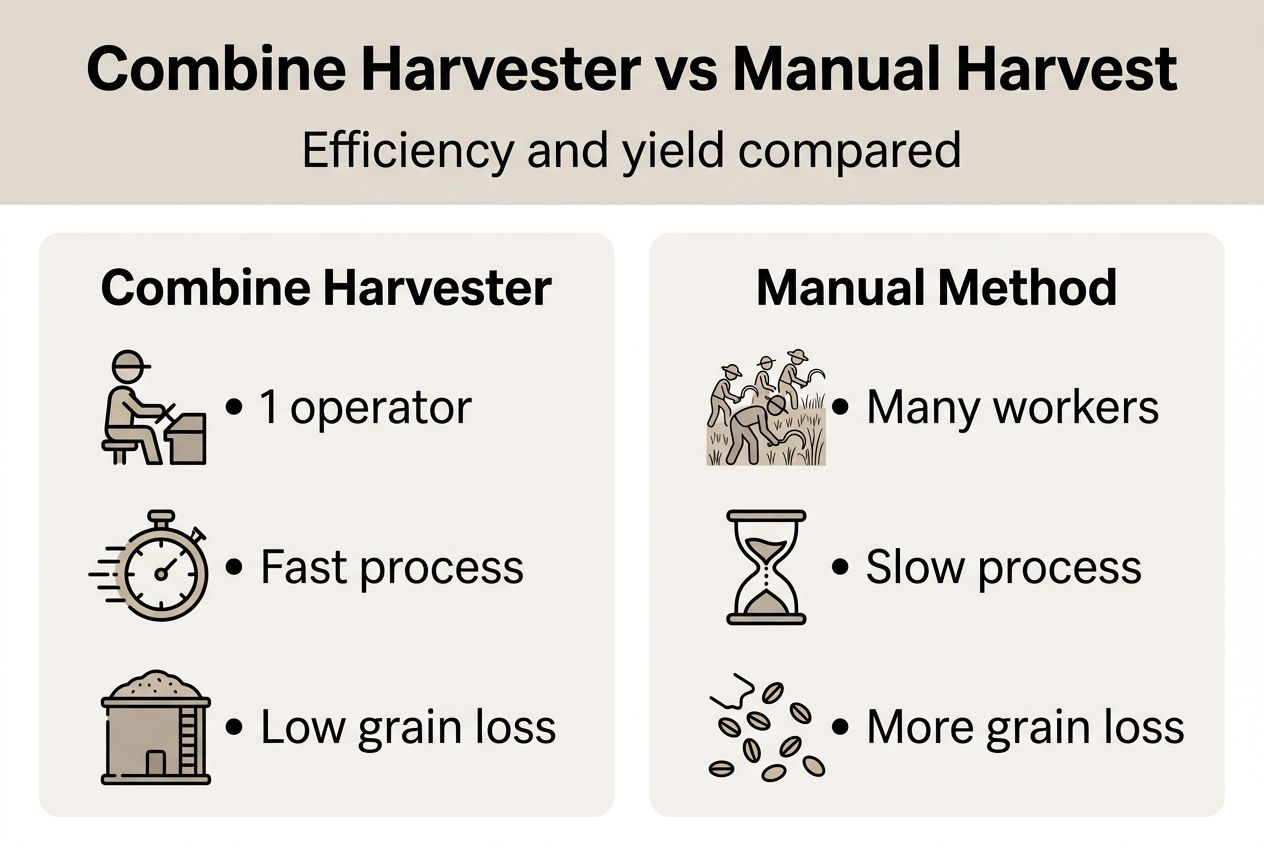
| Method | Labor Required | Time per Hectare | Grain Loss | Weather Dependency |
|---|---|---|---|---|
| Manual harvesting | 15-20 workers | 8-12 hours | 15-25% | Extremely high |
| Separate machines | 4-6 workers | 4-6 hours | 10-15% | High |
| Modern combine | 1-2 operators | 0.5-1.5 hours | 3-5% | Moderate |
Manual harvesting dominated agriculture for millennia. Workers used sickles or scythes to cut stalks, bundled them for drying, then threshed grain by beating stalks or using animal-powered treading. This process stretched over days or weeks, exposing harvested grain to weather damage, pest infestation, and spoilage. Labor costs consumed a massive portion of farm revenue, and the physical demands limited who could participate in farming.
The introduction of separate mechanical reapers, threshers, and winnowers in the 19th and early 20th centuries improved efficiency but created new challenges. Farmers needed to coordinate multiple machines and crews, often hiring custom operators for equipment they couldn’t afford to own. Cut grain sat in fields waiting for threshing equipment, vulnerable to rain and wind damage. The logistical complexity meant many small farms couldn’t access the technology.
Combine harvesters eliminated these coordination problems through integration. The stepwise benefits include:
- Immediate processing reduces field time and weather exposure for cut grain
- Single operator control streamlines decision making and adjustments
- Continuous operation maintains momentum through optimal harvest windows
- Reduced handling minimizes grain damage and quality degradation
- Lower labor costs improve profitability for farms of all sizes
Greek farming conditions particularly benefit from combine technology. The country’s varied terrain, from flat Thessalian plains to hillier regions, requires adaptable equipment. Modern combines handle these variations far better than coordinating multiple traditional machines across challenging topography. The Mediterranean climate’s unpredictable late spring and early summer weather makes rapid harvesting capability essential for protecting grain quality.
Crop loss represents another critical advantage. Traditional methods typically lost 15 to 25 percent of potential yield through shattering during cutting, incomplete threshing, and winnowing inefficiency. Modern combines reduce this to 3 to 5 percent when properly adjusted and operated. For a 50 hectare wheat farm yielding 4 tons per hectare, this difference means recovering an additional 20 to 44 tons of grain annually.
The quality improvements extend beyond quantity. Combine harvesters process grain more gently than manual threshing, reducing cracked kernels and foreign material. This produces higher grades that command premium prices. The speed advantage also allows harvesting at optimal moisture content, further improving quality and reducing drying costs.
Understanding tractors vs harvesters differences clarifies why you need specialized equipment for different tasks. While tractors provide versatile power for tillage, planting, and transport, combines deliver the specialized functionality grain harvesting demands.
Maintaining your combine harvester for peak performance
Proper maintenance separates combines that deliver decades of reliable service from those plagued by breakdowns and premature component failures. Your maintenance program should address both routine care during harvest season and comprehensive preparation before and after use. Neglecting these practices costs you far more in repairs and downtime than the maintenance itself requires.
Daily harvest season checks form your first line of defense against problems:
- Inspect belts for tension, wear, and proper alignment before starting each day
- Check hydraulic hoses for leaks, chafing, or deterioration
- Verify proper lubrication at all grease points per manufacturer specifications
- Clean chaff and debris from engine compartment and cooling systems
- Examine header components for loose bolts or damaged sections
- Test all safety systems and operator controls for proper function
The threshing cylinder and concave demand special attention. These high stress components operate at speeds exceeding 1000 RPM while processing abrasive crop material. Inspect rasp bars or cylinder teeth weekly during active harvesting. Look for uneven wear patterns that indicate balance problems or misalignment. Check concave wire condition and spacing. Even small deviations from specification cause separation efficiency to plummet and grain damage to spike.
Lubrication schedules vary by manufacturer, but most combines require daily greasing of key pivot points and weekly oil changes during heavy use. Use only specified lubricant grades, as substitutions can cause accelerated wear in high load applications. Pay particular attention to feeder house chains, header drive components, and cleaning shoe linkages. These areas experience constant movement and benefit most from proper lubrication.
Pre-season preparation prevents most mid-harvest breakdowns. Start at least two weeks before you expect to begin cutting:
- Change engine oil, fuel filters, and air filters
- Inspect and tension all drive belts and chains
- Calibrate cylinder speed and concave clearance for your first crop
- Test electrical systems including lights, sensors, and monitors
- Verify proper operation of unloading auger and grain tank
- Check tire pressure and condition on all wheels
Common maintenance pitfalls cost farmers thousands in unnecessary repairs. Never ignore unusual noises or vibrations, as these often signal bearing failures or loose components that worsen rapidly. Don’t defer small repairs until the off season, because minor problems cascade into major failures under harvest loads. Avoid using aftermarket parts for critical wear components unless you’ve verified quality equivalence, as inferior materials fail prematurely.
Pro Tip: Store your combine in a covered structure during the off season with the grain tank empty and all hydraulic cylinders fully retracted. This prevents moisture accumulation, protects seals from UV degradation, and reduces corrosion on exposed metal surfaces.
End of season maintenance prepares your combine for storage and next year’s operation. Thoroughly clean all crop residue from the machine, as this material attracts moisture and rodents. Treat exposed metal surfaces with protective coatings. Disconnect batteries or use trickle chargers to maintain charge. Consider rodent deterrents in enclosed areas where wiring damage commonly occurs.
Exploring comprehensive agricultural machinery maintenance guide resources helps you develop systematic maintenance routines. Detailed agricultural machinery maintenance tips provide specific guidance for different equipment types and operating conditions.
Discover essential agricultural machinery expertise at Pexlivanidis
Maximizing your combine harvester’s performance requires more than understanding how it works. You need access to quality parts, expert maintenance guidance, and practical buying advice tailored to Greek farming conditions. Pexlivanidis delivers this comprehensive support through detailed resources and an extensive parts inventory.
Explore in-depth guides covering agricultural machinery parts explained to identify exactly what components your equipment needs. The platform’s machinery maintenance guide provides systematic approaches to preventive care that extend equipment lifespan. When you’re ready to upgrade or expand your machinery fleet, machinery buying tips help you evaluate options and make informed decisions.
With over 20,000 parts in inventory and free shipping on orders exceeding 100€ within Greece, Pexlivanidis combines convenience with expertise. Whether you need replacement components for immediate repairs or want to build a comprehensive maintenance program, the resources and support you require are readily available.
FAQ
What crops can a combine harvester process efficiently?
Combine harvesters excel at processing grain crops including wheat, barley, corn, oats, rye, soybeans, and sunflowers. Most modern combines handle these crops with simple header and settings adjustments. Specialty crops like rice or sorghum may require additional modifications, but the core functionality remains effective across most grain types common to Greek agriculture.
How often should I inspect the threshing cylinder?
Inspect your threshing cylinder daily during active harvest season, checking for loose bolts, unusual wear patterns, and proper clearance settings. Perform a comprehensive inspection including balance verification and rasp bar measurement at the start of each harvest season. This frequency catches problems before they cause expensive damage or mid-season breakdowns.
Can combine harvesters be used in hilly or mountainous terrain in Greece?
Modern combines equipped with hillside leveling systems operate effectively on slopes up to 20 degrees, covering much of Greece’s varied terrain. These systems maintain proper grain separation and cleaning despite the incline. Steeper slopes or extremely rough terrain may require specialized equipment or alternative harvesting approaches to prevent machine damage and ensure operator safety.
What is the average lifespan of a modern combine harvester?
A well-maintained modern combine harvester typically delivers 15 to 20 years of productive service, often accumulating 2000 to 3000 operating hours. Actual lifespan depends heavily on maintenance quality, operating conditions, and annual usage intensity. Machines receiving proper care and storage frequently exceed these averages, while neglected equipment fails prematurely regardless of age.
Where can I find reliable parts and maintenance advice?
Pexlivanidis offers comprehensive support for agricultural machinery including detailed combine harvester parts information and maintenance guidance. The platform maintains an extensive inventory of genuine and quality aftermarket components with expert advice to ensure you select the right parts for your specific equipment and operating conditions.